Macro Calculator
Calculate your exact daily macros, protein, carbs, and fat, based on your body stats, activity level, and goal. Uses the Mifflin-St Jeor formula.
Quick answer
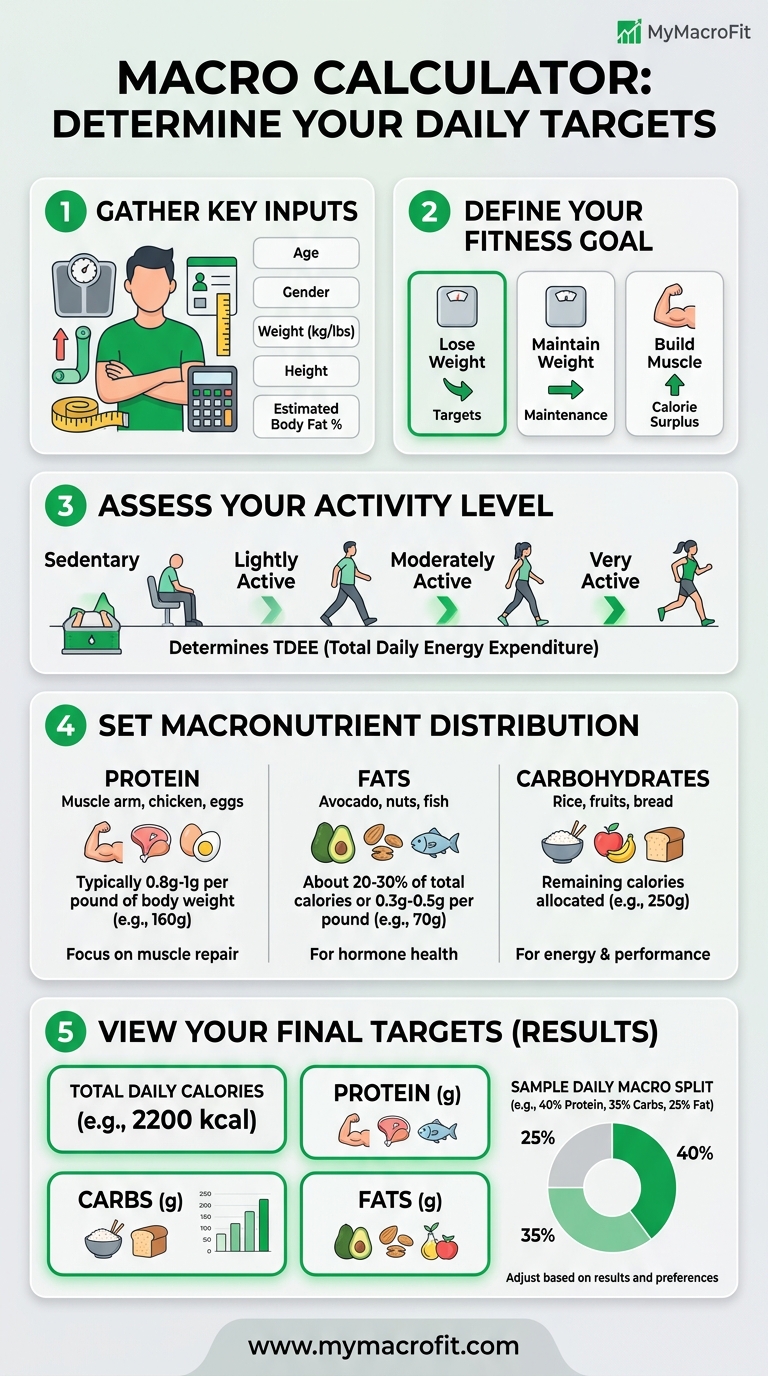
Set your macros from your daily calories: protein first at about 1.6 to 2.2g per kg of bodyweight, fat at about 0.8 to 1g per kg, then fill the rest with carbs. This calculator does the maths from your stats, activity, and goal.
What Are Macros and Why Do They Matter?
Macronutrients, or "macros", are the three main categories of nutrients that make up the caloric content of food: protein, carbohydrates, and fats. Unlike micronutrients (vitamins, minerals), macros are measured in grams and are the primary source of energy for your body.
Understanding your macros goes beyond just counting calories. Two people can eat the same number of calories but achieve completely different body composition results based on how those calories are split between protein, carbs, and fat.
How to Use Your Macro Results
Once you have your daily macro targets, the next step is tracking them. Apps like MyFitnessPal, Cronometer, or our own free calculators make this straightforward. Here's what to do:
- Log everything you eat for the first 2 weeks to learn the macro content of your common foods
- Prioritise hitting your protein target first, it's the most impactful macro for body composition
- Fill remaining calories with carbs and fats based on preference and energy needs
- Reassess every 4 weeks and adjust calories by 100–200 kcal if progress has stalled
The Mifflin-St Jeor Formula Explained
This calculator uses the Mifflin-St Jeor equation, considered the most accurate BMR formula for the general population. Developed in 1990, it's validated by multiple studies and used by registered dietitians worldwide.
The formula is:
- Men: BMR = (10 × weight in kg) + (6.25 × height in cm) − (5 × age) + 5
- Women: BMR = (10 × weight in kg) + (6.25 × height in cm) − (5 × age) − 161
Your BMR is then multiplied by an activity factor (1.2 to 1.9) to estimate TDEE. Your target calories are adjusted based on your goal: −500 kcal for weight loss, +500 kcal for muscle gain.
Frequently Asked Questions
What are macros in nutrition?
How does the macro calculator work?
What macro split should I use for weight loss?
How much protein do I need per day?
Can I use this macro calculator for keto?
What is a calorie deficit?
How accurate is the macro calculator?
Should I count macros or just calories?
How it's calculated: this tool uses established, published equations. See the full calculator methodology for the formulas and assumptions behind it.
Results are estimates for general guidance, not medical advice. See our disclaimer, and speak to a qualified healthcare professional before making medical or dietary changes.
Related Tools
Related Guides
Save & share on Pinterest
Click any card to pin it — or share with someone who needs it.
Macro Calculator
Calculate your exact daily macros, protein, carbs, and fat, based on your body stats, activity level…
Calculate your exact daily macros, protein, carbs, and fat, based on your body s…
Read the full guide: Macro Calculator
Try the free Macro Calculator
Macro Calculator — use our free calculators for instant personalised results. No signup required.
Pinterest opens in a new tab. You can edit the description before saving.
Get Your Free Macro Cheat Sheet
One-page PDF with all the key formulas. Free, no spam ever.
Get the Free Macro Guide