Protein Calculator
Find out exactly how much protein you need each day based on your body weight and goal. Get minimum, optimal, and maximum gram targets plus a per-meal breakdown and high-protein food reference.
Quick answer
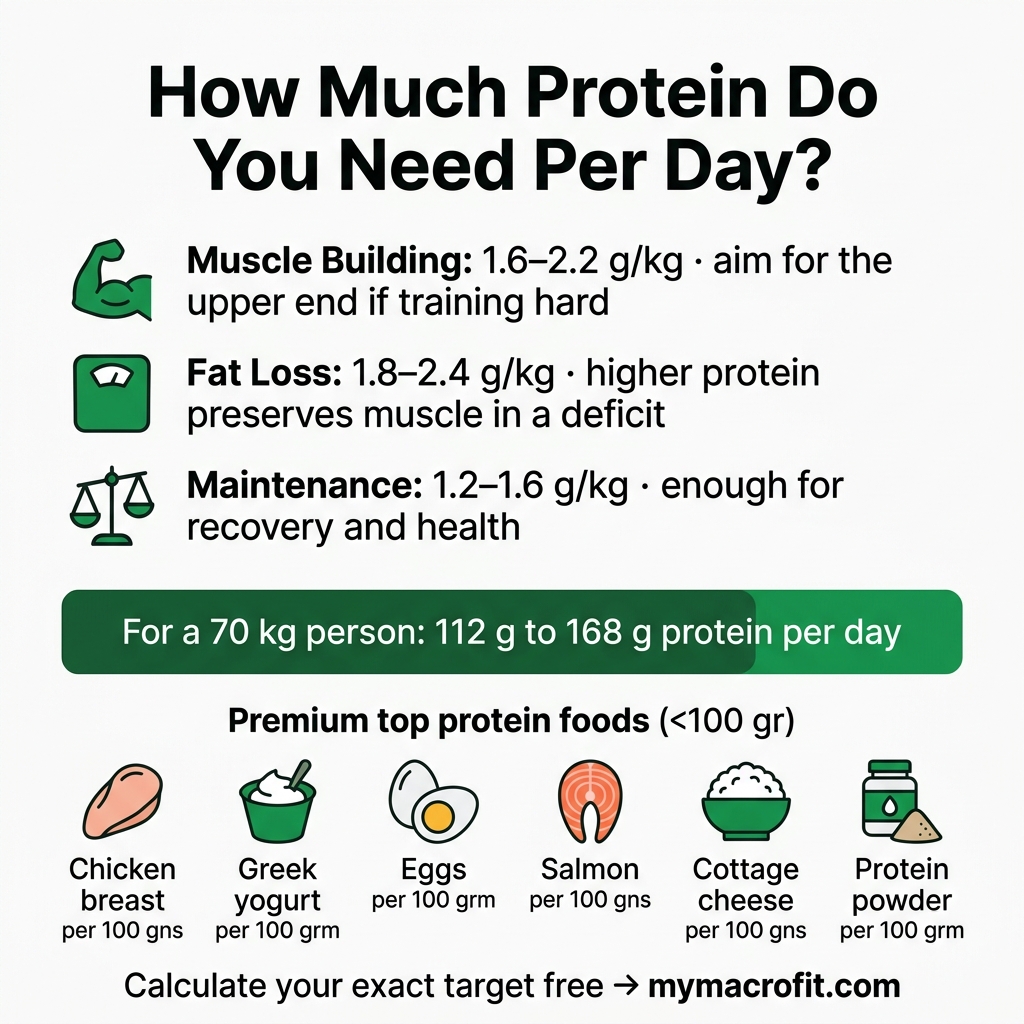
Most active people do well on 1.6 to 2.2g of protein per kg of bodyweight per day for muscle and fat loss. A 70kg person needs roughly 112 to 154g. This calculator sets your target from your weight and goal.
Why Protein Is the Most Important Macronutrient
Of the three macronutrients, protein, carbohydrates, and fat, protein is the only one your body cannot store for later use in a meaningful way. Excess carbohydrates become glycogen or fat. Excess dietary fat is stored as body fat. Excess protein is oxidised for energy.
This matters because your muscles, organs, enzymes, hormones, and immune system are built from protein. Adequate daily protein is not optional, it is the foundation of body composition, recovery, and long-term health.
How Protein Builds Muscle: Muscle Protein Synthesis
Every time you eat a meal containing protein, you trigger a process called muscle protein synthesis (MPS), the creation of new muscle proteins. MPS peaks roughly 90–120 minutes after a protein-rich meal and returns to baseline within 3–5 hours.
To maximise total daily MPS, research consistently shows that spreading protein across 3–5 meals (rather than eating it all at once) stimulates more total synthesis. Each meal should contain roughly 25–40 g of high-quality protein to maximally stimulate MPS in most adults.
Protein for Fat Loss: Why More Is Better
During a calorie deficit, your body faces a problem: it needs energy from somewhere, and muscle tissue is a convenient target. High protein intake (1.8–2.2 g/kg) solves this by:
- Stimulating MPS, keeping the muscle-building signal active even in a deficit
- Increasing satiety, protein is the most satiating macronutrient, reducing hunger on fewer calories
- Boosting the thermic effect of food (TEF), protein requires 20–30% of its calories to digest, vs 5–10% for carbs and 0–3% for fat
Studies directly comparing protein intakes during fat loss consistently show that higher protein groups preserve more lean mass and lose more fat mass, even with identical calorie deficits.
Protein Quality and Leucine
Not all protein is equal. The amino acid leucine is the primary trigger for MPS, it acts like a key turning on the anabolic process. Animal proteins (chicken, beef, fish, eggs, dairy) are rich in leucine. Most plant proteins contain lower leucine per gram.
This is why vegans and vegetarians are advised to consume more total protein, to ensure each meal delivers enough leucine (~2–3 g) to fully stimulate MPS. Soy, hemp, and quinoa are the best plant sources of leucine- rich complete proteins.
Frequently Asked Questions
How much protein do I need per day?
Is it possible to eat too much protein?
Does protein timing matter?
What counts as a complete protein?
Do I need protein supplements?
How much protein should I eat if I am vegetarian or vegan?
What are the best high-protein foods?
Does cooking affect the protein content of food?
How it's calculated: this tool uses established, published equations. See the full calculator methodology for the formulas and assumptions behind it.
Results are estimates for general guidance, not medical advice. See our disclaimer, and speak to a qualified healthcare professional before making medical or dietary changes.
Related Tools
Save & share on Pinterest
Click any card to pin it — or share with someone who needs it.
Protein Calculator
Find out exactly how much protein you need each day based on your body weight and goal. Get minimum,…
Find out exactly how much protein you need each day based on your body weight an…
Read the full guide: Protein Calculator
Try the free Protein Calculator
Protein Calculator — use our free calculators for instant personalised results. No signup required.
Pinterest opens in a new tab. You can edit the description before saving.
Get Your Free Macro Cheat Sheet
One-page PDF with all the key formulas. Free, no spam ever.
Get the Free Macro Guide