How to Calculate Your Macros for Weight Loss

BSc Kinesiology · CPT
You've heard people talk about "hitting their macros" like it's some kind of insider language, and if you've ever nodded along while quietly having no idea what they meant, you're in excellent company. I was there too, years ago. The phrase sounds far more complicated than the reality, and the reality is genuinely worth understanding because it's the difference between guessing at your food and actually knowing what's in it.
The real question, of course, isn't just "what are macros", it's how do I work out the right numbers for my body and my goals. That's what this guide is for. I'll break it down step by step: what macros are, why they matter so much for fat loss, and the exact calculation to find yours. No maths degree required, I promise.
What Are Macros?
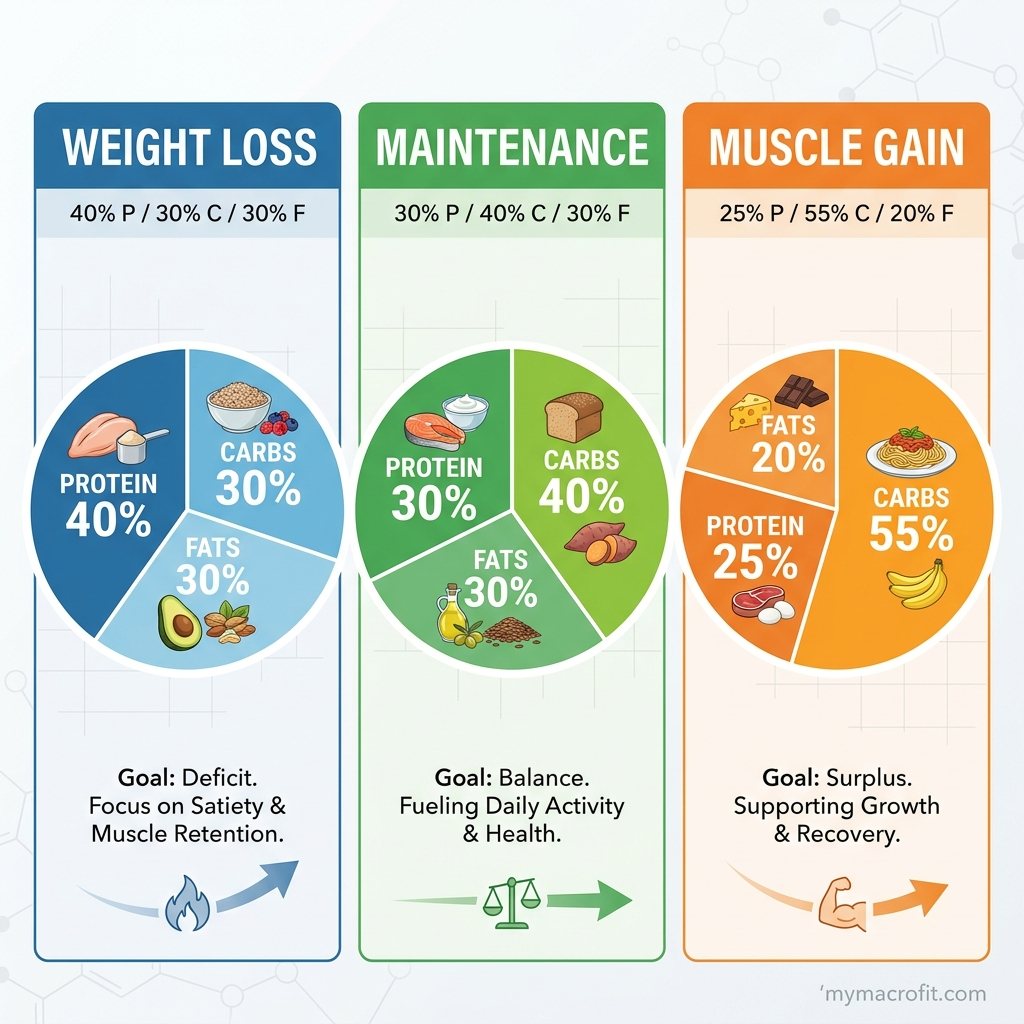
"Macros" is short for macronutrients, the three main nutrients your body needs in large amounts:
- Protein, 4 calories per gram. Builds and repairs muscle, keeps you full, and preserves lean mass during weight loss.
- Carbohydrates, 4 calories per gram. Your body's primary energy source, especially for exercise.
- Fat, 9 calories per gram. Essential for hormone production, brain function, and absorbing fat-soluble vitamins.
Every food you eat contains some combination of these three macronutrients. Understanding how much of each you need gives you far more control over your body composition than simply counting calories alone.
Why Macros Matter More Than Just Calories
Two people can eat 1,800 calories a day and get completely different results.
Person A eats mostly carbs and fat, with very little protein. They'll lose weight, but much of it will be muscle, leaving them lighter but softer.
Person B hits a high-protein target while managing carbs and fat. They preserve muscle and lose primarily body fat, ending up leaner and stronger at the same weight.
Same calories. Completely different outcomes. That's the power of tracking macros.
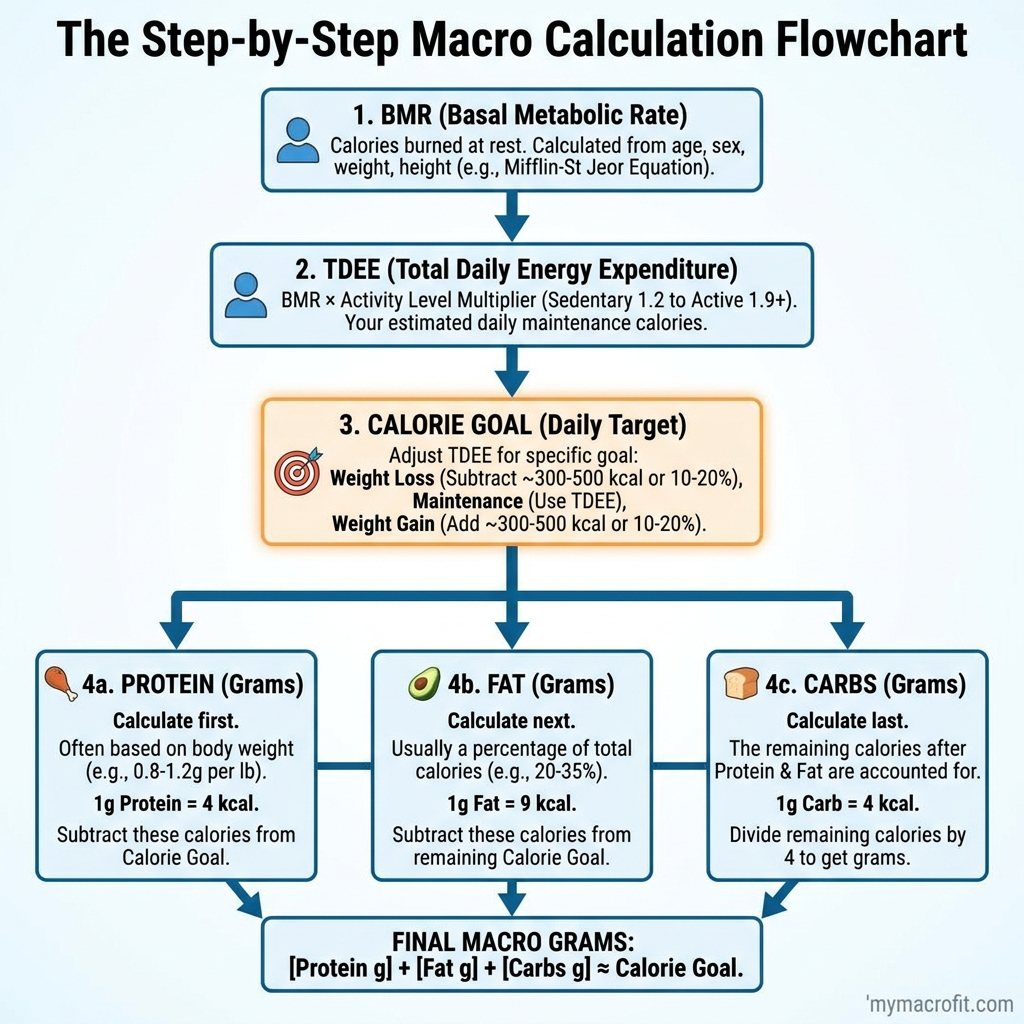
How to Calculate Your Macros in 4 Steps
Step 1: Calculate Your BMR
Your Basal Metabolic Rate (BMR) is the number of calories your body burns at complete rest. We use the Mifflin-St Jeor equation, the most accurate formula for most people:
Men: BMR = (10 × weight in kg) + (6.25 × height in cm) − (5 × age) + 5
Women: BMR = (10 × weight in kg) + (6.25 × height in cm) − (5 × age) − 161
Step 2: Find Your TDEE
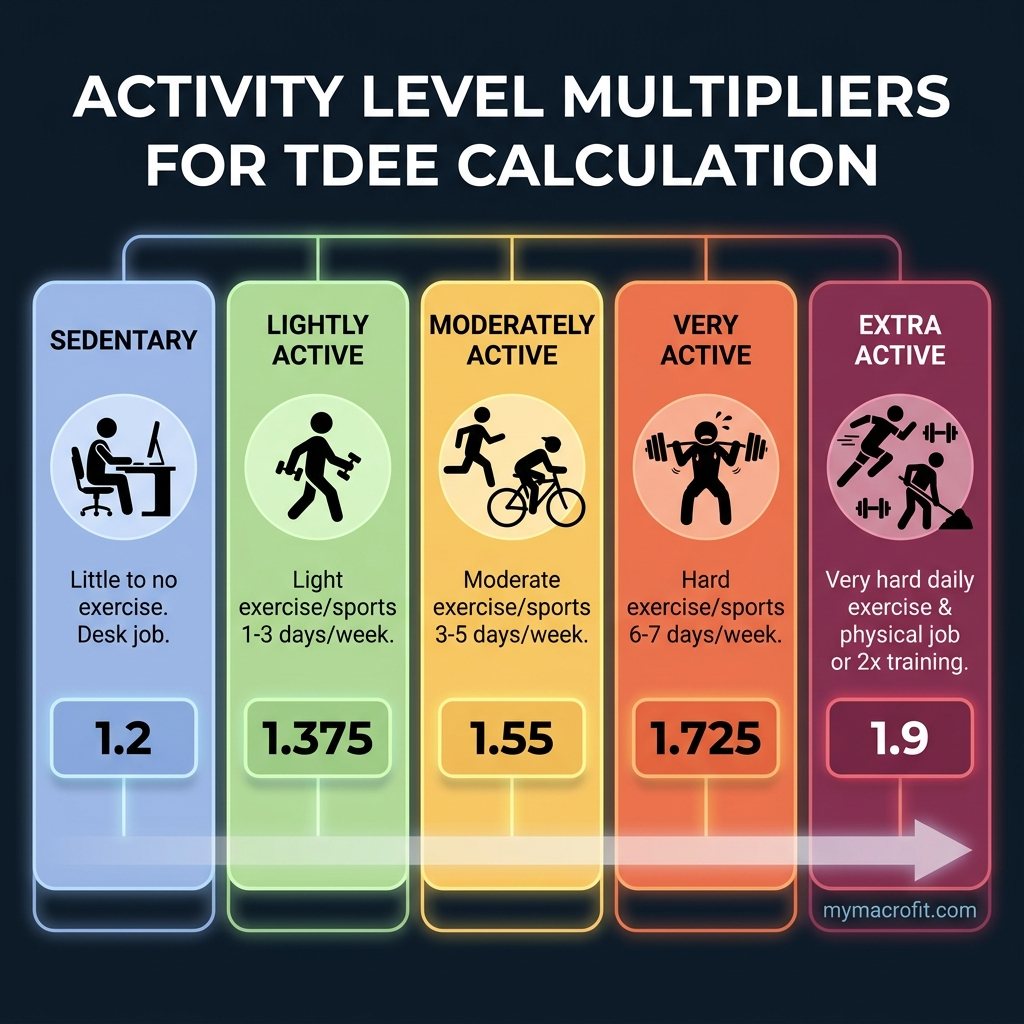
Your Total Daily Energy Expenditure (TDEE) accounts for your activity level:
| Activity Level | Multiplier |
|---|---|
| Sedentary (desk job, no exercise) | BMR × 1.2 |
| Lightly active (1-3 days/week) | BMR × 1.375 |
| Moderately active (3-5 days/week) | BMR × 1.55 |
| Very active (6-7 days/week) | BMR × 1.725 |
| Extra active (physical job + exercise) | BMR × 1.9 |
Step 3: Apply a Calorie Deficit
For weight loss, subtract 500 calories from your TDEE. This creates a safe deficit that results in approximately 0.5 kg (1 lb) of fat loss per week without excessive muscle loss.
Target calories = TDEE − 500
Avoid deficits larger than 1,000 kcal/day, anything beyond that risks muscle breakdown, nutrient deficiencies, and metabolic adaptation.
Step 4: Set Your Macro Split
For weight loss, a 35% protein / 35% carbs / 30% fat split is evidence-based and works well for most people. Use the Protein Calculator to get a bodyweight-based protein target as a cross-check:
- Protein (35%): Target calories × 0.35 ÷ 4 = grams of protein
- Carbs (35%): Target calories × 0.35 ÷ 4 = grams of carbs
- Fat (30%): Target calories × 0.30 ÷ 9 = grams of fat
Example Calculation
For a 30-year-old woman, 165 cm, 70 kg, moderately active, wanting to lose weight:
- BMR = (10 × 70) + (6.25 × 165) − (5 × 30) − 161 = 1,401 kcal
- TDEE = 1,401 × 1.55 = 2,172 kcal
- Target = 2,172 − 500 = 1,672 kcal
- Protein: 1,672 × 0.35 ÷ 4 = 146g
- Carbs: 1,672 × 0.35 ÷ 4 = 146g
- Fat: 1,672 × 0.30 ÷ 9 = 56g
Best Foods for Hitting Your Macros

High-protein foods: Chicken breast, Greek yogurt, eggs, cottage cheese, tuna, whey protein
Complex carbs: Brown rice, oats, sweet potato, quinoa, whole grain bread
Healthy fats: Avocado, olive oil, nuts, salmon, eggs
How to Track Your Macros
- Get a kitchen scale, portion sizes are rarely what you think they are
- Use a tracking app, MyFitnessPal and Cronometer both have large food databases
- Log everything for the first 2-4 weeks to build awareness
- Prioritise protein first, if you're short on time, just track protein
Common Mistakes to Avoid
- Not tracking liquids, protein shakes, milk, juice, and alcohol all count
- Eyeballing portions, measuring for just 1-2 weeks teaches you accurate portion sizes forever
- Being too rigid, hitting within ±5-10g of each macro target is close enough
- Changing too quickly, give any macro adjustment 3-4 weeks before tweaking
When to Adjust Your Macros
Reassess your numbers every 4-6 weeks, especially if:
- You've lost or gained more than 5 kg
- Progress has stalled for 3+ weeks
- Your activity level has changed significantly
A drop of 100-200 kcal/day (while maintaining protein) is usually enough to restart progress if weight loss stalls.
Frequently Asked Questions
Can I eat any foods as long as I hit my macros? Yes, "flexible dieting' or IIFYM (If It Fits Your Macros) is a valid approach. That said, whole foods provide better micronutrients and satiety, so aim for 80% whole foods and 20% flexibility.
Do I need to hit macros exactly every day? No. Weekly averages matter more than daily perfection. If you're under on protein one day, make it up the next.
Should I eat back exercise calories? If you calculated your TDEE using an activity multiplier, your exercise is already factored in. Only eat back calories if you used a sedentary multiplier and added significant activity.
Save & share on Pinterest
Click any card to pin it — or share with someone who needs it.
How to Calculate Your Macros for Weight Loss
A beginner-friendly guide to understanding and calculating your daily macros for effective weight lo…
A beginner-friendly guide to understanding and calculating your daily macros for…
Read the full guide: How to Calculate Your Macros for Weight Loss
Try the free Macro Calculator
How to Calculate Your Macros for Weight Loss — use our free calculators for instant personalised res…
Pinterest opens in a new tab. You can edit the description before saving.
Ready to get your numbers?
Free calculator, instant results, no signup required.
Frequently Asked Questions
How do I calculate my macros for weight loss?+
What is the best macro ratio for weight loss?+
Should I count macros or just calories?+
How much protein should I eat to lose weight without losing muscle?+
Do I have to hit my macros exactly every day?+
How long until I see results from tracking my macros?+
About the Author

I'm a kinesiologist and personal trainer. I've spent eight years helping women lose fat and get stronger without handing their whole life over to a diet.
View full profile →