Water Intake Calculator
Calculate exactly how much water you should drink each day based on your body weight, exercise habits, and climate. Get your target in litres, cups, and 500 ml bottles, plus practical hydration tips.
Quick answer
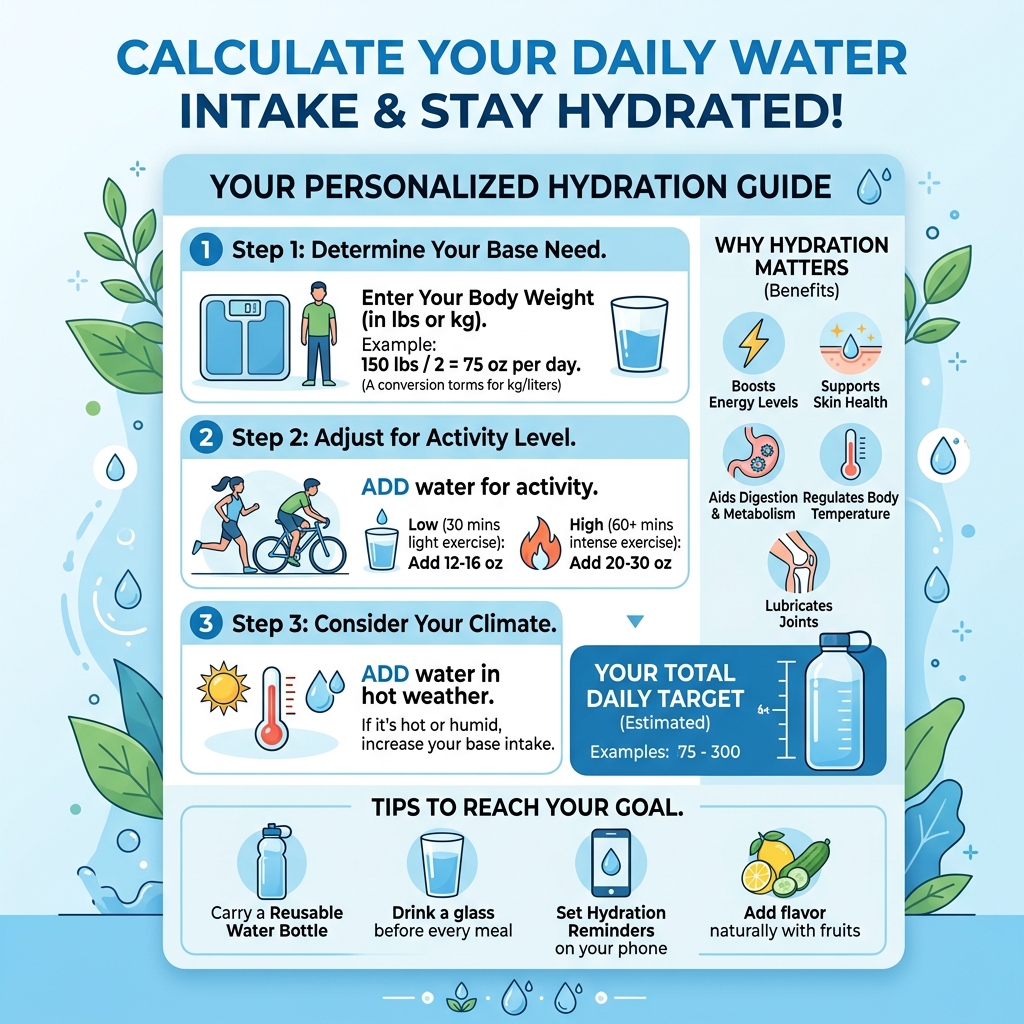
A common target is about 30 to 35ml of water per kg of bodyweight, so a 70kg person needs roughly 2.1 to 2.5 litres, more in heat or with exercise. This calculator sets your daily target from your weight and activity.
Why Hydration Matters More Than You Think
Water makes up roughly 60% of total body mass. It serves as the solvent for every biochemical reaction in your body, transporting nutrients, regulating temperature, lubricating joints, and clearing metabolic waste. Even mild dehydration (1–2% of body weight) measurably reduces both physical and cognitive performance.
For athletes and active individuals, the consequences are even more pronounced. A 2% body weight deficit reduces endurance performance by 10–20%, impairs reaction time, and increases perceived effort at the same absolute workload.
How Water Requirements Are Calculated
The most reliable individual-level formula is weight-based: approximately 35 ml per kg of body weightas a daily baseline. This accounts for the fact that larger people have more metabolically active tissue and lose more water through breathing, sweating, and kidney function.
To this baseline, we add:
- Exercise: ~500 ml per hour of moderate exercise to replace sweat losses
- Climate: +500 ml in hot weather, +1,000 ml in very hot or humid environments
- Diet and lifestyle factors: High caffeine intake, alcohol, high-protein diets, and illness all increase fluid needs
Hydration and Exercise Performance
Sweat rate varies enormously between individuals, from 0.5 to 2+ litres per hour depending on fitness, genetics, temperature, and intensity. The practical approach is to:
- Drink 400–600 ml of water 1–2 hours before exercise
- Sip 150–250 ml every 15–20 minutes during exercise lasting over 30 minutes
- For sessions over 60–90 minutes, include electrolytes (sodium, potassium) to replace what is lost in sweat
- After exercise, drink 1.5× the weight lost during the session (e.g., lose 1 kg = drink 1.5 L)
Practical Hydration Tips
Knowing your target is the easy part, consistency is the challenge. These practical strategies help:
- Use a marked water bottle: A 1 L bottle makes it easy to track. Fill it twice for a 2 L target.
- Drink a glass before each meal: Builds a reliable habit and also helps with appetite regulation.
- Set reminders: Especially important in sedentary, air-conditioned environments where thirst cues are dulled.
- Check your urine: Pale yellow is the target. It is the simplest real-time hydration monitor available.
- Eat water-rich foods: Cucumber, watermelon, celery, strawberries, and leafy greens contribute meaningfully to daily fluid intake.
Frequently Asked Questions
How much water should I drink per day?
Does exercise significantly increase water needs?
Does coffee or tea count towards my water intake?
What are the signs of dehydration?
Can you drink too much water?
Does water intake affect weight loss?
How do I know if I am drinking enough?
Does food contribute to daily water intake?
How it's calculated: this tool uses established, published equations. See the full calculator methodology for the formulas and assumptions behind it.
Results are estimates for general guidance, not medical advice. See our disclaimer, and speak to a qualified healthcare professional before making medical or dietary changes.
Related Tools
Save & share on Pinterest
Click any card to pin it — or share with someone who needs it.
Water Intake Calculator
Calculate exactly how much water you should drink each day based on your body weight, exercise habit…
Calculate exactly how much water you should drink each day based on your body we…
Read the full guide: Water Intake Calculator
Try the free Water Intake Calculator
Water Intake Calculator — use our free calculators for instant personalised results. No signup requi…
Pinterest opens in a new tab. You can edit the description before saving.
Get Your Free Macro Cheat Sheet
One-page PDF with all the key formulas. Free, no spam ever.
Get the Free Macro Guide