Strength Training for Weight Loss: Why Lifting Beats Cardio Long Term

BSc Kinesiology · CPT
Let me state a position that still surprises people, then defend it with the data: if your goal is durable fat loss, the weights room is a more powerful tool than the treadmill. The conventional script says cardio is for weight loss, it burns calories, spikes your heart rate, and feels appropriately punishing. And it does work, in the short term. But it carries a structural flaw that most people never have explained to them.
The distinction is mechanistic, and it matters. Cardio burns calories during the session and then stops. Resistance training alters the amount of energy your body expends every hour of every day, at your desk, asleep, on the sofa, because muscle is metabolically active tissue you carry with you. That is a fundamentally different proposition, and the research bears it out. Here's the evidence, and the protocol.
The Resting Metabolism Argument
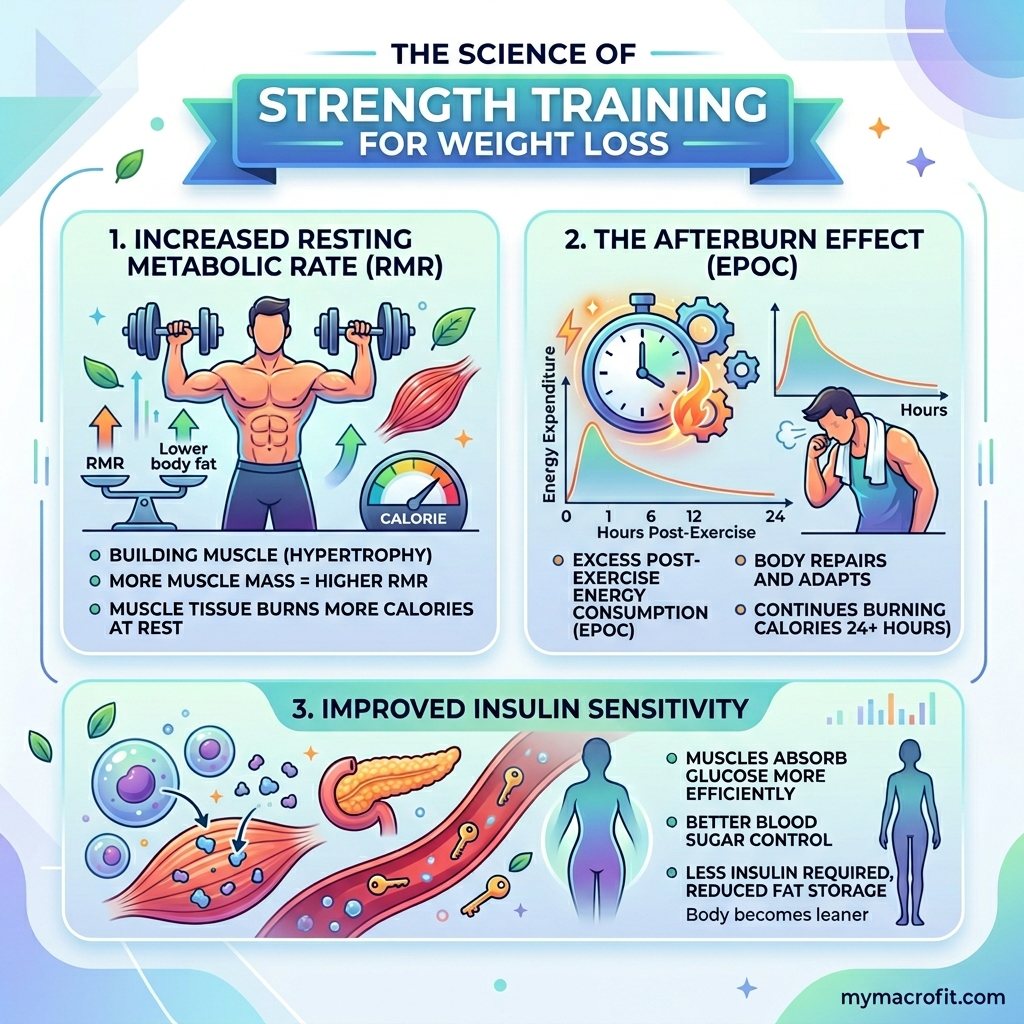
Your resting metabolic rate (RMR) is the number of calories your body burns at rest to maintain basic functions. It accounts for approximately 60-70% of your total daily calorie expenditure. Skeletal muscle is one of the most metabolically active tissues in your body, it requires energy just to maintain itself.
One kilogram of muscle burns approximately 13 kcal per day at rest. This sounds modest. But consider: gaining 5kg of muscle over a year of consistent strength training increases your resting metabolism by roughly 65 kcal per day. Across a year, that's approximately 23,700 additional calories burned, while doing nothing.
Cardio does not build muscle. In fact, high-volume cardio without sufficient protein can accelerate muscle loss. When you lose muscle through excessive cardio and calorie restriction, your resting metabolism drops. This is one reason why long-term cardio-based dieters often hit frustrating plateaus, they've reduced the very machinery that burns fat.
Strength training preserves and builds muscle. It protects your metabolism during fat loss phases and enhances it during muscle-building phases.
EPOC: The Afterburn Effect
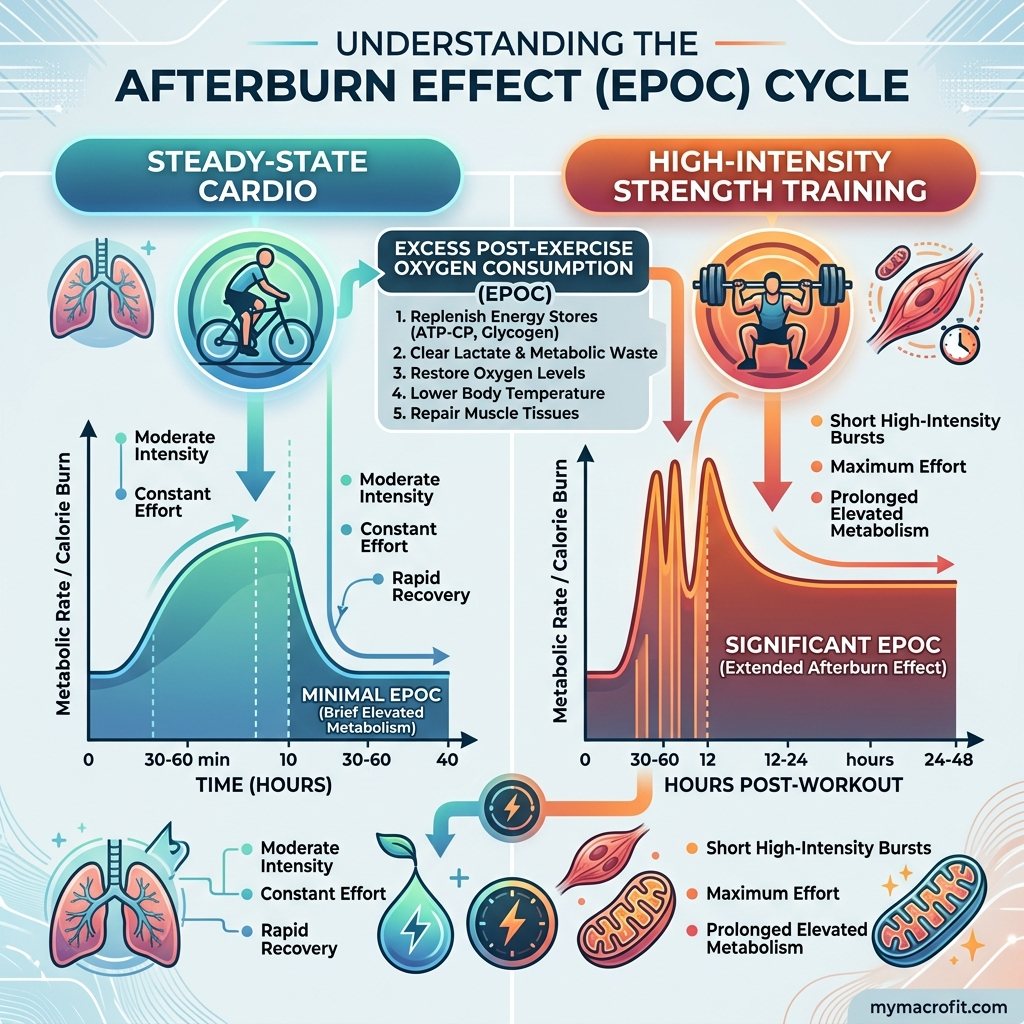
Excess Post-Exercise Oxygen Consumption (EPOC) refers to the elevated oxygen consumption, and therefore calorie burn, that continues after exercise ends as your body returns to its resting state.
Both cardio and strength training create EPOC. But the magnitude and duration differ significantly:
- Steady-state cardio (e.g., 45 min jog): EPOC of approximately 15 calories over 30-60 minutes post-exercise
- High-intensity strength training (e.g., 45 min compound lifts): EPOC of 25-40+ calories over 12-24 hours post-exercise
This "afterburn" from strength training is not a massive calorie expenditure, it's often overstated in fitness marketing. But it's meaningfully larger and longer-lasting than cardio's afterburn, adding up consistently over weeks and months.

Body Recomposition: The Real Goal
Most people say they want to “lose weight”, but what they actually want is to lose fat while looking leaner and more toned. This is body recomposition, and strength training is uniquely positioned to achieve it.
Body recomposition means:
- Losing fat mass
- Maintaining or building muscle mass
At the same body weight, more muscle and less fat looks dramatically different. Clothing fits differently. Posture improves. Definition appears. The scale might say the same number, but the physique is visibly transformed.
Cardio creates a calorie deficit that reduces both fat and muscle. Strength training creates a calorie deficit while signalling your body to preserve and build muscle. This is the fundamental difference in outcome.
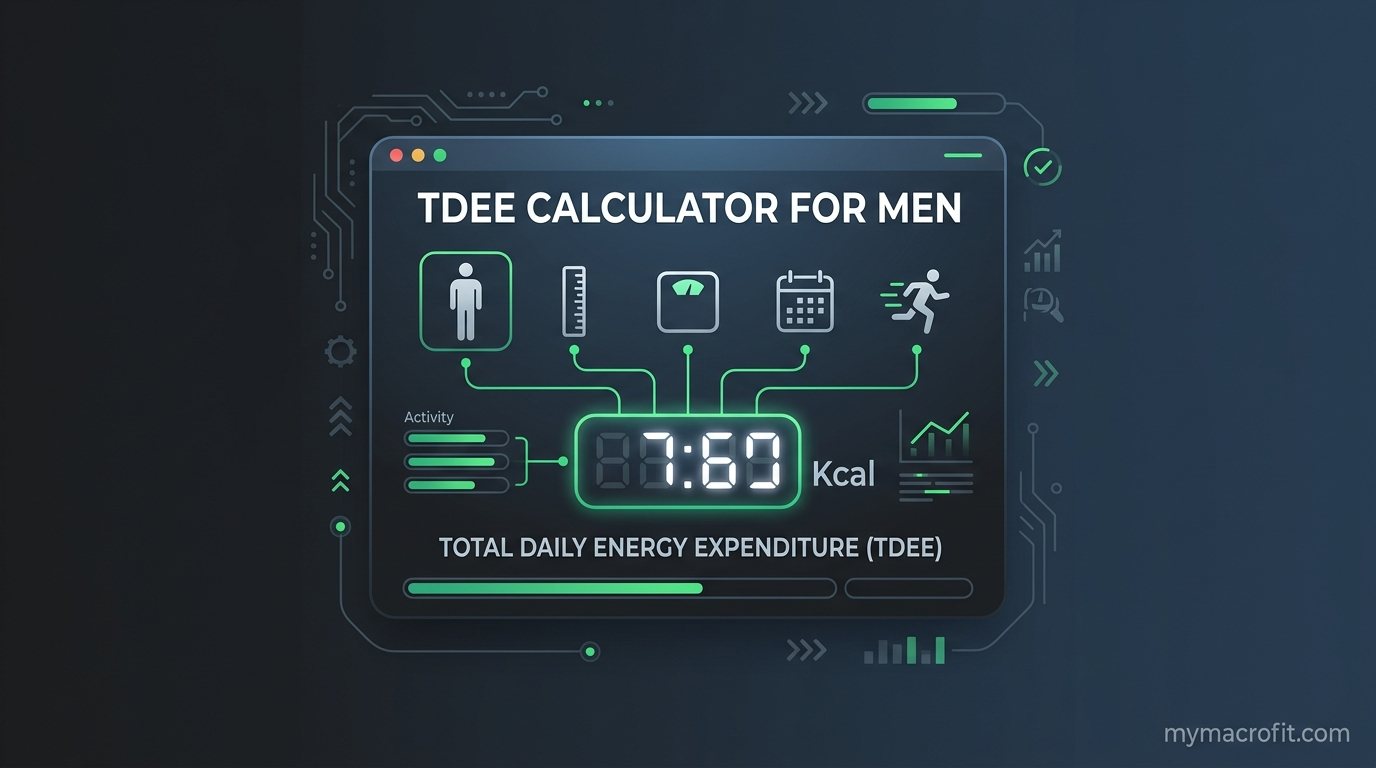
Use our TDEE Calculator to set an appropriate calorie deficit for fat loss while strength training.
The Research Comparison
Studies comparing cardio-only and strength training-only interventions for fat loss consistently show:
- Both produce similar total weight loss when calories are equated
- Strength training produces significantly greater fat mass loss while preserving lean mass
- Cardio produces more weight loss from both fat and muscle
- Strength training groups consistently show better long-term weight maintenance in follow-up studies (12+ months)
- Combining both (strength training + cardio) outperforms either alone
The long-term maintenance finding is critical. The reason strength-trained individuals maintain weight loss better is the preserved resting metabolism, they haven't reduced the engine that burns calories at rest.
Why Cardio Isn't the Enemy
To be clear: cardio is not bad for fat loss. Cardio:
- Burns calories effectively during the session
- Improves cardiovascular fitness and health
- Supports active recovery
- Reduces stress and improves mood
- Is accessible to beginners and requires minimal equipment
The case being made here is not "don't do cardio." It's "don't use cardio as your primary or only fat loss tool." The hierarchy should be:
- Strength training as the foundation, 3-4 sessions per week, compound movements, progressive overload
- Cardio as a supplement, 2-3 sessions per week, moderate intensity
- Calorie deficit via nutrition, the actual driver of fat loss
Practical: A 3-Day Starter Strength Programme for Fat Loss
This programme is designed for beginners to intermediate lifters and prioritises compound movements that burn the most calories and build the most muscle:
Day 1, Lower Body Focus:
- Barbell or goblet squat: 3 x 10
- Romanian deadlift: 3 x 10
- Leg press: 3 x 12
- Walking lunges: 3 x 10 each leg
- Calf raises: 3 x 15
Day 2, Upper Body Push + Pull:
- Bench press or push-up: 3 x 10
- Dumbbell row: 3 x 10 each arm
- Overhead press: 3 x 10
- Lat pulldown or assisted pull-up: 3 x 10
- Bicep curl + tricep dip superset: 3 x 12 each
Day 3, Full Body / Posterior Chain:
- Deadlift: 3 x 6-8
- Hip thrust: 3 x 12
- Cable or dumbbell row: 3 x 12
- Face pull: 3 x 15
- Plank: 3 x 45 seconds
Cardio supplement: Add 2, 3 moderate-intensity cardio sessions per week (30, 40 min each): cycling, brisk walking, swimming, or rowing. Keep these separate from strength training days where possible.
Why 3 Days of Lifting Burns More Fat Than 5 Days of Cardio
Here's the arithmetic over a 12-week programme:
| Approach | Session calorie burn | Resting metabolism effect | 12-week fat change |
|---|---|---|---|
| 5 days cardio (45 min each) | ~300 kcal/session | None (may decline with muscle loss) | Fat and muscle loss |
| 3 days strength (45 min each) | ~200 kcal/session | +100, 200 kcal/day resting burn | Primarily fat loss, muscle preserved |
| Strength + 2 days cardio | ~250 kcal/session average | +100, 200 kcal/day resting burn | Maximum fat loss, muscle preserved |
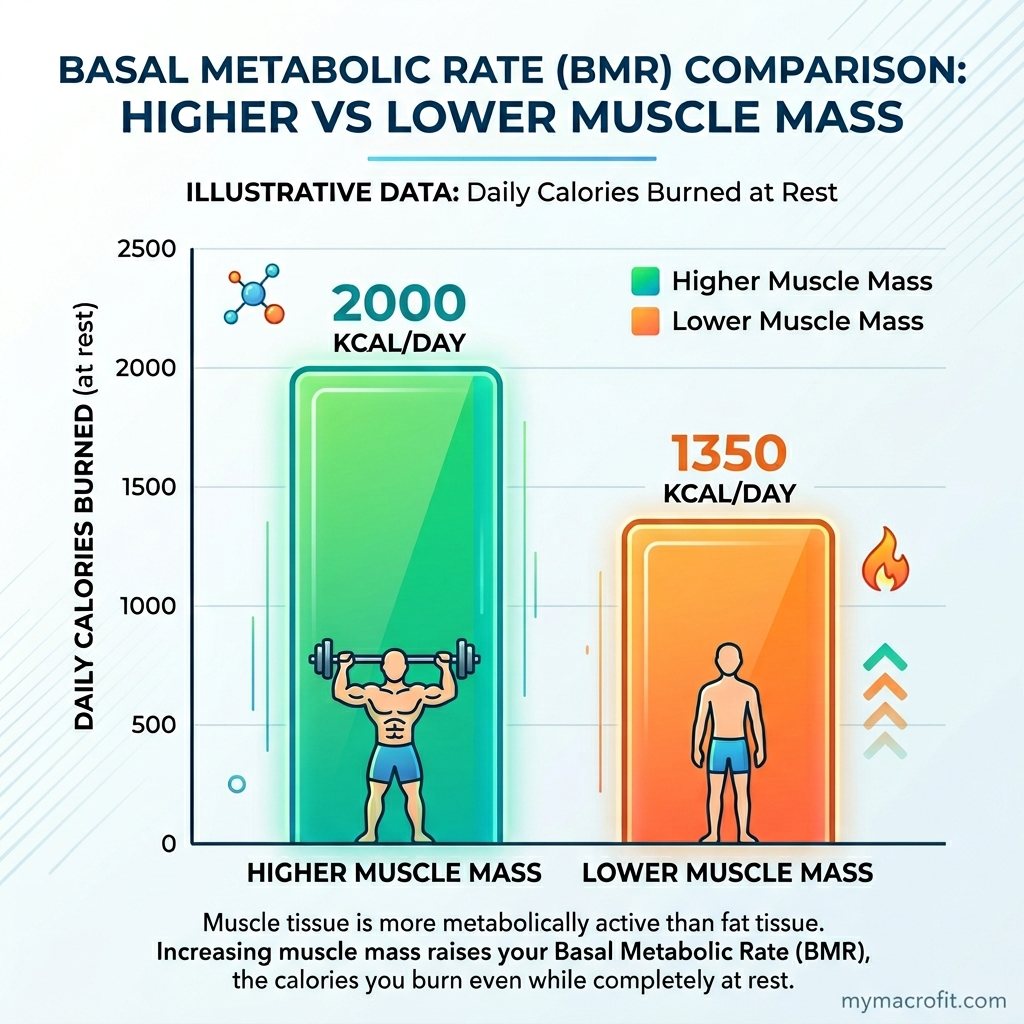
Over 12 weeks, the increased resting metabolism from strength training adds approximately 8,400-16,800 calories burned above what the cardio-only approach achieves, equivalent to 1-2kg of additional fat loss from the resting metabolism effect alone.

Getting Your Calorie Setup Right
The non-negotiable for fat loss from any form of exercise is a calorie deficit. Strength training will not produce fat loss if you're eating in a surplus. The training changes your body composition, the calories determine whether you're also losing total mass.
Use our TDEE Calculator to find your total daily calorie burn and set a deficit of 300-500 calories below it for steady, sustainable fat loss.
The Bottom Line
Cardio is effective for burning calories. Strength training is effective for changing your body composition, protecting your resting metabolism, and producing fat loss that lasts. For long-term results, the evidence strongly favours a strength-training-first approach, supplemented with cardio, over a cardio-dominated programme.
Three sessions per week with progressive overload, adequate protein, and a moderate calorie deficit is a more effective long-term fat loss strategy than daily cardio with restricted eating. Start with the programme above, use the TDEE Calculator to set your calorie target, and commit for 12 weeks.
Sources
- Resistance training for fat loss: a meta-analysis, Willis et al., Obesity, 2012
- EPOC following resistance training: a systematic review, Borsheim & Bahr, Sports Medicine, 2003
- ISSN Position Stand: resistance training and body composition, ISSN, 2018
Save & share on Pinterest
Click any card to pin it — or share with someone who needs it.
Strength Training for Weight Loss: Why Lifting Beats Cardio Long Term
Why strength training produces better long-term fat loss than cardio, covering muscle and resting me…
Why strength training produces better long-term fat loss than cardio, covering m…
Read the full guide: Strength Training for Weight Loss: Why Lifting Beats Cardio Long Term
Try the free TDEE Calculator
Strength Training for Weight Loss: Why Lifting Beats Cardio Long Term — use our free calculators for…
Pinterest opens in a new tab. You can edit the description before saving.
Ready to get your numbers?
Free calculator, instant results, no signup required.
Frequently Asked Questions
How many times a week should I lift weights to lose fat?+
Is strength training or cardio better for weight loss?+
Will I bulk up from lifting weights?+
Should I do cardio on the same day as weight training?+
About the Author

I'm a kinesiologist and personal trainer. I've spent eight years helping women lose fat and get stronger without handing their whole life over to a diet.
View full profile →