Running for Weight Loss: Pace, Distance, and Calories Explained

BSc Kinesiology · CPT
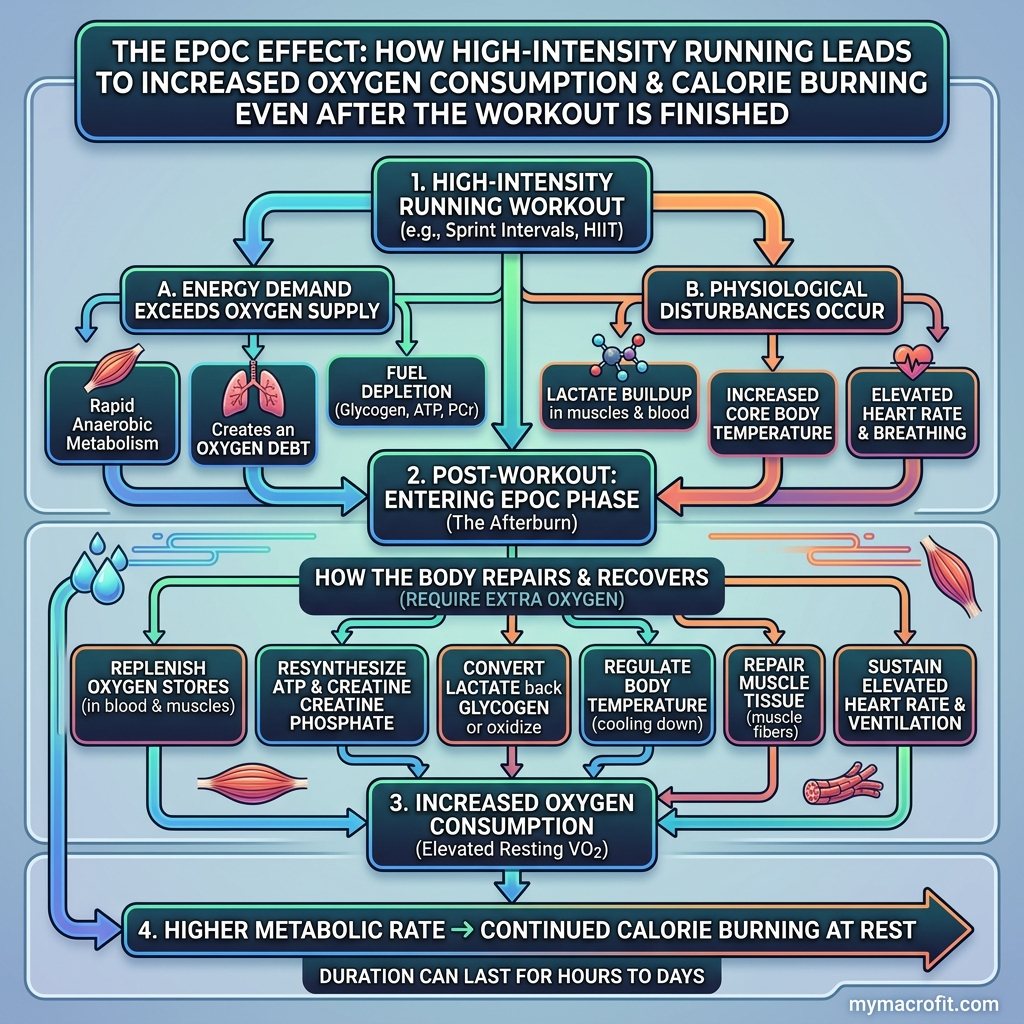
I spent years as a competitive middle-distance runner, and I can tell you the thing that surprises most people who start running to lose weight: running is a phenomenal tool for fat loss, but not for the reason most people assume. They think it's about the calories torched during the run itself. The real story, the one the data tells, is more interesting and a lot more useful once you understand it.
Running is about as accessible as exercise gets: no equipment, no gym, just you and a pair of shoes. But "run more, weigh less" is a dangerously incomplete equation. Get the approach wrong and your body adapts, your appetite climbs, and the scale stalls. Get it right and running becomes one of the most effective fat-loss engines you have. Here's how to make it work.
How Many Calories Does Running Burn?
Running burns approximately 60-80 calories per kilometre for most adults, or about 100 calories per mile. The actual figure depends on:
- Body weight, heavier people burn more calories running the same distance
- Running speed, faster running burns more calories per minute but not necessarily per km
- Terrain, hills and off-road increase calorie burn by 10-30%
- Fitness level, more efficient runners burn fewer calories at the same pace
Calorie estimates by body weight (per km):
| Body Weight | Calories per km |
|---|---|
| 60 kg | ~52 kcal |
| 70 kg | ~61 kcal |
| 80 kg | ~70 kcal |
| 90 kg | ~79 kcal |
| 100 kg | ~88 kcal |
Use our Calorie Burn Calculator for a personalised estimate.
The Best Running Pace for Fat Loss
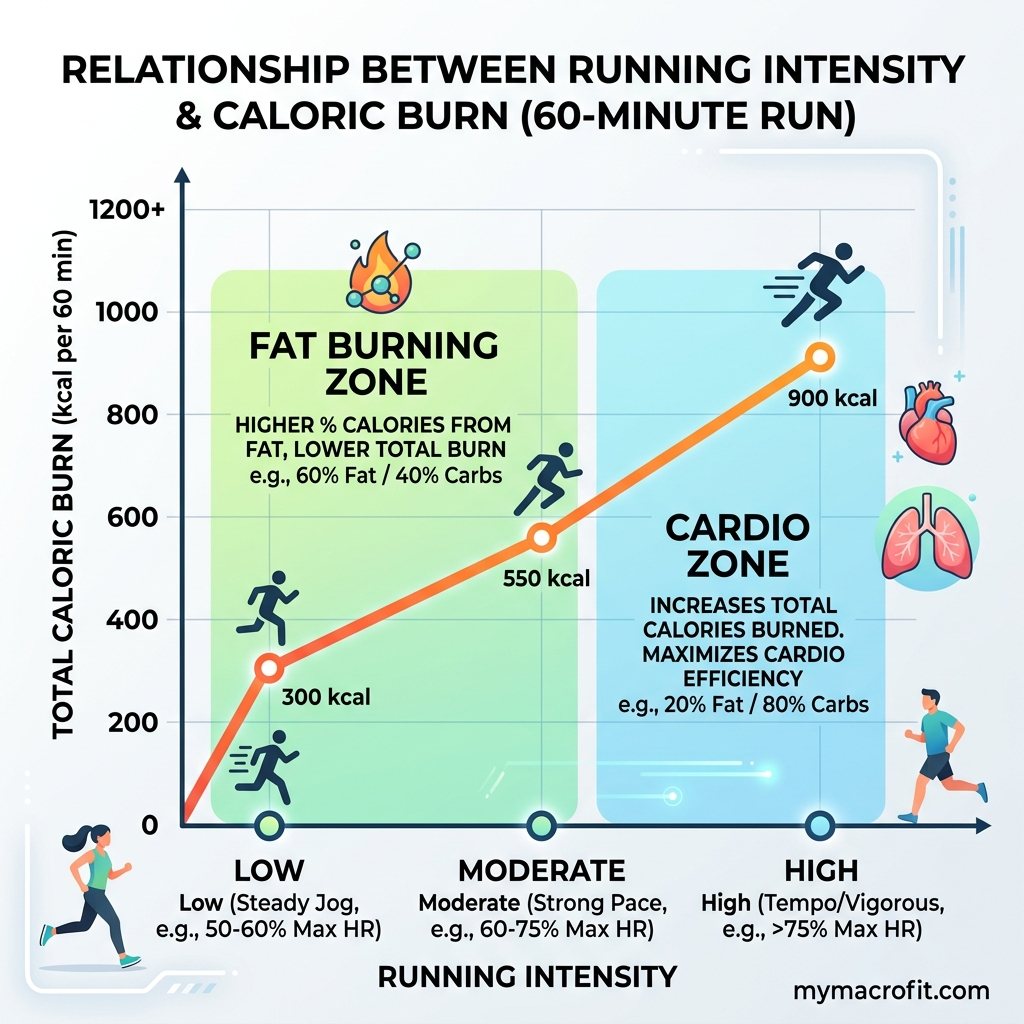
There's a persistent myth that "fat burning zone" (low intensity, ~60% max heart rate) is optimal for fat loss because it burns a higher percentage of calories from fat.
The reality: Total calorie burn matters more than fuel source.
A 30-minute run at moderate pace (70-80% max heart rate) burns significantly more total calories than a 30-minute walk at 60%, even though the walk burns a higher percentage from fat. Total fat loss comes down to total calorie deficit, not which fuel source you burn during exercise.
Practical pace guidelines:
Easy pace (60-70% max HR): You can hold a conversation. Good for recovery runs and beginners building mileage. Burns fewer calories per minute but low injury risk.
Moderate pace (70-80% max HR): You can speak in short sentences but it's uncomfortable. The sweet spot for most people, enough intensity to burn significant calories without high injury risk.
Hard pace (80-90% max HR): Very difficult to speak. Burns the most calories per minute. Reserve for interval sessions 1-2x per week maximum.
How Far Should You Run to Lose Weight?
There's no single "right" distance, it depends on your starting fitness level and calorie targets. A practical framework:
Week 1-4 (beginners): 2-3 km, 3 sessions per week = 6-9 km/week Week 5-8: 3-5 km, 3-4 sessions = 9-20 km/week Month 3+: 5-10 km, 4 sessions = 20-40 km/week
At 40 km/week and 70 kg bodyweight, you're burning approximately 2,440 extra calories per week from running alone, roughly 0.35 kg of fat per week from exercise, before any dietary changes.
Running vs Diet: Which Matters More?
Both matter, but diet has more leverage. Here's why:
It's significantly easier to create a 500 kcal daily deficit through diet than through running:
- Diet: Skip dessert, eat a smaller dinner, done in seconds
- Running: 5-6 km, ~40 minutes, requires motivation and physical effort
This doesn't mean you should skip running, the cardiovascular health benefits, muscle retention, and metabolic effects are valuable. But if you're trying to lose fat and can only focus on one variable, diet produces faster results.
The optimal approach: Combine a moderate calorie deficit (300-500 kcal/day from diet) with regular running (3-4x per week). This produces faster results than either alone and is far more sustainable than extreme restriction.
The Weight Loss Plateau Problem
Many people find they lose weight initially with running, then plateau. This is caused by two things:
1. Adaptation: As you get fitter, your body becomes more efficient at running. A 5km run that burned 350 calories when you were unfit might burn 280 calories 3 months later. Your body adapts to the stress of running and conserves energy.
2. Compensation: Research shows that exercise often increases appetite and reduces NEAT (non-exercise movement). Some people unconsciously eat more or move less during the rest of the day to compensate for calories burned running.
Solutions:
- Progressively increase distance or intensity every 3-4 weeks
- Add strength training 2-3x per week to preserve and build muscle
- Track food intake to check for compensation eating
- Use a step counter to monitor overall daily movement
Running and Muscle Loss
Pure running without adequate protein intake can cause muscle loss during weight loss. This matters because muscle is metabolically active, losing muscle lowers your BMR, making future weight loss harder.
To preserve muscle while running:
- Eat 1.8-2.2g protein per kg body weight daily
- Include resistance training 2-3x per week alongside running
- Don't run on severely restricted calories (under 1,200 kcal for women, 1,500 for men)
A Simple Running Plan for Fat Loss
Week 1-4 (building the habit):
- Monday: 20 min easy run
- Wednesday: 25 min easy run
- Friday: 30 min easy run
- Weekend: optional 30 min walk
Week 5-8 (adding intensity):
- Monday: 30 min easy run
- Wednesday: 20 min intervals (1 min fast / 2 min easy × 6)
- Friday: 35 min easy run
Week 9-12 (increasing volume):
- Monday: 35 min easy run
- Wednesday: 25 min intervals (1 min fast / 90 sec easy × 8)
- Friday: 40 min easy run
- Sunday: 45 min long easy run

Running Safety Tips for Beginners
- Increase mileage by no more than 10% per week, the most evidence-backed rule for avoiding overuse injuries
- Rest days are not optional, running 7 days a week as a beginner almost guarantees knee or shin problems
- Invest in proper running shoes, visit a running shop for a gait analysis. Wrong shoes are responsible for a large proportion of beginner running injuries
- Warm up and cool down, 5 minutes of walking before and after runs reduces injury risk significantly
The Bottom Line
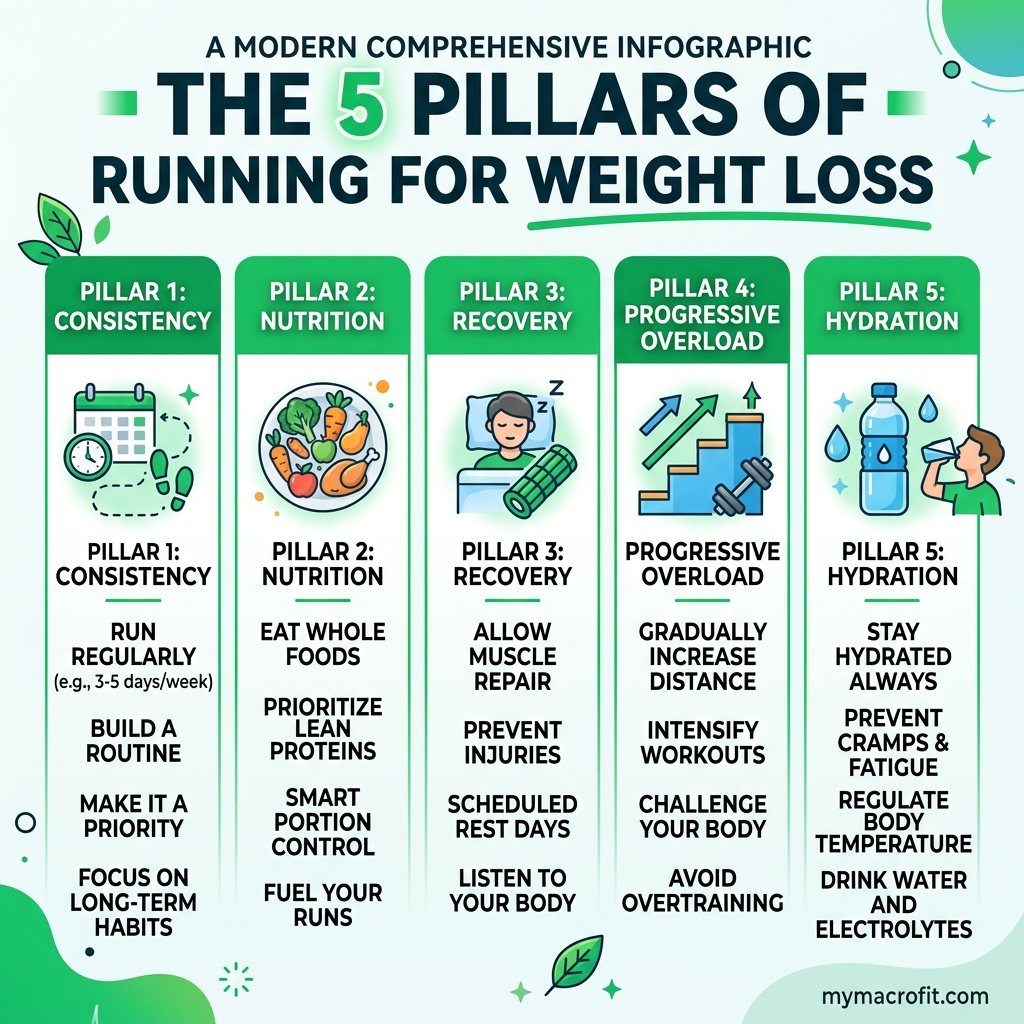
Running is excellent for weight loss when combined with a calorie-controlled diet. Aim for 3-4 sessions per week, progressively increase distance and intensity, eat sufficient protein, and add strength training to preserve muscle. The combination of running, diet, and resistance training beats any single approach alone.
Save & share on Pinterest
Click any card to pin it — or share with someone who needs it.
Running for Weight Loss: Pace, Distance, and Calories Explained
How to use running for fat loss, the right pace, how many calories you actually burn, how far to run…
How to use running for fat loss, the right pace, how many calories you actually …
Read the full guide: Running for Weight Loss: Pace, Distance, and Calories Explained
Try the free Running Pace Calculator
Running for Weight Loss: Pace, Distance, and Calories Explained — use our free calculators for insta…
Pinterest opens in a new tab. You can edit the description before saving.
Ready to get your numbers?
Free calculator, instant results, no signup required.
Frequently Asked Questions
How much should I run to lose weight?+
What pace should I run for fat loss?+
Should I run or do strength training for weight loss?+
Why am I not losing weight from running?+
About the Author

I'm a kinesiologist and personal trainer. I've spent eight years helping women lose fat and get stronger without handing their whole life over to a diet.
View full profile →