Intermittent Fasting Calculator
Calculate your personalised fasting and eating windows for any IF protocol, 16:8, 18:6, 20:4, OMAD, or 5:2. See your schedule, meal times, and practical tips instantly.
Quick answer
16:8 is the most common beginner protocol: fast for 16 hours and eat within an 8-hour window, often noon to 8pm. This calculator maps your fasting and eating windows to your own schedule.
What Is Intermittent Fasting and How Does It Work?
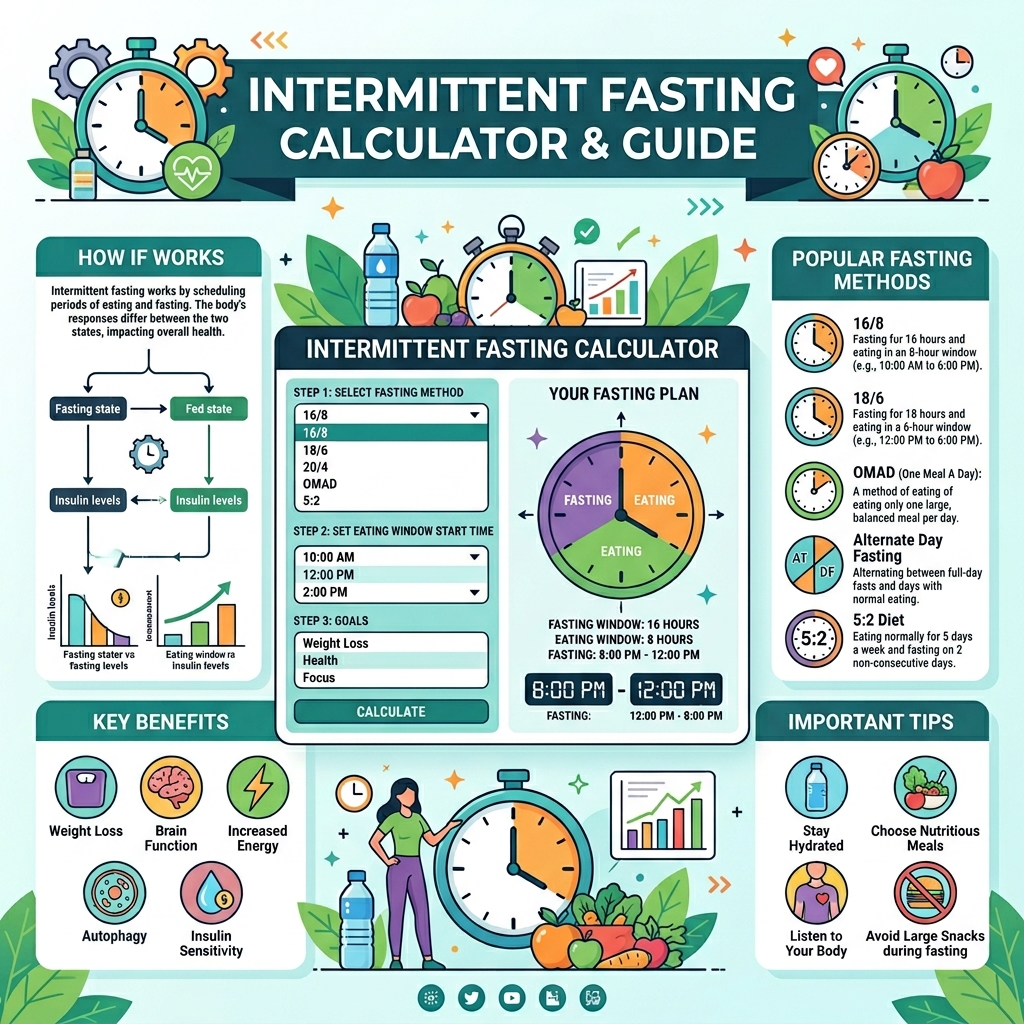
Intermittent fasting (IF) is not a diet, it's a timing pattern for eating. Rather than restricting what you eat, IF restricts when you eat, creating a predictable cycle of fasting and feeding windows. During the fasting window, insulin levels drop, glycogen stores deplete, and your body shifts toward burning stored fat for energy.
The metabolic effects of fasting begin around 12–16 hours after your last meal, which is why shorter eating windows (16:8 and beyond) tend to produce better results than simply "not snacking." These protocols consistently show benefits for fat loss, insulin sensitivity, inflammation, and cellular repair (autophagy).
The 5 IF Protocols Explained: Choose Your Schedule
Each protocol offers a different level of restriction and benefits:
- 16:8 (Leangains Protocol): Fast 16 hours, eat within an 8-hour window. The most popular and best-researched protocol. Fits easily into most lifestyles, skip breakfast, eat lunch through dinner.
- 18:6: Fast 18 hours, eat within 6 hours. Accelerates fat loss vs 16:8 while still allowing 2–3 meals. Good for people who adapt easily to 16:8 and want more results.
- 20:4 (Warrior Diet): Fast 20 hours, eat within 4 hours. Based on the natural eating patterns of ancient humans, small amounts during the day, one large evening meal.
- OMAD (One Meal a Day): One large meal per day within approximately 1 hour. Maximum simplicity and fat burning. Requires careful nutrition planning to hit macro targets in one sitting.
- 5:2 Protocol: Eat normally for 5 days; restrict to 500–600 kcal on 2 non-consecutive days. Good for people who prefer full eating days most of the week.
Pair your IF window with the right macros.
Fasting works best when you hit your protein and calorie targets in your eating window.
Get the Free Macro Guide →The Science Behind Why IF Works for Fat Loss
Intermittent fasting produces fat loss through several complementary mechanisms:
- Insulin reduction: Fasting lowers insulin levels, unlocking fat stores. Insulin is the primary fat storage hormone, keeping it low for 16+ hours per day enables lipolysis (fat breakdown).
- Norepinephrine increase: Short-term fasting raises norepinephrine, which stimulates fat cells to release stored fatty acids for energy.
- Natural calorie reduction: Most people eat fewer calories when they have fewer hours to eat, without deliberately tracking or restricting food choices.
- Autophagy: Extended fasting triggers cellular cleanup processes that improve metabolic health, reduce inflammation, and may have longevity benefits.
How to Start Intermittent Fasting Without Misery
The first 1–2 weeks of IF are the hardest. Hunger is partly habitual, your body is used to receiving food at specific times. Practical strategies to make the transition smooth:
- Delay gradually: If you currently eat at 8am, push breakfast to 9am for a week, then 10am, then noon. Gradual delay beats cold turkey for adherence.
- Stay hydrated: Drink black coffee, tea, or water during the fasting window. Hunger signals and thirst are often confused, dehydration amplifies fasting hunger.
- Eat enough protein: High-protein meals in your eating window keep you fuller longer and prevent muscle loss. Aim for at least 30–40g protein per meal.
- Break the fast smart: Your first meal doesn't need to be huge. A protein-rich meal (eggs, Greek yogurt, chicken) is ideal, it satisfies hunger without causing energy crashes.
Intermittent Fasting Myths, What the Research Actually Says
- Myth: "Breakfast is the most important meal of the day." Research shows meal timing matters far less than total daily nutrient intake. Skipping breakfast doesn't harm metabolism.
- Myth: "You must eat every 2–3 hours to keep metabolism high." Meal frequency has minimal effect on metabolic rate. Total calories are what matters.
- Myth: "IF causes muscle loss." Studies consistently show IF preserves muscle mass equally to continuous calorie restriction when protein intake is adequate.
- Myth: "IF is too hard to sustain." Adherence rates for IF are comparable to or better than continuous calorie restriction in most studies, many people find it simpler because there are fewer food decisions to make.
Frequently Asked Questions
What is intermittent fasting?
Which IF protocol is best for beginners?
Can I drink coffee or water during the fasting window?
When should I exercise during intermittent fasting?
Will intermittent fasting cause muscle loss?
How long does it take to see results with IF?
Can I do IF if I train early in the morning?
Is intermittent fasting safe for everyone?
How it's calculated: this tool uses established, published equations. See the full calculator methodology for the formulas and assumptions behind it.
Results are estimates for general guidance, not medical advice. See our disclaimer, and speak to a qualified healthcare professional before making medical or dietary changes.
Related Tools
Save & share on Pinterest
Click any card to pin it — or share with someone who needs it.
Intermittent Fasting Calculator
Calculate your personalised fasting and eating windows for any IF protocol, 16:8, 18:6, 20:4, OMAD, …
Calculate your personalised fasting and eating windows for any IF protocol, 16:8…
Read the full guide: Intermittent Fasting Calculator
Try the free Intermittent Fasting Calculator
Intermittent Fasting Calculator — use our free calculators for instant personalised results. No sign…
Pinterest opens in a new tab. You can edit the description before saving.
Get Your Free Macro Cheat Sheet
One-page PDF with all the key formulas. Free, no spam ever.
Get the Free Macro Guide