Keto Macro Calculator
Calculate your personalised keto macros, fat, protein, and carbs, for Standard, Strict, or Targeted ketogenic diets. Based on your TDEE and adjusted for your goal.
Quick answer
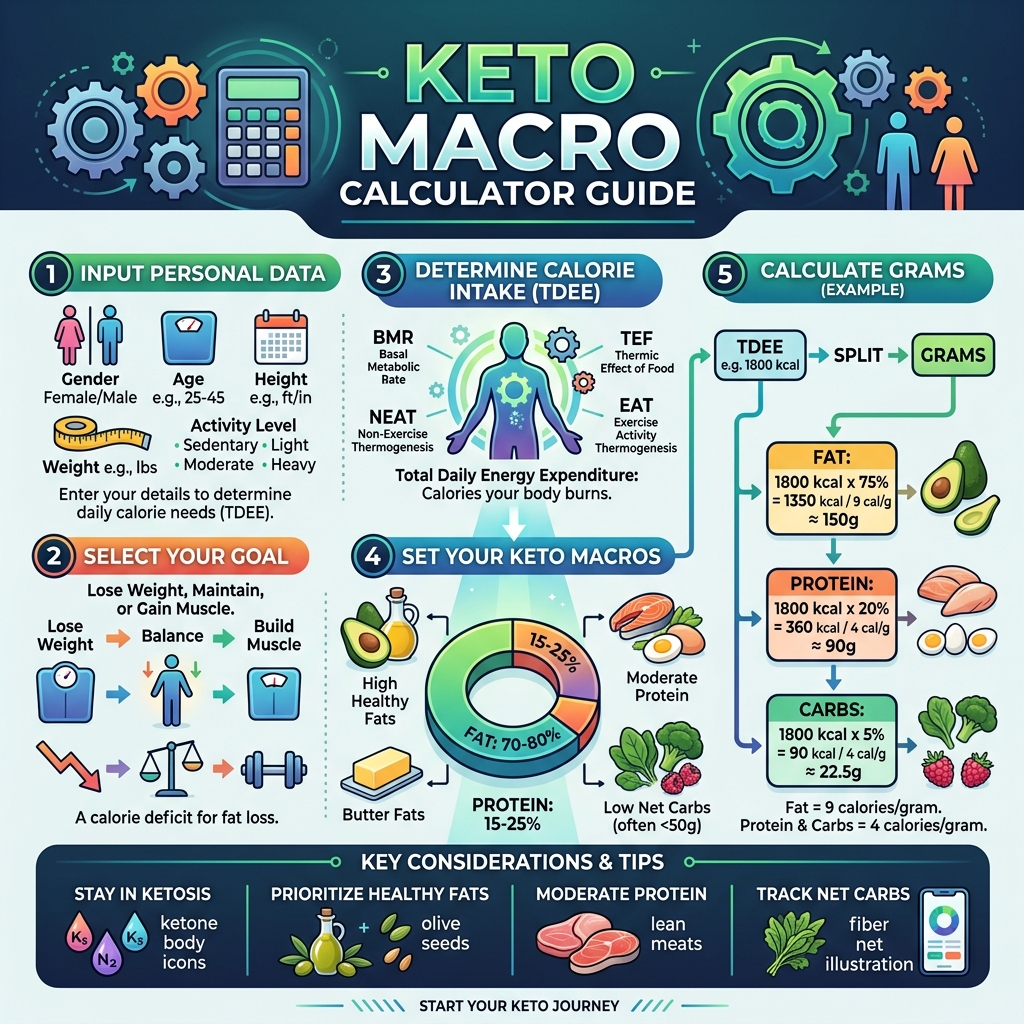
A standard ketogenic split is about 70 percent fat, 25 percent protein, and 5 percent carbs, which usually means under 20 to 50g of carbs a day. This calculator turns that split into gram targets from your calories.
What Are Keto Macros and Why Do They Matter?
On a ketogenic diet, your macro ratios determine whether you stay in ketosis, the metabolic state where your body burns fat for fuel instead of glucose. Getting your macros right isn't optional: too many carbs kick you out of ketosis; too little protein causes muscle loss; not enough total calories stalls your progress.
The classic keto split is 70% fat, 25% protein, 5% carbohydrates. But these percentages must be calculated from your actual TDEE (total daily energy expenditure) to translate into meaningful gram targets. A blanket "eat 20g carbs" without knowing your calorie context often leads to undereating or overeating.
The 3 Keto Protocols: Which Is Right for You?
Not all keto diets are identical. Choose your protocol based on your goal and activity level:
- Standard Keto (70/25/5): Best for most people, fat loss, mental clarity, metabolic health. Suitable for sedentary to moderately active individuals.
- Strict Keto (75/20/5): Higher fat, lower protein. Used therapeutically for epilepsy management and by those seeking the deepest ketosis for maximum fat oxidation.
- Targeted Keto (65/30/5): Higher protein allocation for people who lift weights or do high-intensity training. Preserves muscle mass better during fat loss phases.
New to tracking your macros?
Our free guide walks you through calculating keto and standard macros step by step.
Download the Free Macro Guide →How to Hit Your Keto Macros Every Day
The biggest challenges on keto are hitting fat targets (surprisingly hard without planning) and staying under carb limits. Practical strategies:
- Build meals around protein first: Choose your protein source (eggs, meat, fish), then add fat-rich foods (avocado, olive oil, butter) to hit fat targets
- Track net carbs, not total carbs: Subtract fiber from total carbs, fiber doesn't raise blood sugar or affect ketosis
- Meal prep high-fat staples: Hard-boiled eggs, cooked bacon, roasted nuts, and fat bombs make it easy to hit fat macros without constant cooking
- Read labels obsessively at first: Hidden sugars and starches in sauces, dressings, and processed foods are the most common source of surprise carbs
Keto and Fat Loss: The Metabolic Advantage Explained
Keto produces fat loss through multiple mechanisms, not just calorie restriction:
- Reduced insulin: Low-carb diets dramatically lower insulin levels, allowing fat cells to release stored fat for energy
- Appetite suppression: Ketones suppress ghrelin (the hunger hormone), making it easier to maintain a calorie deficit without feeling deprived
- Improved fat oxidation: Keto-adapted bodies become efficient at burning fat as their primary fuel source, including during exercise
- Reduced water retention: Initial rapid weight loss on keto is largely water weight from glycogen depletion (each gram of glycogen holds ~3g water)
Common Keto Mistakes That Kick You Out of Ketosis
- Hidden carbs: Sauces, dressings, dairy products, and processed meats often contain surprising amounts of sugar, track everything initially
- Too much protein: Excess protein can be converted to glucose through gluconeogenesis, potentially reducing ketone production
- Not enough sodium: Keto causes kidneys to excrete more sodium, "keto flu" symptoms are often electrolyte depletion, not carb withdrawal
- Impatience: True keto adaptation takes 3–6 weeks. Most people quit during the hardest adaptation phase before experiencing the benefits
Frequently Asked Questions
What macros do I need for keto?
What is the difference between Standard, Strict, and Targeted keto?
How many carbs can I eat on keto?
How long does it take to get into ketosis?
Will I lose muscle on keto?
What foods have the most fat for keto?
Can I exercise on keto?
Is keto safe for everyone?
How it's calculated: this tool uses established, published equations. See the full calculator methodology for the formulas and assumptions behind it.
Results are estimates for general guidance, not medical advice. See our disclaimer, and speak to a qualified healthcare professional before making medical or dietary changes.
Related Tools
Save & share on Pinterest
Click any card to pin it — or share with someone who needs it.
Keto Macro Calculator
Calculate your personalised keto macros, fat, protein, and carbs, for Standard, Strict, or Targeted …
Calculate your personalised keto macros, fat, protein, and carbs, for Standard, …
Read the full guide: Keto Macro Calculator
Try the free Keto Macro Calculator
Keto Macro Calculator — use our free calculators for instant personalised results. No signup require…
Pinterest opens in a new tab. You can edit the description before saving.
Get Your Free Macro Cheat Sheet
One-page PDF with all the key formulas. Free, no spam ever.
Get the Free Macro Guide