Lean Bulk Calculator
Calculate your exact calorie surplus, protein targets, and expected monthly muscle gains for a lean bulk. Adjusted for your training experience, beginner, intermediate, or advanced.
Quick answer
A lean bulk uses a small surplus of about 200 to 300 kcal above maintenance, which adds muscle while limiting fat gain. This calculator sets that surplus and your macros from your stats.
What Is a Lean Bulk and Why It Beats Dirty Bulking
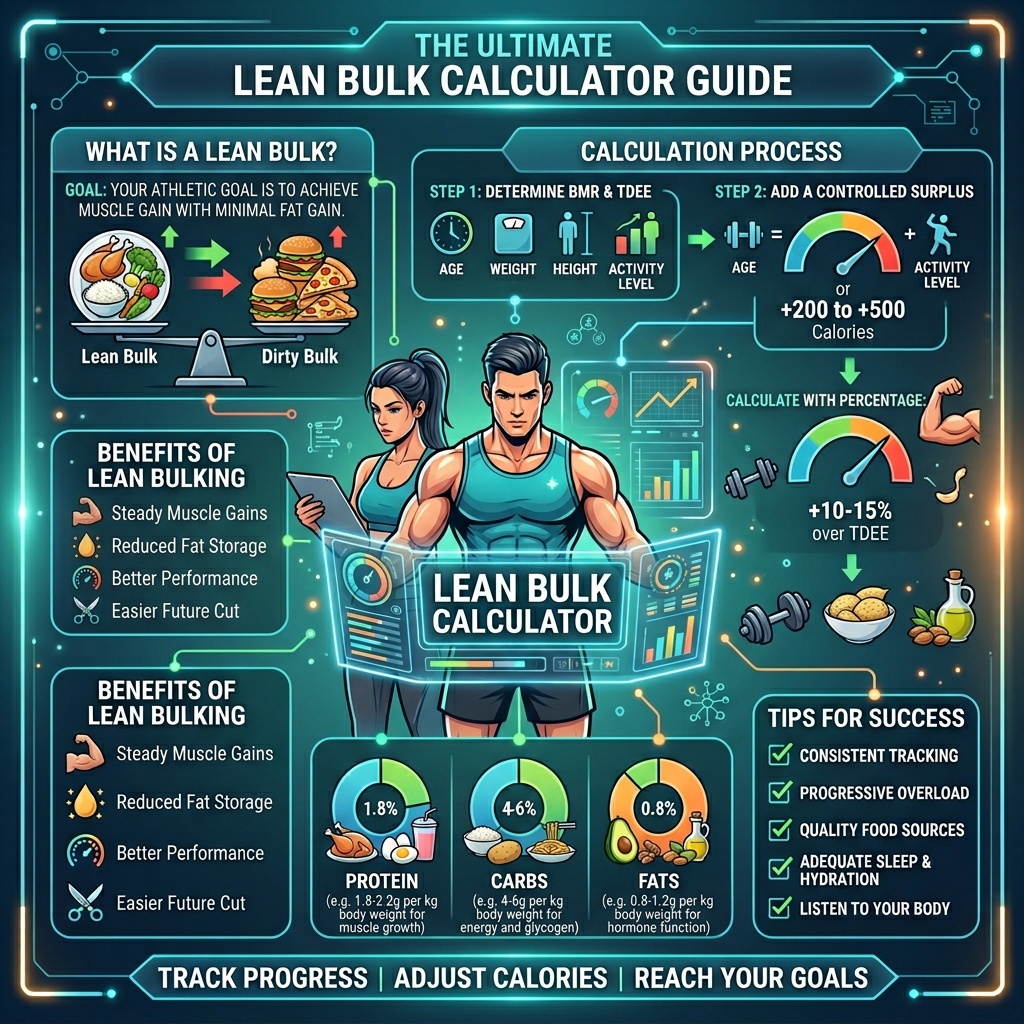
A lean bulk is a strategic muscle-building phase where you eat a controlled calorie surplus , just enough above maintenance to drive muscle growth, but not so much that you add significant fat. This contrasts with a "dirty bulk" (eating everything in sight), which builds muscle faster initially but deposits far more fat, requires a longer and harder cut, and can harm insulin sensitivity.
The natural muscle-building ceiling is strictly limited by biology. A beginner can add at most 0.25 kg of muscle per week under ideal conditions. A surplus of 300 kcal above maintenance provides more than enough energy for this growth, larger surpluses beyond that mostly become fat.
How Much Surplus You Need Based on Training Experience
The most important variable in lean bulking isn't the exact formula you use, it's matching your surplus to your muscle growth potential at your experience level:
- Beginners (<1 year): +300 kcal/day surplus. You can gain up to 0.25 kg/week, your body is primed to build muscle rapidly. "Newbie gains" are real and powerful.
- Intermediate (1–3 years): +250 kcal/day. Your rate of muscle gain has slowed, a smaller surplus prevents unnecessary fat accumulation while still supporting growth.
- Advanced (3+ years): +200 kcal/day. Advanced lifters are close to their genetic ceiling. Larger surpluses would primarily add fat, not muscle. Patience and consistency beat caloric aggression.
The Macro Blueprint for Lean Bulking
Lean bulking macros follow a specific hierarchy:
- Protein first (2.2g/kg bodyweight): This is the non-negotiable foundation. Higher protein during a bulk maximises muscle protein synthesis, reduces fat gain by increasing TEF (thermic effect of food), and keeps you fuller so you don't over-eat.
- Fat second (1.0g/kg bodyweight): Dietary fat supports testosterone production and joint health. Dropping fat below 0.7g/kg risks hormonal disruption and declining strength.
- Carbs fill the rest: Remaining calories go to carbohydrates, the primary fuel for training. Higher carb intake improves training performance, muscle glycogen, and insulin-mediated nutrient partitioning.
Want a pre-built lean bulk plan?
Meals, macros, and grocery list — done for you. Built around these exact targets.
See the 7-Day Muscle Building Meal Plan →How to Know If Your Lean Bulk Is Working
Successful lean bulking requires regular monitoring. Use these benchmarks to stay on track:
- Weekly weight gain: Aim for 0.1–0.25 kg/week (beginners) or 0.05–0.15 kg/week (advanced). Weigh yourself daily and track the 7-day average to eliminate water fluctuation noise.
- Strength progression: You should be adding reps or weight to your main lifts every 1–3 weeks. Stalled strength on a surplus usually means your calories are too low or sleep/recovery is inadequate.
- Visual assessment: Check monthly progress photos in the same lighting and pose. Slight softness is acceptable; if you're noticeably gaining fat (waist increasing rapidly), reduce calories by 100 kcal/day.
- Waist measurement: Track waist circumference monthly. If it's increasing faster than 0.5 cm/week over 4+ weeks, cut calories slightly, you're gaining too much fat.
The Lean Bulk Timeline: What to Expect Month by Month
Here's a realistic timeline for an intermediate lifter lean bulking with 250 kcal surplus:
- Month 1: +0.5–0.6 kg lean mass gain, scale weight up ~1.5–2 kg (includes glycogen/water). Strength gains on all main lifts.
- Month 2–3: Consistent +0.5 kg/month lean mass. Minor increase in upper body fullness visible. Waist stable or +0.5 cm.
- Month 3–4: Noticeable size gains. If body fat has increased significantly, transition to a mini-cut (4–6 weeks) before continuing to bulk.
Most effective lean bulks last 10–16 weeks before transitioning to a maintenance or cutting phase to "solidify" gains and stay at a healthy body fat percentage.
Frequently Asked Questions
What is a lean bulk?
How many calories above maintenance for a lean bulk?
How much muscle can I realistically gain per month?
How much protein do I need for muscle gain?
Should I track macros or just calories during a lean bulk?
When should I switch from bulking to cutting?
What if I am not gaining weight on my lean bulk?
Can beginners lean bulk more aggressively?
How it's calculated: this tool uses established, published equations. See the full calculator methodology for the formulas and assumptions behind it.
Results are estimates for general guidance, not medical advice. See our disclaimer, and speak to a qualified healthcare professional before making medical or dietary changes.
Related Tools
Save & share on Pinterest
Click any card to pin it — or share with someone who needs it.
Lean Bulk Calculator
Calculate your exact calorie surplus, protein targets, and expected monthly muscle gains for a lean …
Calculate your exact calorie surplus, protein targets, and expected monthly musc…
Read the full guide: Lean Bulk Calculator
Try the free Lean Bulk Calculator
Lean Bulk Calculator — use our free calculators for instant personalised results. No signup required…
Pinterest opens in a new tab. You can edit the description before saving.
Get Your Free Macro Cheat Sheet
One-page PDF with all the key formulas. Free, no spam ever.
Get the Free Macro Guide