Pregnancy Weight Gain Calculator
Calculate your personalized pregnancy weight gain targets based on your pre-pregnancy BMI and IOM 2009 guidelines. Track your progress by week and see if you're on track.
Quick answer
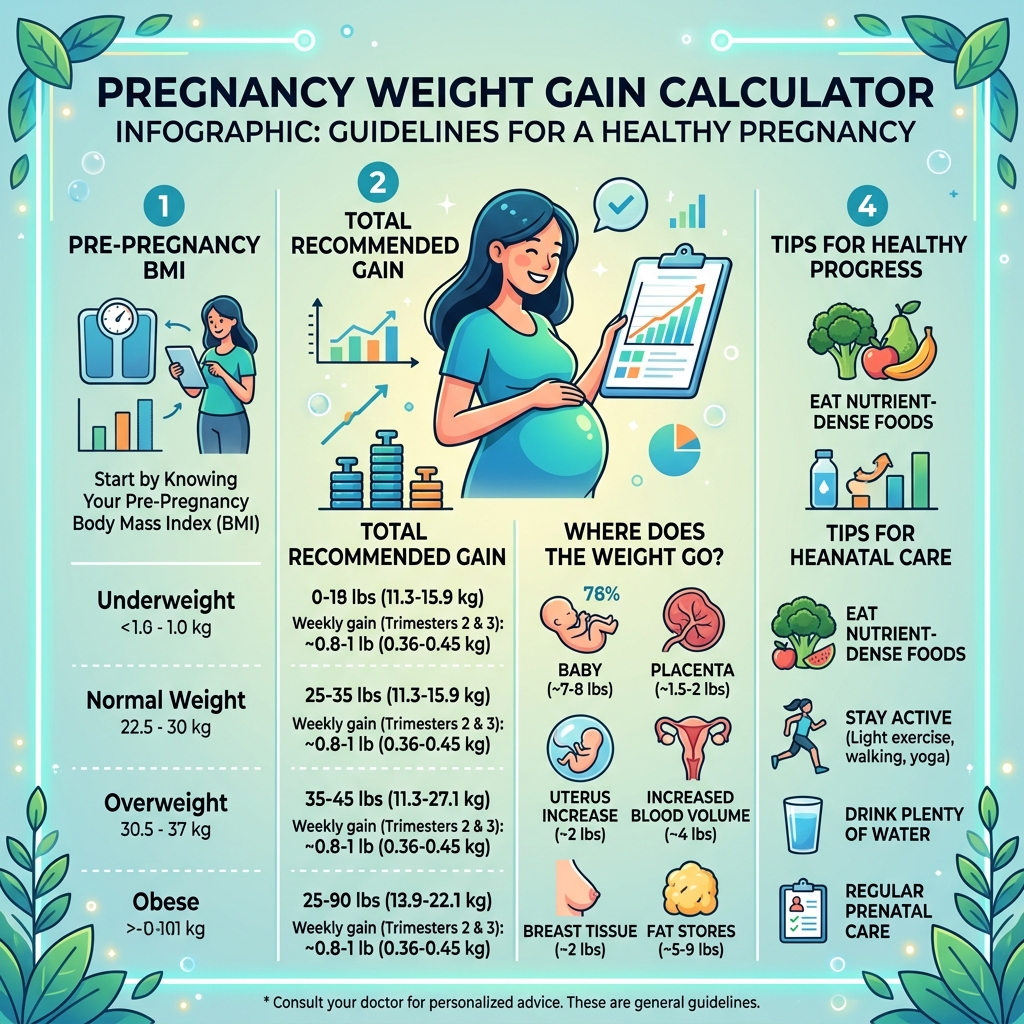
Recommended gain depends on your starting BMI, from about 11 to 16kg at a healthy weight and less if you started overweight. This calculator gives a healthy range by trimester. Always follow your own doctor or midwife.
Nutrition guidance for every trimester.
Learn what to eat, how much, and which nutrients matter most during pregnancy.
Read the Pregnancy Nutrition Guide →Understanding Healthy Weight Gain During Pregnancy
Pregnancy weight gain is one of the most anxiously watched numbers in prenatal care, yet many women receive little guidance beyond "gain between X and Y kilos." Understanding why those guidelines exist, and what the weight actually represents, transforms a source of anxiety into a meaningful health signal.
The IOM guidelines are not arbitrary. They were derived from analysis of hundreds of thousands of pregnancies to identify the weight gain ranges associated with the best outcomes: healthy birth weight (3–4 kg), reduced pregnancy complications, and easier postpartum recovery. Both too little and too much gain carry risks.
What Happens If You Gain Too Little Weight During Pregnancy
Insufficient gestational weight gain is associated with:
- Low birth weight (<2.5 kg), linked to higher infant mortality and long-term health issues
- Preterm birth, babies born before 37 weeks face higher NICU admission rates
- Small for gestational age (SGA), associated with metabolic issues in childhood and adulthood
- Nutrient deficiencies, the baby draws on maternal stores; inadequate gain can deplete iron, calcium, and folate
If you are below target, focus on nutrient-dense, calorie-rich foods: nut butters, avocado, full-fat dairy, eggs, and complex carbohydrates. This is not the time for low-calorie dieting.
4 Nutrition Priorities for Healthy Pregnancy Weight Gain
- Protein (1.1–1.5 g/kg/day), Supports fetal tissue growth, placenta development, and increased maternal blood volume. Good sources: chicken, fish, eggs, Greek yogurt, legumes.
- Folate/folic acid (600 mcg/day), Critical in the first trimester for neural tube development. Found in dark leafy greens, fortified cereals, and prenatal vitamins.
- Iron (27 mg/day), Blood volume increases 50% during pregnancy, dramatically raising iron needs. Lean red meat, spinach, and lentils are excellent sources. Pair with vitamin C to improve absorption.
- DHA omega-3 (200–300 mg/day), Essential for fetal brain and eye development. Found in low-mercury fatty fish (salmon, sardines) and algae-based supplements.
Safe Exercise During Pregnancy: What the Evidence Says
Moderate exercise during pregnancy has been consistently shown to:
- Reduce risk of gestational diabetes by up to 30%
- Lower rates of preeclampsia and pregnancy-induced hypertension
- Reduce lower back pain and pelvic girdle discomfort
- Improve mood and reduce rates of prenatal depression
- Support appropriate (not excessive) weight gain
Safe exercise options for most pregnancies include brisk walking, swimming, stationary cycling, prenatal yoga, and low-impact resistance training. Avoid contact sports, activities with fall risk, and lying flat on your back after the first trimester. Always get clearance from your healthcare provider before exercising.
This calculator is for informational purposes. Always consult your OB-GYN or midwife for personalized guidance on weight gain and nutrition during pregnancy.
Frequently Asked Questions
How much weight should I gain during pregnancy?
How much weight should I gain in the first trimester?
How much weight should I gain per week in the second trimester?
What if I gain too much weight during pregnancy?
Is it safe to exercise during pregnancy?
Where does pregnancy weight gain go?
How it's calculated: this tool uses established, published equations. See the full calculator methodology for the formulas and assumptions behind it.
Results are estimates for general guidance, not medical advice. See our disclaimer, and speak to a qualified healthcare professional before making medical or dietary changes.
Related Tools
Save & share on Pinterest
Click any card to pin it — or share with someone who needs it.
Pregnancy Weight Gain Calculator
Calculate your personalized pregnancy weight gain targets based on your pre-pregnancy BMI and IOM 20…
Calculate your personalized pregnancy weight gain targets based on your pre-preg…
Read the full guide: Pregnancy Weight Gain Calculator
Try the free Pregnancy Weight Gain Calculator
Pregnancy Weight Gain Calculator — use our free calculators for instant personalised results. No sig…
Pinterest opens in a new tab. You can edit the description before saving.
Get Your Free Macro Cheat Sheet
One-page PDF with all the key formulas. Free, no spam ever.
Get the Free Macro Guide