Waist to Hip Ratio Calculator
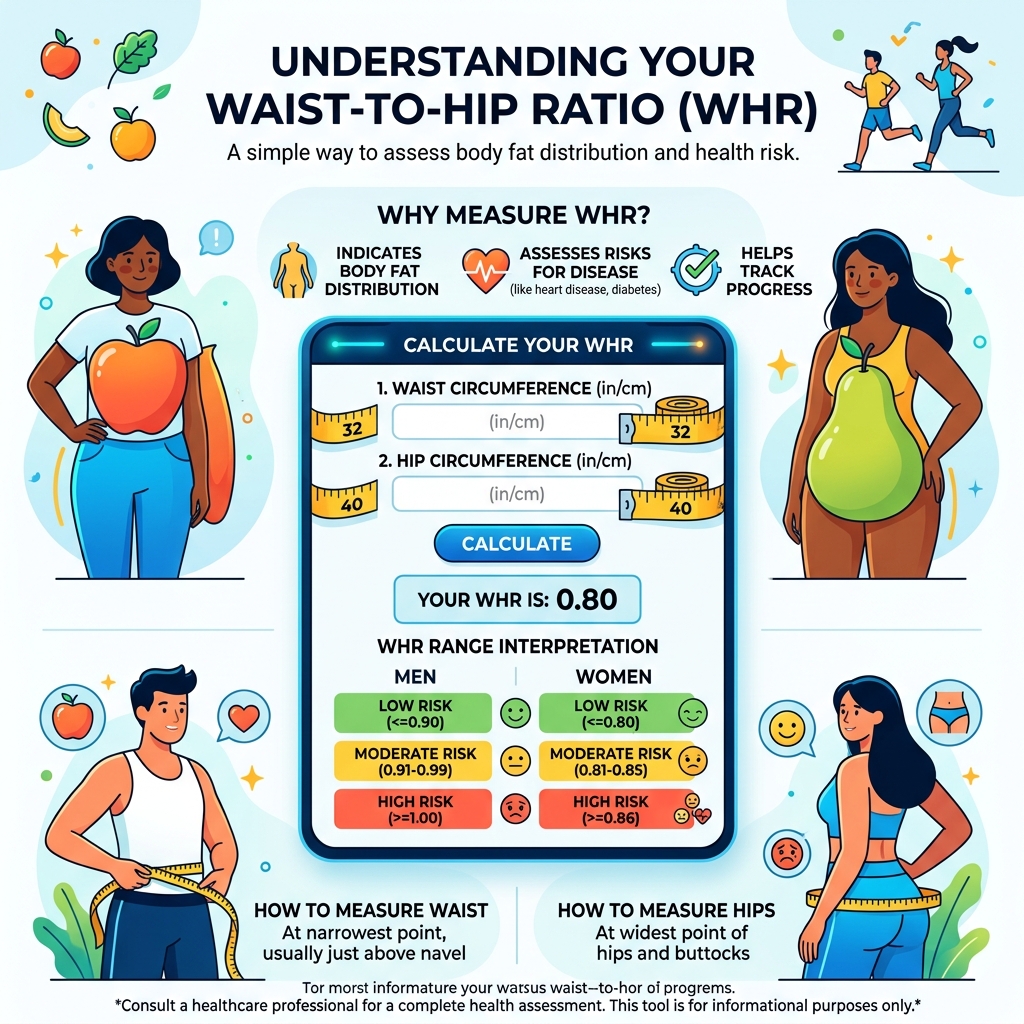
Calculate your waist-to-hip ratio and get your WHO cardiovascular risk category. Know your ideal waist target and whether your current measurements put you at low, moderate, or high risk.
Quick answer
Waist-to-hip ratio shows where you carry fat. Health risk rises above about 0.90 for men and 0.85 for women. This calculator works it out from your waist and hip measurements.
Reduce waist-to-hip ratio the right way.
A calorie deficit reduces visceral fat faster than any spot-training method. Here are your targets.
Get the Free Macro Guide →Why Waist-to-Hip Ratio Matters More Than Your Weight
Your scale weight says nothing about where you carry fat, but that's exactly what determines your health risk. Two people can weigh the same and have completely different metabolic profiles based on fat distribution. Visceral fat (fat stored around the abdominal organs) is metabolically active: it releases inflammatory compounds and drives insulin resistance, heart disease, and type 2 diabetes.
Waist-to-hip ratio directly measures this. A high WHR signals central adiposity even if your BMI looks normal, a pattern called "metabolically obese, normal weight" that affects roughly 20–30% of adults with "healthy" BMIs.
3 Numbers That Tell More About Your Health Than the Scale
- Waist-to-hip ratio, The WHO's preferred measure of abdominal obesity risk. Target: below 0.80 (women) or 0.90 (men).
- Waist circumference alone, Above 88 cm (35 in) for women or 102 cm (40 in) for men signals high metabolic risk per IDF guidelines.
- Waist-to-height ratio, The simplest and arguably most predictive metric. Keep waist below half your height. Easy to measure, no math required.
5 Evidence-Based Ways to Shrink Your Waist Circumference
- Calorie deficit, A 300–500 kcal/day deficit reliably reduces visceral fat over 12–24 weeks. Visceral fat is often the first to go during a deficit.
- Moderate aerobic cardio, 150+ minutes per week of moderate-intensity cardio reduces waist circumference independent of diet, per 2023 meta-analysis data.
- Resistance training, Preserves lean mass during a deficit and builds hip musculature to improve WHR.
- Reduce alcohol, Alcohol is preferentially stored as visceral fat. Eliminating just 2–3 drinks per week can visibly reduce waist size in 4–6 weeks.
- Sleep 7–9 hours, Sleep deprivation elevates cortisol, which directs fat storage toward the abdomen. Multiple studies link poor sleep to higher waist circumference independent of diet.
How to Measure Progress Beyond the Waist-to-Hip Ratio
Take measurements every 4 weeks under identical conditions: same time of day (morning, fasted), same tape position, and relaxed stance. Track both raw waist and hip measurements alongside the ratio, you might see your waist shrink AND your hips grow as you lose fat and build muscle, improving the ratio from both sides.
Progress photos from the front and side can show changes that neither the scale nor the tape captures. Combine all three for the most accurate picture of your body composition progress.
Frequently Asked Questions
What is a healthy waist-to-hip ratio?
How do I measure my waist and hips correctly?
Is waist-to-hip ratio better than BMI?
What does waist-to-height ratio measure?
How do I reduce my waist-to-hip ratio?
Does waist-to-hip ratio change with muscle gain?
How it's calculated: this tool uses established, published equations. See the full calculator methodology for the formulas and assumptions behind it.
Results are estimates for general guidance, not medical advice. See our disclaimer, and speak to a qualified healthcare professional before making medical or dietary changes.
Related Tools
Save & share on Pinterest
Click any card to pin it — or share with someone who needs it.
Waist to Hip Ratio Calculator
Calculate your waist-to-hip ratio and get your WHO cardiovascular risk category. Know your ideal wai…
Calculate your waist-to-hip ratio and get your WHO cardiovascular risk category.…
Read the full guide: Waist to Hip Ratio Calculator
Try the free Waist to Hip Ratio Calculator
Waist to Hip Ratio Calculator — use our free calculators for instant personalised results. No signup…
Pinterest opens in a new tab. You can edit the description before saving.
Get Your Free Macro Cheat Sheet
One-page PDF with all the key formulas. Free, no spam ever.
Get the Free Macro Guide