How Much Protein Do I Need to Build Muscle

BSc Kinesiology · CPT
If there's one change that's transformed more of my clients' results than any other, it's simply eating enough protein, and protein is the exact macro almost everyone under-eats, especially women. You're caught between two unhelpful voices here: the fitness industry shouting huge numbers at you (conveniently, right next to the protein powder they're selling), and generic health guidelines quietly understating what you actually need. The reality sits in between, and the research is genuinely clear about where.
Let me cut through both extremes and show you what the science actually supports for your body and goal. Want your number straight away? The Protein Calculator gives you a personalised target in seconds.
The Evidence-Based Protein Target for Muscle Growth
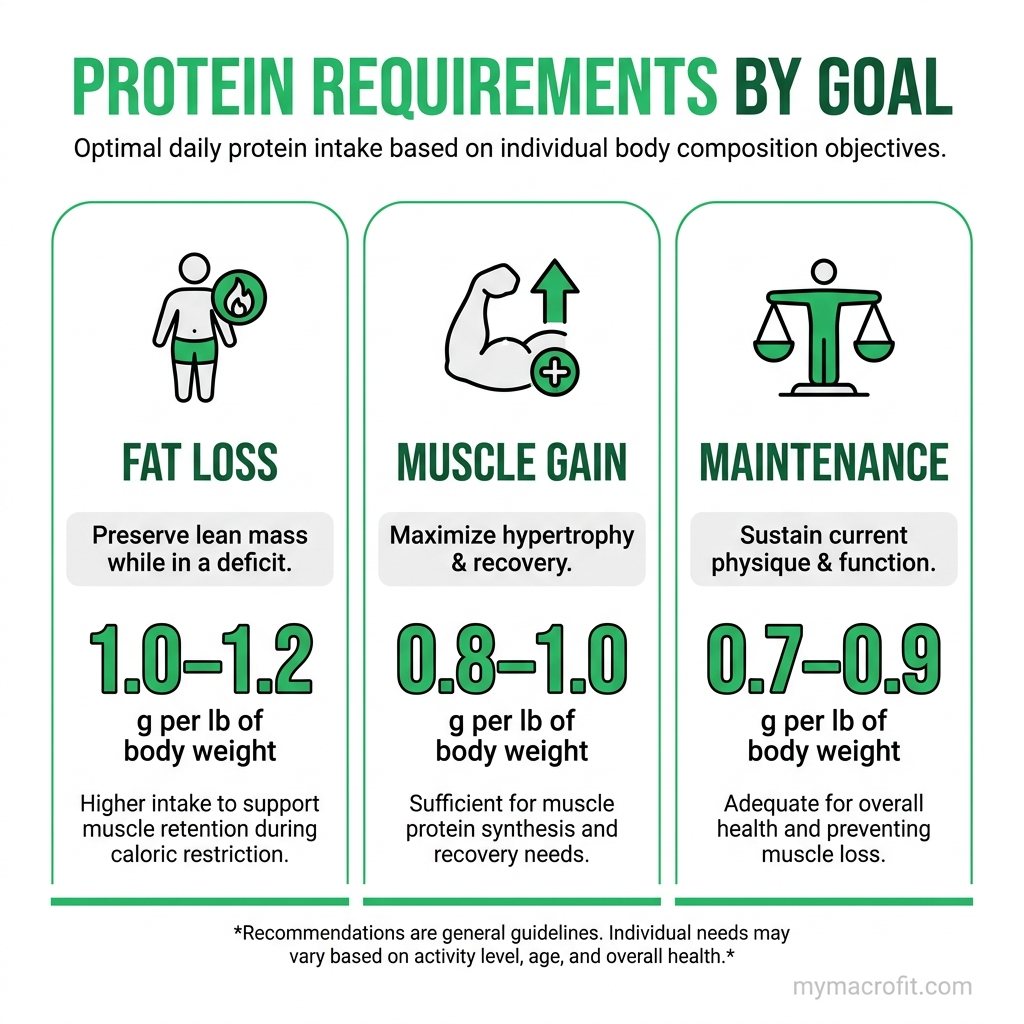
The most comprehensive meta-analysis on this topic (Morton et al., 2018, reviewed 49 studies) found that protein intakes above 1.62g per kg of body weight did not produce additional muscle gains in resistance-trained individuals.
Practical recommendations based on current evidence:
| Goal | Protein per kg bodyweight | Protein per lb bodyweight |
|---|---|---|
| Muscle gain | 1.6-2.2g/kg | 0.7-1.0g/lb |
| Fat loss (preserve muscle) | 2.0-2.4g/kg | 0.9-1.1g/lb |
| Maintenance | 1.4-1.8g/kg | 0.6-0.8g/lb |
| Beginners | 1.4-1.6g/kg | 0.6-0.7g/lb |
A higher target during fat loss (2.0-2.4g/kg) compensates for the fact that a calorie deficit already creates conditions that break down muscle.
Why Protein Intake Matters More During Fat Loss
Counterintuitively, protein becomes more important when you're cutting calories. Here's why:
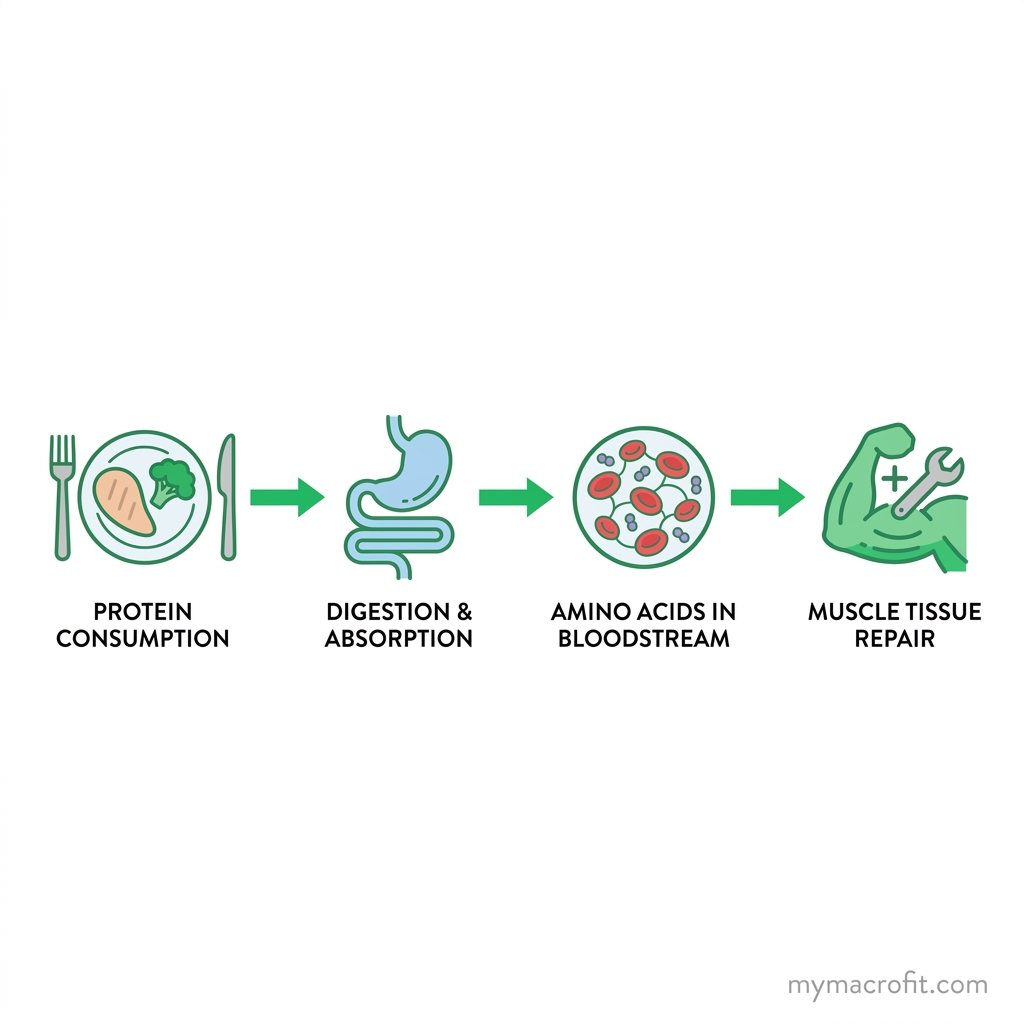
During a calorie deficit, your body doesn't just burn fat, it can also break down muscle for energy. This is called muscle protein breakdown (MPB). High protein intake suppresses MPB by:
- Providing amino acids for muscle repair and maintenance
- Increasing muscle protein synthesis (MPS) signals
- Reducing cortisol-driven muscle breakdown
- Having a higher thermic effect (~25% of protein calories are burned digesting them)
Studies consistently show that people eating 2.2-2.4g/kg during a cut retain significantly more muscle compared to those eating 1.2-1.4g/kg, even at the same calorie deficit.
How Much Protein Per Day: Practical Numbers
If calculating by body weight feels abstract, here are practical daily targets by body weight:
| Body Weight | Muscle Gain (1.8g/kg) | Fat Loss (2.2g/kg) |
|---|---|---|
| 60 kg / 132 lbs | 108g | 132g |
| 70 kg / 154 lbs | 126g | 154g |
| 80 kg / 176 lbs | 144g | 176g |
| 90 kg / 198 lbs | 162g | 198g |
| 100 kg / 220 lbs | 180g | 220g |
The Best Protein Sources
Not all protein sources are equal. Complete proteins contain all nine essential amino acids, including the leucine that triggers muscle protein synthesis most effectively:
Animal proteins (complete):
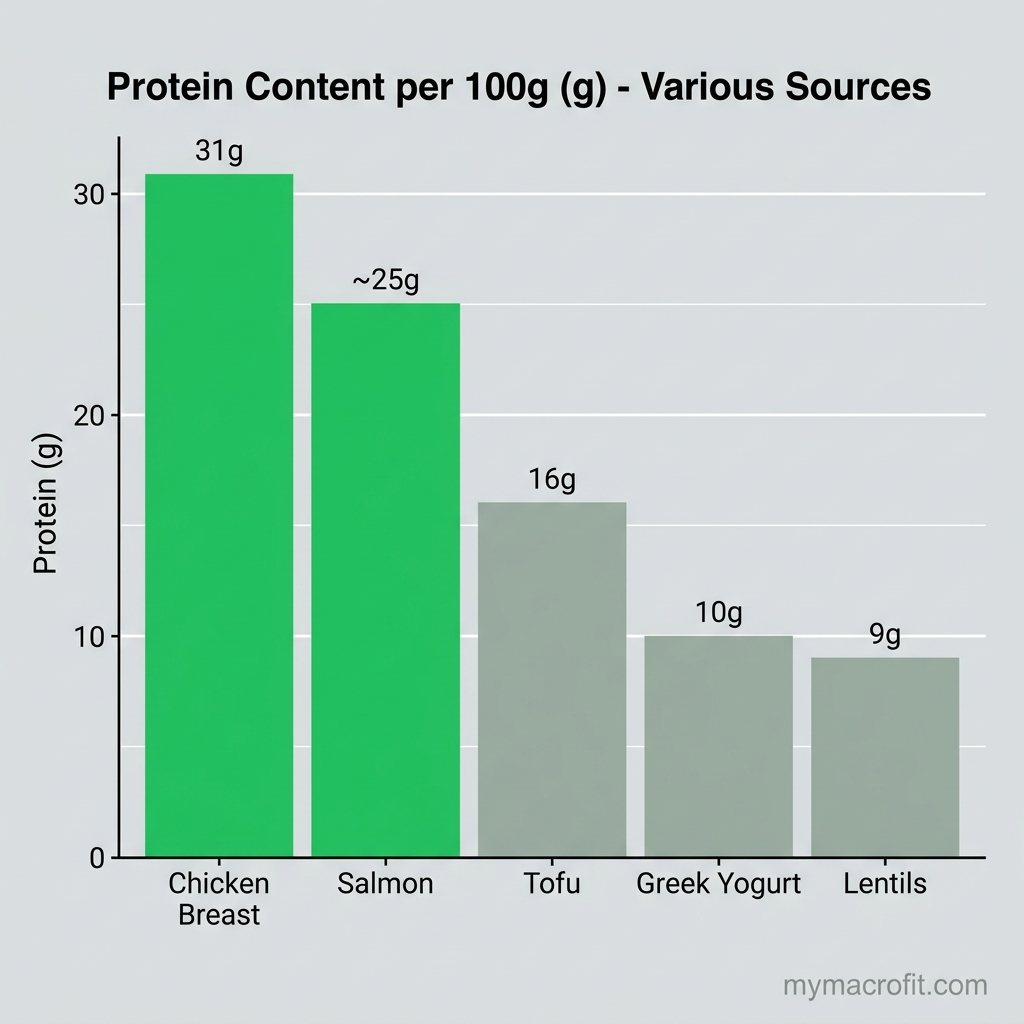
- Chicken breast: 31g per 100g
- Tuna (canned): 30g per 100g
- Salmon: 25g per 100g
- Eggs: 13g per 2 large eggs
- Greek yogurt (0%): 10g per 100g
- Cottage cheese: 11g per 100g
- Beef (lean): 26g per 100g
Protein supplements:
- Whey protein isolate: 25-27g per scoop
- Casein protein: 24g per scoop (slower digesting, good before bed)
- Egg white protein: 24g per scoop
Plant proteins (often incomplete, but combinable):
- Tofu: 17g per 100g
- Edamame: 11g per 100g
- Lentils: 9g per 100g (cooked)
- Chickpeas: 8g per 100g
- Tempeh: 19g per 100g
- Hemp seeds: 31g per 100g
If you eat primarily plant-based proteins, aim for the higher end of the range (2.0-2.4g/kg) and combine different sources throughout the day to ensure a complete amino acid profile.
Protein Timing: Does It Matter?
Protein distribution matters more than total daily timing. Key findings from the research:
Spread protein across meals: Muscle protein synthesis peaks after each meal then returns to baseline. Eating 4-5 meals with 30-40g protein each is more effective than eating the same total protein in 1-2 large meals.
Post-workout window is real but flexible: Consuming protein within 2 hours of training supports recovery and MPS. However, if you ate a protein-rich meal before training, the "anabolic window" extends considerably.
Pre-sleep protein: 40g of casein protein before bed has been shown to increase overnight muscle protein synthesis. Cottage cheese, Greek yogurt, or a casein shake are practical options.
Minimum per-meal threshold: You need at least 2-3g of leucine per meal to maximally trigger MPS. This roughly translates to 30-40g of protein per meal from most complete sources.
High-Protein Meal Ideas
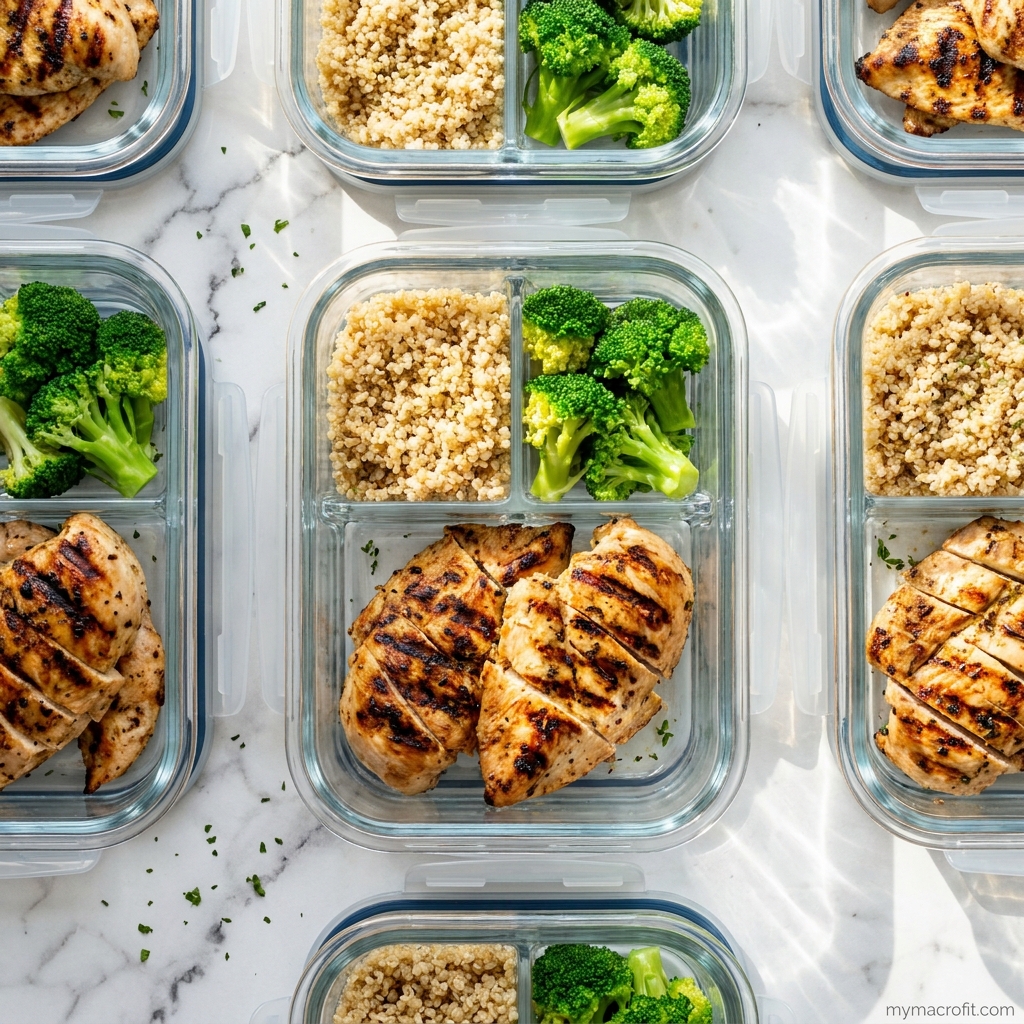
Hitting 150-200g of protein daily feels impossible until you have a repertoire of high-protein staples:
Breakfast options (30-40g protein):
- 4 whole eggs + 200g Greek yogurt
- 300g cottage cheese + protein shake
- 200g smoked salmon + 2 eggs
Lunch options (35-45g protein):
- 200g chicken breast + 100g quinoa + vegetables
- 300g tuna with olive oil and salad
- 250g ground beef stir-fry
Dinner options (35-45g protein):
- 250g salmon fillet + vegetables
- 300g beef mince in tomato sauce
- 200g chicken thighs + sweet potato
Snacks (15-25g protein):
- Greek yogurt (200g)
- Cottage cheese (200g)
- 2 hard-boiled eggs + 30g almonds
- Protein shake (25g)
Can You Eat Too Much Protein?
For healthy adults, current evidence does not support protein being harmful to kidneys at intakes up to at least 3.0g/kg/day. The "protein damages kidneys" claim applies to people with pre-existing kidney disease, not healthy individuals.
Practically, eating much above 2.5g/kg provides no additional muscle benefit and comes at the cost of reduced calories for carbs and fats, which power your workouts and support hormones.
Signs you're eating enough protein:
- Recovering well between sessions
- Maintaining or building strength during a fat loss phase
- Feeling satiated between meals
- Stable energy levels
Signs you may be under-eating protein:
- Losing strength alongside fat
- Feeling hungry 1-2 hours after meals
- Slow recovery and persistent soreness
- Loss of muscle definition during a cut
The Bottom Line
Aim for 1.6-2.2g of protein per kg of bodyweight for muscle gain, and 2.0-2.4g/kg during a calorie deficit to preserve muscle. Spread it across 4-5 meals with at least 30g per meal. The exact source matters less than hitting your daily total consistently.
A protein supplement (whey, casein, or plant-based) is useful if you struggle to hit your target from food alone, but it's a convenience tool, not a requirement.
Sources
- Dietary protein recommendations for body weight management, Morton et al., British Journal of Sports Medicine, 2018
- International Society of Sports Nutrition Position Stand: protein and exercise, Stokes et al., JISSN, 2018
- Protein and healthy ageing, NHS, 2023
Save & share on Pinterest
Click any card to pin it — or share with someone who needs it.
How Much Protein Do I Need to Build Muscle
Science-backed protein recommendations for muscle growth at every training level, plus the best sour…
Science-backed protein recommendations for muscle growth at every training level…
Read the full guide: How Much Protein Do I Need to Build Muscle
Try the free Protein Calculator
How Much Protein Do I Need to Build Muscle — use our free calculators for instant personalised resul…
Pinterest opens in a new tab. You can edit the description before saving.
Ready to get your numbers?
Free calculator, instant results, no signup required.
Frequently Asked Questions
How much protein do I need per day to build muscle?+
Can you eat too much protein?+
Is plant protein as good as animal protein for muscle?+
Do protein needs change with age?+
About the Author

I'm a kinesiologist and personal trainer. I've spent eight years helping women lose fat and get stronger without handing their whole life over to a diet.
View full profile →