How to Build Muscle as a Woman: The Complete Guide (No Bulk, Just Tone)

RHC · Pre/Postnatal Fitness Specialist
In my years coaching athletes and writing about training physiology, no myth has cost more women more progress than the fear of "getting bulky." It keeps them away from the single most physique-transforming form of exercise available, and it's built on a misunderstanding of endocrinology. So let me be precise about what the science actually says: women cannot accidentally build large, masculine amounts of muscle. The hormonal environment, specifically, testosterone levels roughly 10-20 times lower than men's, simply does not permit it.
What women can build, and what the overwhelming majority tell me they actually want, is the lean, defined, athletic look. That look is not a mystery. It's the product of adequate muscle mass sitting under relatively low body fat, achieved through strength training, sufficient protein, and patience. This guide is the complete, evidence-based protocol for getting there.
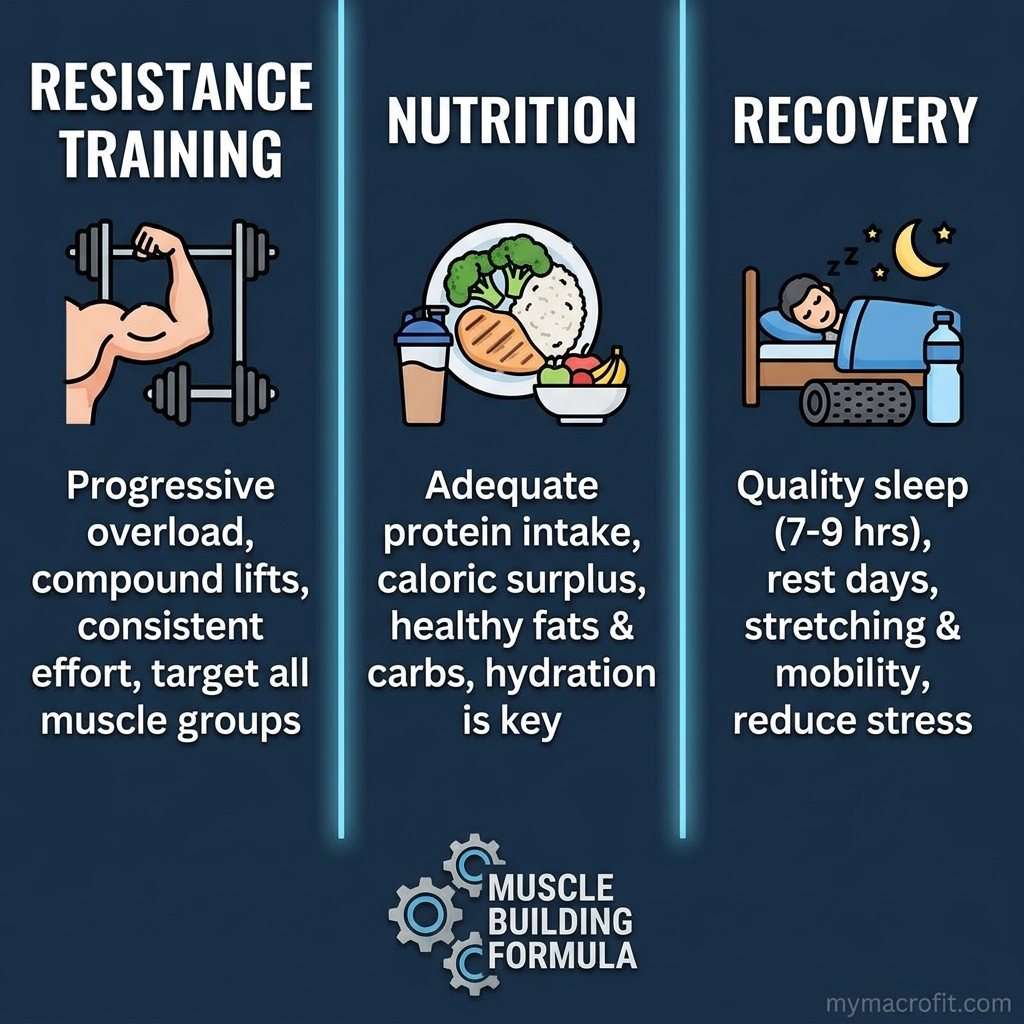
Why Women Won't Get Bulky From Lifting
The fear of bulk comes from a misunderstanding of what it actually takes to build large amounts of muscle. The key factor is testosterone.
Men have 15-20x more testosterone than women. Testosterone is the primary anabolic hormone, it directly drives muscle protein synthesis. Even with heavy training, a consistent surplus, and optimal nutrition, natural men gain approximately 2kg of muscle per month at most (and only as beginners). Women, with dramatically lower testosterone, gain approximately 0.5-1kg of muscle per month under ideal conditions.
The highly muscular physiques you may be thinking of are achieved by women who:
- Train specifically for maximum muscle mass (bodybuilding), often for 5-10+ years
- In many cases use anabolic steroids or other performance-enhancing drugs
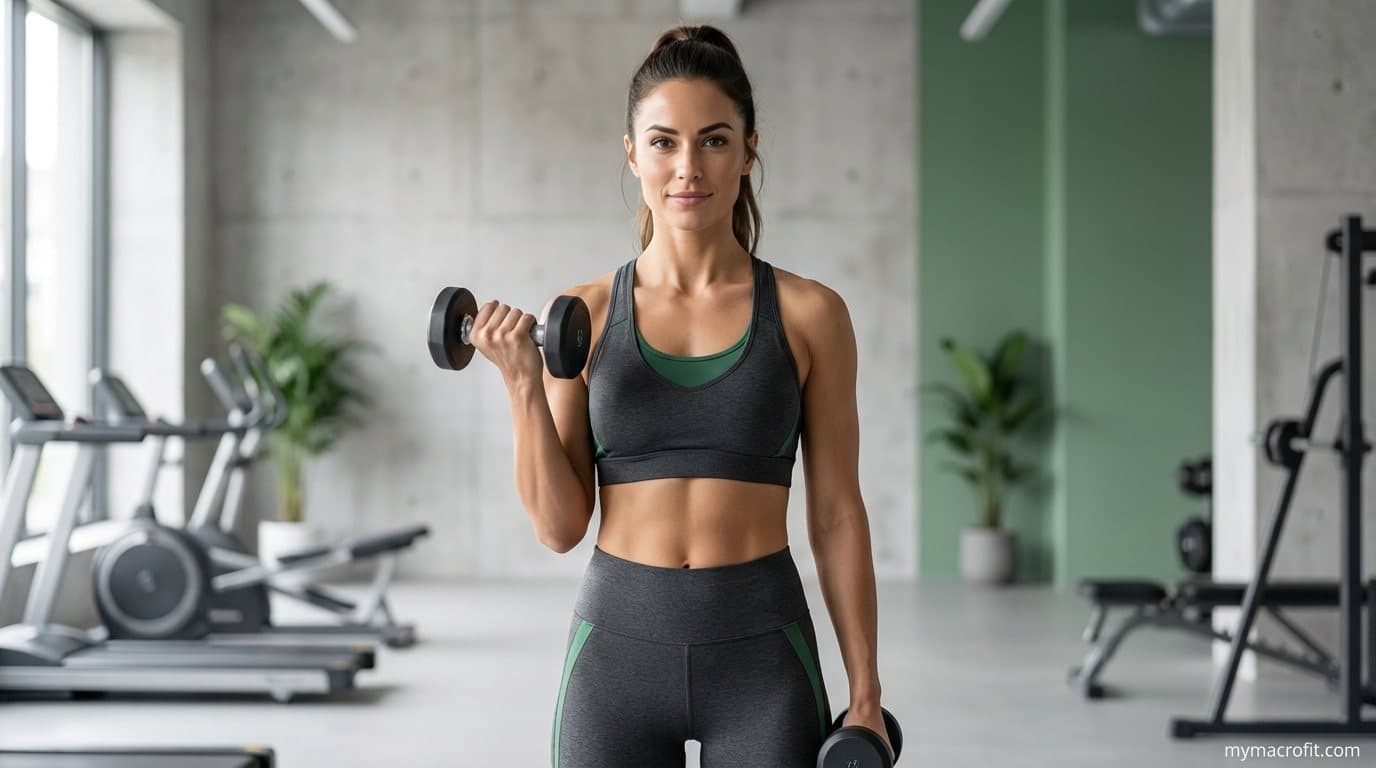
A woman lifting weights 3-4 times per week, eating adequate protein, and being consistent for 6-12 months will not look like a female bodybuilder. She will look leaner, more defined, and stronger.
What "Toning" Actually Means
"Toned" is not a physiological term, but what people mean when they use it is clear: visible muscle definition without significant size. This physique has two requirements:
- Adequate muscle mass, built through resistance training
- Low enough body fat, so the muscle is visible
You cannot tone a muscle without building it. Doing 100 tricep kickbacks with a 1kg dumbbell will not build your tricep, the weight is too light to create the stimulus needed for muscle growth. Toning requires progressive resistance training with meaningful loads.
The Four Principles of Muscle Building for Women
1. Progressive Overload
Progressive overload is the foundation of all strength and muscle development. It means consistently increasing the demand placed on your muscles over time. Without it, your body has no reason to adapt.
Progressive overload can be achieved by:
- Increasing weight (most common)
- Increasing repetitions at the same weight
- Increasing sets
- Decreasing rest time
- Improving technique and range of motion
You don't need to increase weight every session. But over weeks and months, the trend should be upward.
2. Compound Movements as the Core
The most effective exercises for women building muscle are compound movements, exercises that work multiple muscle groups simultaneously:
- Squat (quadriceps, glutes, hamstrings, core)
- Deadlift (hamstrings, glutes, back, core)
- Hip hinge/Romanian deadlift (posterior chain)
- Bench press or push-up variations (chest, shoulders, triceps)
- Pull-up or lat pulldown (back, biceps)
- Row variations (back, biceps, rear delts)
- Overhead press (shoulders, triceps, upper back)
These movements build significantly more muscle mass than isolation exercises like bicep curls or leg extensions, which serve a supplementary role.
3. Adequate Training Volume
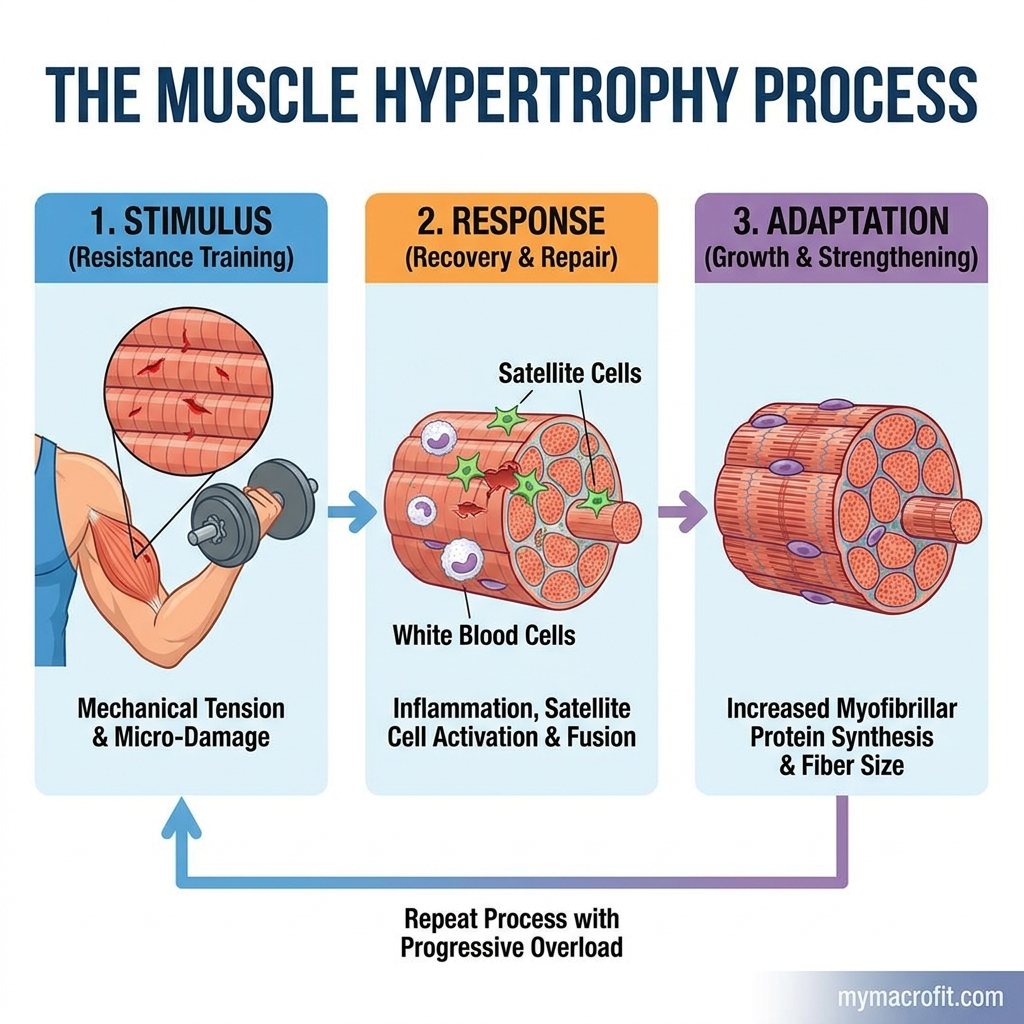
Volume, the total number of sets and reps performed for each muscle group per week, is the primary driver of muscle hypertrophy.
Research supports approximately:
- 10-20 sets per muscle group per week for consistent muscle growth
- 6-12 repetitions at 60-75% of your 1-rep max as the primary rep range for hypertrophy
- At least 48 hours of recovery between sessions targeting the same muscle group
A practical 3-day full body programme hitting each muscle group with 3-4 sets per session accumulates 9-12 sets per week, sufficient for consistent progress for beginners and intermediate trainees.
4. Consistency Over Perfection
Muscle is built over months and years, not weeks. The women with the most impressive physiques in the gym are almost universally those who have trained consistently for the longest time, not those who followed the most aggressive programme.
Missing a session occasionally doesn't matter. Missing months does.
Nutrition for Building Muscle as a Woman
Calorie Surplus (and the Fear of It)
To build muscle, you need to eat enough to support it. This is where many women stall, the instinct to maintain a calorie deficit conflicts with the requirement for a small surplus during a muscle-building phase.
You don't need a large surplus. Research supports a surplus of 150-250 kcal above TDEE for women, sometimes called a "lean bulk." This is small enough that fat gain is minimal, while providing the energy required for muscle protein synthesis.
Women who attempt to build muscle while in a calorie deficit (sometimes called "body recomposition") can make progress, particularly as beginners, but it's slower than building with a small surplus.
Use our Muscle Gain Calculator to set the right calorie and protein target for your muscle-building phase.
Protein Requirements
During a muscle-building phase, protein is the most critical nutritional variable. Target 1.6-2.0g per kg of body weight distributed across 3-4 meals.
Each meal should ideally contain 30-50g of protein to maximally stimulate muscle protein synthesis. Research on leucine thresholds suggests that ~3g of leucine per meal is required to trigger optimal muscle-building response, this is achieved through most 30-40g protein meals from animal sources.
Carbohydrates Fuel Training
Carbohydrates are the primary fuel source for resistance training. Training without adequate carbohydrates results in poorer performance, which limits the progressive overload stimulus that drives muscle growth.
Don't drastically cut carbohydrates during a muscle-building phase. Target at least 3, 4g per kg of body weight on training days.
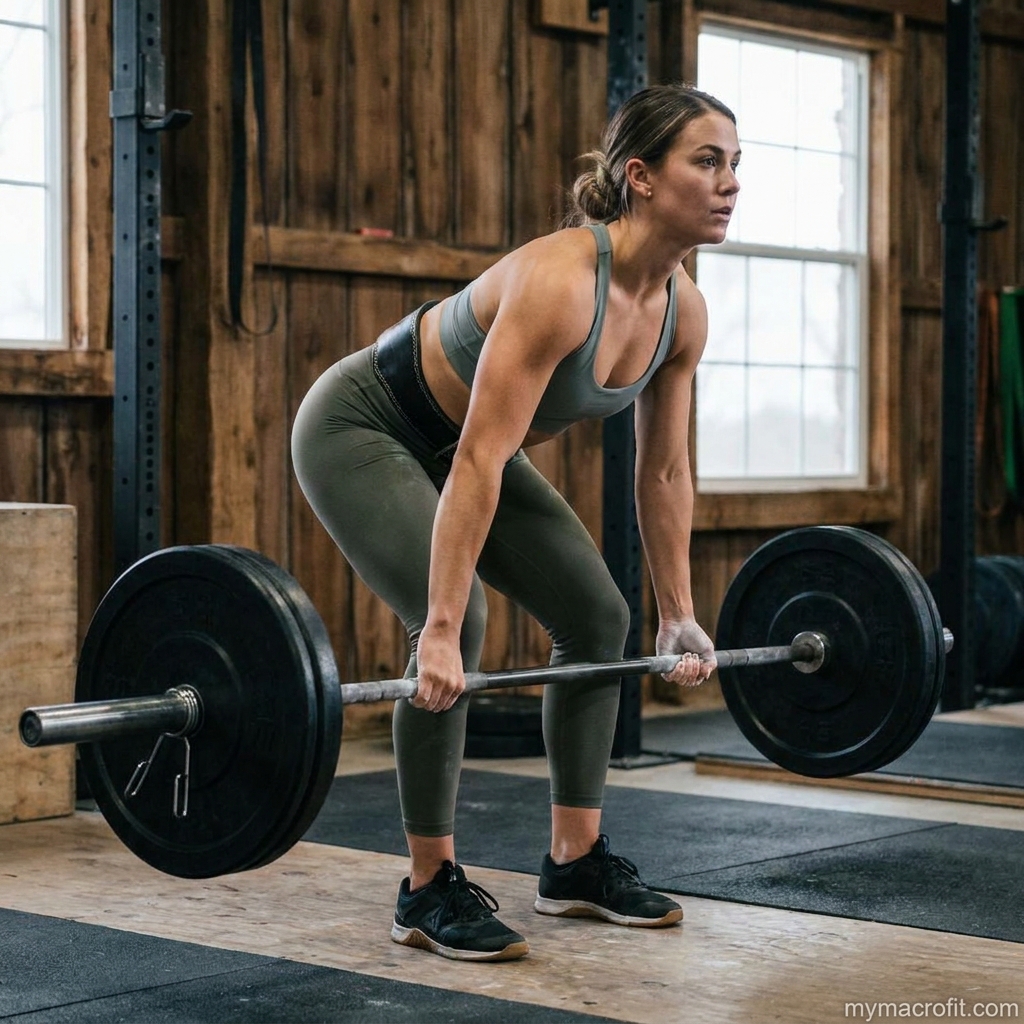
The Realistic Month-by-Month Timeline
Here's what building muscle actually looks like for women over the first year:
| Timeframe | What You'll Notice |
|---|---|
| Weeks 1-4 | Strength gains (neurological, not yet muscle growth), improved technique |
| Weeks 4-8 | Subtle changes in muscle firmness, initial body composition shift |
| Months 2-3 | Visible muscle development begins, noticeable improvements in posture |
| Months 3-6 | Clear visible change, more defined arms, shoulders, legs |
| Months 6-12 | Significant physique transformation, meaningful strength compared to baseline |
| Year 1-2 | The most dramatic period of change for natural lifters |
The women who give up at week 8 because "it's not working" are giving up right before the visible results arrive.
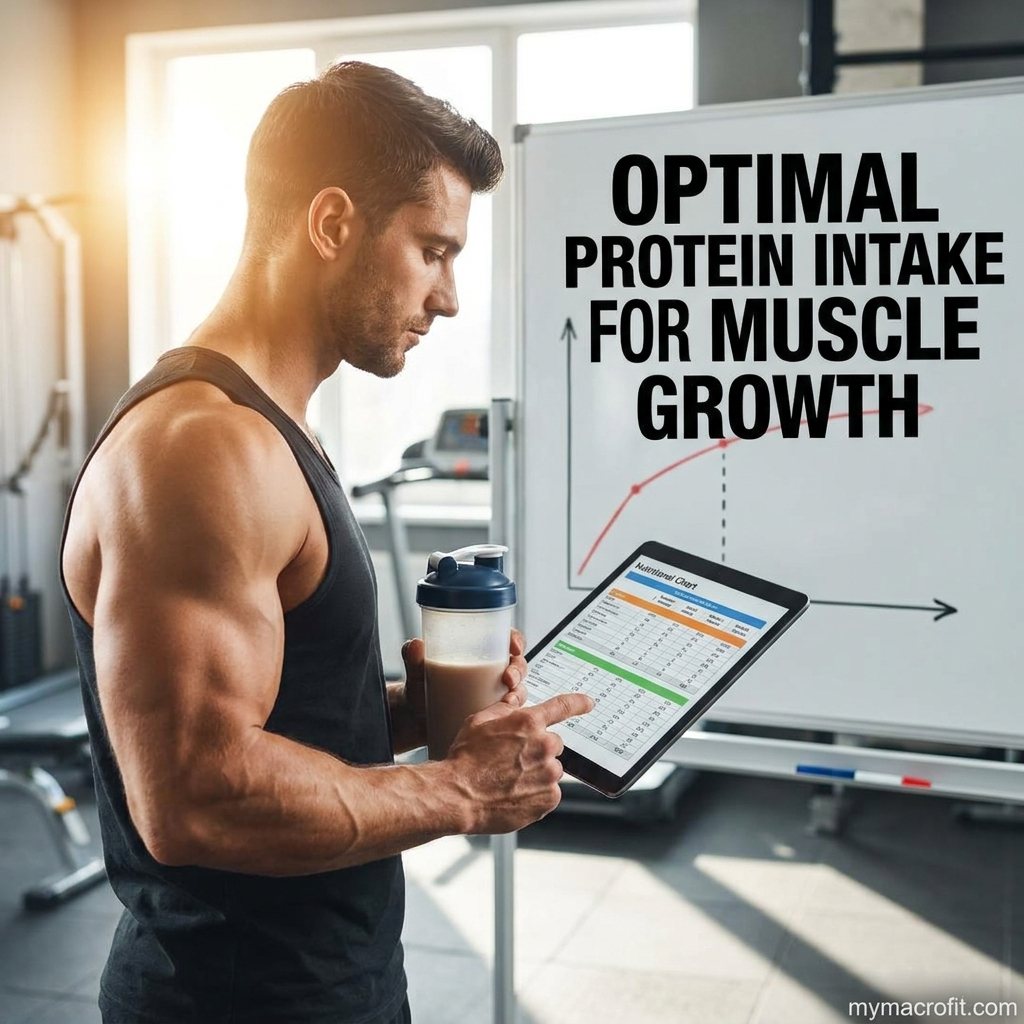
Common Mistakes Women Make When Trying to Build Muscle
Training Too Light
Using the same light weights for years produces no new stimulus for muscle growth. You must progressively increase the challenge. If you can complete 15 reps with perfect form, the weight is too light for building muscle.
Doing Too Much Cardio
Excessive cardio burns the calorie surplus needed for muscle growth and can interfere with strength training adaptations. Limit cardio to 2-3 sessions per week during a muscle-building phase, and keep it low intensity.
Not Eating Enough Protein
The most common nutritional error. Track protein for at least two weeks to see where you actually are. Most women significantly underestimate protein intake.
Changing Programmes Too Frequently
Switching programmes every 4 weeks prevents you from getting strong at any given movement pattern. Stick with a programme for at least 8, 12 weeks before evaluating whether to change.
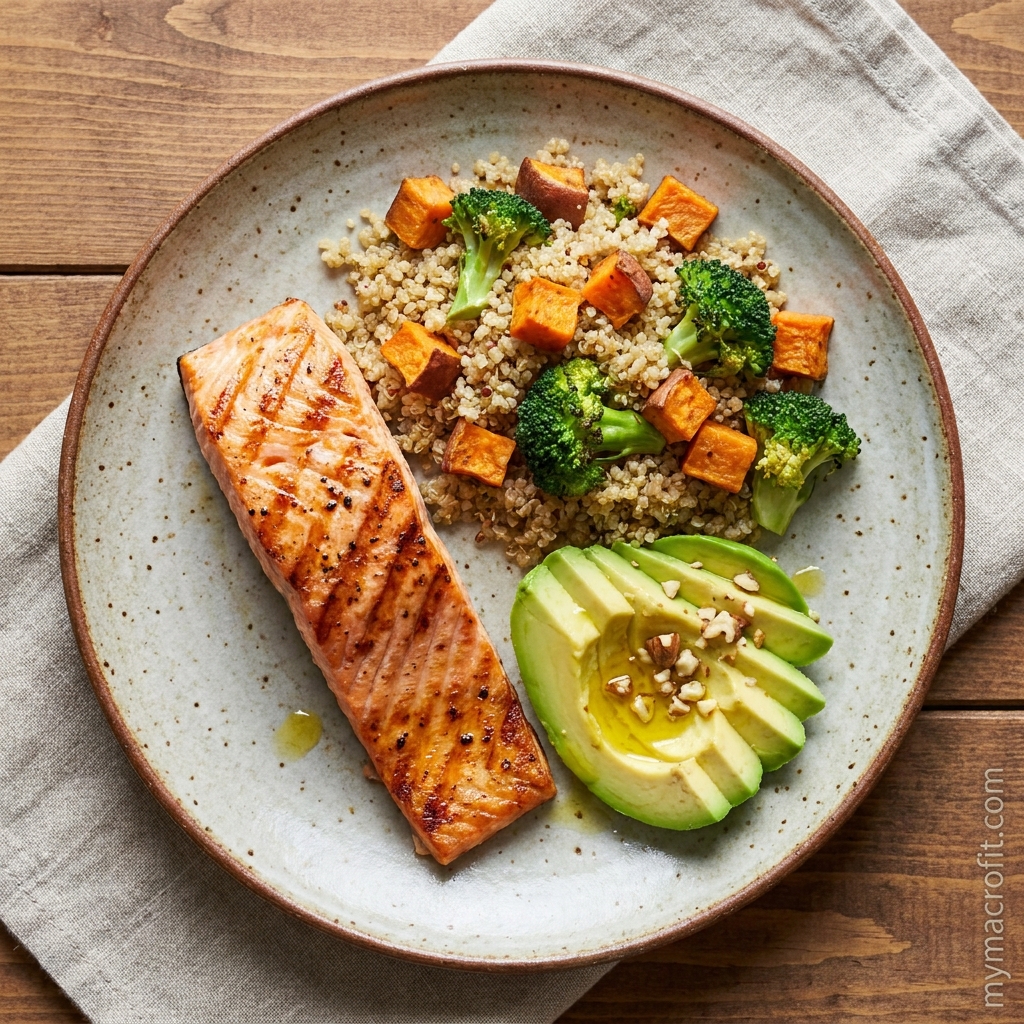
A Starter 3-Day Programme
If you're new to strength training, here's a simple full-body structure to begin with:
Day 1:
- Squat: 3 x 8-10
- Dumbbell row: 3 x 10-12
- Dumbbell bench press or push-up: 3 x 10-12
Day 2:
- Romanian deadlift: 3 x 10-12
- Lat pulldown or assisted pull-up: 3 x 10
- Overhead press: 3 x 10-12
Day 3:
- Goblet squat: 3 x 10
- Hip thrust: 3 x 12
- Face pull: 3 x 15
- Plank: 3 x 30-45 seconds
Rest 2, 3 minutes between sets. Increase weight when you can complete the top of the rep range with good form across all sets.
The Bottom Line
Building muscle as a woman means progressive resistance training, adequate protein, enough calories to support growth, and consistency over months and years. The fear of bulk is not supported by physiology, women simply don't have the hormonal environment to build excessive muscle accidentally.
The result of consistent strength training is a leaner, stronger, more defined physique. Use the Muscle Gain Calculator to set your nutritional targets, commit to a programme for at least 12 weeks, and let the process work.
Save & share on Pinterest
Click any card to pin it — or share with someone who needs it.
How to Build Muscle as a Woman: The Complete Guide (No Bulk, Just Tone)
How women can build muscle without getting bulky, covering progressive overload, protein needs, over…
How women can build muscle without getting bulky, covering progressive overload,…
Read the full guide: How to Build Muscle as a Woman: The Complete Guide (No Bulk, Just Tone)
Try the free Muscle Gain Calculator
How to Build Muscle as a Woman: The Complete Guide (No Bulk, Just Tone) — use our free calculators f…
Pinterest opens in a new tab. You can edit the description before saving.
Ready to get your numbers?
Free calculator, instant results, no signup required.
Frequently Asked Questions
Will lifting weights make women bulky?+
How much protein do women need to build muscle?+
How long does it take women to build noticeable muscle?+
Do women need to eat in a calorie surplus to build muscle?+
About the Author

I'm a registered health coach and pre/postnatal specialist. I look at the whole person, your sleep, your stress, your hormones, because the number on the scale is only ever part of the story.
View full profile →