Lean Bulking: How to Build Muscle Without Gaining Fat

BSc Kinesiology · CPT
As a competitive powerlifter, I've watched countless lifters run the traditional "bulk and cut" cycle, eat in a big surplus to chase muscle, then diet aggressively to strip the fat they piled on. From a body-composition standpoint, it's remarkably inefficient. You spend months gaining fat you'll spend months removing, and the muscle-to-fat ratio of the whole exercise is often worse than people assume.
A lean bulk is the more disciplined alternative. It's slower, and that frustrates people, but it produces consistent muscle gain with minimal fat accumulation, which means you never face a brutal cut on the other side. The trade is patience now for a far better physique later. Here's how to run one properly.
What Is a Lean Bulk?
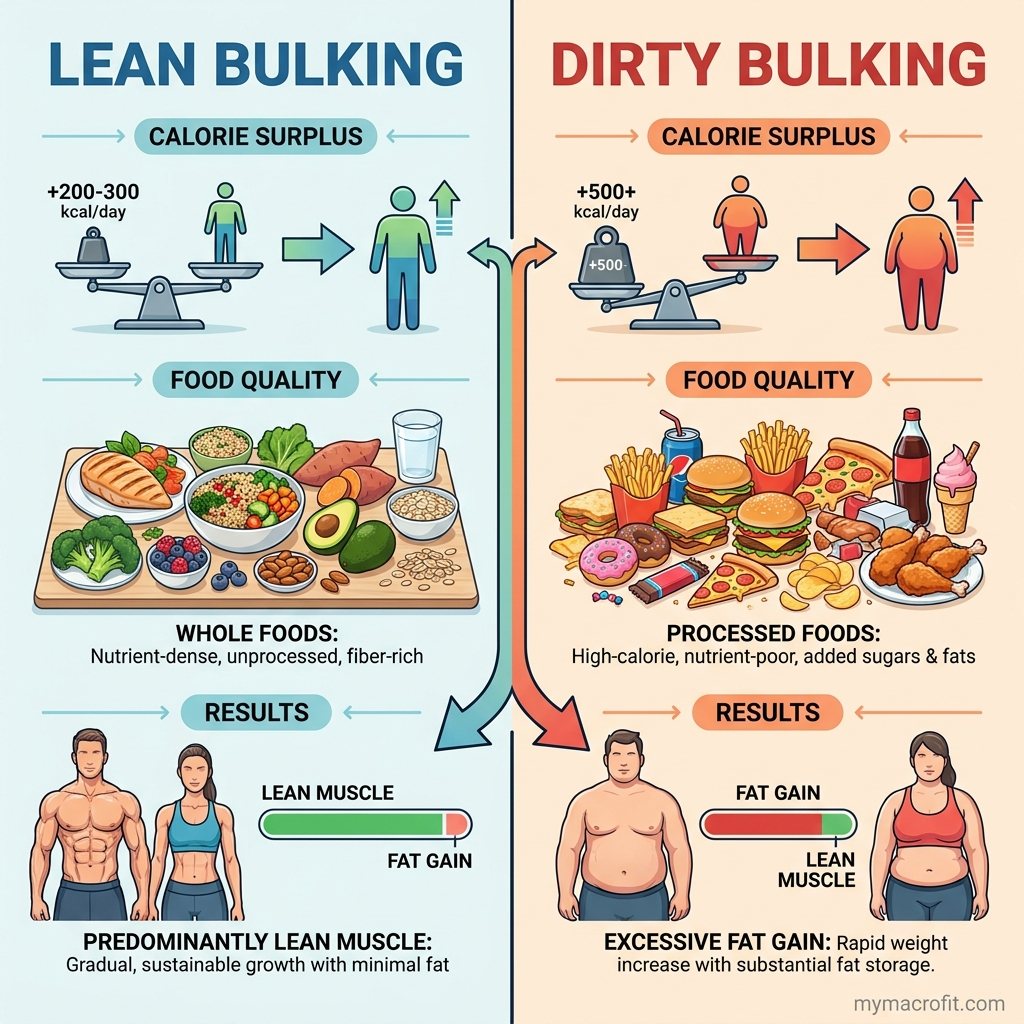
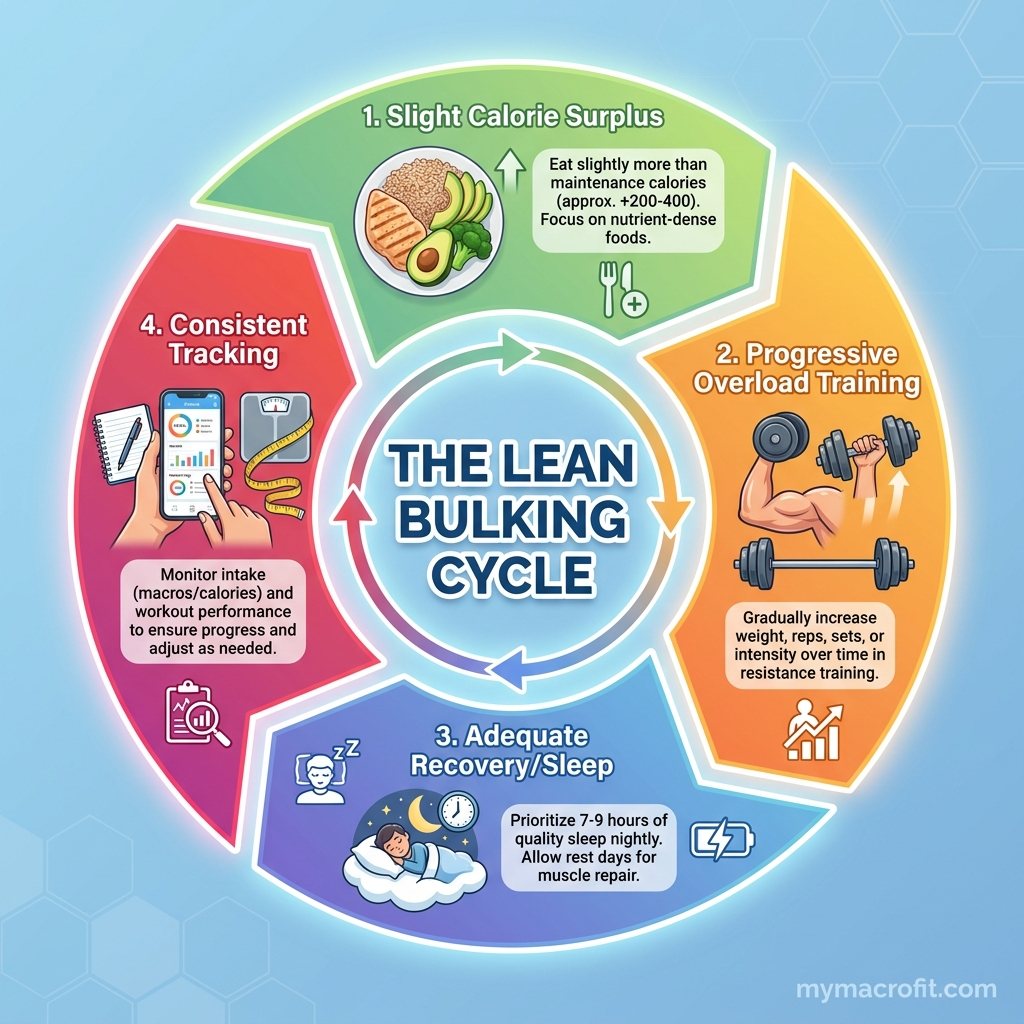
A lean bulk is a controlled muscle-building phase with a small calorie surplus (200-400 kcal above TDEE). The goal is to provide enough energy for muscle growth without the excess that gets stored as fat. Use the Lean Bulk Calculator to find your exact surplus and macro targets.
Contrast this with a traditional "dirty bulk", eating in a large surplus (500-1,000+ kcal) to maximise muscle gain rate. Dirty bulking does build muscle faster short-term, but a significant portion of the weight gained is fat, requiring a subsequent aggressive cut that risks muscle loss.
Lean bulk: Slower muscle gain, minimal fat gain, no harsh cutting phase required Dirty bulk: Faster muscle gain, significant fat gain, requires aggressive cutting phase
Why Your Calorie Surplus Should Be Small
Here's the key insight: muscle can only be synthesised at a limited rate. No matter how many extra calories you provide, your body can only build muscle so quickly.
Maximum natural muscle gain rates (approximate):
| Experience Level | Muscle per Month |
|---|---|
| Beginner (< 1 year training) | 1-2 kg |
| Intermediate (1-3 years) | 0.5-1 kg |
| Advanced (3+ years) | 0.25-0.5 kg |
To build 1 kg of muscle, your body needs approximately 4,000-6,000 extra calories. Spread over a month, that's only 130-200 extra calories per day.
A 300-500 kcal daily surplus is sufficient for most people, anything beyond that is primarily stored as fat.
How to Calculate Your Lean Bulk Calories
Step 1: Find your TDEE using the TDEE Calculator
Step 2: Add your surplus:
- Beginner (< 1 year): +300-400 kcal/day
- Intermediate (1-3 years): +200-300 kcal/day
- Advanced (3+ years): +150-200 kcal/day
Step 3: Set macros (see below)
Step 4: Monitor weekly weight gain. Adjust if gaining too fast or too slow.
Lean Bulk Macro Targets
Protein: 1.8-2.2g per kg bodyweight
Protein provides the amino acids for muscle protein synthesis. More than 2.2g/kg provides no additional benefit for muscle gain.
Carbohydrates: Fill the majority of remaining calories
Carbohydrates fuel training performance, replenish muscle glycogen, and support anabolic hormone production (insulin, IGF-1). Don't fear carbs on a bulk, they're your ally.
Fat: 0.8-1.2g per kg bodyweight
Fat supports testosterone and other anabolic hormone production. Going too low in fat (below 0.7g/kg) can impair hormonal function and negatively affect muscle growth.
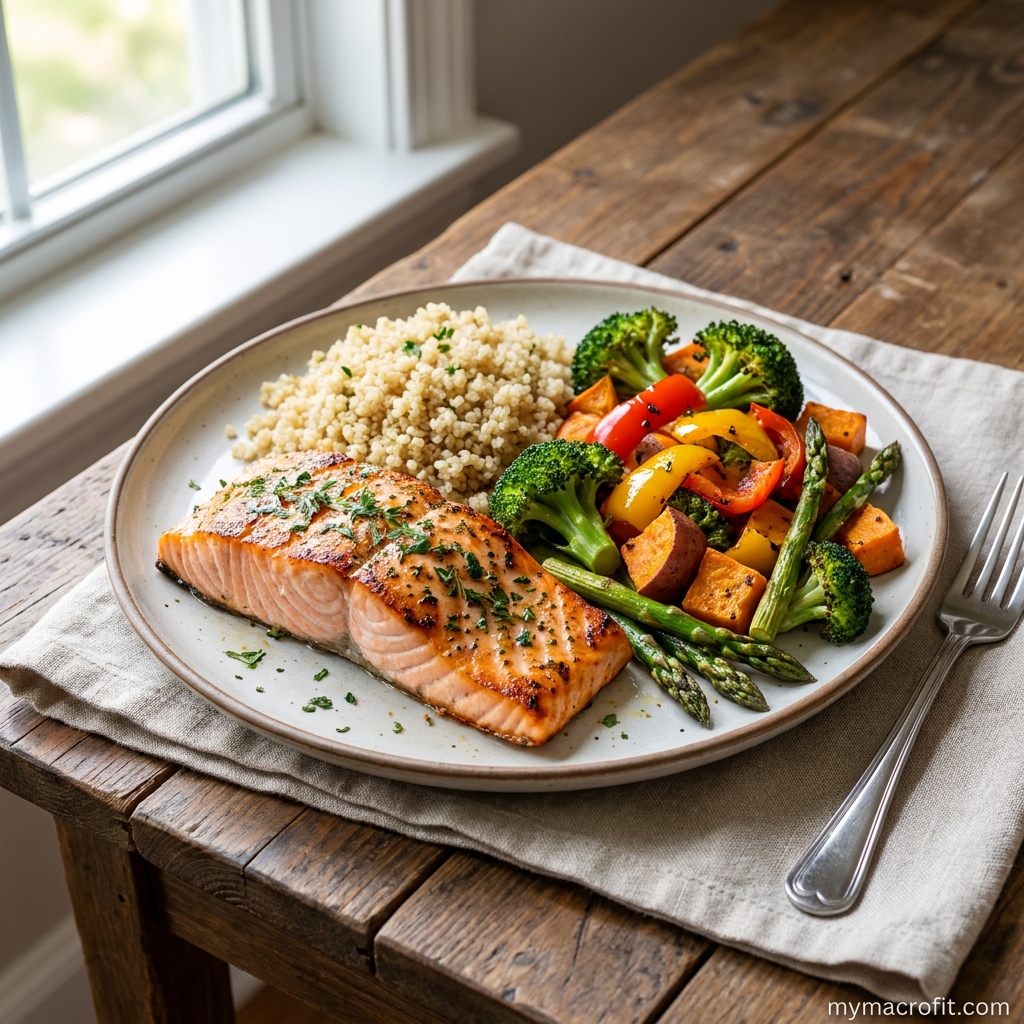
Example for 80 kg intermediate lifter:
- TDEE: 2,800 kcal → Target: 3,100 kcal
- Protein: 80 × 2.0 = 160g (640 kcal)
- Fat: 80 × 1.0 = 80g (720 kcal)
- Carbs: (3,100 − 640 − 720) ÷ 4 = 435g
How Fast Should the Scale Move?
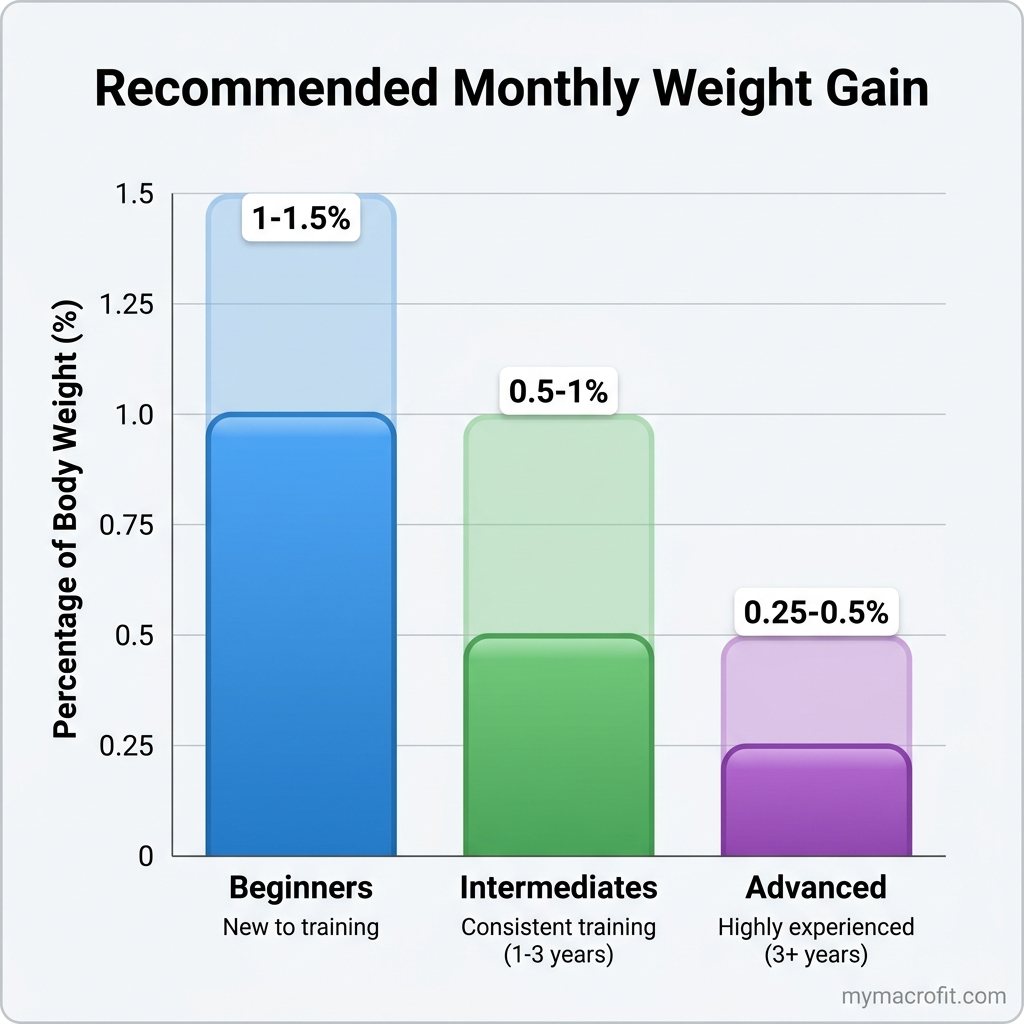
Target weight gain rate for lean bulking:
- Beginners: 0.5-1 kg per month (0.25 kg/week)
- Intermediates: 0.25-0.5 kg per month
- Advanced: 0.1-0.25 kg per month
If you're gaining faster than this, reduce calories by 100-150 kcal. If the scale isn't moving after 3-4 weeks, add 100-150 kcal.
Weight fluctuates daily by 1-2 kg due to water retention, food volume, and glycogen. Track your weekly average from morning weigh-ins, not individual daily readings.
Training for a Lean Bulk
Nutrition provides the raw materials for muscle. Training provides the stimulus. Both are required, surplus calories without progressive resistance training primarily results in fat gain.
Progressive overload is everything
Your training must become progressively more challenging over time. This can be achieved by:
- Increasing weight (adding 1.25-2.5 kg when you hit the top of your rep range)
- Increasing reps (same weight, more reps)
- Increasing sets (adding an additional set)
- Improving technique (fuller range of motion under control)
Training volume and frequency
Research supports 10-20 sets per muscle group per week for hypertrophy, spread across 2-4 sessions. Each muscle group should be trained at least twice per week, this doubles the muscle protein synthesis stimulus compared to once per week.
A practical split for most people:
- Upper/Lower: 4 days/week (2 upper, 2 lower)
- Push/Pull/Legs: 6 days/week (each pattern twice)
- Full body: 3 days/week (every session, every muscle group)
Compound lifts first
Squat, deadlift, bench press, overhead press, and rows should form the foundation. These recruit the most muscle fibres, stimulate the most hormone response, and provide the strongest progressive overload stimulus.
Monitoring Body Composition on a Lean Bulk
Use multiple metrics, the scale alone is insufficient:
Weekly average weight: Track in the morning, post-toilet, before eating. Average 5-7 readings.
Progress photos: Take under the same conditions (lighting, angle, time of day) monthly. Photos reveal physique changes the scale misses.
Strength metrics: Are you adding weight to your lifts? Increased strength is the most direct indicator that your training stimulus is working and the surplus is going to muscle.
Waist measurement: A lean bulk should show minimal waist increase. If your waist grows more than 1-2 cm per month, your surplus is too aggressive.
Body fat testing: Monthly DEXA scan or monthly caliper measurements give the most direct picture of whether gained weight is muscle or fat.
Common Lean Bulking Mistakes
Surplus too large: The most common mistake. More than 400-500 kcal above TDEE primarily results in fat gain. Patience is required, lean bulking is slow by design.
Inconsistent training: A calorie surplus without consistent progressive resistance training results in fat gain. The training stimulus is what directs surplus calories toward muscle.
Under-eating protein: Even in a surplus, inadequate protein limits muscle protein synthesis. Hit 1.8-2.2g/kg consistently.
Not tracking progress properly: Relying on the scale alone leads to poor adjustments. Use all metrics: weight trend, strength, waist measurement, and photos.
Cutting too early: Many people panic at seeing the scale rise and cut the bulk short before meaningful muscle has been built. Commit to at least 8-12 weeks before evaluating progress.
When to Transition from Lean Bulk to Cut
Consider transitioning to a cutting phase when:
- Body fat reaches ~15-18% (men) or ~25-28% (women)
- You've been lean bulking for 4-6 months
- Performance and recovery are declining despite adequate nutrition and sleep
A lean bulk rarely requires a harsh cut, a moderate 300-400 kcal deficit for 8-12 weeks typically returns you to a lean starting point, at which point you can begin the next lean bulk cycle.
The Long Game
Natural muscle building is slow. An intermediate lifter might gain 3-5 kg of muscle in a year of consistent training and nutrition. That's meaningful progress, but it requires patience and the discipline to keep the surplus small.
The lean bulk approach might feel frustratingly gradual compared to an aggressive bulk, but after 12-18 months, the person who lean bulked consistently will look better and have done far less yo-yo dieting than the person who alternated aggressive bulk/cut cycles.
Save & share on Pinterest
Click any card to pin it — or share with someone who needs it.
Lean Bulking: How to Build Muscle Without Gaining Fat
The complete guide to lean bulking, the right calorie surplus, macro targets, training approach, and…
The complete guide to lean bulking, the right calorie surplus, macro targets, tr…
Read the full guide: Lean Bulking: How to Build Muscle Without Gaining Fat
Try the free Lean Bulk Calculator
Lean Bulking: How to Build Muscle Without Gaining Fat — use our free calculators for instant persona…
Pinterest opens in a new tab. You can edit the description before saving.
Ready to get your numbers?
Free calculator, instant results, no signup required.
Frequently Asked Questions
What is lean bulking?+
How many calories over maintenance should I eat to lean bulk?+
How fast should you gain weight on a lean bulk?+
How much protein do you need to lean bulk?+
How long should a lean bulk last before cutting?+
Can women lean bulk, or is it just for men?+
About the Author

I'm a kinesiologist and personal trainer. I've spent eight years helping women lose fat and get stronger without handing their whole life over to a diet.
View full profile →