VO2 Max Calculator
Estimate your VO2 max without a lab test. Get your cardio fitness category, percentile ranking compared to your age group, and science-backed tips to improve.
Quick answer
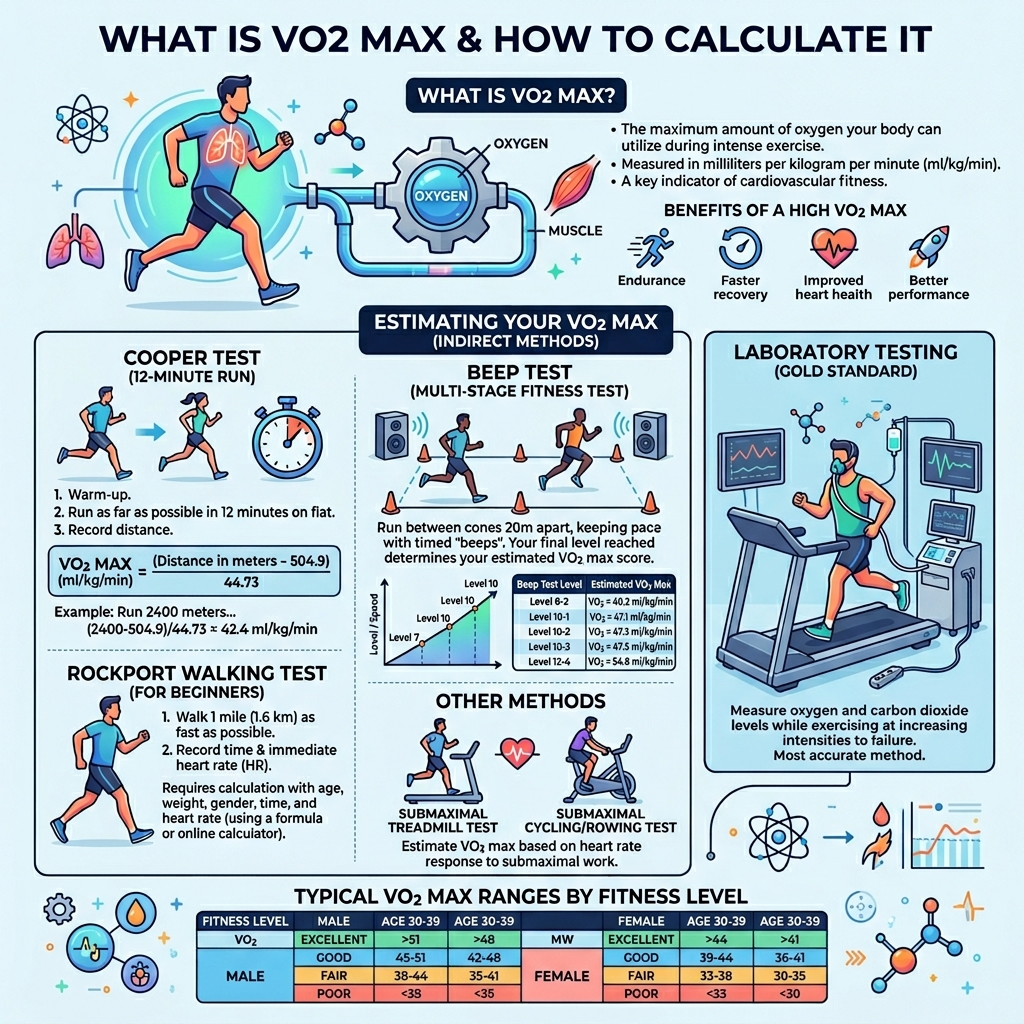
VO2 max is the most oxygen your body can use during hard exercise and a strong marker of fitness. This calculator estimates it and compares it to the norms for your age and sex.
Nutrition follows your fitness level.
Your VO2 max determines your calorie burn — get the macro targets to match your aerobic capacity.
Get the Free Macro Guide →Why VO2 Max Is the Most Important Fitness Number You're Not Tracking
Most people track weight, steps, or the number on the scale, but VO2 max is the metric that actually predicts how long and how well you'll live. Research from the Cleveland Clinic following 120,000 patients found that low cardiorespiratory fitness had a higher mortality risk than smoking.
The good news: VO2 max is highly trainable. Unlike genetics or age, your aerobic capacity responds powerfully to consistent exercise. Even modest improvements, moving from the "Poor" to "Fair" category , are associated with a significant reduction in cardiovascular disease risk.
4 Proven Ways to Improve Your VO2 Max Faster
- 4×4 Interval Training, 4 minutes at 85–95% max HR, 4 minutes easy recovery, repeated 4 times. Norwegian sports scientists showed this protocol improves VO2 max by 7–10% in 8 weeks.
- Increase Weekly Volume, Adding just 20 minutes per week of aerobic exercise raises VO2 max. Consistency matters more than any single session type.
- Lose Body Fat, VO2 max is measured per kg of bodyweight. A 5 kg fat loss can raise your score by 3–5 ml/kg/min with no change in aerobic fitness.
- Concurrent Strength Training, Combining resistance training with cardio produces greater VO2 max gains than cardio alone, according to a 2022 meta-analysis in the British Journal of Sports Medicine.
VO2 Max by Age: What's Normal for Your Age Group?
VO2 max naturally declines with age, roughly 1% per year in sedentary adults. But highly trained athletes show dramatically slower decline, preserving 70–80% of their peak values well into their 60s and 70s.
Average VO2 max ranges (ml/kg/min) for untrained adults:
- Ages 20–29: Men 44–51 / Women 35–43
- Ages 30–39: Men 41–47 / Women 33–39
- Ages 40–49: Men 37–43 / Women 30–36
- Ages 50–59: Men 34–39 / Women 27–33
- Ages 60+: Men 29–35 / Women 24–29
These are averages for recreationally active adults. Competitive athletes often score 10–20 points above these ranges at every age.
How VO2 Max Predicts More Than Just Fitness
Cardiorespiratory fitness assessed by VO2 max is linked to:
- Brain health, Higher VO2 max is associated with larger hippocampal volume and better cognitive scores in adults over 50
- Mental health, Aerobic fitness reduces depression and anxiety symptoms with effect sizes comparable to medication
- Metabolic health, Higher VO2 max improves insulin sensitivity and lowers HbA1c even without dietary changes
- Cancer survival, Fit cancer patients show significantly better survival and treatment tolerance than unfit patients
Measure it, track it, and treat improving your VO2 max as one of the most impactful health investments you can make.
Frequently Asked Questions
What is VO2 max?
How accurate is this VO2 max calculator?
What is a good VO2 max?
How can I improve my VO2 max?
Can I increase my VO2 max at any age?
Why does VO2 max matter beyond athletics?
How it's calculated: this tool uses established, published equations. See the full calculator methodology for the formulas and assumptions behind it.
Results are estimates for general guidance, not medical advice. See our disclaimer, and speak to a qualified healthcare professional before making medical or dietary changes.
Related Tools
Save & share on Pinterest
Click any card to pin it — or share with someone who needs it.
VO2 Max Calculator
Estimate your VO2 max without a lab test. Get your cardio fitness category, percentile ranking compa…
Estimate your VO2 max without a lab test. Get your cardio fitness category, perc…
Read the full guide: VO2 Max Calculator
Try the free VO2 Max Calculator
VO2 Max Calculator — use our free calculators for instant personalised results. No signup required.
Pinterest opens in a new tab. You can edit the description before saving.
Get Your Free Macro Cheat Sheet
One-page PDF with all the key formulas. Free, no spam ever.
Get the Free Macro Guide