BMI Chart: What Does Your Number Mean?

BSc Kinesiology · CPT
BMI is everywhere, your doctor reaches for it, your gym app asks for it, national health guidelines are built on it. It's also one of the most misunderstood numbers in health, and I've sat with plenty of women who walked away from a BMI reading feeling defeated by a number that didn't tell the real story of their body. So before you let three digits decide how you feel about yourself, let's actually understand what BMI measures, what it genuinely tells you, and, just as importantly, where it falls flat.
What Is BMI?
Body Mass Index (BMI) is a simple calculation that uses your height and weight to estimate whether your weight falls within a healthy range for your height.
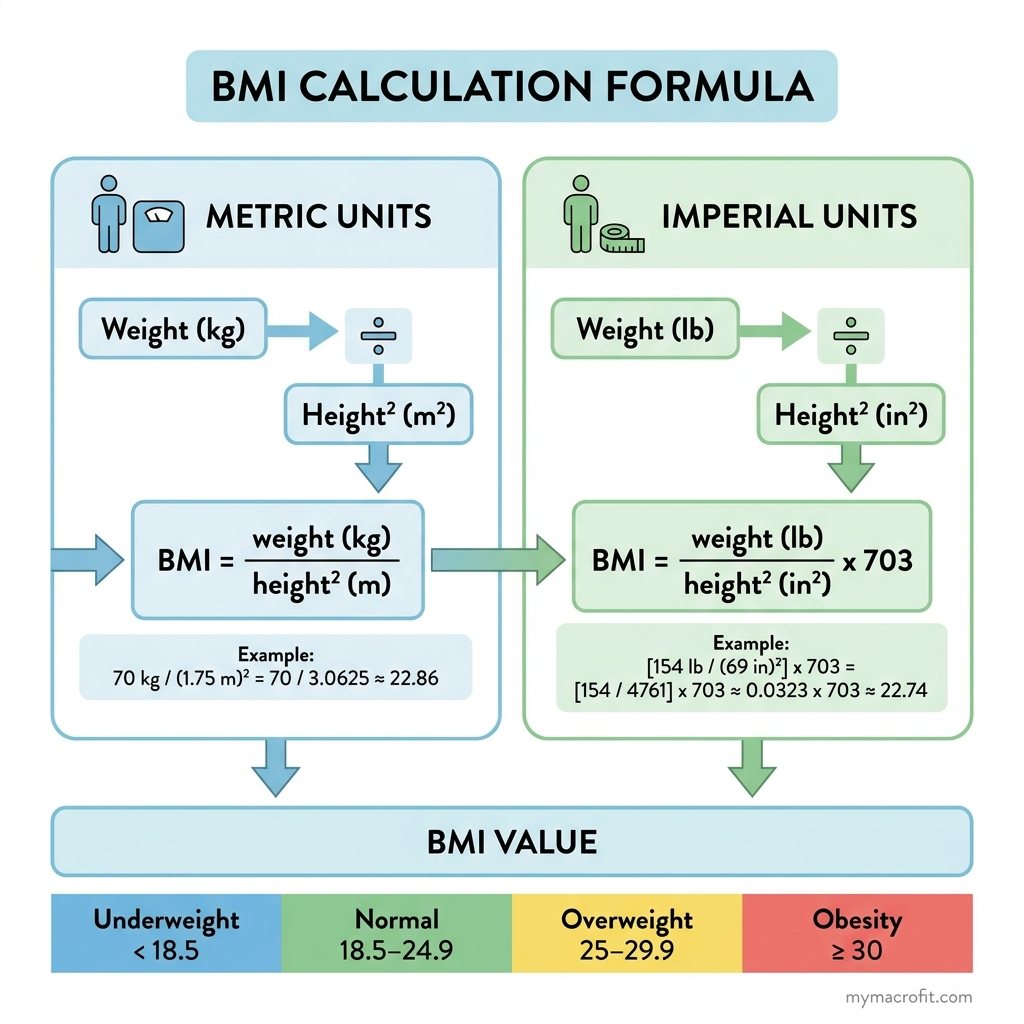
Formula:
- BMI = weight (kg) ÷ height (m)²
Example: 75 kg person, 1.75 m tall
- BMI = 75 ÷ (1.75 × 1.75) = 75 ÷ 3.0625 = 24.5
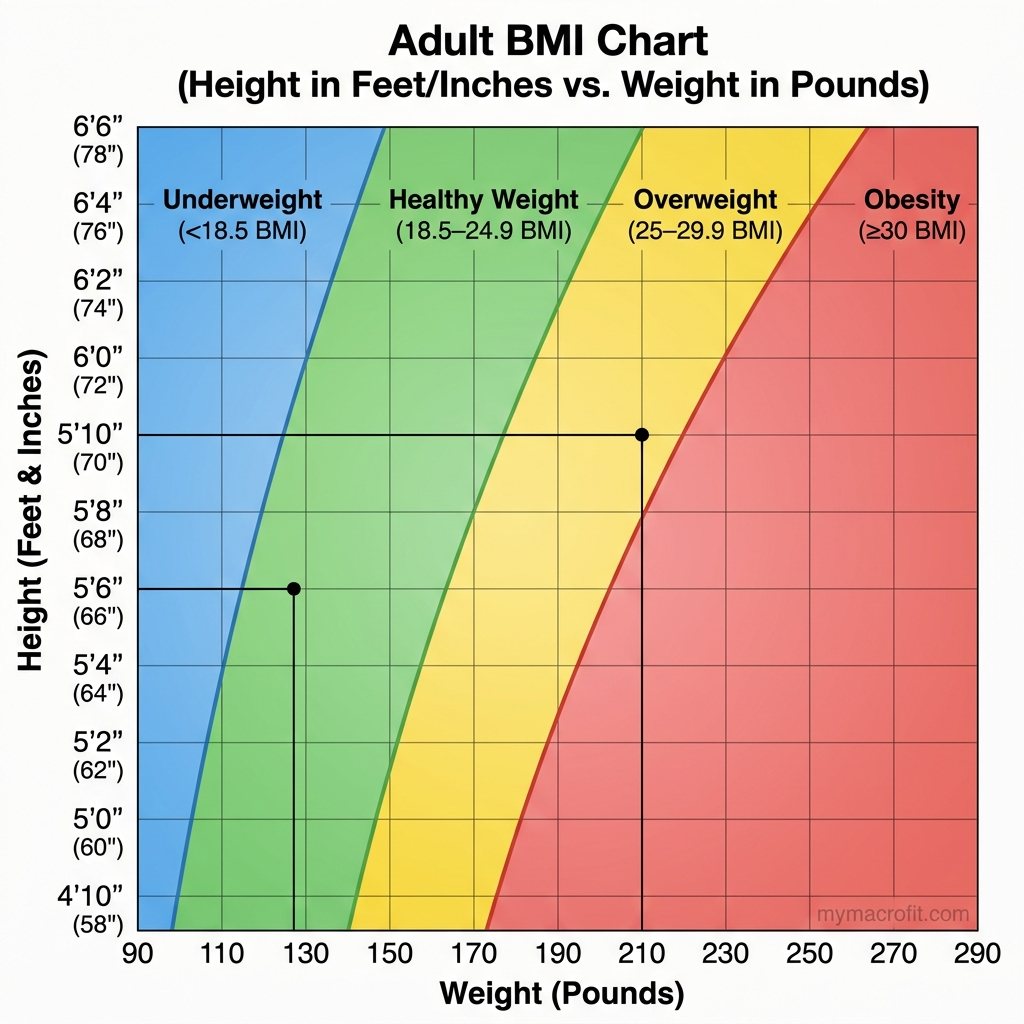
The BMI Chart: Categories and Ranges
Adults (18+ years)
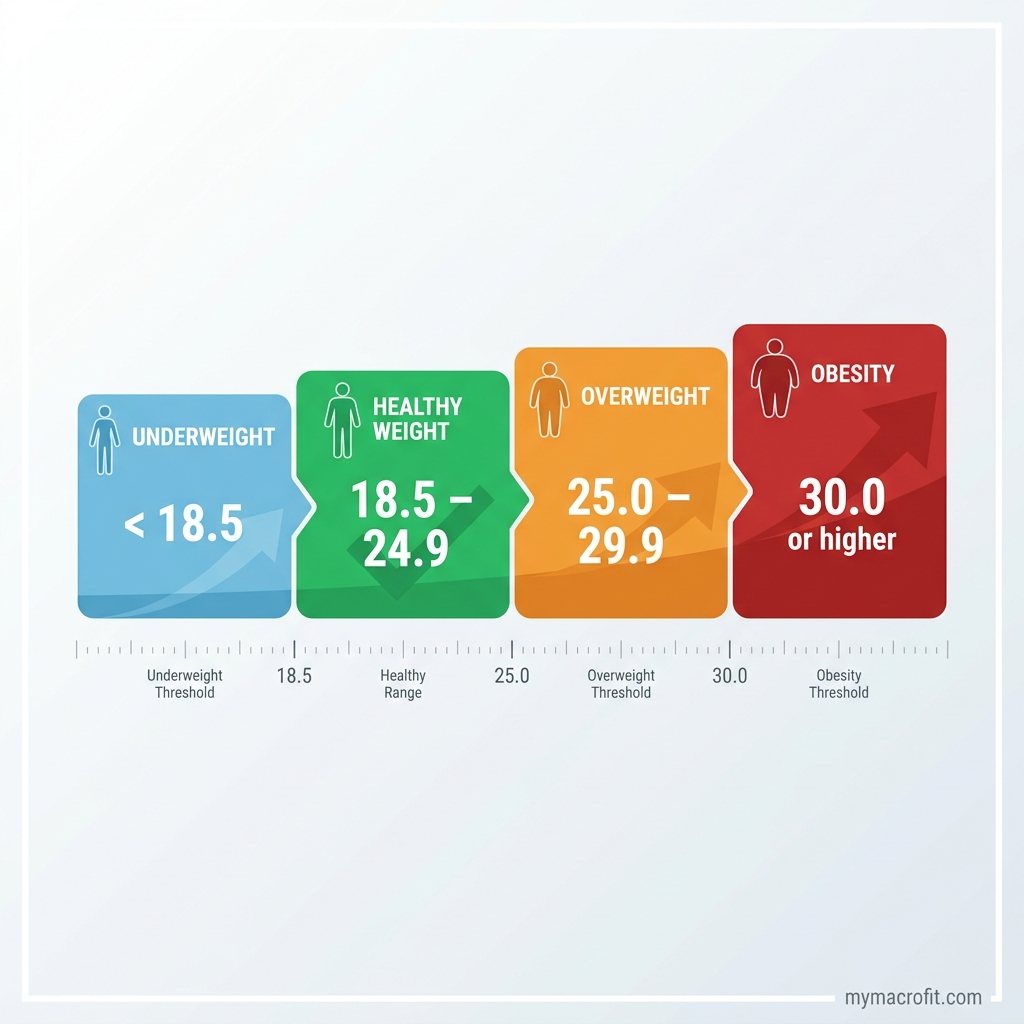
| BMI Range | Category |
|---|---|
| Below 18.5 | Underweight |
| 18.5-24.9 | Healthy weight |
| 25.0-29.9 | Overweight |
| 30.0-34.9 | Obese (Class I) |
| 35.0-39.9 | Obese (Class II) |
| 40.0 and above | Severely obese (Class III) |
These categories are the same for men and women in standard WHO and NHS guidelines. However, the health risk thresholds differ slightly by ethnicity (see below).
What Is a Healthy BMI?
A BMI between 18.5 and 24.9 is considered the healthy range for most adults. People in this range have the lowest statistical risk of weight-related health conditions including:
- Type 2 diabetes
- Cardiovascular disease
- High blood pressure
- Certain cancers
- Sleep apnoea
Being in the healthy range doesn't guarantee good health, and being outside it doesn't guarantee poor health. BMI is a statistical tool, not a health verdict.
BMI for Different Ethnic Groups
The standard BMI thresholds were developed primarily on European populations. Research has consistently shown that:
South Asian, Chinese, and Japanese populations:
- Develop metabolic risk at lower BMI values
- Overweight threshold: 23.0 (vs standard 25.0)
- Obese threshold: 27.5 (vs standard 30.0)
Black/African populations:
- May have higher BMIs due to greater muscle mass and bone density without corresponding metabolic risk
The World Health Organisation recommends population-adjusted thresholds for Asian populations, though most countries still use the universal standards clinically.
The Key Limitations of BMI
BMI is a useful screening tool, but it has significant limitations at the individual level:
1. It can't distinguish muscle from fat
This is the most critical limitation. A muscular athlete and a sedentary person can have identical BMIs with vastly different health profiles.
Example: A 90 kg man at 1.78 m has a BMI of 28.4 (overweight). If he's a rugby player with 12% body fat, he's in excellent health. If he's sedentary with 30% body fat, his health risk is real. BMI treats them identically.
2. It doesn't account for fat distribution
Visceral fat (fat around organs) is far more health-relevant than subcutaneous fat (fat under skin). BMI doesn't distinguish between the two. A person with a healthy BMI but high waist circumference (indicating visceral fat) may have greater health risk than someone with a slightly elevated BMI who stores fat peripherally.
3. It doesn't account for age
Muscle mass naturally declines with age. An older adult with a "healthy" BMI may have very little muscle and relatively high fat mass, a condition called "sarcopenic obesity" that BMI completely misses.
4. Sex differences
Women naturally carry more fat than men for hormonal and reproductive reasons. A woman with BMI 25 may be at a very different health position than a man with BMI 25.
Better Metrics to Use Alongside BMI
| Metric | What It Measures | How to Use |
|---|---|---|
| Waist circumference | Visceral fat | Men: risk above 102cm / Women: risk above 88cm |
| Waist-to-height ratio | Central obesity | Keep waist below half your height |
| Body fat % | Actual fat mass | More meaningful for fitness tracking |
| Waist-to-hip ratio | Fat distribution | Measure waist and hip, calculate ratio |
Waist-to-height ratio is particularly useful because it's a single number that accounts for body size: simply keep your waist circumference below half your height. A 175 cm person should aim for a waist under 87.5 cm.
What If Your BMI Is in the Overweight Range?
A BMI of 25-29.9 (overweight) is a yellow flag, not an emergency. It means your weight may be associated with increased health risk, but it depends heavily on:
- Your body composition (muscle vs fat)
- Your waist circumference (fat distribution)
- Your metabolic markers (blood pressure, blood glucose, cholesterol)
- Your physical fitness and activity level
A muscular person with BMI 27 who exercises regularly, has a normal waist circumference, and good metabolic markers likely has lower health risk than a sedentary person with BMI 22.
That said, if you have a BMI above 25 and aren't particularly muscular, working toward a BMI of 22-24 is a reasonable health-improvement goal.
What If Your BMI Is in the Obese Range?
A BMI above 30 is associated with significantly increased health risks for most people. These are statistical associations based on large populations, individual cases always vary, but the general direction of the evidence is clear.
If your BMI is above 30, the most beneficial single changes are:
- Dietary change to achieve a modest calorie deficit (300-500 kcal/day)
- Regular physical activity, even walking 30 minutes daily has significant health benefits at this BMI range
- Medical review to check blood pressure, glucose, and cholesterol

What If Your BMI Is Underweight (below 18.5)?
A BMI below 18.5 indicates insufficient weight for your height. This can result from inadequate food intake, underlying illness, or, in athletes, extremely low body fat combined with muscle mass.
Underweight individuals are at risk of:
- Nutritional deficiencies
- Bone density loss (osteopenia/osteoporosis)
- Immune suppression
- Hormonal disruption (particularly in women: irregular or absent menstrual cycles)
- Impaired wound healing and recovery
If you're underweight, consult a GP or registered dietitian to assess the cause and develop a safe plan to reach a healthy weight.
The Bottom Line
BMI is a useful starting point, a quick screening tool that requires no equipment and correlates reasonably well with population-level health outcomes. But it's not a definitive health assessment at the individual level.
Use it as one data point alongside waist circumference, physical fitness, and how you feel and perform. The goal isn't a specific number on a chart, it's genuine health and function.
Save & share on Pinterest
Click any card to pin it — or share with someone who needs it.
BMI Chart: What Does Your Number Mean?
A complete guide to BMI, what the numbers mean, the BMI chart for men and women, the limitations of …
A complete guide to BMI, what the numbers mean, the BMI chart for men and women,…
Read the full guide: BMI Chart: What Does Your Number Mean?
Try the free BMI Calculator
BMI Chart: What Does Your Number Mean? — use our free calculators for instant personalised results. …
Pinterest opens in a new tab. You can edit the description before saving.
Ready to get your numbers?
Free calculator, instant results, no signup required.
Frequently Asked Questions
What is a healthy BMI for adults?+
Is BMI different for men and women?+
What BMI is considered obese?+
Can you have a normal BMI but still be unhealthy?+
Why does BMI say I'm overweight when I lift weights?+
What's a better measurement than BMI?+
Does BMI work for older adults and different ethnicities?+
About the Author

I'm a kinesiologist and personal trainer. I've spent eight years helping women lose fat and get stronger without handing their whole life over to a diet.
View full profile →