How Much Water Should You Drink a Day? (Based on Your Weight and Activity)

RHC · Pre/Postnatal Fitness Specialist
"Drink 8 glasses of water a day" might be the most repeated health advice on the planet, and one of the least thoughtful. It treats every body as identical, which is something I've never once found to be true. An 80kg athlete training in summer heat and a 55kg office worker in a cool climate are living in completely different bodies, with completely different needs. A single number can't honestly serve them both.
So let's replace the slogan with something that actually listens to your body, your weight, your movement, your circumstances. And just as importantly, let's learn to read the signals your body is already giving you, because it's been quietly telling you all along.
The Body Weight Formula for Daily Water Intake
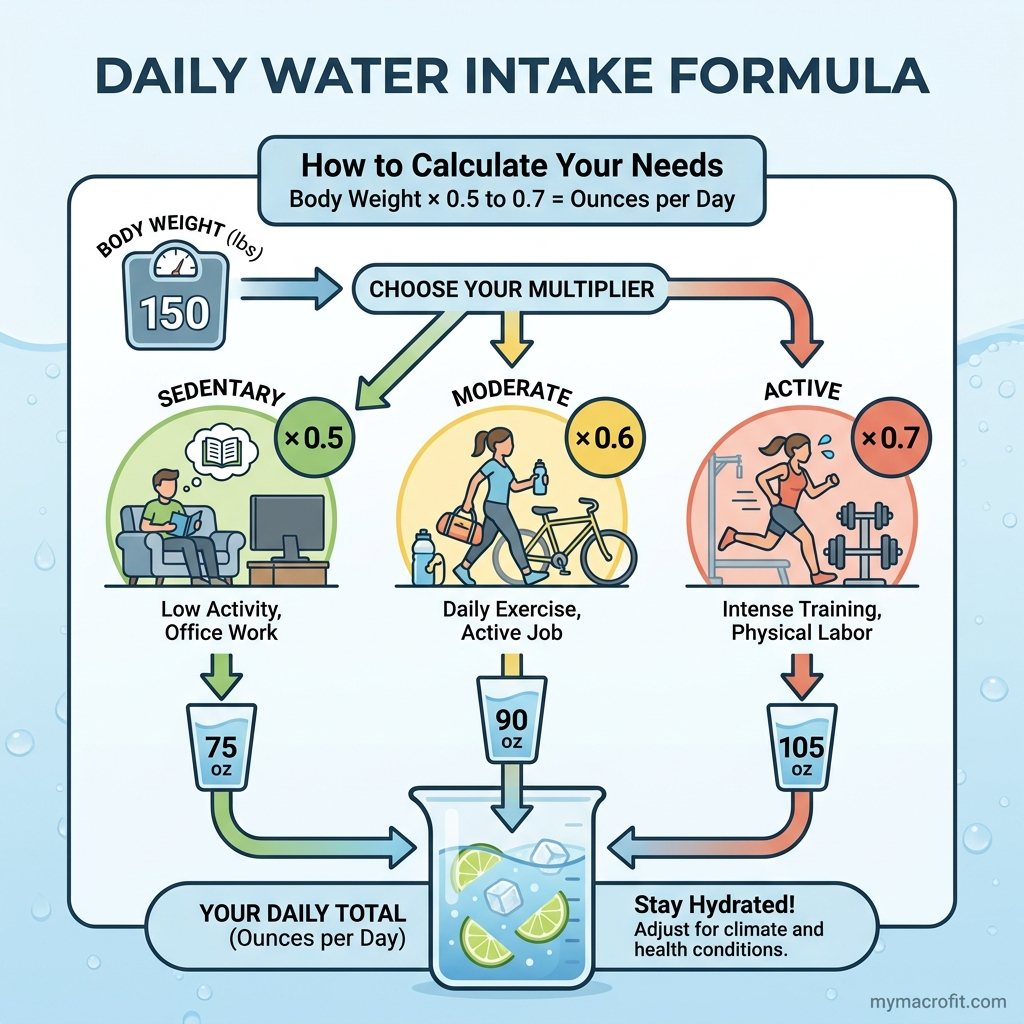
The most practical starting point is a bodyweight-based calculation:
Daily water intake = 30-35ml per kg of body weight
| Body Weight | Baseline Water Need (30ml/kg) | Higher Activity (35ml/kg) |
|---|---|---|
| 50kg | 1.5 litres | 1.75 litres |
| 55kg | 1.65 litres | 1.93 litres |
| 60kg | 1.8 litres | 2.1 litres |
| 65kg | 1.95 litres | 2.28 litres |
| 70kg | 2.1 litres | 2.45 litres |
| 75kg | 2.25 litres | 2.63 litres |
| 80kg | 2.4 litres | 2.8 litres |
| 85kg | 2.55 litres | 2.98 litres |
| 90kg | 2.7 litres | 3.15 litres |
| 100kg | 3.0 litres | 3.5 litres |
This is your baseline before accounting for exercise, heat, or other modifying factors.
For a fully personalised recommendation, use our Water Intake Calculator.
Adjustments for Exercise
During exercise, you lose water through sweat at a rate that varies significantly by intensity, temperature, and individual sweat rate. General guidelines:
- Low intensity exercise (30-45 min): Add 400-600ml
- Moderate exercise (45-60 min): Add 600-800ml
- High intensity exercise (60+ min): Add 800ml-1L+
- Endurance sport (90+ min): Add 1-1.5L or more
A practical method: weigh yourself before and after a workout. Every 0.5kg of weight lost represents approximately 500ml of fluid that needs replacing.
For sessions longer than 60 minutes, plain water may not be sufficient, electrolytes (particularly sodium) help the body retain and absorb water more effectively.
Adjustments for Other Factors
| Factor | Additional Water Needed |
|---|---|
| Hot weather / high humidity | Add 300-500ml |
| Air conditioning / heated environments | Add 200-300ml |
| High-fibre diet | Add 200-400ml (fibre absorbs water) |
| Alcohol (per standard drink) | Add 250-350ml |
| Pregnancy | Add 300ml above baseline |
| Breastfeeding | Add 700-1000ml above baseline |
| Illness with fever / diarrhoea / vomiting | Significantly more, consult a doctor |
Signs You're Not Drinking Enough Water
Your body signals dehydration well before you feel thirsty, thirst is actually a relatively late indicator. Watch for:
Early Signs (Mild Dehydration, 1-2% fluid loss)
- Urine that is dark yellow or amber
- Reduced urine frequency
- Mild fatigue or low energy
- Difficulty concentrating or "brain fog"
- Mild headache
- Dry mouth
Moderate Dehydration (2-5% fluid loss)
- Headache that persists through the day
- Noticeably reduced physical performance
- Muscle cramps (particularly during exercise)
- Dizziness or lightheadedness when standing
- Dry skin
- Constipation
Severe Dehydration (5%+ fluid loss)
Seek medical attention for: extreme thirst, rapid heartbeat, dark brown urine, confusion, or no urination for 8+ hours.
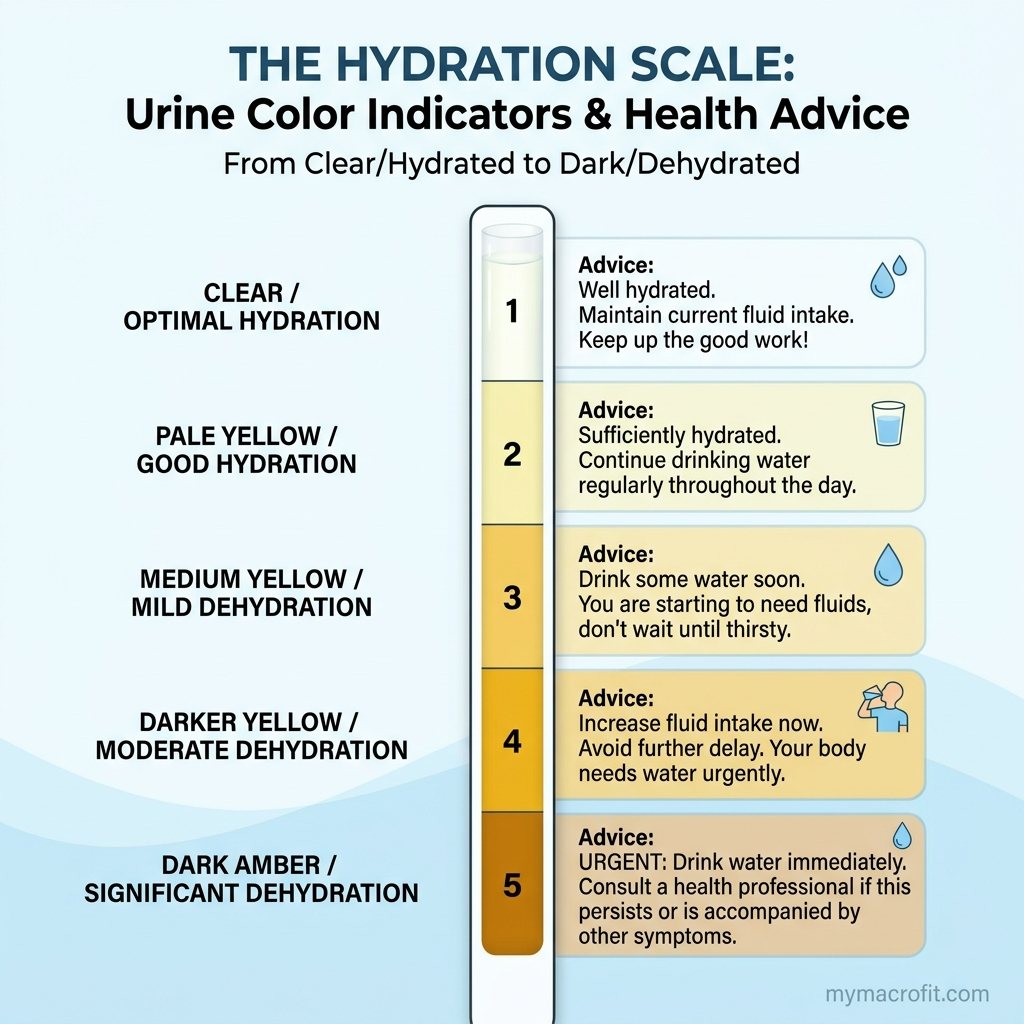
The Urine Colour Test
The simplest, most reliable real-time hydration check is urine colour:
| Colour | Hydration Status |
|---|---|
| Pale yellow (straw colour) | Well hydrated |
| Clear/colourless | Possibly overhydrated (dilutes electrolytes) |
| Medium yellow | Slightly underhydrated, drink some water |
| Dark yellow | Underhydrated, drink water now |
| Amber/orange | Significantly dehydrated |
| Brown | Severely dehydrated, seek medical advice |
Aim for pale yellow at most urinations.
Best Hydration Habits
Front-Load Your Water Intake
Most people drink very little water in the morning and then try to catch up in the evening. This doesn't work well, your kidneys can only process about 800ml-1L of water per hour, and drinking too much too quickly dilutes electrolytes. Instead, start drinking from the moment you wake up and distribute intake throughout the day.
A practical schedule:
- Wake up: 500ml (replaces overnight losses)
- Mid-morning: 500ml
- With lunch: 400-500ml
- Mid-afternoon: 400ml
- With dinner: 400ml
- Before and during exercise: as needed
Eat Your Water
Roughly 20% of daily water intake typically comes from food. High water-content foods include:
| Food | Water Content |
|---|---|
| Cucumber | 96% |
| Lettuce | 95% |
| Celery | 95% |
| Courgette | 94% |
| Watermelon | 92% |
| Strawberries | 91% |
| Broccoli | 89% |
| Oranges | 87% |
| Greek yogurt | 80% |
This water counts toward your daily total.
Use a Water Bottle You'll Actually Carry
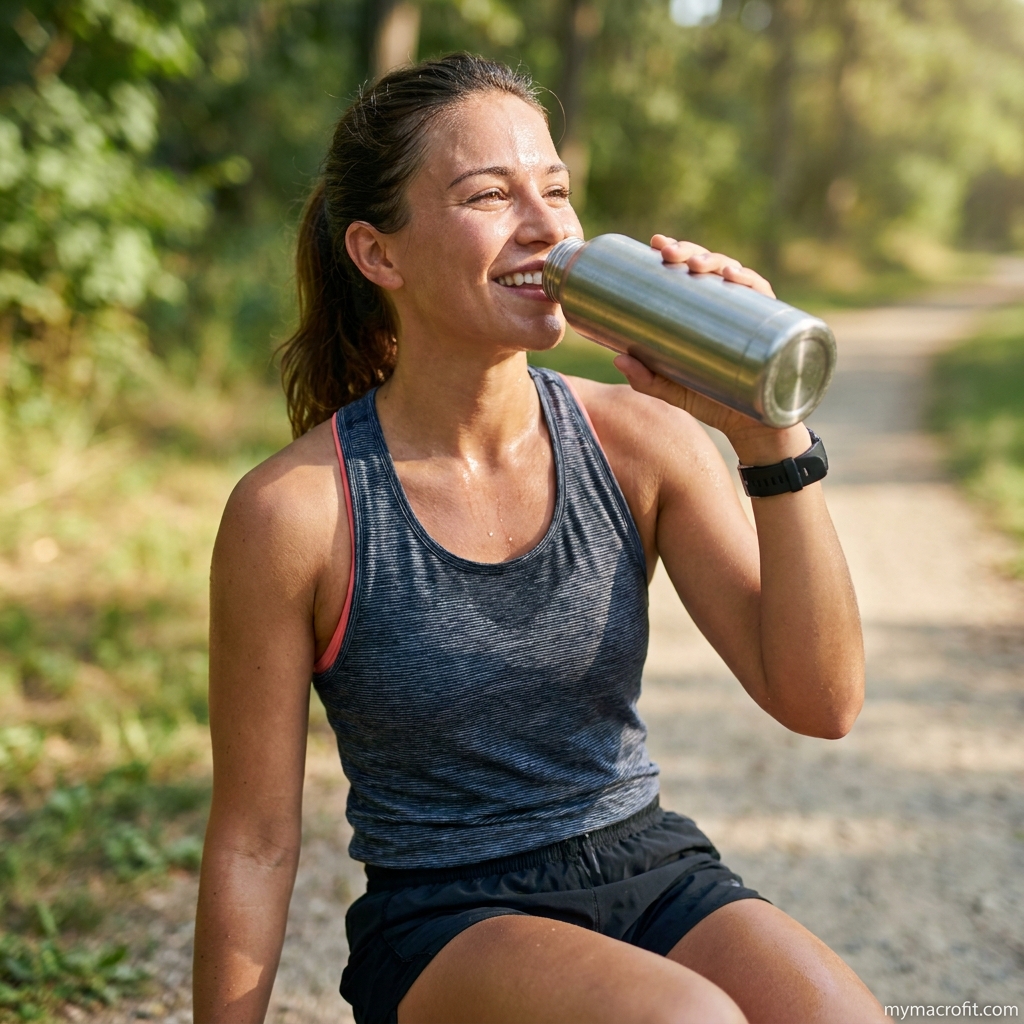
Behavioural research consistently shows that visible water bottles increase intake. A 1L bottle that you refill twice gives you 2 litres with minimal effort. A bottle left at home does nothing.
Set Hourly Reminders if Needed
If you routinely forget to drink water during a busy workday, set phone reminders every 90 minutes. After 2-3 weeks of reminders, the habit typically becomes automatic.
Does Coffee and Tea Count?
Yes, with caveats. Despite the myth that caffeine is severely dehydrating, research shows that moderate coffee and tea consumption (3-4 cups per day) contributes positively to total fluid intake. The mild diuretic effect of caffeine is offset by the water content of the beverage itself.
However, very high caffeine intake (6+ cups per day) or energy drinks can tip toward net dehydration. And neither coffee nor tea replaces plain water as the primary hydration source.
Water and Weight Loss
Adequate hydration supports fat loss through several mechanisms:
- Proper hydration maintains resting metabolic rate (mild dehydration reduces metabolism by 2-3%)
- Drinking 500ml of water before meals reduces calorie intake at those meals in some studies
- Thirst is often confused with hunger, dehydration can present as food cravings
- Good hydration supports kidney function, which helps the body process and excrete fat metabolism by-products
None of these effects are dramatic, but together they're meaningful.
The Bottom Line
The right amount of water for you is based on your body weight, activity level, and personal circumstances, not a generic 8-glass recommendation. Use the weight-based formula (30-35ml per kg) as your baseline, add for exercise and heat, and monitor urine colour as your daily check.
Use our Water Intake Calculator for a personalised daily target, and aim for consistent intake throughout the day rather than drinking reactively when you're already thirsty.
Save & share on Pinterest
Click any card to pin it — or share with someone who needs it.
How Much Water Should You Drink a Day? (Based on Your Weight and Activity)
How much water you should drink per day based on your body weight, activity level, and climate, with…
How much water you should drink per day based on your body weight, activity leve…
Read the full guide: How Much Water Should You Drink a Day? (Based on Your Weight and Activity)
Try the free Water Intake Calculator
How Much Water Should You Drink a Day? (Based on Your Weight and Activity) — use our free calculator…
Pinterest opens in a new tab. You can edit the description before saving.
Ready to get your numbers?
Free calculator, instant results, no signup required.
Frequently Asked Questions
How much water should I drink per day?+
Does the 8 glasses of water per day rule hold up?+
Can you drink too much water?+
Does drinking more water help with weight loss?+
About the Author

I'm a registered health coach and pre/postnatal specialist. I look at the whole person, your sleep, your stress, your hormones, because the number on the scale is only ever part of the story.
View full profile →