How to Eat in a Calorie Deficit Without Being Hungry All the Time

CN · Metabolic Health Coach
I want to retire a myth that has caused more diet failures than any other: that successful fat loss requires gritting your teeth through constant hunger. It doesn't. In all my years coaching, the people who succeed aren't the ones with superhuman willpower, they're the ones who learned to build meals that keep them full while in a deficit.
Because here's the truth that took me years to fully appreciate: hunger is not a measure of how hard you're trying. It's mostly a measure of what's on your plate. Being in a calorie deficit doesn't have to mean being hungry all day, but it does mean eating differently, not just less. This guide is everything I teach clients about how.
Why Conventional Diets Make You Hungry
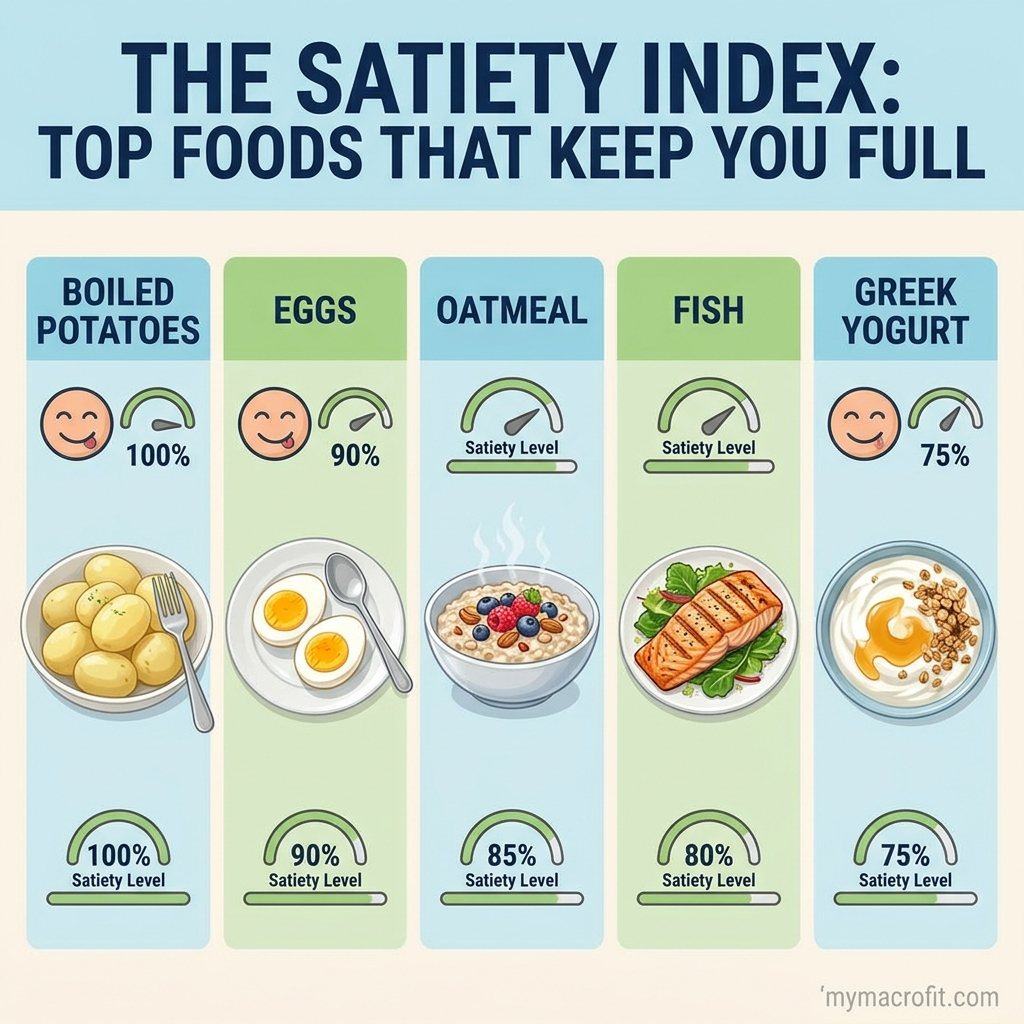
Most people approach a calorie deficit by simply eating smaller portions of the same foods they already eat. Half the pasta. One less slice of bread. A smaller plate. This creates a psychological sense of deprivation, you're looking at the same meal and seeing what's missing.
The better approach is to change the composition of what you eat rather than just the quantity. Certain foods are significantly more filling per calorie than others, and understanding why is the key to eating in a deficit without suffering.
The 4 Satiety Mechanisms to Know
1. Volume, physical stomach stretch Your stomach has stretch receptors that signal fullness when it's physically full. High-volume, low-calorie foods trigger these receptors even though they don't contribute many calories.
2. Protein, hormonal satiety signals Protein stimulates the release of GLP-1 and PYY, two satiety hormones that reduce appetite. It also suppresses ghrelin (the hunger hormone) more effectively than carbohydrates or fat.
3. Fibre, digestive slowdown Dietary fibre slows gastric emptying, keeping food in your stomach longer. Soluble fibre forms a gel that slows carbohydrate absorption, reducing blood sugar spikes and the hunger crashes that follow.
4. Protein thermic effect, metabolic benefit Your body burns 20-30% of protein calories just digesting them. A 500-calorie high-protein meal nets closer to 375-400 calories after the cost of digestion, making protein the most efficient macro for a deficit.
10 Foods That Keep You Full in a Calorie Deficit
These are the most satiety-per-calorie foods available:
1. Non-Fat Greek Yogurt
200g serving = ~110 calories, 20g protein. Thick, filling, and high in casein protein, the slow-digesting form that keeps you full for hours. Eat it at breakfast and you'll eat less at lunch.
2. Eggs
2 large eggs = ~143 calories, 12g protein. Studies consistently show that a high-protein breakfast (like eggs) reduces calorie intake at subsequent meals. Eggs contain leucine, the amino acid most responsible for satiety signalling.
3. Legumes (Lentils, Chickpeas, Kidney Beans)
200g cooked lentils = ~230 calories, 18g protein, 16g fibre. The combination of protein and fibre in legumes is unmatched in the plant food world. A study in the journal Obesity found that people who ate a serving of legumes daily felt 31% fuller.
4. Oats
80g dry oats = ~300 calories, 11g protein, 7g fibre. Beta-glucan, the soluble fibre in oats, forms a viscous gel that significantly slows stomach emptying. Oats for breakfast is one of the most evidence-backed hunger management strategies available.
5. White Fish (Cod, Haddock, Pollock)
150g cod = ~123 calories, 30g protein. The highest protein-to-calorie ratio of almost any whole food. White fish contains a protein that specifically triggers cholecystokinin (CCK), a gut hormone that signals fullness to the brain.
6. Chicken Breast
150g = ~248 calories, 46g protein. The calorie-per-gram-of-protein ratio makes chicken breast the core of virtually every successful fat loss diet. A 150g portion at lunch is almost certain to keep hunger at bay until dinner.
7. Broccoli, Courgette, and Non-Starchy Vegetables
200g broccoli = ~70 calories. These foods provide almost unlimited volume with very few calories. Filling half your plate with non-starchy vegetables is the simplest volume eating strategy available.
8. Cottage Cheese
200g low-fat = ~144 calories, 24g protein. High in casein protein, slower digesting than whey, providing a longer satiety window. Works well as a late-night snack because the slow digestion prevents late-night hunger pangs.
9. Apples and High-Fibre Fruit
1 medium apple = ~80 calories, 4g fibre. Chewing whole fruit signals satiety more effectively than drinking the same calories in juice form. The fibre and water content of whole fruit creates significant volume relative to the calorie content.
10. Canned Tuna
1 can (145g) in water = ~168 calories, 34g protein. One of the cheapest, most convenient high-protein foods available. A tuna salad with vegetables at lunch is filling, fast, and very low in calories.
Volume Eating: The Core Strategy
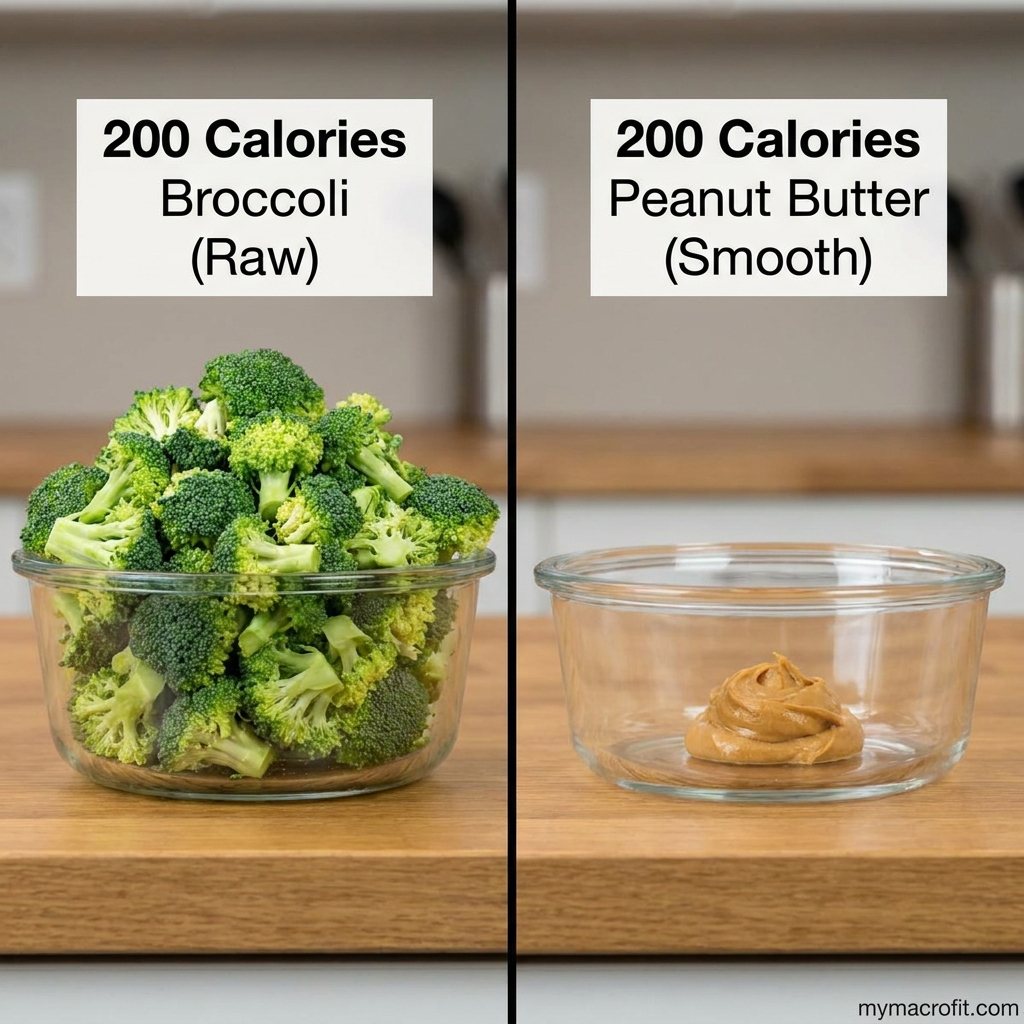
Volume eating means maximising the physical amount of food you eat for any given calorie target. The principle is simple: eat foods that have a high volume-to-calorie ratio so your stomach is physically full while you remain in a deficit.
Low volume, high calorie foods (avoid as staples):
- Nut butter (90 kcal per tablespoon)
- Olive oil (120 kcal per tablespoon)
- Granola (400+ kcal per 100g)
- Cheese (350-400 kcal per 100g)
- Dried fruit (250-300 kcal per 100g)
High volume, low calorie foods (build meals around these):
| Food | Amount | Calories |
|---|---|---|
| Courgette | 300g | ~50 kcal |
| Cucumber | 300g | ~45 kcal |
| Lettuce/spinach | 100g | ~20 kcal |
| Broccoli | 200g | ~70 kcal |
| Cherry tomatoes | 200g | ~40 kcal |
| Mushrooms | 200g | ~44 kcal |
| Strawberries | 200g | ~64 kcal |
| Watermelon | 300g | ~90 kcal |
| Egg whites | 200g | ~104 kcal |
| Chicken broth/soup | 400ml | ~30 kcal |
Meal Timing Strategies That Reduce Hunger
Eat a Larger Breakfast
Research consistently shows that eating more calories earlier in the day reduces total daily calorie intake. A large, protein-rich breakfast suppresses appetite more effectively than a small breakfast and large dinner.
Don't Skip Meals to "Save Calories"
Skipping meals causes blood sugar to drop, which triggers intense hunger and increases the likelihood of overeating at the next meal. Three structured meals (plus a snack if needed) maintains steadier blood sugar and more manageable appetite.
Include Soup as a Starter
Studies show that starting a meal with a low-calorie soup (broth-based, not cream) reduces total meal calorie intake by an average of 20%. The liquid volume fills the stomach before the main meal arrives.
Eat Slowly
Satiety hormones take 15-20 minutes to reach the brain. Eating a meal in 5 minutes means you've consumed everything before your body has signalled fullness. Eating slowly, chewing thoroughly, and pausing between bites allows satiety to develop naturally.
Practical 1-Day Menu for a Filling Calorie Deficit
This day of eating totals ~1500 kcal and incorporates all the satiety strategies above:
| Meal | Food | Calories | Protein |
|---|---|---|---|
| Breakfast | 80g oats + 200g Greek yogurt + berries | 380 kcal | 25g |
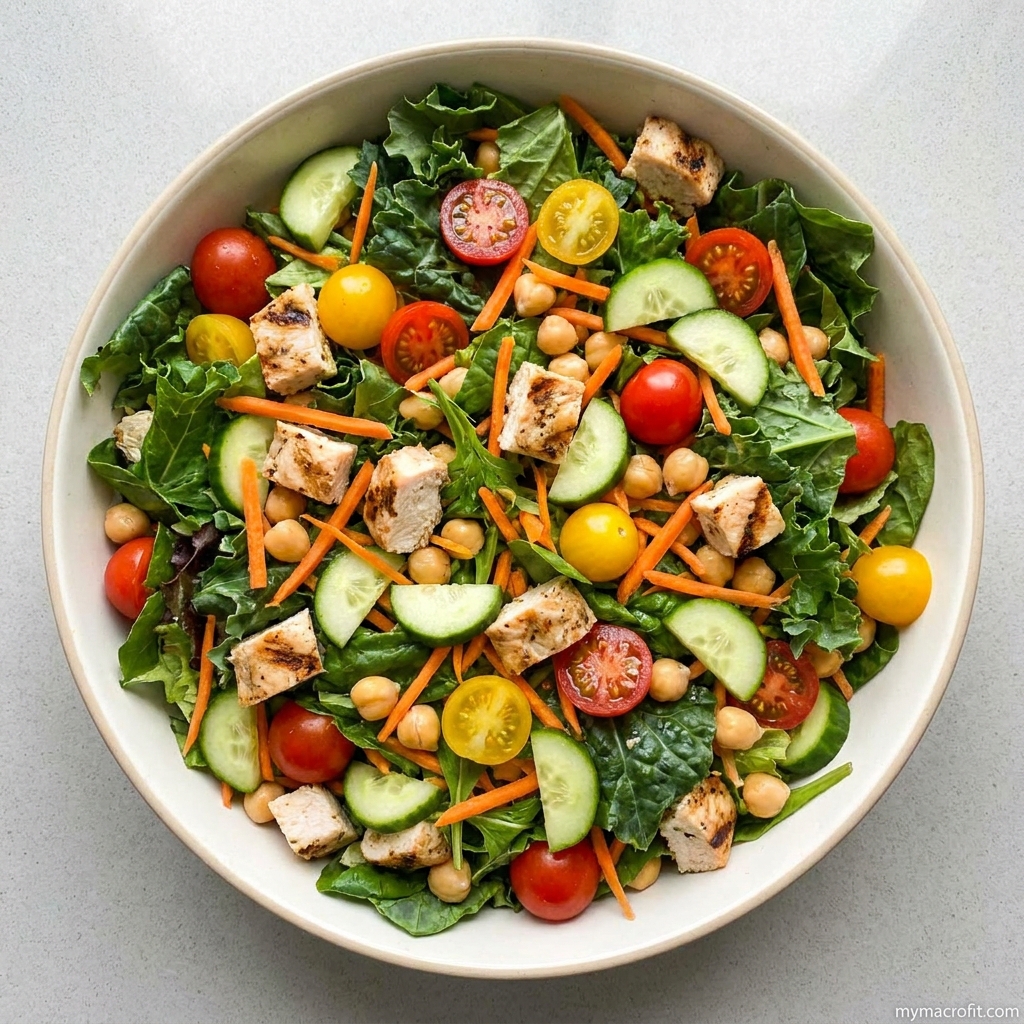
| Lunch | 150g chicken breast + large salad + lemon dressing | 320 kcal | 44g |
| Snack | 1 apple + 100g cottage cheese | 160 kcal | 12g |
| Dinner | 150g cod + 300g roasted vegetables + broth-based soup | 380 kcal | 36g |
| Evening | 150g Greek yogurt | 80 kcal | 15g |
| Total | ~1320 kcal | 132g |
This is a large amount of food for 1320 calories, but you could also adjust portions up to 1500-1600 kcal and still be in a meaningful deficit.
Set Your Deficit Correctly
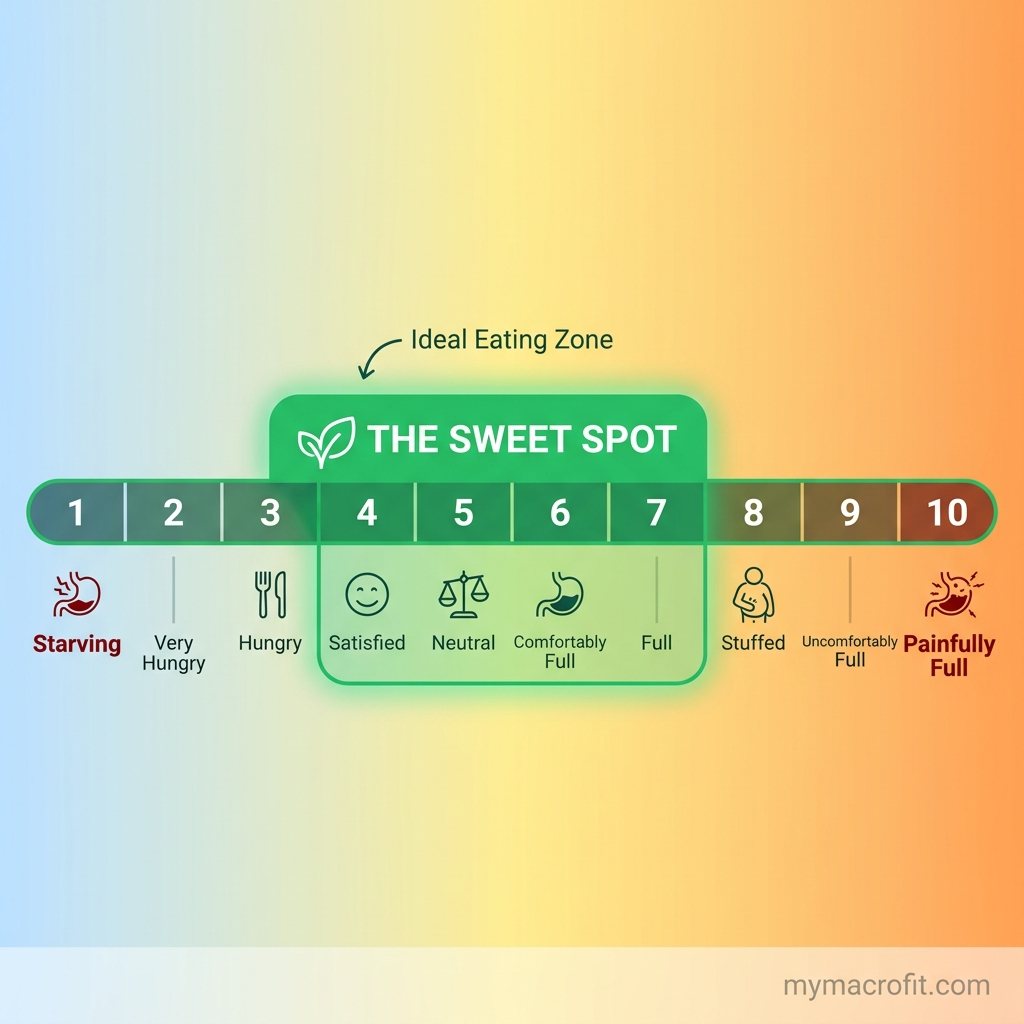
Use our Calorie Deficit Calculator to find a deficit that's sustainable. A 300-500 calorie deficit below TDEE is typically the sweet spot for fat loss without unsustainable hunger. Larger deficits might produce faster results initially, but they also produce more hunger, more muscle loss, and more metabolic adaptation.
The Bottom Line
Hunger in a calorie deficit is largely a function of food choice. When you build meals around high-protein, high-fibre, high-volume foods, and use meal timing strategies to maintain steady blood sugar, a calorie deficit becomes something you can sustain, not something you have to white-knuckle through.
The 10 foods in this guide are the foundation. Use them consistently, use the Calorie Deficit Calculator to set your target, and you'll find that a deficit doesn't have to mean constant hunger.
Sources
- Effects of dietary protein on body composition during weight loss, Helms et al., International Journal of Sport Nutrition, 2014
- Adaptive thermogenesis with weight loss, Rosenbaum & Leibel, Physiology, 2010
- NHS guidance on calorie intake and healthy eating, NHS, 2023
Save & share on Pinterest
Click any card to pin it — or share with someone who needs it.
How to Eat in a Calorie Deficit Without Being Hungry All the Time
How to stay in a calorie deficit without constant hunger, using volume eating, high-satiety foods, p…
How to stay in a calorie deficit without constant hunger, using volume eating, h…
Read the full guide: How to Eat in a Calorie Deficit Without Being Hungry All the Time
Try the free Calorie Deficit Calculator
How to Eat in a Calorie Deficit Without Being Hungry All the Time — use our free calculators for ins…
Pinterest opens in a new tab. You can edit the description before saving.
Ready to get your numbers?
Free calculator, instant results, no signup required.
Frequently Asked Questions
How big should my calorie deficit be?+
Why am I always hungry on a calorie deficit?+
Will I lose muscle on a calorie deficit?+
How long should I stay in a calorie deficit?+
About the Author

I'm a certified nutritionist and metabolic health coach. I went deep on keto and metabolism after reversing my own insulin resistance, and I'd rather give you the actual numbers than a hand-wave.
View full profile →