How to Lose Belly Fat After 40 (What Actually Works for Women)

BSc Kinesiology · CPT
I want to start by saying the thing I wish someone had said to me sooner: if you're over 40 and the diet that worked like a charm in your 30s has suddenly stopped touching the weight around your middle, you are not imagining it, and you have not become lazy. Something genuinely shifted in your body. I hear the self-blame in so many women's voices when they describe this, and it breaks my heart a little, because the problem was never your willpower. It's your hormones, and the moment you understand what they're doing, you can finally stop fighting blind.
The belly fat that settles in after 40, particularly around perimenopause, is metabolically different from fat elsewhere and at earlier life stages, it responds to different signals and needs a different approach. Here's exactly what's driving it, and what genuinely helps.
Why Belly Fat Increases After 40 for Women
Declining Oestrogen Changes Fat Distribution
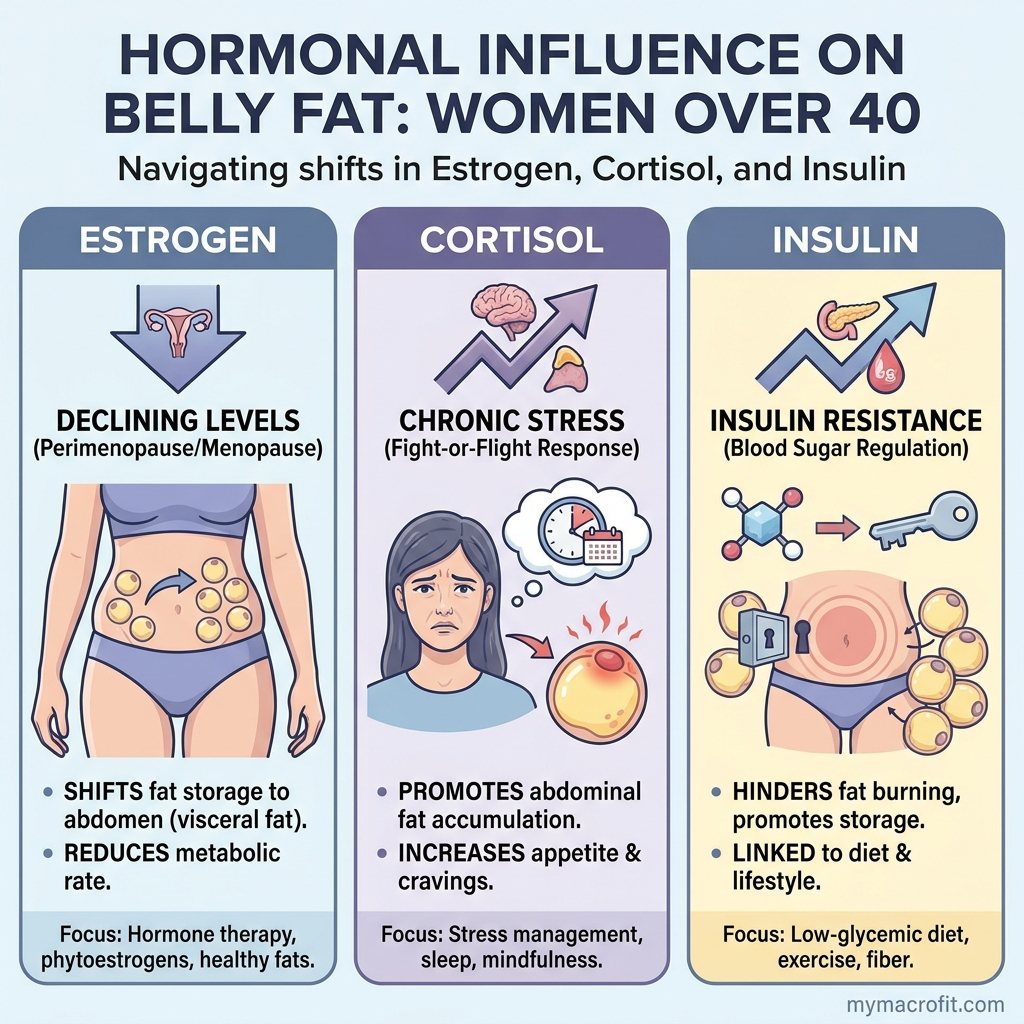
Throughout your reproductive years, oestrogen encourages fat storage in the hips, thighs, and buttocks, the classic pear shape. As oestrogen levels decline in perimenopause (which can begin in your late 30s), fat distribution shifts. Your body starts storing more fat centrally, around the abdomen.
This visceral fat, the kind that sits around your organs rather than just under your skin, is metabolically active and hormonally disruptive. It produces inflammatory signals that make further fat loss harder.
Cortisol Becomes More Problematic
Cortisol, your primary stress hormone, tells your body to store fat in the abdominal region. Under 40, oestrogen helps buffer cortisol's effects. When oestrogen drops, that buffering disappears. Chronic stress, poor sleep, and over-exercising all spike cortisol, and in a low-oestrogen environment, the result is stubborn belly fat that won't budge no matter how little you eat.
Muscle Mass Declines Without Intervention
Women naturally lose 3-5% of muscle mass per decade from their 30s onward. Less muscle means a lower resting metabolic rate. If you're eating the same number of calories you ate at 35, you may now be in a calorie surplus even without changing anything. This is why the old approach stops working.
Insulin Sensitivity Decreases
After 40, most women experience some degree of reduced insulin sensitivity. This means your body becomes less efficient at processing carbohydrates, leading to higher blood sugar spikes and greater fat storage. The solution isn't necessarily low-carb, but it does mean the quality and timing of carbohydrates matters more.
What Actually Works: The Evidence-Based Approach
1. Prioritise Strength Training Over Cardio
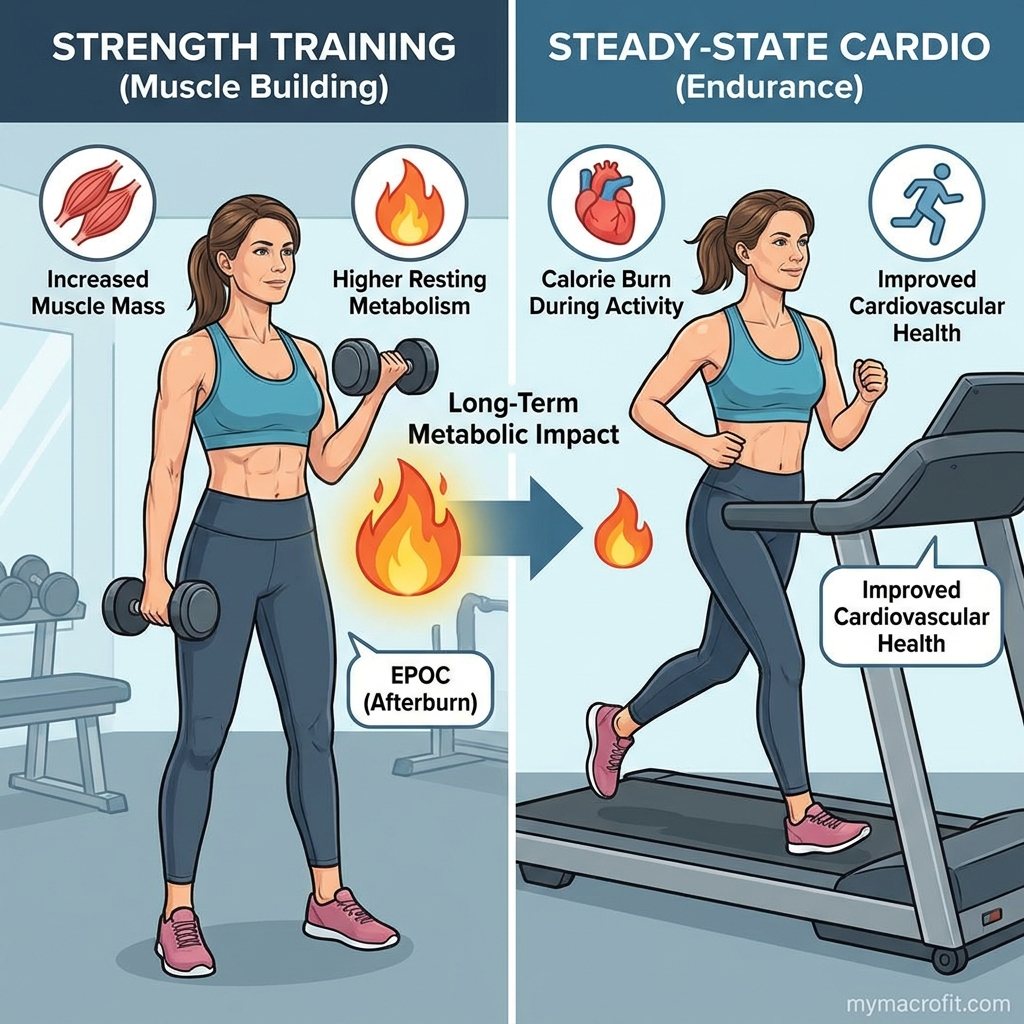
This is the most important shift women over 40 need to make. Cardio burns calories during the session but does little to change your resting metabolism. Strength training builds muscle tissue, which increases the number of calories your body burns at rest, 24 hours a day, 7 days a week.
Aim for 3 sessions per week of progressive resistance training: squats, deadlifts, rows, presses. You do not need to lift heavy to start, but you need to progressively increase the challenge over time. This is what builds muscle.
Research consistently shows that resistance training is more effective than cardio alone for reducing visceral belly fat in postmenopausal women.
2. Recalculate Your Calorie Needs
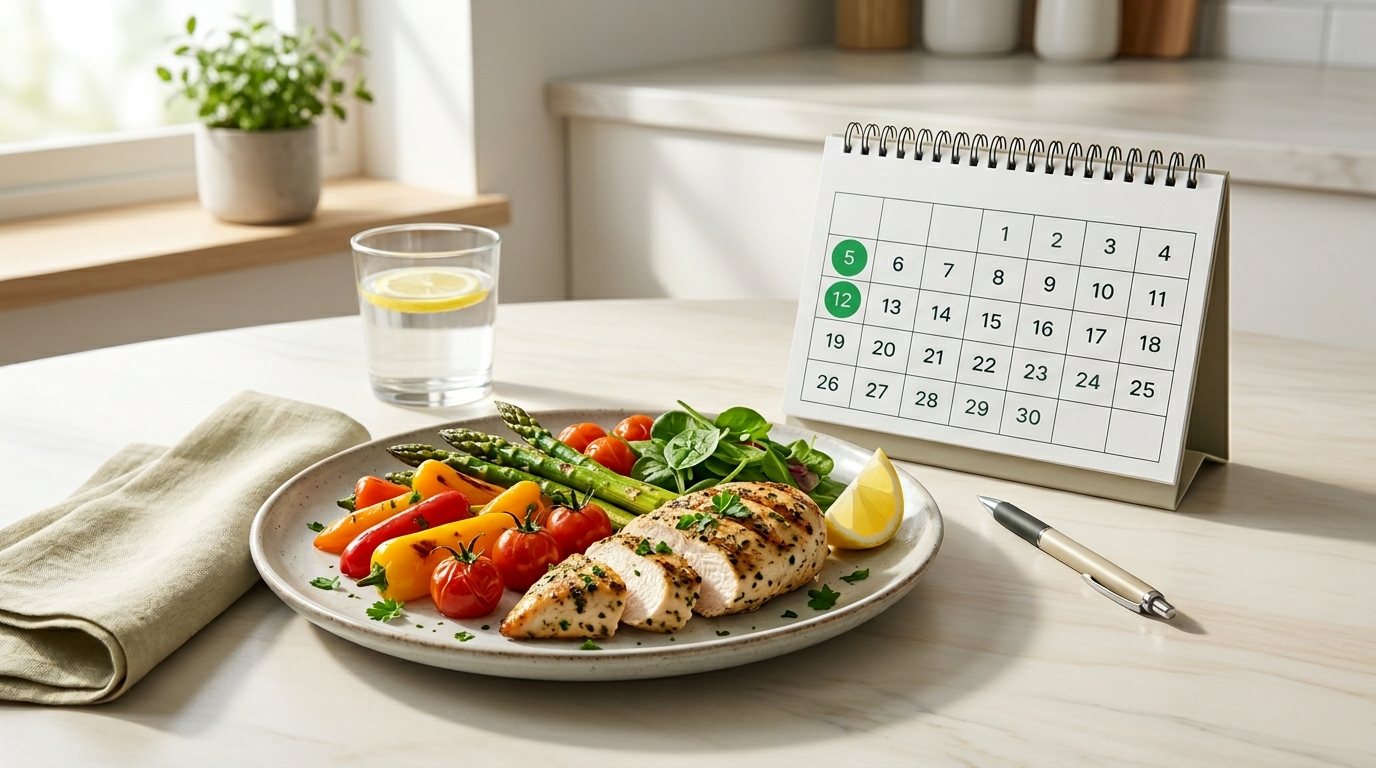
Because your metabolism has changed, your old calorie targets may no longer be appropriate. Use our TDEE Calculator to get an updated estimate of your Total Daily Energy Expenditure. Then set a modest deficit of 300-400 calories below that number, not a dramatic cut.
Aggressive calorie restriction after 40 backfires. It raises cortisol, accelerates muscle loss, and triggers your body's famine response, making fat storage more likely, not less.
3. Increase Protein Dramatically
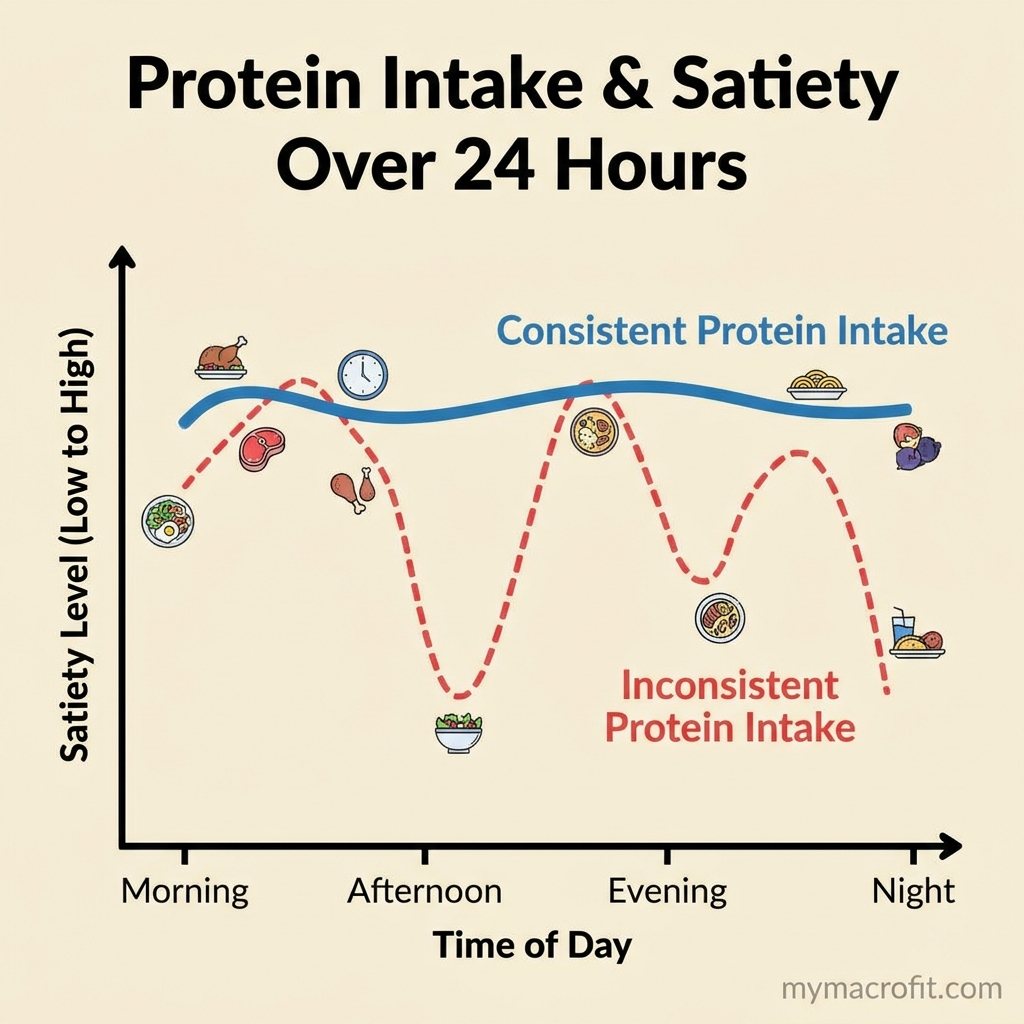
Protein becomes even more important after 40 for two reasons: it preserves muscle mass during fat loss, and it has a high thermic effect (your body burns 20-30% of protein calories just digesting them).
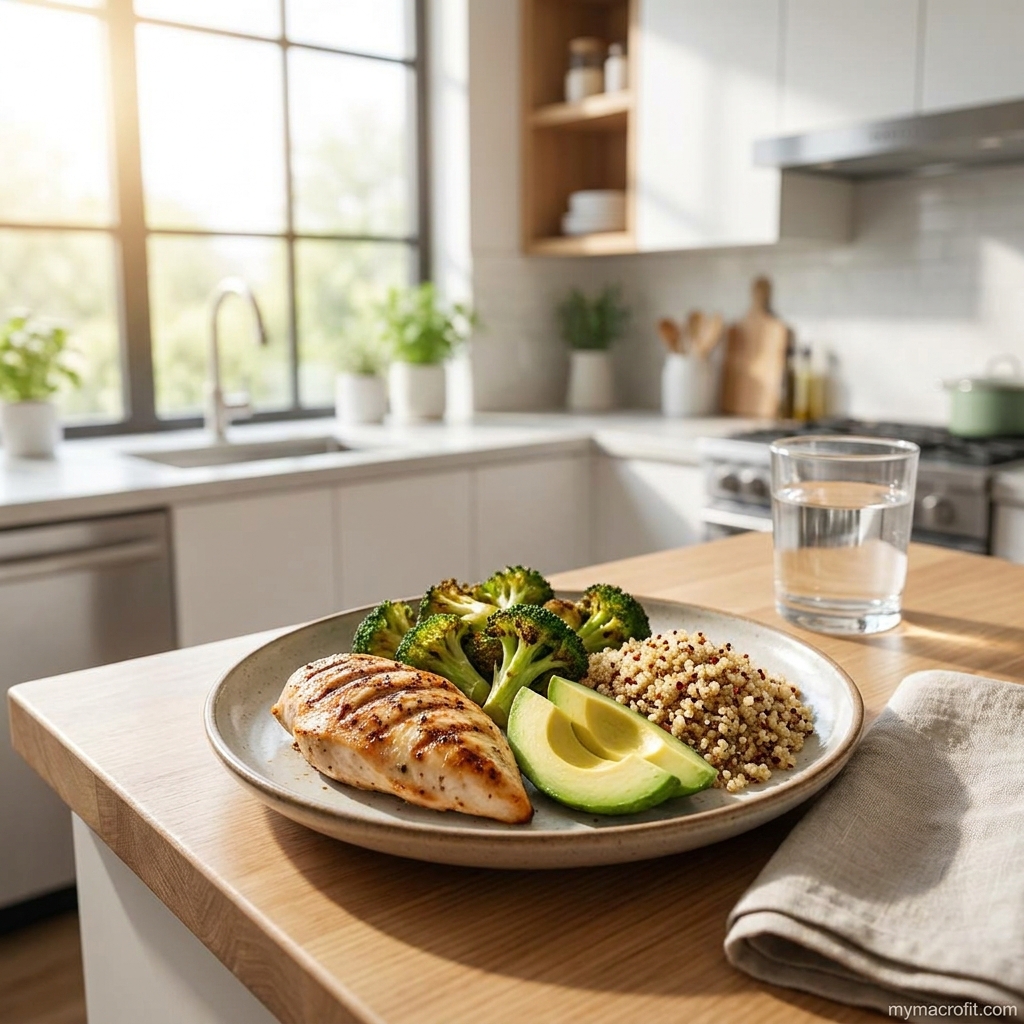
Target 1.8, 2.2g of protein per kg of body weight. For a 65kg woman, that's 117, 143g of protein per day. This is significantly more than most women eat. Spread it across 3, 4 meals and use high-quality sources: chicken breast, fish, eggs, Greek yogurt, cottage cheese, legumes.
4. Sleep Is Not Optional
Poor sleep is one of the most underrated drivers of belly fat in women over 40. Just two nights of poor sleep increases hunger hormones (ghrelin) by 28% and decreases satiety hormones (leptin) by 18%. It also directly elevates cortisol, driving central fat storage.
Most women over 40 need 7-9 hours of quality sleep. This means protecting a consistent sleep schedule, reducing evening screen exposure, limiting alcohol (which fragments sleep architecture even in small amounts), and managing stress before bed.
5. Manage Cortisol Deliberately
Reducing stress sounds vague, but the hormonal mechanism is real. High cortisol = central fat storage. Practical ways to lower chronic cortisol:
- Don't overtrain. More exercise is not always better. Five intense sessions per week can elevate cortisol chronically. Three to four well-structured sessions, with adequate recovery, produce better results.
- Limit caffeine after noon. Late caffeine delays sleep and raises evening cortisol.
- Include active recovery. Walks, yoga, and light stretching are recovery tools, not wasted days.
6. Reconsider Your Carbohydrate Quality
You don't need to eliminate carbohydrates, but the type matters more after 40. Refined carbohydrates (white bread, pastries, sweetened drinks) cause large blood sugar spikes, which increases insulin, which promotes fat storage. Switching to whole food carbohydrates, oats, sweet potato, legumes, fruits, vegetables, provides the same energy with a far lower glycaemic response.
Pairing carbohydrates with protein and fat also slows absorption and reduces blood sugar spikes.
The Belly Fat Trap: What Doesn't Work
| Common Approach | Why It Fails After 40 |
|---|---|
| Extreme calorie restriction | Raises cortisol, accelerates muscle loss |
| High-volume cardio only | Doesn't build muscle, can increase cortisol |
| Low-fat diet | Reduces hormones that depend on dietary fat |
| Cutting carbs completely | Often unsustainable, can worsen sleep and mood |
| Skipping meals | Creates blood sugar swings, increases cortisol |
A Realistic Timeline
Belly fat is often the first fat to be stored and the last to be lost. For women over 40, realistic expectations for sustainable fat loss are:
- 0.5-0.75kg per week of total weight, with body composition changes visible over 8-12 weeks
- Waist circumference reduction is often measurable before the scale moves significantly
- Visible belly fat changes typically occur after 10-16 weeks of consistent effort
The goal isn't to get the body you had at 25. The goal is to be leaner, stronger, and healthier in the body you have now, and that is absolutely achievable with the right approach.
What to Do This Week
- Recalculate your calorie needs with our TDEE Calculator
- Commit to 3 resistance training sessions
- Track your protein for 3 days, most women discover they're eating far less than they need
- Set a consistent sleep and wake time
- Replace one refined carbohydrate per day with a whole food alternative
The Bottom Line
Losing belly fat after 40 requires a different strategy than what worked before. The combination of declining oestrogen, reduced insulin sensitivity, greater cortisol sensitivity, and lower muscle mass all work against the old approach of "eat less and do more cardio."
What works is strength training, adequate protein, a modest calorie deficit, quality sleep, and cortisol management. It's not a quick fix, but it is a fix that works.
Save & share on Pinterest
Click any card to pin it — or share with someone who needs it.
How to Lose Belly Fat After 40 (What Actually Works for Women)
Why losing belly fat after 40 is different for women, and what actually works, covering hormones, co…
Why losing belly fat after 40 is different for women, and what actually works, c…
Read the full guide: How to Lose Belly Fat After 40 (What Actually Works for Women)
Try the free TDEE Calculator
How to Lose Belly Fat After 40 (What Actually Works for Women) — use our free calculators for instan…
Pinterest opens in a new tab. You can edit the description before saving.
Ready to get your numbers?
Free calculator, instant results, no signup required.
Frequently Asked Questions
Why do women gain belly fat after 40?+
What is the most effective exercise for belly fat after 40?+
Does menopause make it impossible to lose belly fat?+
What should women over 40 eat to lose belly fat?+
About the Author

I'm a kinesiologist and personal trainer. I've spent eight years helping women lose fat and get stronger without handing their whole life over to a diet.
View full profile →