Intermittent Fasting for Women: What You Need to Know Before Starting

RHC · Pre/Postnatal Fitness Specialist
I get asked about intermittent fasting more than almost any other topic, usually by women who've watched a male partner or colleague drop weight effortlessly on 16:8 and felt frustrated, even a little betrayed, when the same approach left them exhausted, irritable, and with a cycle suddenly gone haywire. If that's you, I want to say clearly: you didn't do it wrong, and there's nothing wrong with your body. You were simply given a map drawn for someone else's terrain.
The research on intermittent fasting is genuinely compelling, better insulin sensitivity, reduced inflammation, real weight loss when calories are right. But the overwhelming majority of that research was done on men. And a woman's body, with its exquisitely sensitive hormonal feedback system, reads the stress of fasting very differently. This isn't a reason to avoid IF. It's a reason to approach it as the woman you are, with information that actually accounts for your physiology.
How Intermittent Fasting Works
Intermittent fasting is an eating pattern that cycles between periods of eating and fasting. It doesn't specify what to eat, only when. The most common protocols include:
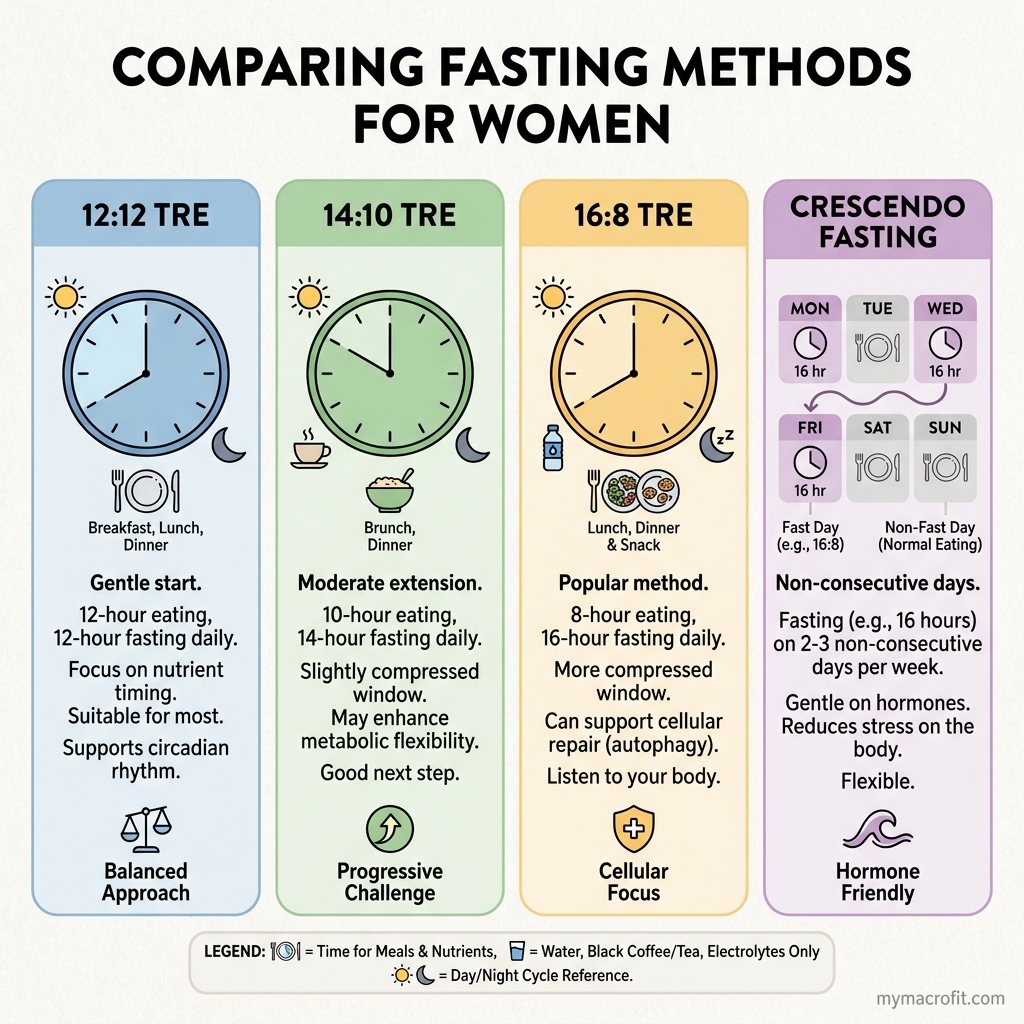
- 16:8, 16 hours fasting, 8-hour eating window (e.g. noon to 8pm)
- 14:10, 14 hours fasting, 10-hour eating window
- 5:2, normal eating 5 days per week, very low calorie (500-600 kcal) for 2 non-consecutive days
- OMAD, One Meal A Day (23-hour fast)
The proposed mechanisms include reduced overall calorie intake (the eating window is simply shorter), improved insulin sensitivity from longer fasting periods, and cellular repair processes (autophagy) that occur during extended fasting.
See our full 16:8 Intermittent Fasting guide for a deep dive into the most popular protocol.
Why Intermittent Fasting Affects Women Differently
The Hypothalamic-Pituitary-Ovarian (HPO) Axis
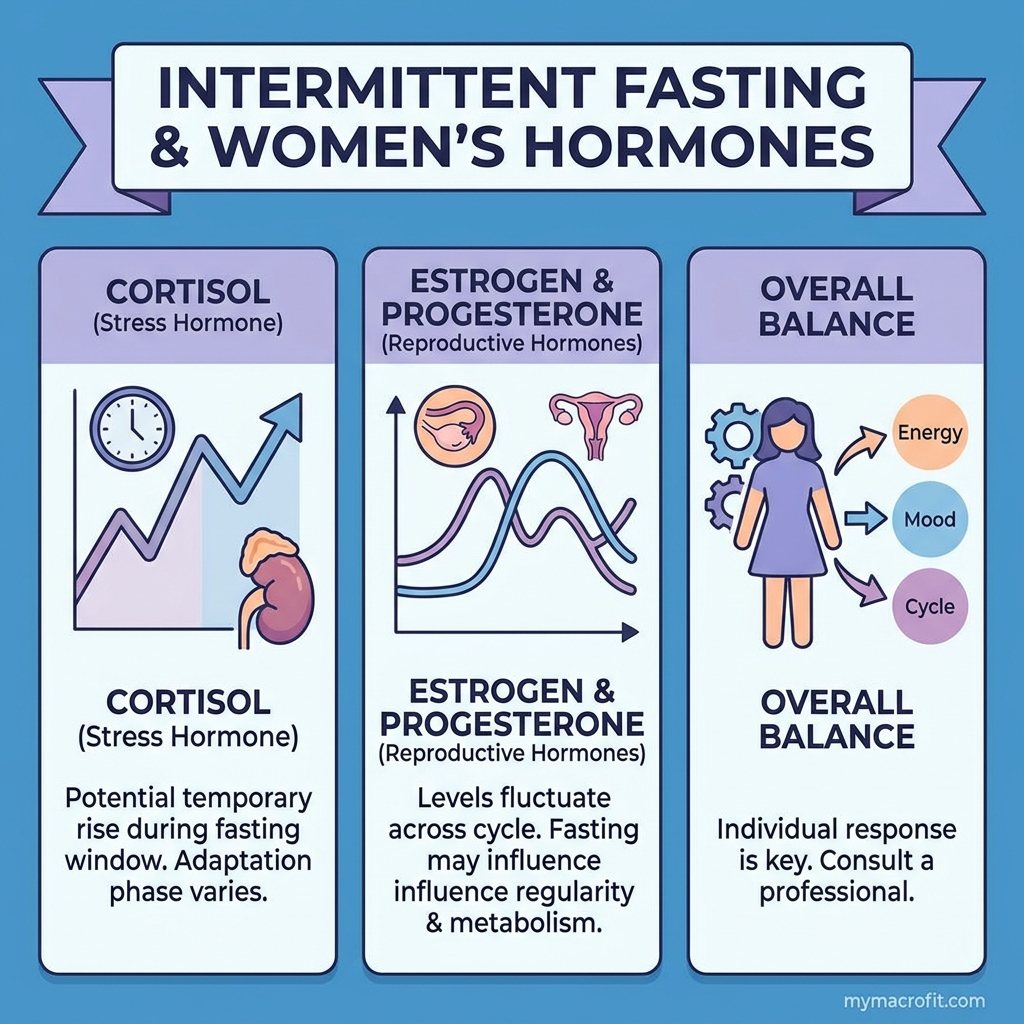
Women's reproductive hormones are governed by a complex signalling pathway: the hypothalamus signals the pituitary gland, which signals the ovaries. This system is sensitive to energy availability. When calorie intake drops too low, or when the body is in a prolonged fasted state, the hypothalamus can interpret this as energy scarcity and reduce reproductive hormone output.
This can manifest as:
- Irregular or missed periods
- Changes in cycle length
- Reduced libido
- Disrupted ovulation
Research in rodents has shown more pronounced hormonal disruption from fasting in females than males, though it's important to note that rodent studies don't always translate directly to humans. Human studies are more mixed, and the severity of hormonal impact varies significantly between individuals.
Kisspeptin Sensitivity
Kisspeptin is a neuropeptide that directly triggers GnRH (gonadotropin-releasing hormone) release, the starting point of the reproductive hormone cascade. Female brains appear to have more kisspeptin neurons than male brains, and these neurons are more sensitive to metabolic signals including fasting. This may partly explain why women are more vulnerable to fasting-induced hormonal disruption.
Cortisol Response
Extended fasting raises cortisol. In women, particularly those who are already under significant stress, this cortisol spike can compound existing HPA axis dysregulation. Women with high baseline stress levels may find that aggressive fasting protocols worsen anxiety, sleep quality, and fat retention around the abdomen.
Who Should Be Cautious About Intermittent Fasting
Some women should approach intermittent fasting with significant caution or avoid it entirely:
- Women who are pregnant or breastfeeding
- Women with a history of disordered eating or eating disorders
- Women with hypothalamic amenorrhea or irregular periods
- Those with adrenal fatigue or chronic HPA axis dysregulation
- Women with type 1 diabetes
- Those who are underweight (BMI below 18.5)
- Women undergoing fertility treatment
If any of these apply, speak to your doctor before beginning any fasting protocol.
The Best IF Protocols for Women
Start with 14:10, Not 16:8
Most IF content jumps straight to 16:8. For women new to fasting, 14:10 (a 10-hour eating window) is a gentler entry point that provides many of the metabolic benefits with significantly lower hormonal risk. After 4-6 weeks of 14:10 with no negative effects on cycle, energy, or mood, you can consider moving to 16:8.
Keep Your Eating Window in the Middle of the Day
Research suggests that early time-restricted eating (e.g. 8am to 4pm or 9am to 5pm) produces better metabolic outcomes than late eating windows (noon to 8pm), particularly for insulin sensitivity and blood sugar control. This is because of the body's circadian biology: insulin sensitivity peaks in the morning and declines toward evening. The common "skip breakfast" approach of noon-to-8pm windows is convenient but may not be the most metabolically effective option for women.
5:2 Over Daily Fasting for Some Women
Some women respond better hormonally to two low-calorie days per week rather than daily fasting windows. The 5:2 protocol avoids the daily cortisol spike from extended fasting and may be easier to sustain.
Syncing Intermittent Fasting to Your Menstrual Cycle
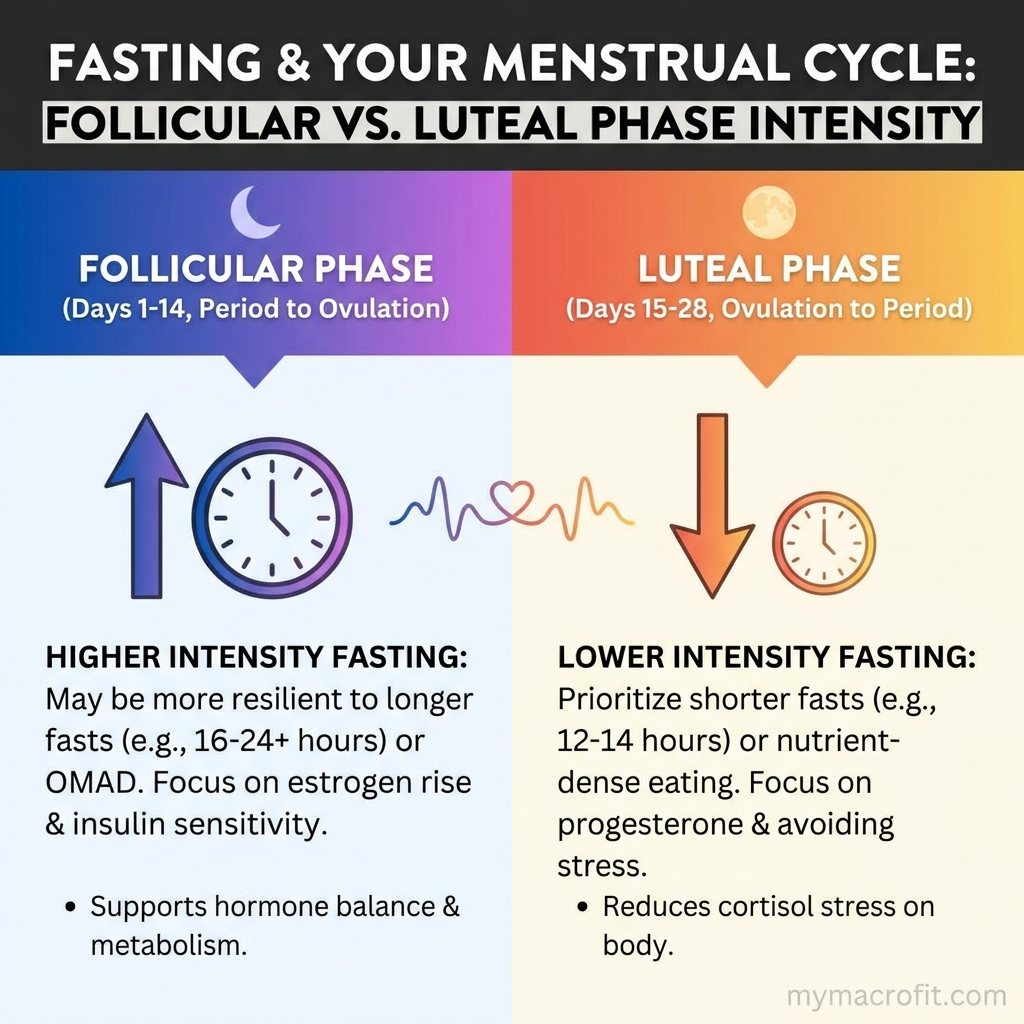
The most nuanced, and arguably most effective, approach for women is cycle-synced fasting:
| Cycle Phase | Days | Fasting Approach |
|---|---|---|
| Menstruation | Days 1-5 | Keep fasting gentle (14:10 max) or skip, energy needs are higher |
| Follicular | Days 6-14 | Best time for 16:8, oestrogen is high, insulin sensitivity is good |
| Ovulation | Day ~14 | Keep eating window moderate (14:10 to 16:8), caloric needs increase |
| Luteal | Days 15-28 | Reduce fasting intensity (14:10 or no structured fasting), progesterone increases cravings and cortisol sensitivity |
This approach respects your body's changing energy demands across the month rather than imposing the same structure regardless of cycle phase.
Practical Tips for Women Doing IF
Don't Restrict Calories Aggressively in the Eating Window
The biggest mistake women make with IF is combining it with heavy calorie restriction. IF should ideally create a modest calorie reduction through the shortened eating window, not be layered on top of an already aggressive deficit. If you're both fasting 16 hours and eating only 1000 kcal, you're creating a much larger hormonal stress than the research supports.
Eat Enough Protein When You Break Your Fast
Your first meal after a fasting window should include 35-50g of protein to stimulate muscle protein synthesis and reduce the catabolic effect of the overnight fast.
Watch for Warning Signs
Signs that your IF protocol may be disrupting hormones:
- Missed or irregular periods
- Worsening PMS
- Persistent fatigue, especially in the afternoon
- Increased anxiety or mood swings
- Hair loss or thinning
- Cold intolerance
If any of these appear, reduce fasting intensity immediately.
Hydration During the Fast
During the fasting window, drink:
- Water (plain or sparkling)
- Black coffee (small amounts, excess caffeine spikes cortisol)
- Plain herbal teas
Avoid: any flavoured drinks with calories, milk, sweeteners that may spike insulin response.

Does Intermittent Fasting Work for Weight Loss in Women?
The honest answer: when calories are equated, intermittent fasting produces similar weight loss to continuous calorie restriction. The advantage of IF for many women is that it naturally reduces calorie intake by limiting the eating window, not through any metabolic magic, but through fewer hours available to eat.
For women who struggle with constant calorie counting, IF provides a simpler framework: eat in the window, fast outside it. The calorie reduction happens passively.
Use our Intermittent Fasting Calculator to set up your fasting window based on your schedule and goals.
The Bottom Line
Intermittent fasting can be an effective strategy for women, but it requires a more careful approach than the male-oriented protocols most people follow. Start with shorter fasting windows, consider cycle-syncing your eating window, watch for hormonal warning signs, and don't compound IF with aggressive calorie restriction.
The goal is to use fasting as a tool that works with your physiology, not against it.
Sources
- Intermittent fasting and metabolic health in women, Cioffi et al., Nutrients, 2018
- Time-restricted eating and weight loss in overweight adults, Lowe et al., JAMA Internal Medicine, 2020
- NHS overview: intermittent fasting, NHS, 2023
Save & share on Pinterest
Click any card to pin it — or share with someone who needs it.
Intermittent Fasting for Women: What You Need to Know Before Starting
What women need to know before starting intermittent fasting, covering hormonal impact, who should a…
What women need to know before starting intermittent fasting, covering hormonal …
Read the full guide: Intermittent Fasting for Women: What You Need to Know Before Starting
Try the free Intermittent Fasting Calculator
Intermittent Fasting for Women: What You Need to Know Before Starting — use our free calculators for…
Pinterest opens in a new tab. You can edit the description before saving.
Ready to get your numbers?
Free calculator, instant results, no signup required.
Frequently Asked Questions
Is intermittent fasting safe for women?+
Does intermittent fasting affect women's hormones?+
Should women fast during their period?+
What should I eat to break my fast?+
About the Author

I'm a registered health coach and pre/postnatal specialist. I look at the whole person, your sleep, your stress, your hormones, because the number on the scale is only ever part of the story.
View full profile →