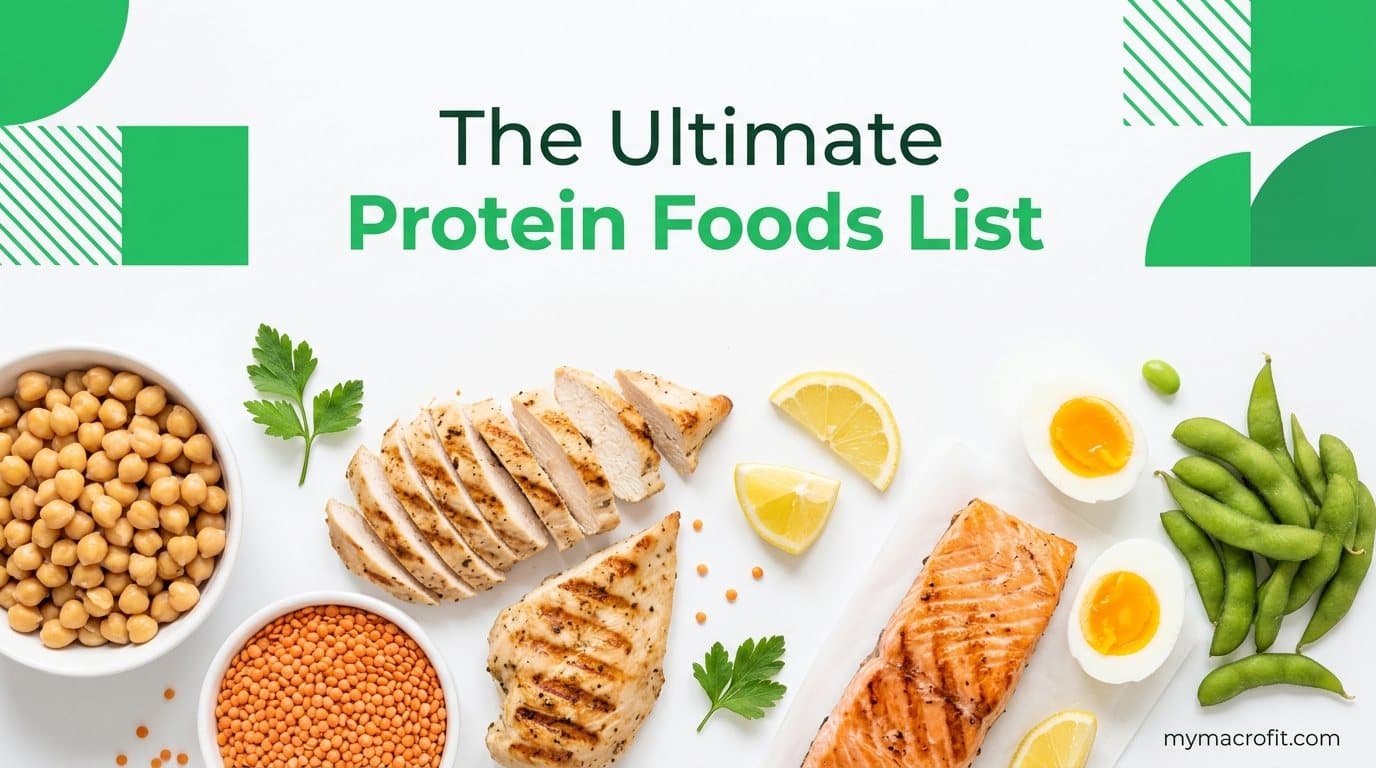
50 High Protein Foods Ranked (From Highest to Lowest)

BSc Kinesiology · CPT
"Eat more protein" is the most common advice in all of nutrition, and also the least actionable, because almost nobody tells you which foods are actually pulling their weight. I've spent years helping athletes hit aggressive protein targets, and the single biggest win is always the same: knowing the protein-per-100g of your staple foods cold, so you can build meals by instinct instead of guesswork.
That's exactly what this is. Below is a ranked list of 50 high-protein foods, organised by protein per 100g, spanning every category, meat, fish, dairy, legumes, grains, and supplements. Save it. Pin it. Bookmark it. It's the reference I wish every client had taped to their fridge.
Before diving in, use our Protein Calculator to find out exactly how much protein you personally need per day.
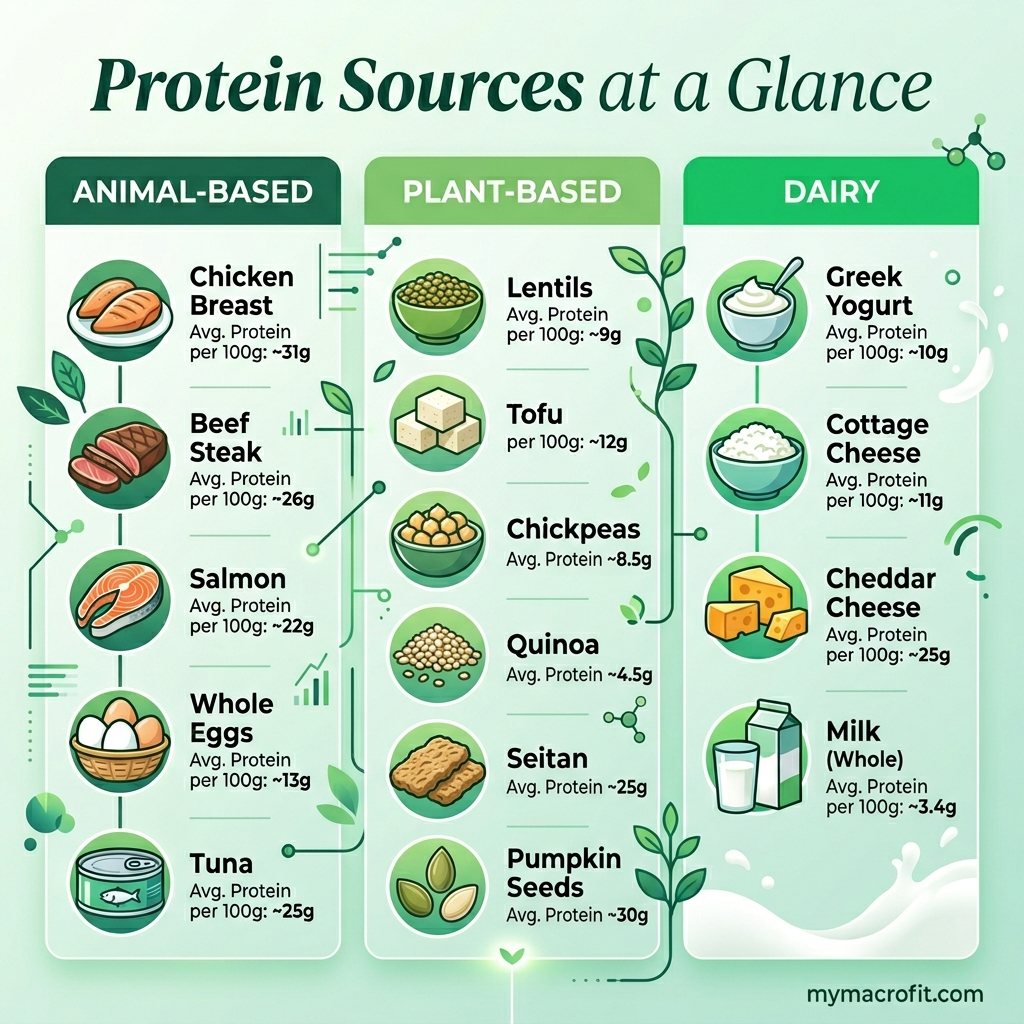
How to Read This List
The table shows:
- Serving, a realistic portion size
- Protein per serving, how much protein that portion contains
- Calories per serving, the calorie cost of that protein
- Protein per 100g, allows fair comparison across foods
Higher protein per 100g = more protein density. Foods near the top of each category are the most efficient protein sources.
Meat and Poultry (Top 10)
| Food | Serving | Protein | Calories | Protein/100g |
|---|---|---|---|---|
| Chicken breast (cooked) | 150g | 46g | 248 kcal | 31g |
| Turkey breast (cooked) | 150g | 44g | 236 kcal | 29g |
| Lean beef mince (5% fat) | 150g | 36g | 248 kcal | 24g |
| Beef sirloin steak | 150g | 37g | 280 kcal | 25g |
| Pork tenderloin | 150g | 38g | 231 kcal | 25g |
| Chicken thigh (skinless) | 150g | 34g | 270 kcal | 23g |
| Venison | 150g | 41g | 225 kcal | 27g |
| Lamb leg (lean) | 150g | 35g | 270 kcal | 23g |
| Duck breast (skinless) | 150g | 34g | 255 kcal | 23g |
| Buffalo/bison | 150g | 37g | 228 kcal | 25g |
Chicken breast is the gold standard for protein density in meat, high protein, low fat, relatively low calorie. Turkey breast is a close second and often overlooked.
Fish and Seafood (Top 10)
| Food | Serving | Protein | Calories | Protein/100g |
|---|---|---|---|---|
| Tuna (canned in water) | 145g tin | 34g | 168 kcal | 23g |
| Cod fillet (cooked) | 150g | 30g | 123 kcal | 20g |
| Tilapia | 150g | 32g | 156 kcal | 21g |
| Haddock | 150g | 30g | 120 kcal | 20g |
| Salmon fillet | 150g | 30g | 280 kcal | 20g |
| Prawns/shrimp (cooked) | 150g | 27g | 128 kcal | 18g |
| Sardines (canned in water) | 100g | 25g | 140 kcal | 25g |
| Pollock | 150g | 31g | 128 kcal | 21g |
| Sea bass | 150g | 28g | 180 kcal | 19g |
| Mussels | 150g | 21g | 129 kcal | 14g |
White fish (cod, haddock, tilapia, pollock) are the leanest protein sources in the entire food supply, very high protein with almost no fat. Tinned tuna is the most convenient and affordable option.
Eggs and Dairy (Top 10)
| Food | Serving | Protein | Calories | Protein/100g |
|---|---|---|---|---|
| Egg whites (liquid) | 240ml (~8 whites) | 26g | 120 kcal | 11g |
| Non-fat Greek yogurt | 200g | 20g | 114 kcal | 10g |
| Skyr (Icelandic yogurt) | 200g | 22g | 124 kcal | 11g |
| Cottage cheese (low fat) | 200g | 24g | 144 kcal | 12g |
| Whole eggs | 2 large (100g) | 12g | 143 kcal | 12g |
| Quark | 200g | 22g | 118 kcal | 11g |
| Ricotta (part skim) | 150g | 18g | 195 kcal | 12g |
| Parmesan (grated) | 30g | 10g | 118 kcal | 35g |
| Low-fat milk | 300ml | 10g | 120 kcal | 3.4g |
| Cheddar cheese | 50g | 12g | 207 kcal | 25g |
Greek yogurt, skyr, and cottage cheese are the most practical high-protein dairy options for daily eating. Note that parmesan has the highest protein density per 100g of any cheese, though portion sizes are small.
Legumes and Plant Proteins (Top 10)
| Food | Serving | Protein | Calories | Protein/100g |
|---|---|---|---|---|
| Edamame (cooked) | 150g | 17g | 183 kcal | 11g |
| Tempeh | 100g | 19g | 193 kcal | 19g |
| Lentils (cooked) | 200g | 18g | 230 kcal | 9g |
| Chickpeas (cooked) | 200g | 15g | 328 kcal | 8g |
| Tofu (firm) | 150g | 15g | 118 kcal | 10g |
| Black beans (cooked) | 200g | 15g | 312 kcal | 8g |
| Kidney beans (cooked) | 200g | 14g | 330 kcal | 7g |
| Seitan (wheat gluten) | 100g | 25g | 142 kcal | 25g |
| Peas (frozen, cooked) | 150g | 8g | 116 kcal | 5g |
| Hemp seeds | 30g | 10g | 166 kcal | 32g |
Tempeh and seitan stand out as the best whole food plant protein sources. Legumes are good supporting proteins but rarely sufficient as primary sources without significant volume. Hemp seeds are a useful protein boost for smoothies and salads.
Grains and Carb-Based Proteins (Top 5)
| Food | Serving | Protein | Calories | Protein/100g |
|---|---|---|---|---|
| Quinoa (cooked) | 200g | 8g | 222 kcal | 4g |
| Oats (dry) | 80g | 11g | 303 kcal | 13g |
| Buckwheat (cooked) | 200g | 8g | 220 kcal | 4g |
| Wild rice (cooked) | 200g | 8g | 212 kcal | 4g |
| Whole wheat pasta (cooked) | 200g | 10g | 310 kcal | 5g |
Grains should not be relied on as primary protein sources, but they contribute meaningfully when combined with other proteins throughout the day.
Protein Supplements (Top 5)
| Food | Serving | Protein | Calories | Protein/100g |
|---|---|---|---|---|
| Whey protein isolate | 30g scoop | 27g | 110 kcal | 90g |
| Whey protein concentrate | 30g scoop | 22g | 120 kcal | 73g |
| Casein protein | 30g scoop | 24g | 115 kcal | 80g |
| Pea protein powder | 30g scoop | 21g | 110 kcal | 70g |
| Collagen peptides | 10g scoop | 9g | 35 kcal | 90g |
Whey protein isolate has the highest protein density of any food and the best amino acid profile for muscle protein synthesis. It's the most efficient way to close a protein gap if you're struggling to hit your daily target through whole foods.
Note: Collagen has very high protein per 100g but lacks tryptophan, an essential amino acid, making it incomplete. Don't use it as your primary protein source.
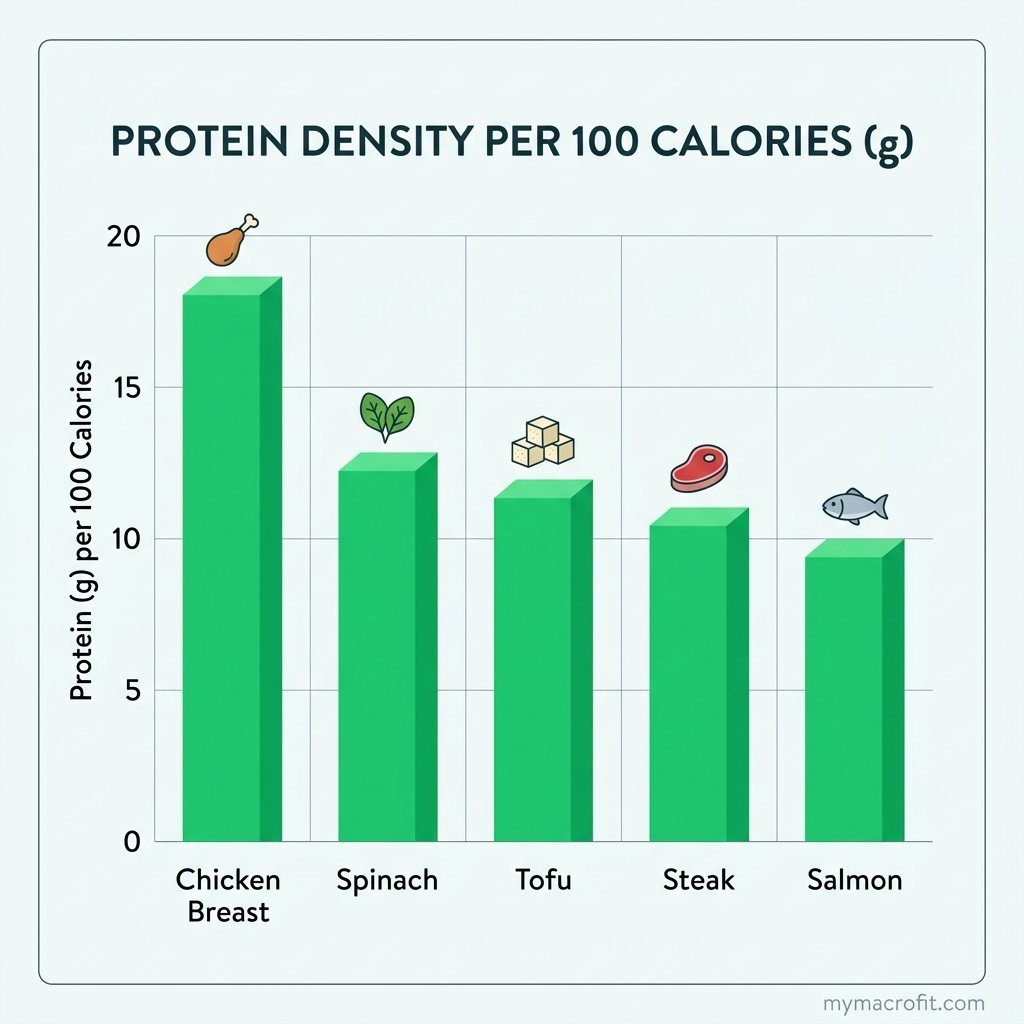
The 10 Best Everyday Protein Foods
If you had to pick just 10 foods to build your protein intake around, these deliver the best combination of practicality, cost, taste, and protein content:
- Chicken breast
- Canned tuna
- Non-fat Greek yogurt
- Eggs
- Cottage cheese
- White fish (cod, haddock)
- Lentils
- Salmon
- Turkey breast
- Skyr
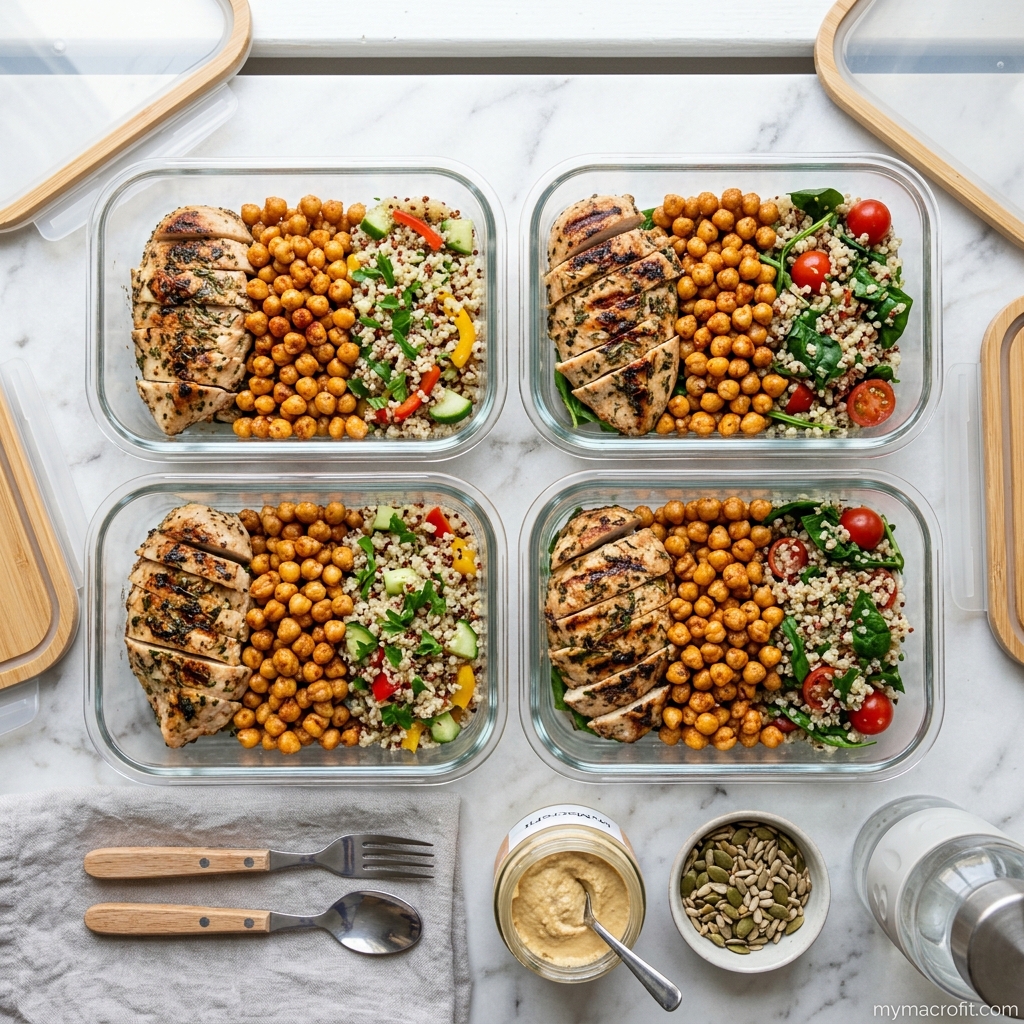
How to Actually Hit Your Protein Target
Knowing which foods are high in protein is only useful if you build meals around them. Here's the structure that works:
At every meal, choose a protein source first. Before deciding on carbs or vegetables, anchor your meal to a protein source from the list above. Then build around it.
Aim for 30-50g of protein per meal. At 4 meals per day, that's 120-200g total, enough for most people's targets.
Use Greek yogurt, cottage cheese, and protein powder as flexible additions. These can be added to meals to boost protein without significantly increasing calories.
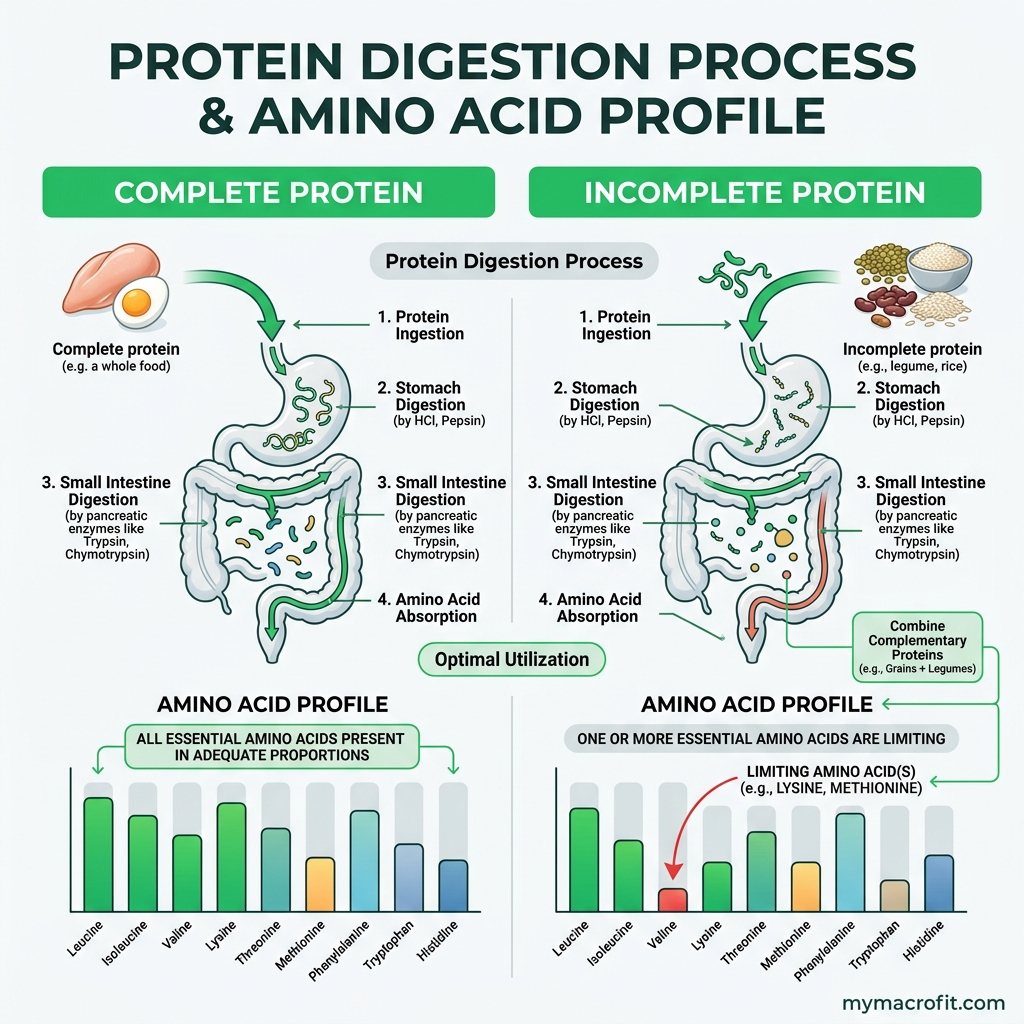
How Much Protein Do You Actually Need?
The amount you need depends on your body weight, goals, and activity level. Use our Protein Calculator to get a personalised daily target. As a general guideline:
- For weight loss with muscle retention: 1.8-2.2g per kg body weight
- For muscle building: 1.6-2.2g per kg body weight
- For general health: 0.8-1.2g per kg body weight
The Bottom Line
The 50 foods in this list cover every food group and give you everything you need to build a high-protein diet from any eating style or preference. Animal proteins like chicken breast, white fish, and non-fat dairy offer the most protein per calorie. Plant proteins like tempeh, seitan, and legumes work well combined.
Save this list, use the Protein Calculator to set your target, and start building meals around protein first.
Save & share on Pinterest
Click any card to pin it — or share with someone who needs it.
50 High Protein Foods Ranked (From Highest to Lowest)
A complete ranked list of 50 high protein foods with serving size, protein content, calories, and pr…
A complete ranked list of 50 high protein foods with serving size, protein conte…
Read the full guide: 50 High Protein Foods Ranked (From Highest to Lowest)
Try the free Protein Calculator
50 High Protein Foods Ranked (From Highest to Lowest) — use our free calculators for instant persona…
Pinterest opens in a new tab. You can edit the description before saving.
Ready to get your numbers?
Free calculator, instant results, no signup required.
Frequently Asked Questions
What foods are highest in protein?+
How much protein should I eat per day?+
Are plant-based proteins as good as animal proteins for muscle building?+
What is the easiest high protein food to add to your diet?+
About the Author

I'm a kinesiologist and personal trainer. I've spent eight years helping women lose fat and get stronger without handing their whole life over to a diet.
View full profile →