
Carb Cycling for Women: The Complete Beginner's Guide

CN · Metabolic Health Coach
Carb cycling has a reputation for being complicated, and honestly, most of that reputation is manufactured, fitness influencers love to make a simple idea sound like advanced biochemistry so it feels exclusive. Let me strip it back to what it actually is: you eat more carbohydrates on the days you train hard, and fewer on the days you don't. That's the entire concept. You're matching fuel to demand, the same way you'd put more petrol in the car before a long drive.
Where it gets genuinely interesting, and where the data gets fun, is for women. Because carbohydrate needs aren't static across the month; they shift with the menstrual cycle and its hormonal tides in ways a flat, identical-every-day calorie plan completely ignores. Carb cycling lets you work with that rhythm instead of against it. Here's exactly how.
What Is Carb Cycling?
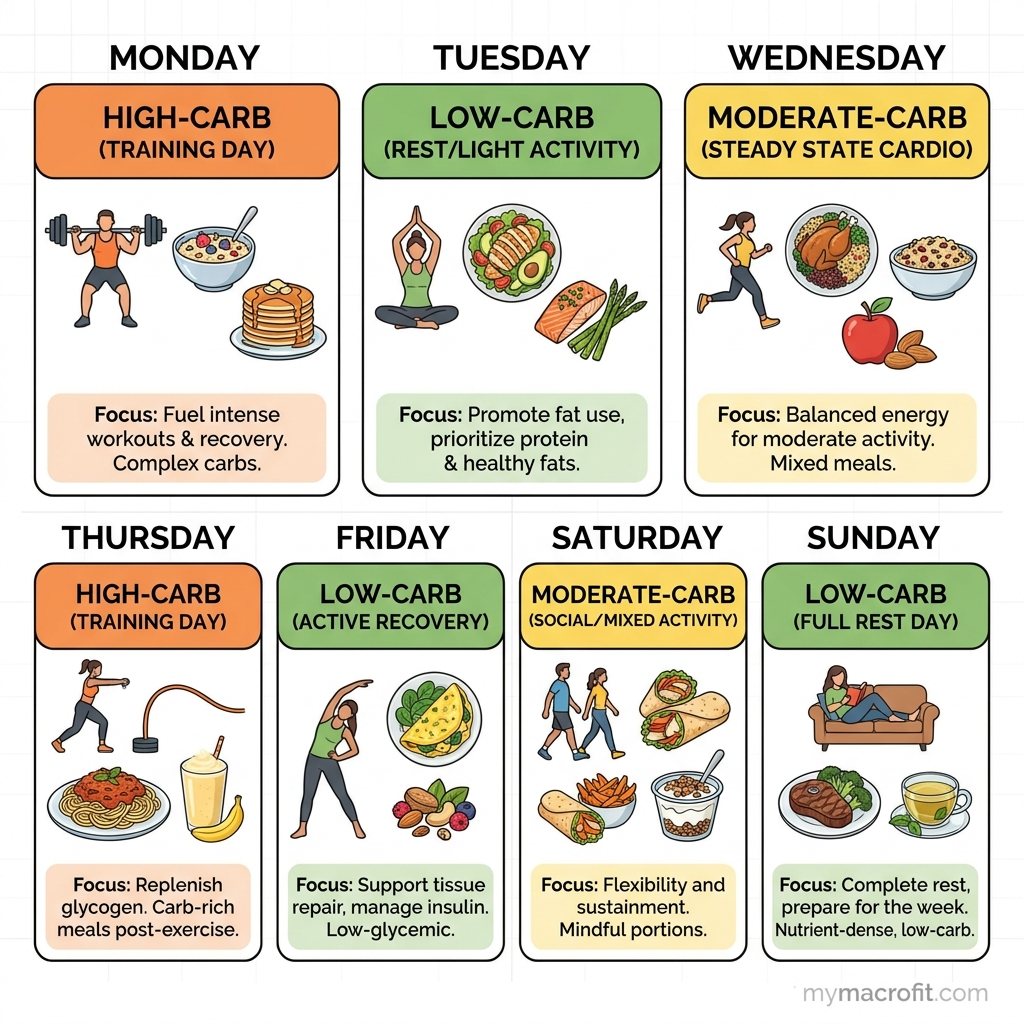
Carb cycling means strategically varying your carbohydrate intake across different days based on your activity level and goals. Most commonly, it involves alternating between:
- High carb days, on your most intense training days
- Moderate carb days, on lighter training days
- Low carb days, on rest days
Protein stays relatively consistent across all days. Fat intake typically rises on low carb days to compensate for the lower carbohydrate intake, keeping total calories stable or within a controlled range.
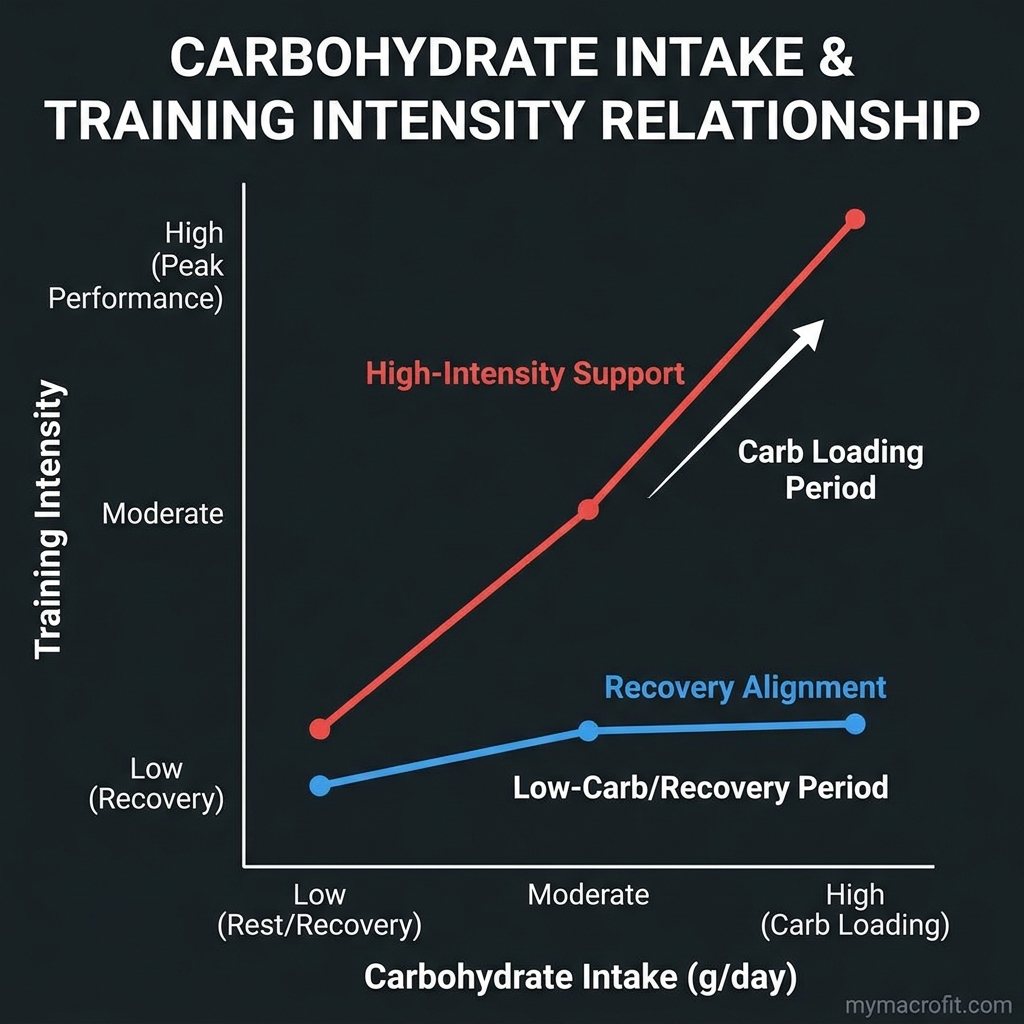
The logic is that carbohydrates are the primary fuel source for high-intensity exercise. Eating more of them when you're training hard improves performance and recovery. Eating fewer when you're sedentary reduces total calorie intake on days when you don't need the extra fuel.
Why Carb Cycling Can Work Well for Women
Hormonal Compatibility
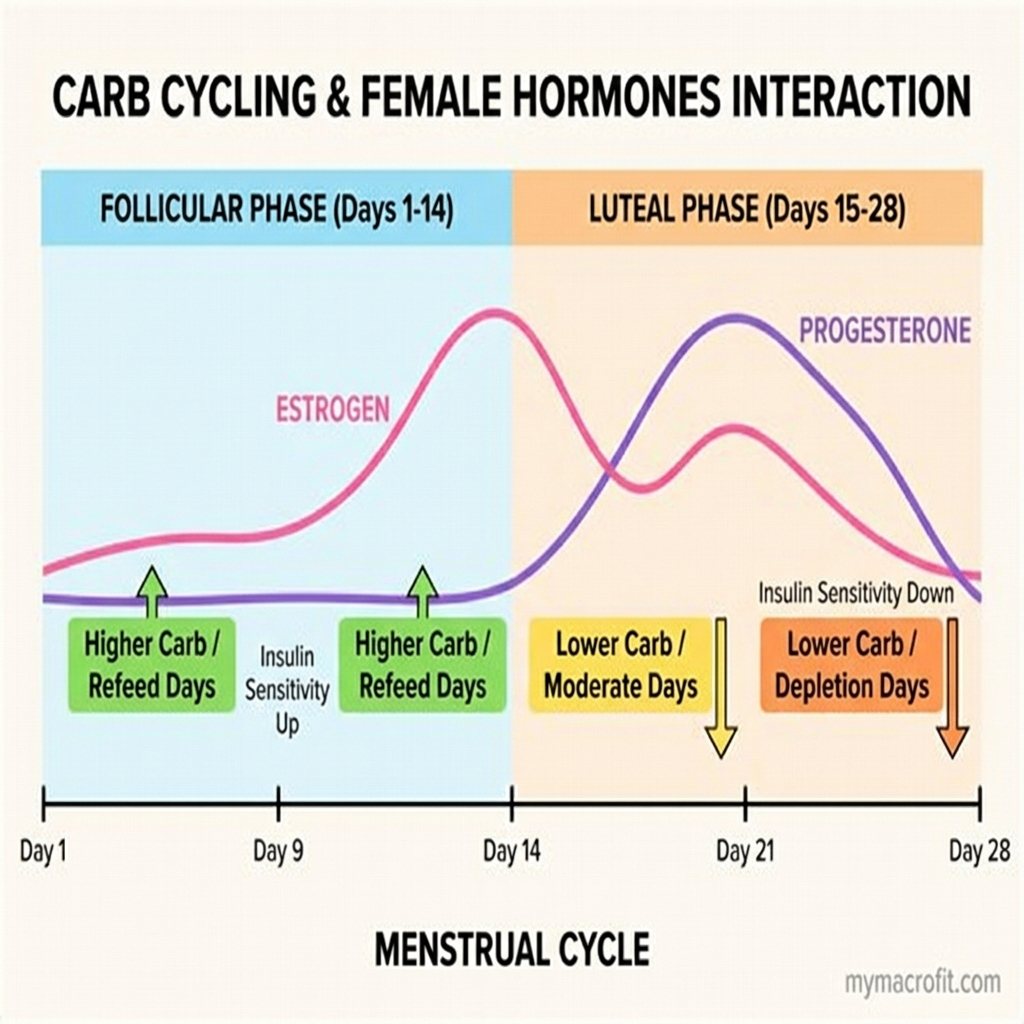
Women's carbohydrate needs naturally fluctuate throughout the menstrual cycle. In the follicular phase (days 1-14), oestrogen is dominant and insulin sensitivity is higher, meaning your body handles carbohydrates more efficiently. In the luteal phase (days 15-28), progesterone rises, insulin sensitivity decreases slightly, and energy needs increase by approximately 100-200 calories.
Carb cycling can be loosely structured around this cycle, with slightly higher carb intake in the follicular phase and more fat-based energy in the luteal phase.
Avoiding Metabolic Adaptation
Eating the same number of calories every day for months can lead to metabolic adaptation, your body downregulates metabolism in response to a sustained calorie deficit. Cycling calories (via carbohydrates) introduces variation that may help prevent this, though the evidence is stronger for overall calorie cycling than carb cycling specifically.
Practical Flexibility
Carb cycling can be easier to sustain than a continuous low-carb diet because high carb days provide psychological relief and better exercise performance. It's structured flexibility rather than rigid restriction.
How to Set Up Your Carb Cycling Plan
Step 1: Establish Your Baseline
Use our Carb Cycling Calculator to get specific numbers for your body. As a general framework, here's how to structure your intake:
Protein: Keep consistent at 1.8-2.2g per kg body weight on all days.
Carbohydrates:
- High day: 2.5-4g per kg body weight
- Moderate day: 1.5-2.5g per kg body weight
- Low day: 0.5-1.5g per kg body weight
Fat: Fill remaining calories with fat, typically higher on low carb days.
Step 2: Assign Days to Your Training Schedule
This is where carb cycling becomes practical:
| Day Type | When to Use | Carb Level |
|---|---|---|
| High carb day | Intense training (legs, heavy compound lifts) | Highest |
| Moderate carb day | Moderate training (upper body, steady cardio) | Moderate |
| Low carb day | Rest day or light activity | Lowest |
Step 3: Choose Your Carbohydrate Sources
On all days, prioritise whole food carbohydrates:
- Oats, rice, sweet potato, quinoa, fruit, legumes on high and moderate days
- Vegetables, small amounts of legumes, berries on low carb days
Avoid refined carbohydrates (white bread, sugary cereals, pastries) on all days, they cause blood sugar spikes that undermine the metabolic benefits of carb cycling.
Sample Carb Cycling Week for a 65kg Woman
Based on a 65kg woman with moderate activity, targeting fat loss:
| Day | Training | Carbs | Protein | Fat | Calories |
|---|---|---|---|---|---|
| Monday | Leg day (heavy) | 195g | 130g | 50g | 1740 kcal |
| Tuesday | Upper body | 130g | 130g | 60g | 1560 kcal |
| Wednesday | Rest | 65g | 130g | 75g | 1435 kcal |
| Thursday | Full body | 195g | 130g | 50g | 1740 kcal |
| Friday | Cardio (moderate) | 130g | 130g | 60g | 1560 kcal |
| Saturday | Rest | 65g | 130g | 75g | 1435 kcal |
| Sunday | Light walk | 100g | 130g | 65g | 1485 kcal |
Average daily intake: ~1565 kcal, a moderate deficit for most women of this size.
What to Eat on High Carb Days
High carb days should centre on performance and recovery. Good high-carb meals include:
- Oats with protein powder and banana (breakfast)
- Chicken breast with 200g rice and roasted vegetables (lunch)
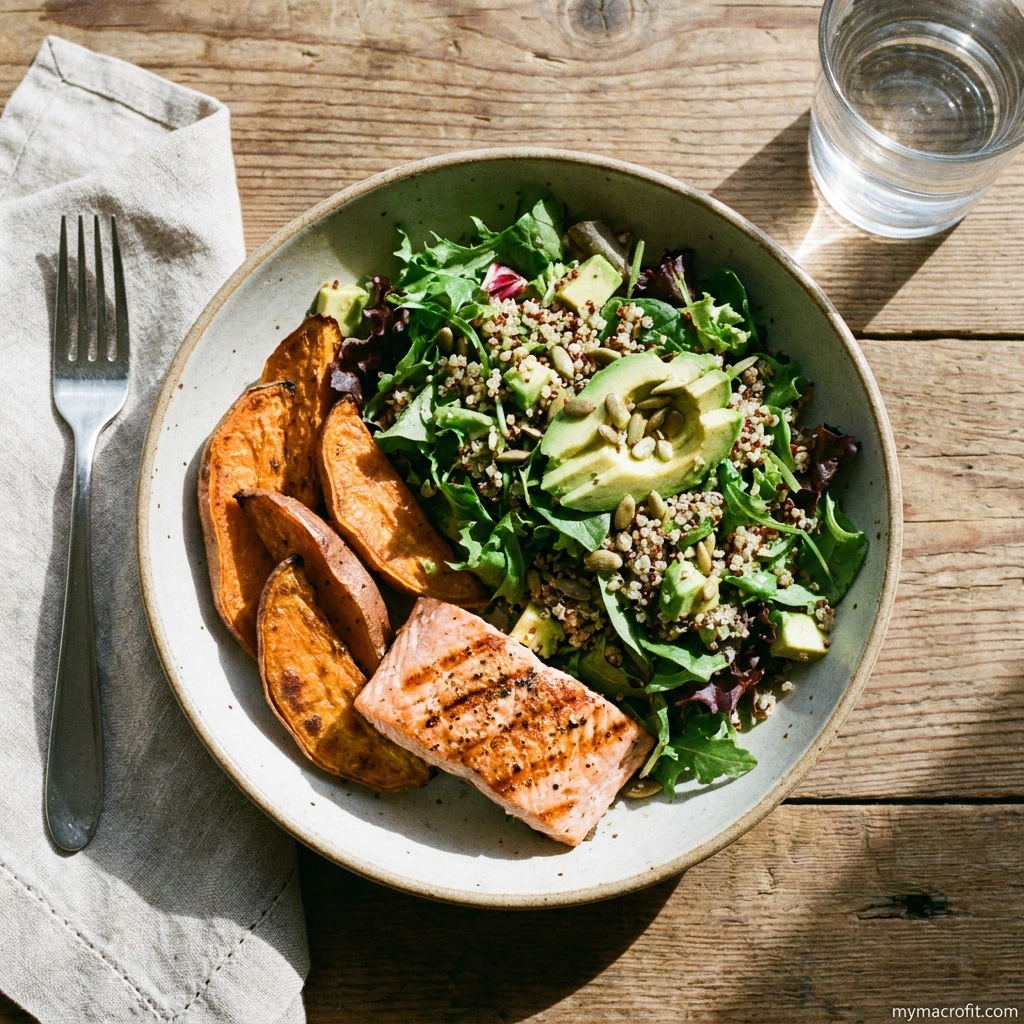
- Salmon with sweet potato and green beans (dinner)
- Fruit, rice cakes with peanut butter, Greek yogurt as snacks
What to Eat on Low Carb Days
Low carb days should feel satisfying despite the reduced carbohydrate intake. Increase fat slightly to compensate:
- Eggs with avocado and smoked salmon (breakfast, no toast)
- Large chicken salad with olive oil dressing (lunch)
- Beef stir fry with courgette noodles and peppers (dinner)
- Nuts, cottage cheese, hard boiled eggs as snacks
Common Mistakes to Avoid
Eating Too Little on High Carb Days
Some women feel guilty eating high carbs and undereat on those days. This defeats the purpose. High carb days fuel training, eat the full allocation.
Choosing the Wrong Carb Sources
Refined carbohydrates on high carb days cause rapid blood sugar swings that don't serve performance or recovery. Stick to whole food sources.
Not Tracking
Carb cycling without tracking is guesswork. You need to know how many grams of carbohydrate you're actually eating to make the system work. Even 2-4 weeks of accurate tracking is enough to build an intuitive sense of portions.
Assigning High Carb Days to Rest Days
This is backward. High carbs go on high-activity days. Rest days are low carb days.
Is Carb Cycling Right for You?
Carb cycling is most appropriate for:
- Women who are already tracking macros and want more structure
- Those who find continuous calorie restriction leads to low energy or poor performance
- Women who want to align nutrition with their training schedule
- Those who are comfortable with some complexity in their diet
It's probably not necessary for:
- Beginners who haven't yet established consistent tracking habits
- Women with a history of disordered eating (the regimented structure can be triggering)
- Those who find diet complexity increases stress and reduces adherence
The Bottom Line
Carb cycling for women is a practical, evidence-informed strategy for improving body composition while supporting training performance. It's not magic, the results come from the overall calorie and protein targets it creates. But for women who want a more nuanced approach than simple calorie restriction, it offers real advantages.
Start with the Carb Cycling Calculator to get your personalised numbers, assign your days, and begin with one week of tracking before making any adjustments.
Save & share on Pinterest
Click any card to pin it — or share with someone who needs it.
Carb Cycling for Women: The Complete Beginner's Guide
A complete beginner's guide to carb cycling for women, what it is, how to structure high and low car…
A complete beginner's guide to carb cycling for women, what it is, how to struct…
Read the full guide: Carb Cycling for Women: The Complete Beginner's Guide
Try the free Carb Cycling Calculator
Carb Cycling for Women: The Complete Beginner's Guide — use our free calculators for instant persona…
Pinterest opens in a new tab. You can edit the description before saving.
Ready to get your numbers?
Free calculator, instant results, no signup required.
Frequently Asked Questions
What is carb cycling and does it work for women?+
How many carbs should women eat on a high carb day?+
What do you eat on low carb days for carb cycling?+
Is carb cycling better than a standard calorie deficit?+
About the Author

I'm a certified nutritionist and metabolic health coach. I went deep on keto and metabolism after reversing my own insulin resistance, and I'd rather give you the actual numbers than a hand-wave.
View full profile →