What Are Macros and How Do I Track Them

BSc Kinesiology · CPT
I still remember how intimidated I felt the first time someone mentioned "tracking macros" to me. It sounded like something only bodybuilders and spreadsheet obsessives did, definitely not something for a normal woman just trying to feel better in her clothes. Then someone finally explained it in plain English, and my honest reaction was: that's it? That's the whole thing everyone makes sound so complicated?
Because here's the truth, macros are genuinely one of the simplest and most effective ways to understand food, once you strip away the jargon. This guide is the plain-English version I wish I'd been handed years ago: what macros are, what each one actually does in your body, how to work out yours, and how to track them without it taking over your life.
What Are Macros?
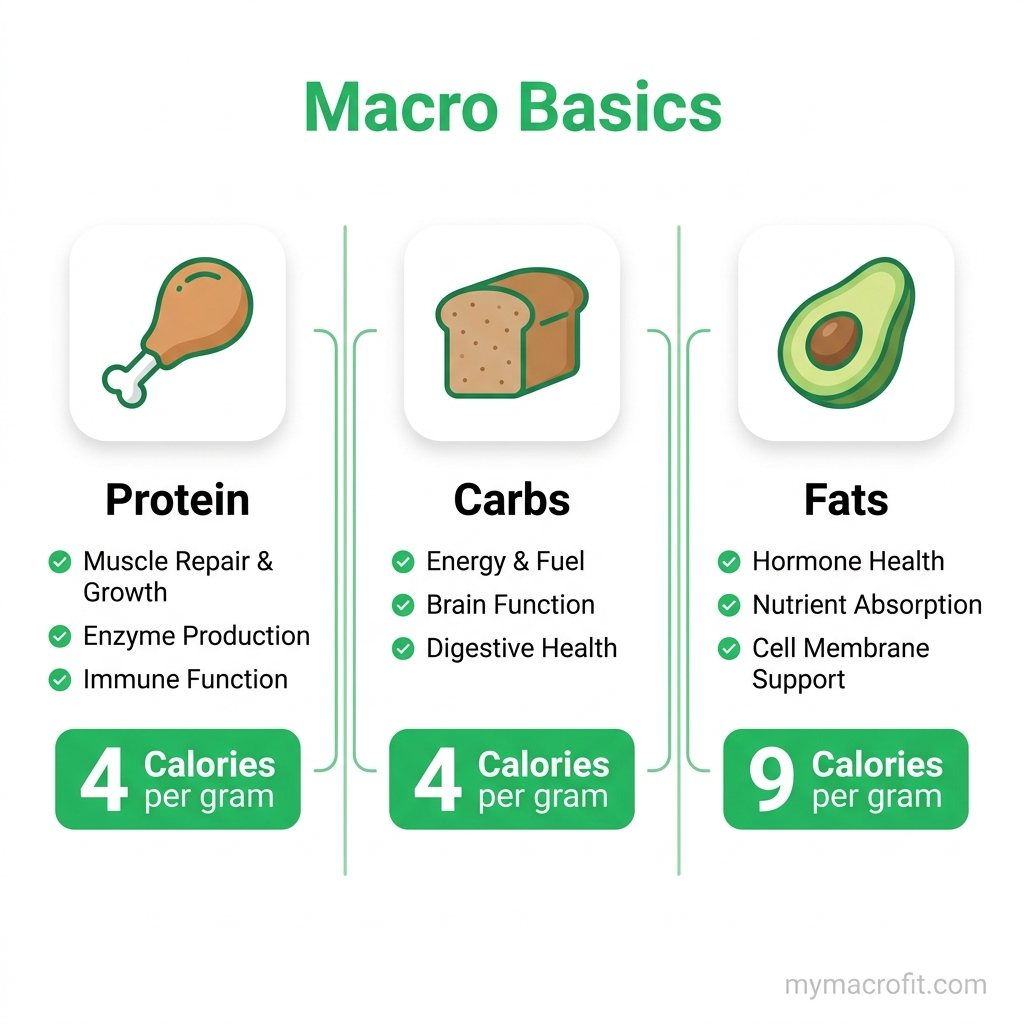
"Macros" is short for macronutrients, the three main categories of nutrients that make up every calorie you eat:
Protein
- 4 calories per gram
- Builds and repairs muscle tissue
- Keeps you full longer than carbs or fat
- Preserves lean mass during calorie deficits
- Found in: chicken, eggs, fish, dairy, legumes, protein powder
Carbohydrates
- 4 calories per gram
- Primary fuel for the brain and muscles
- Powers high-intensity exercise
- Influences energy levels and mood
- Found in: rice, oats, bread, fruit, vegetables, pasta
Fat
- 9 calories per gram
- Essential for hormone production (including testosterone and estrogen)
- Required for absorbing fat-soluble vitamins (A, D, E, K)
- Supports brain health and cell membrane integrity
- Found in: avocado, nuts, olive oil, fatty fish, eggs, dairy
Every food you eat contains some combination of these three. Understanding your daily targets for each gives you a level of body composition control that calorie counting alone doesn't provide.
Why Track Macros Instead of Just Calories?
Calories determine whether you lose or gain weight. Macros determine what you lose or gain.
Consider two people eating 1,800 calories per day:
Person A: 60g protein / 220g carbs / 70g fat Person B: 150g protein / 150g carbs / 45g fat
Both are at the same calorie level. But Person B will preserve significantly more muscle during fat loss, look leaner at the same body weight, and likely feel fuller throughout the day.
Protein is the critical macro. It's the one most people under-eat, and it's the one with the biggest impact on body composition. Use the Protein Calculator to find your exact daily target.
How to Calculate Your Macro Targets
Macro targets are personal, they depend on your weight, height, age, activity level, and goal. The calculation follows these steps:
Step 1: Find your TDEE (Total Daily Energy Expenditure)
Step 2: Adjust for goal
- Fat loss: TDEE − 500 kcal
- Maintenance: TDEE
- Muscle gain: TDEE + 300 kcal
Step 3: Apply a macro split
| Goal | Protein | Carbs | Fat |
|---|---|---|---|
| Fat loss | 35% | 35% | 30% |
| Maintenance | 30% | 40% | 30% |
| Muscle gain | 30% | 45% | 25% |
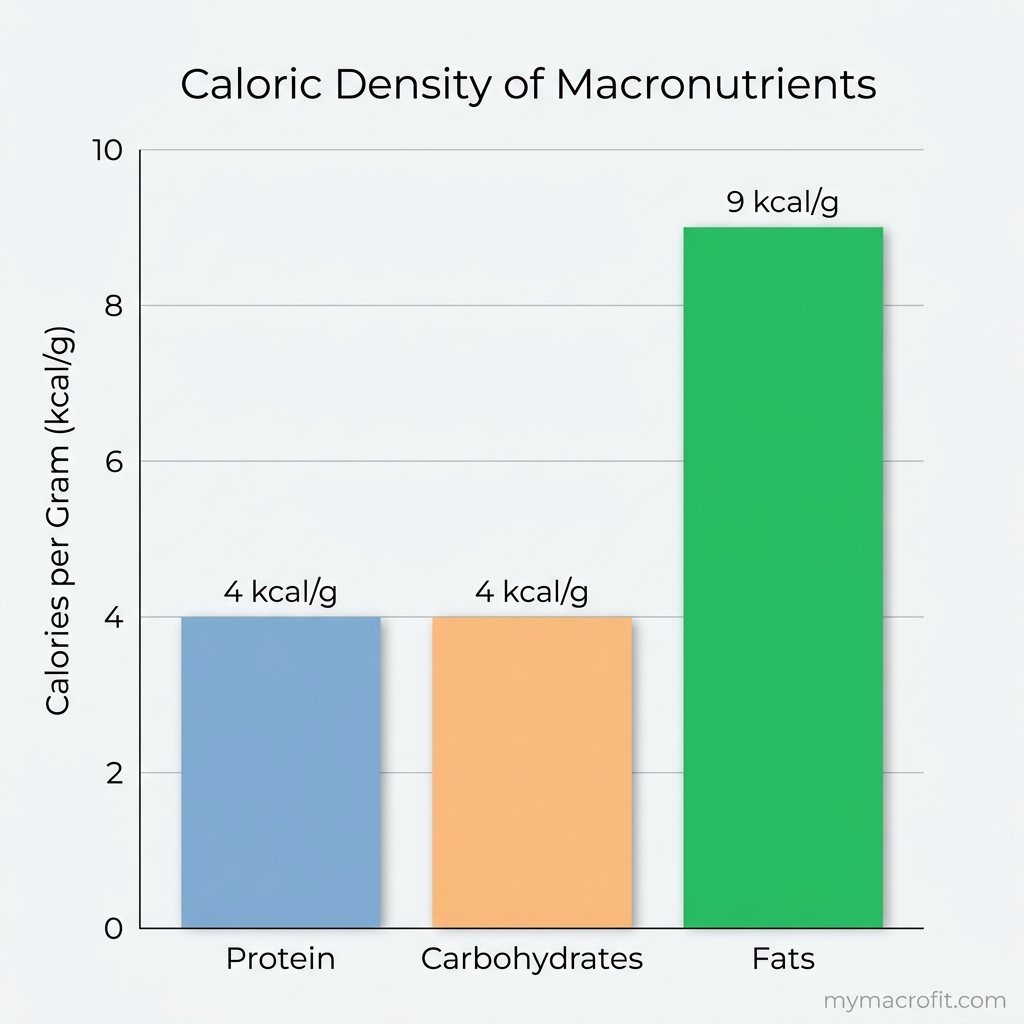
Step 4: Convert percentages to grams
- Protein/Carbs: (Target calories × %) ÷ 4 = grams
- Fat: (Target calories × %) ÷ 9 = grams
Use our Macro Calculator to do this automatically in seconds.
What Are Good Macro Targets? (Examples)
Example 1: 75kg woman, fat loss goal
- Target calories: ~1,550
- Protein: 136g
- Carbs: 136g
- Fat: 52g
Example 2: 85kg man, muscle gain
- Target calories: ~2,900
- Protein: 218g
- Carbs: 326g
- Fat: 80g
These are starting points, adjust after 3-4 weeks based on real results.
How to Track Your Macros: Step by Step
1. Get a food scale
Eyeballing portions is the #1 tracking mistake. A food scale costs $10-15 and transforms your accuracy. After 2-4 weeks of weighing, you'll have a reliable mental database of portion sizes and can rely on it more.
2. Choose a tracking app
The best macro tracking apps:
- Cronometer, most accurate database, tracks 84 micronutrients too. Best for people who care about nutrition quality beyond just macros.
- MyFitnessPal, largest food database, barcode scanner, widely used. Free version has all the core features you need.
- MacroFactor, adjusts your targets weekly based on actual weight trend. Best for people who want automation.
- Lose It!, clean interface, good for beginners.
3. Log everything, including drinks
Protein shakes, milk in coffee, juice, alcohol, all count. The most common tracking failure is forgetting liquid calories, which can easily add 200-400 untracked calories per day.
4. Log before or during meals, not after
Logging in the morning or as you cook lets you adjust portion sizes before eating. Logging after the fact often leads to under-reporting ("I think it was about 100g...").
5. Prioritise protein first
If tracking three macros feels overwhelming, start with just protein. Getting adequate protein (~1.6-2g per kg of bodyweight) covers the most important variable. Add carb and fat tracking once protein is consistent.
What to Do When You Can't Track Perfectly
Life happens, restaurants, social events, travel. Some principles for imperfect situations:
At restaurants: Use the MyFitnessPal restaurant database or estimate using similar home-cooked meals. Over-estimate slightly to account for oils and sauces.
At social events: Prioritise protein. Fill your plate with the highest-protein options available, then add carbs and fats to fit the situation.
On holiday: Take a flexible week, focus on hitting protein and keeping total calories roughly sensible rather than tracking every gram.
Missing a day: Don't try to "compensate" the next day with restriction. Just resume your normal targets.
Common Macro Tracking Mistakes
Being too rigid, Being within ±10g of your targets is more than close enough. Obsessing over the last 3 grams of carbs creates stress without meaningful benefit.
Tracking net carbs for non-keto goals, Unless you're on a ketogenic diet, track total carbs, not net carbs.
Ignoring cooking oils, A tablespoon of olive oil adds 14g of fat and 120 calories. Easy to forget; significant if you forget it daily.
Using "generic" database entries, Many database entries are user-submitted and inaccurate. Prefer verified entries (green checkmarks in MyFitnessPal, USDA database in Cronometer).
Starting too strictly, Perfect tracking for 2 weeks is worse than consistent, slightly imperfect tracking for 6 months. Start with 80% accuracy and build from there.
How Long Do You Need to Track Macros?
Most people track for 3-6 months actively, then move to a more intuitive approach. After 6 months of logging, most people have:
- A reliable sense of portion sizes without weighing
- A set of go-to meals they know the macros for
- The ability to eyeball most situations reasonably accurately
Some people enjoy tracking long-term. Others use it periodically, especially when starting a new fat loss or muscle gain phase, and eat more intuitively between phases.
The Bottom Line
Macros give you a precision tool for body composition that calorie counting alone can't match. The learning curve is about 2 weeks, after that, it becomes second nature. Start with a food scale, a free tracking app, and a focus on hitting your protein target. The rest follows.
Sources
- Dietary Reference Intakes for macronutrients, Institute of Medicine, National Academies Press
- Flexible vs rigid dieting and psychological outcomes, Smith et al., International Journal of Eating Disorders, 2000
- NHS Eatwell Guide, macronutrient recommendations, NHS, 2023
Save & share on Pinterest
Click any card to pin it — or share with someone who needs it.
What Are Macros and How Do I Track Them
The complete beginner's guide to macronutrients, what protein, carbs, and fat do, how to track them,…
The complete beginner's guide to macronutrients, what protein, carbs, and fat do…
Read the full guide: What Are Macros and How Do I Track Them
Try the free Macro Calculator
What Are Macros and How Do I Track Them — use our free calculators for instant personalised results.…
Pinterest opens in a new tab. You can edit the description before saving.
Ready to get your numbers?
Free calculator, instant results, no signup required.
Frequently Asked Questions
What are the 3 macronutrients?+
How do I start tracking macros as a beginner?+
Do macros matter more than calories?+
What is IIFYM (If It Fits Your Macros)?+
About the Author

I'm a kinesiologist and personal trainer. I've spent eight years helping women lose fat and get stronger without handing their whole life over to a diet.
View full profile →