What to Eat on 1500 Calories a Day (Full Day of Eating)

BSc Kinesiology · CPT
If you've been handed the number "1,500 calories" and have no idea what that actually looks like on a plate, you are in exactly the position most of my clients start from. A number is not a meal plan. It tells you nothing about whether you'll feel satisfied or starved, energised or exhausted. And that gap, between the number and the lived experience of eating it, is where most diets quietly fall apart.
So let's close that gap. This is a full, satisfying day of eating at 1,500 calories, with real portions and a complete macro breakdown. Done well, 1,500 calories is a moderate deficit for most women, and it does not have to feel like deprivation. The difference between misery and manageability comes down to what you eat, not just how much.
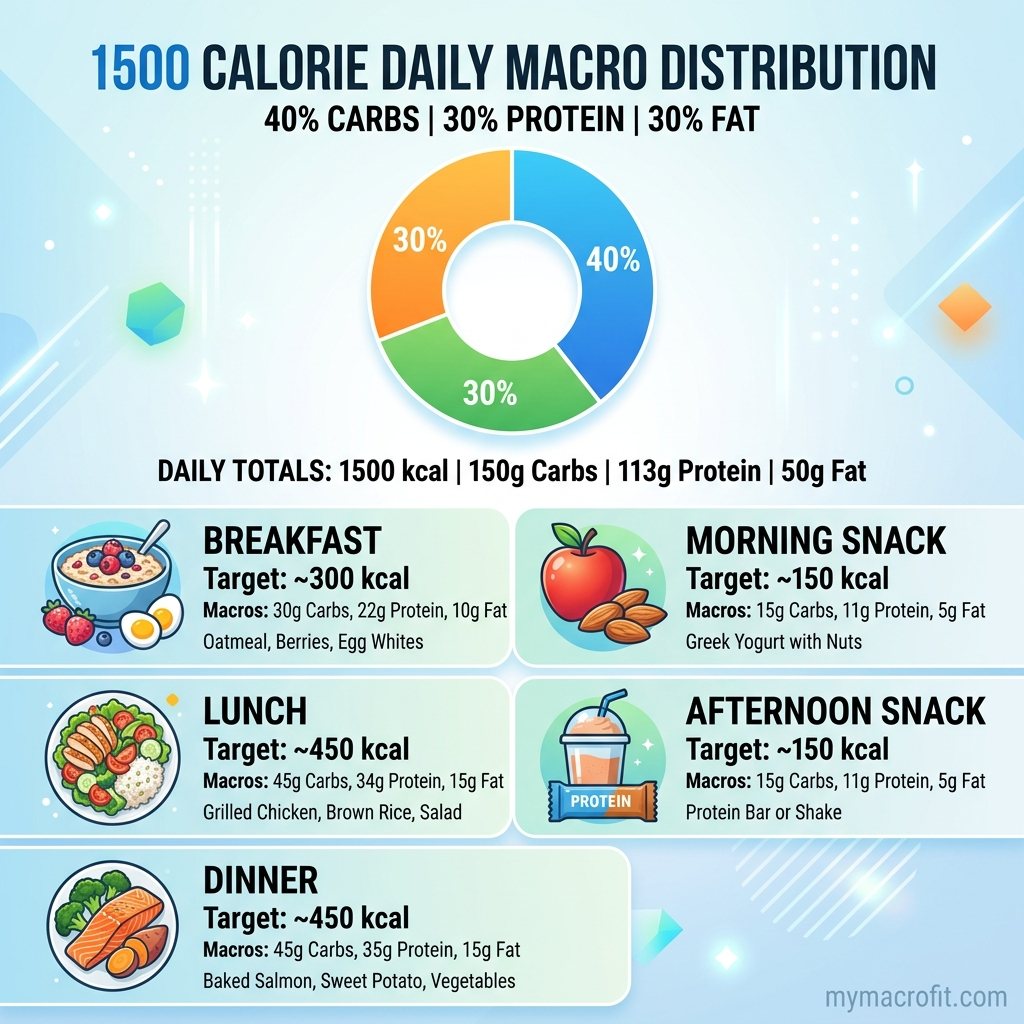
Is 1,500 Calories Right for You?
Before you commit, check whether 1,500 is sensible for your body. Your TDEE (Total Daily Energy Expenditure) is how many calories you actually burn in a day. For most active women, 1,500 kcal creates a deficit of roughly 300-700 calories, the sweet spot for steady, sustainable fat loss.
But here's where I want you to be honest with yourself: if your TDEE is below 1,800, then 1,500 calories is a small deficit and progress will be slow, that's fine, just expect it. And if you're tempted to drop lower than 1,500 to speed things up, please don't. The faster you try to lose, the more muscle you sacrifice and the harder the whole thing becomes to sustain. Slow and steady genuinely wins here.
Use our Macro Calculator to get a personalised target based on your stats.
Full Day of Eating: 1,500 Calories
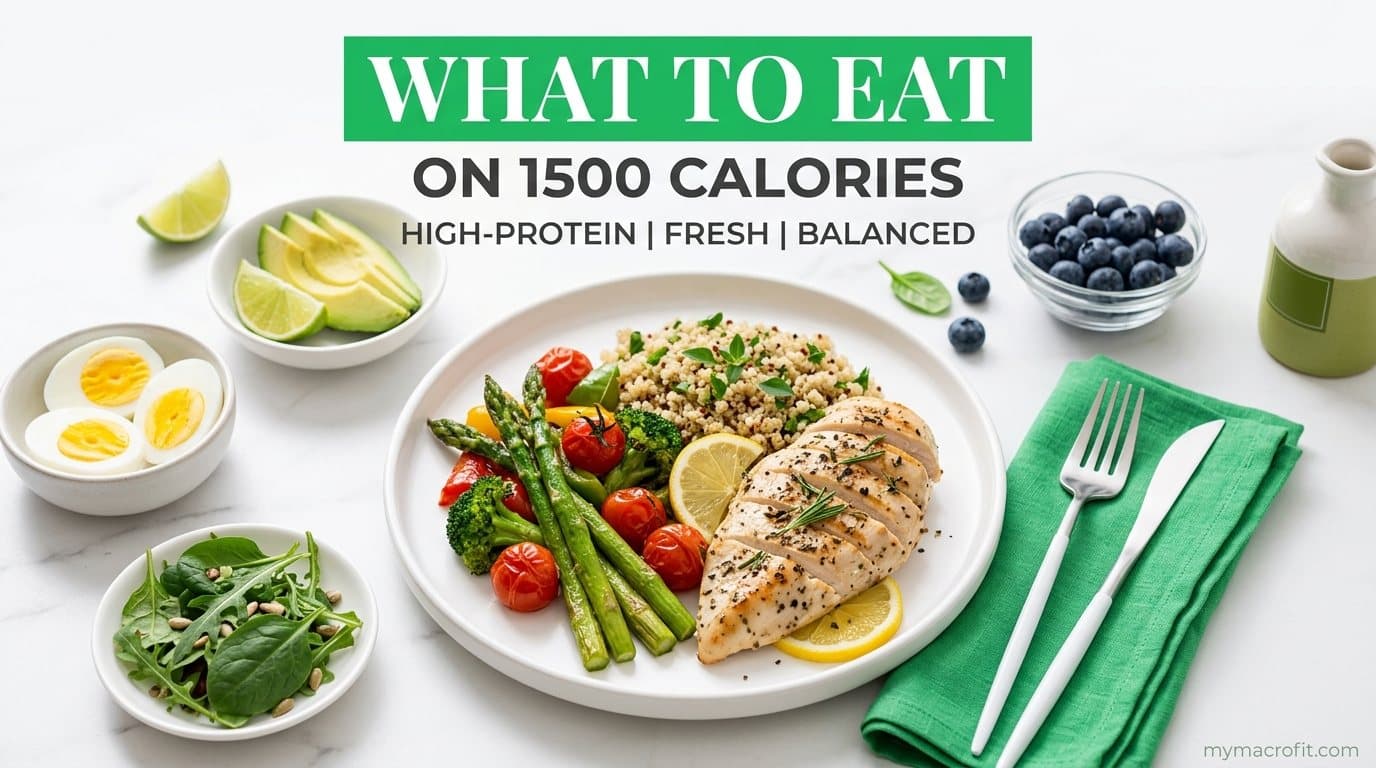
Here is a complete day that hits 1,500 calories, 130g+ protein, and stays genuinely satisfying.
Breakfast, ~380 Calories
Greek Yogurt Parfait with Berries and Granola
- 250g non-fat Greek yogurt
- 80g mixed berries (fresh or frozen)
- 25g low-sugar granola
- 1 tsp honey
Macros: ~380 kcal · 28g protein · 48g carbs · 6g fat
Fast, no cooking, and the protein keeps you full until lunch. Greek yogurt is one of the best volume-to-protein foods available, a genuine workhorse of fat-loss diets.
Mid-Morning Snack, ~150 Calories
Apple with Low-Fat Cottage Cheese
- 1 medium apple (150g)
- 100g low-fat cottage cheese
Macros: ~150 kcal · 10g protein · 22g carbs · 1g fat
The fibre from the apple plus protein from the cottage cheese prevents the mid-morning energy dip, the one that usually ends with someone reaching for the biscuit tin at 11am. (I've been there. We all have.)
Lunch, ~430 Calories
Grilled Chicken and Quinoa Bowl
- 150g grilled chicken breast (herbs, no oil)
- 80g quinoa (dry weight, cooked ≈ 220g)
- Unlimited mixed greens, cucumber, cherry tomatoes
- 2 tbsp low-fat balsamic dressing
Macros: ~430 kcal · 48g protein · 42g carbs · 7g fat
This is the anchor meal of the day. Chicken breast is one of the leanest proteins available, quinoa brings slow-release carbs, and the vegetable volume makes this a physically large, genuinely filling plate.
Afternoon Snack, ~140 Calories
Hard Boiled Eggs and Cucumber
- 2 hard boiled eggs
- 150g sliced cucumber, salt and pepper
Macros: ~140 kcal · 12g protein · 3g carbs · 9g fat
Batch-cook eggs at the start of the week and this becomes a zero-effort snack. Nutrient-dense, portable, satisfying.
Dinner, ~400 Calories
Baked Salmon with Roasted Vegetables
- 150g salmon fillet
- 250g mixed roasted vegetables (courgette, peppers, red onion, cherry tomatoes)
- 150g steamed broccoli
- Lemon juice, herbs, 1 tsp olive oil
Macros: ~400 kcal · 36g protein · 20g carbs · 18g fat
Salmon's omega-3s support fat loss, reduce inflammation, and, I notice this with clients constantly, help keep mood steady during a diet. The sheer volume of vegetables makes this a plate-filling meal despite the modest calories.
Full Day Calorie and Macro Breakdown
| Meal | Calories | Protein | Carbs | Fat |
|---|---|---|---|---|
| Breakfast (Greek yogurt parfait) | 380 kcal | 28g | 48g | 6g |
| Mid-morning snack (apple + cottage cheese) | 150 kcal | 10g | 22g | 1g |
| Lunch (chicken quinoa bowl) | 430 kcal | 48g | 42g | 7g |
| Afternoon snack (eggs + cucumber) | 140 kcal | 12g | 3g | 9g |
| Dinner (salmon + roasted veg) | 400 kcal | 36g | 20g | 18g |
| TOTAL | 1500 kcal | 134g | 135g | 41g |
That's roughly 35% protein, 36% carbohydrate, 25% fat, a balanced ratio that drives fat loss while protecting the muscle underneath.
5 Rules for Staying Full on 1,500 Calories
These are the five things I come back to with every client who tells me they're hungry. Fix these and the hunger usually disappears.
1. Hit 130g+ of Protein Every Day
Protein is the most filling macronutrient, it suppresses hunger hormones and steadies blood sugar. Eat 1,500 calories with only 60g of protein and you'll be ravenous by evening. Aim for at least 1.8g per kg of bodyweight.
2. Load Up on Vegetables at Every Meal
Vegetables are practically free. 200g of broccoli is around 70 calories and takes up real space in your stomach. Half your plate, lunch and dinner, non-starchy veg.
3. Eat Slowly and Without Screens
Satiety signals take about 20 minutes to reach your brain. Eat quickly in front of the TV and you'll finish before your body has registered the meal, then go hunting for more.
4. Front-Load Your Calories
A bigger breakfast and lunch with a lighter dinner tends to control appetite better on a deficit. Saving most of your calories for the evening leaves you hungry all day and vulnerable to overeating at night.
5. Drink Water Before Meals
400-500ml before a meal physically reduces stomach capacity and dampens appetite. It's one of the simplest, most underused tools in calorie management, and it's free.
Build Your Own 1,500 Calorie Day
The meals above are one example. Mix and match from these:
| Food Group | Best Choices |
|---|---|
| Lean protein | Chicken breast, tuna, white fish, egg whites, Greek yogurt, cottage cheese |
| Slow carbs | Oats, sweet potato, quinoa, wholegrain bread, lentils, brown rice |
| Healthy fat | Salmon, eggs, avocado (small portions), olive oil |
| Volume fillers | All leafy greens, broccoli, courgette, mushrooms, cucumber, tomatoes |
| Snacks | Fruit, hard boiled eggs, low-fat dairy, protein shakes |
What About Alcohol and Treats?
1,500 calories is tight, but there's still room, if you track honestly. A 150ml glass of wine is ~120 calories; a square of dark chocolate ~50. Both fit, if you account for them. What derails people isn't the treat itself, it's the quiet belief that "one drink doesn't count." It does. And in my experience, those untracked little extras are the single most common reason a deficit silently stops working.
The Bottom Line
Eating on 1,500 calories is entirely achievable when you build meals around protein, fibre, and volume. The day above shows you can eat five times across varied, satisfying meals and still stay on target. The deficit isn't the hard part, staying consistent and kind to yourself through it is. Build a plan you can actually live with, and the results follow.
Use our Macro Calculator to confirm 1,500 is right for your body and get a personalised macro split.
Save & share on Pinterest
Click any card to pin it — or share with someone who needs it.
What to Eat on 1500 Calories a Day (Full Day of Eating)
A complete 1500 calorie meal plan with breakfast, lunch, dinner, and snacks. Includes a full calorie…
A complete 1500 calorie meal plan with breakfast, lunch, dinner, and snacks. Inc…
Read the full guide: What to Eat on 1500 Calories a Day (Full Day of Eating)
Try the free Macro Calculator
What to Eat on 1500 Calories a Day (Full Day of Eating) — use our free calculators for instant perso…
Pinterest opens in a new tab. You can edit the description before saving.
Ready to get your numbers?
Free calculator, instant results, no signup required.
Frequently Asked Questions
Is 1500 calories a day enough to lose weight?+
Can men lose weight on 1500 calories a day?+
What should I eat on a 1500 calorie diet to stay full?+
What foods should I avoid on a 1500 calorie diet?+
About the Author

I'm a kinesiologist and personal trainer. I've spent eight years helping women lose fat and get stronger without handing their whole life over to a diet.
View full profile →