Sleep Cycle Calculator
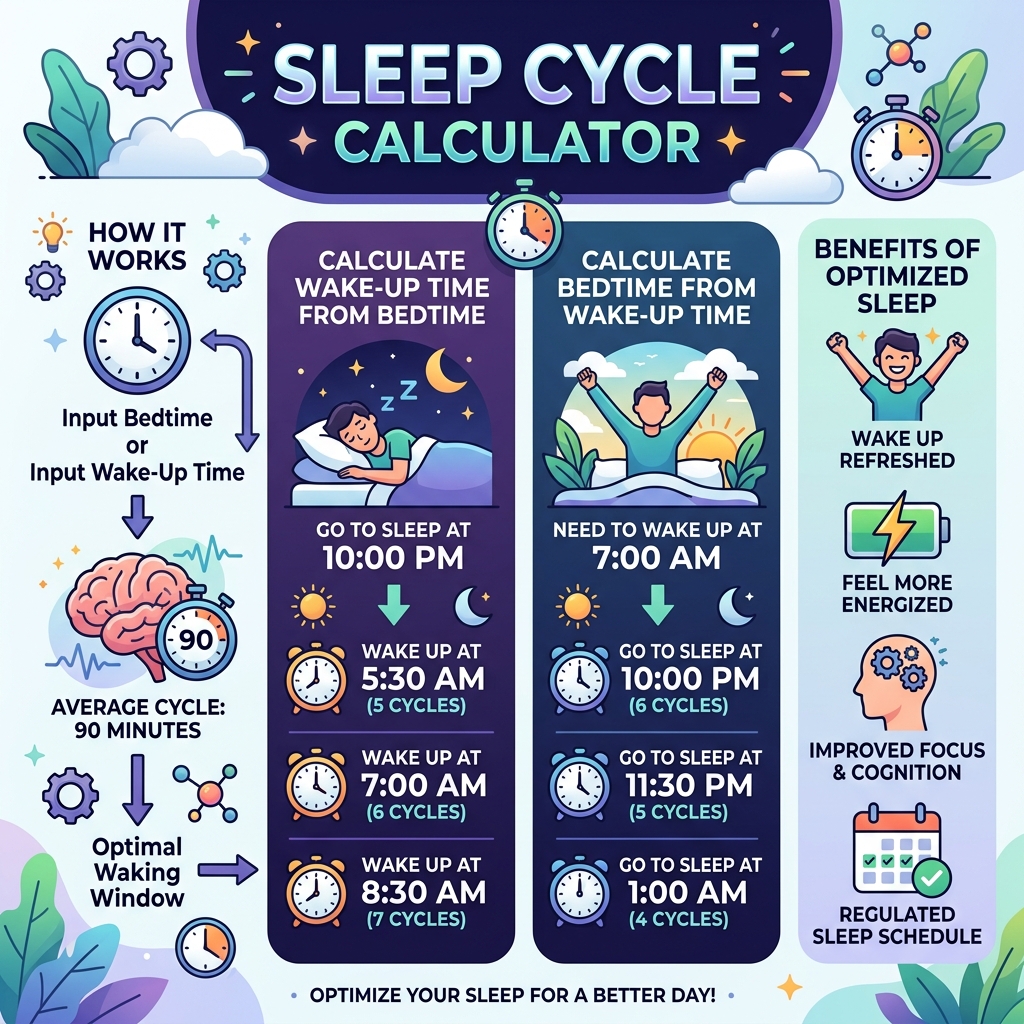
Find the ideal bedtime or wake-up time based on 90-minute sleep cycles. Wake up at the end of a cycle and you'll feel refreshed, wake up mid-cycle and you'll feel terrible.
Quick answer
Sleep runs in roughly 90-minute cycles, so waking at the end of a cycle feels easier than mid-cycle. This calculator works back from your wake time to the best bedtimes, allowing about 15 minutes to fall asleep.
Why Sleep Cycles Matter More Than Total Hours
Most people focus only on how many hours they sleep, but when you wake up within your sleep cycle matters just as much. A person sleeping 7.5 hours and waking at the end of a cycle will feel dramatically better than someone who slept 8 hours but woke in the middle of deep sleep.
Each cycle is approximately 90 minutes long and consists of several stages including light sleep, deep slow-wave sleep (critical for physical recovery), and REM sleep (essential for memory and mood). Disrupting a cycle mid-way, especially during deep sleep, causes sleep inertia: the groggy fog that makes mornings miserable.
The Science of 90-Minute Sleep Cycles
Sleep researchers discovered the 90-minute ultradian rhythm in the 1950s. Since then, hundreds of studies have confirmed that the brain cycles through predictable stages throughout the night:
- N1 (5%): Light sleep, easily woken, hypnic jerks common
- N2 (45%): True sleep, body temperature drops, heart rate slows
- N3 (25%): Deep/slow-wave sleep, hardest to wake from, most physically restorative
- REM (25%): Dreaming, memory consolidation, emotional processing, creativity
Early cycles contain more deep sleep; later cycles contain more REM. This is why cutting sleep short by 90 minutes doesn't just lose you one cycle, it disproportionately cuts your most memory-rich, mood-boosting REM sleep.
How to Use the Sleep Calculator for Better Recovery
Use the calculator in two ways:
- Fixed wake-up time: Enter when you need to wake up, and the calculator shows the best bedtimes. Go to sleep at the time corresponding to 5 or 6 cycles for optimal rest.
- Fixed bedtime: If you know when you'll get to bed, the calculator shows the best times to set your alarm, choose one that aligns with a full cycle.
For most adults, the recommended targets are 5 cycles (7.5 hours) or 6 cycles (9 hours) of actual sleep, accounting for the 14-minute fall-asleep buffer.
Sleep and Fitness: The Recovery Multiplier
Sleep is the most underrated recovery tool in fitness. During deep sleep (N3), your body releases the majority of its growth hormone, driving muscle repair and fat metabolism. Studies show:
- Sleeping under 6 hours reduces muscle protein synthesis by up to 18%
- Sleep-deprived athletes experience 20–30% reductions in performance
- Getting 9+ hours can increase sprint speed, reaction time, and mood in athletes
- Poor sleep elevates cortisol, which breaks down muscle tissue and promotes fat storage
Sleep and nutrition work together.
What you eat affects sleep quality, and sleep affects every result in the gym and on the scale.
Get the Free Macro Guide →5 Evidence-Based Tips to Improve Sleep Quality Tonight
- Consistent timing: Go to bed and wake up at the same time every day. Consistency anchors your circadian rhythm better than any supplement.
- Cool your room: Core body temperature must drop 1–2°C to initiate sleep. Keep your bedroom below 19°C (66°F).
- Morning light exposure: Get outside or use a bright light within 30 minutes of waking. This resets your circadian clock and improves sleep quality that night.
- Caffeine cutoff: Caffeine has a 5–7 hour half-life. A 3pm coffee means 50% of its stimulant effect is still active at 9pm. Cut off by 1–2pm if you struggle to sleep.
- Wind-down ritual: Signal to your brain that sleep is coming, dim lights, reduce screens, and keep the 60 minutes before bed calm and consistent.
Frequently Asked Questions
How long is one sleep cycle?
Why should I wake up at the end of a sleep cycle?
Why does the calculator add 14 minutes?
How many sleep cycles should I get per night?
Can I catch up on missed sleep?
Does everyone have exactly 90-minute cycles?
What is the best amount of sleep for muscle gain?
How do I improve my sleep quality?
How it's calculated: this tool uses established, published equations. See the full calculator methodology for the formulas and assumptions behind it.
Results are estimates for general guidance, not medical advice. See our disclaimer, and speak to a qualified healthcare professional before making medical or dietary changes.
Related Tools
Save & share on Pinterest
Click any card to pin it — or share with someone who needs it.
Sleep Cycle Calculator
Find the ideal bedtime or wake-up time based on 90-minute sleep cycles. Wake up at the end of a cycl…
Find the ideal bedtime or wake-up time based on 90-minute sleep cycles. Wake up …
Read the full guide: Sleep Cycle Calculator
Try the free Sleep Cycle Calculator
Sleep Cycle Calculator — use our free calculators for instant personalised results. No signup requir…
Pinterest opens in a new tab. You can edit the description before saving.
Get Your Free Macro Cheat Sheet
One-page PDF with all the key formulas. Free, no spam ever.
Get the Free Macro Guide