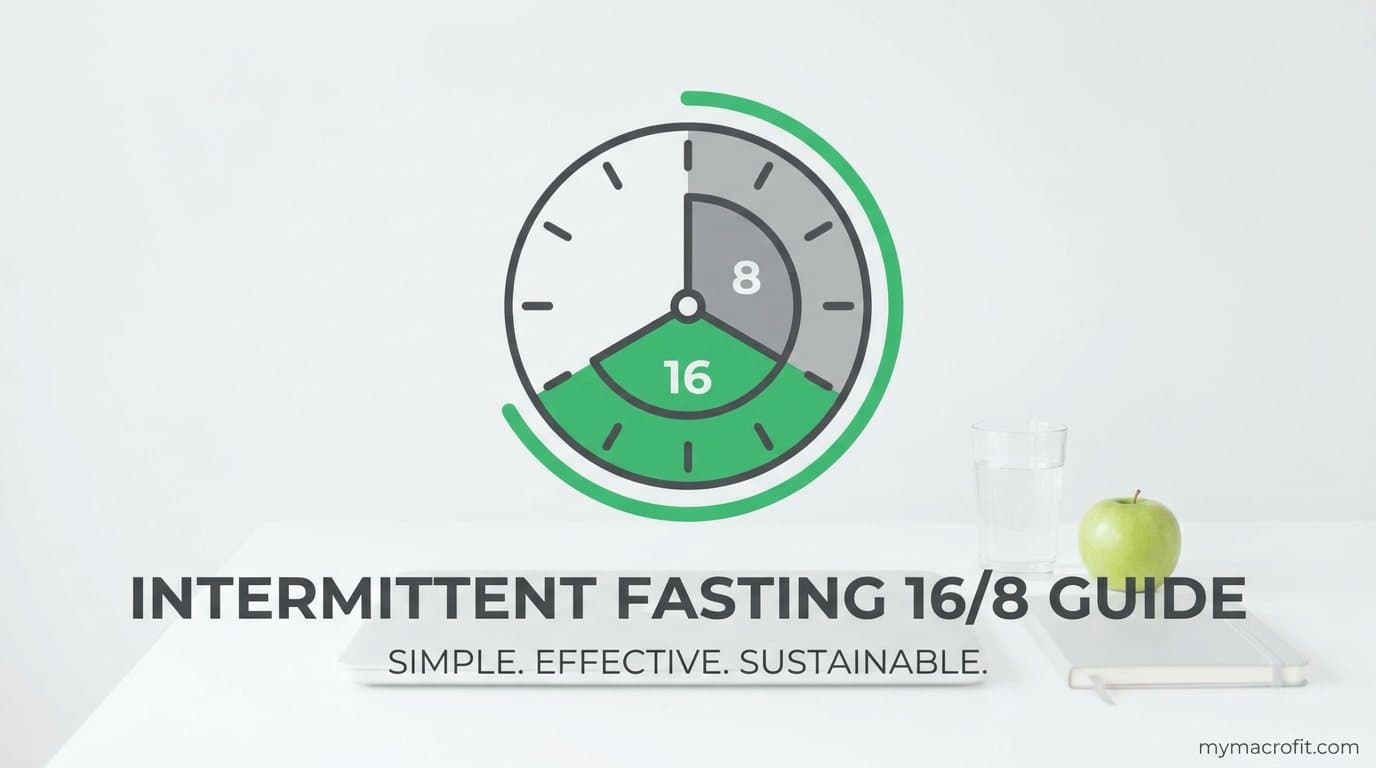
Intermittent Fasting 16/8: The Complete Guide

CN · Metabolic Health Coach
Most fitness trends don't survive contact with the actual research. Intermittent fasting is one of the rare ones that does, and the 16/8 protocol is the version I find genuinely defensible, because it's practical enough to run for years without rearranging your entire life. What I love about it from a metabolic standpoint is that it works on two levers at once: it naturally trims your eating window (fewer hours, often fewer calories) and it extends the daily fasting period long enough to nudge insulin sensitivity in the right direction.
Let me walk you through how it actually works under the hood, what the evidence genuinely supports (and what it doesn't), and how to run it properly. Want your exact windows first? The Intermittent Fasting Calculator sets them in seconds.
What Is the 16/8 Protocol?
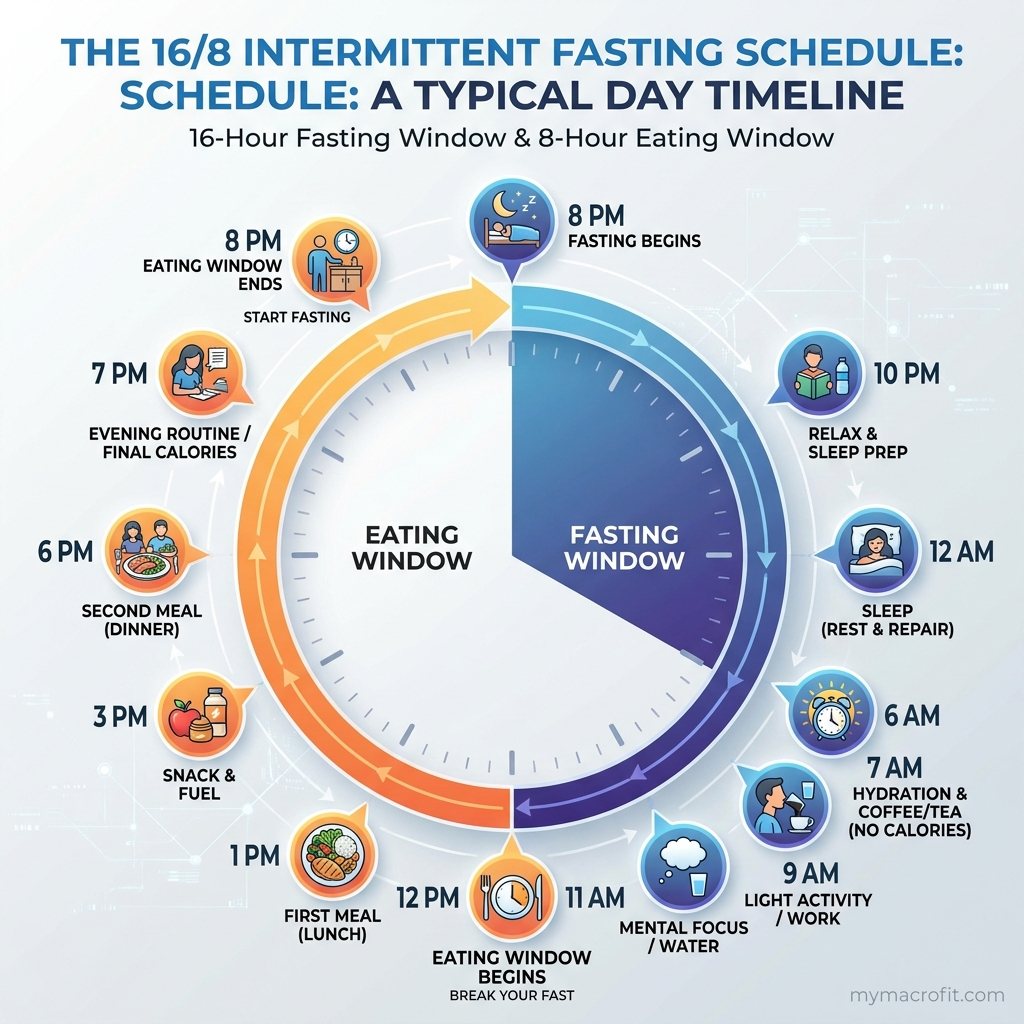
The 16/8 method means fasting for 16 hours and eating within an 8-hour window each day. A common schedule:
- Eating window: 12:00pm, 8:00pm
- Fasting window: 8:00pm, 12:00pm (next day)
Since most of the fast happens while you sleep, the effective "hunger period" is only 3-4 hours in the morning, which many people find easy to manage with black coffee or tea.
Other common 16/8 windows:
- 10am, 6pm (earlier for morning exercisers)
- 11am, 7pm (moderate approach)
- 1pm, 9pm (late risers, shift workers)
How Does Intermittent Fasting Work?
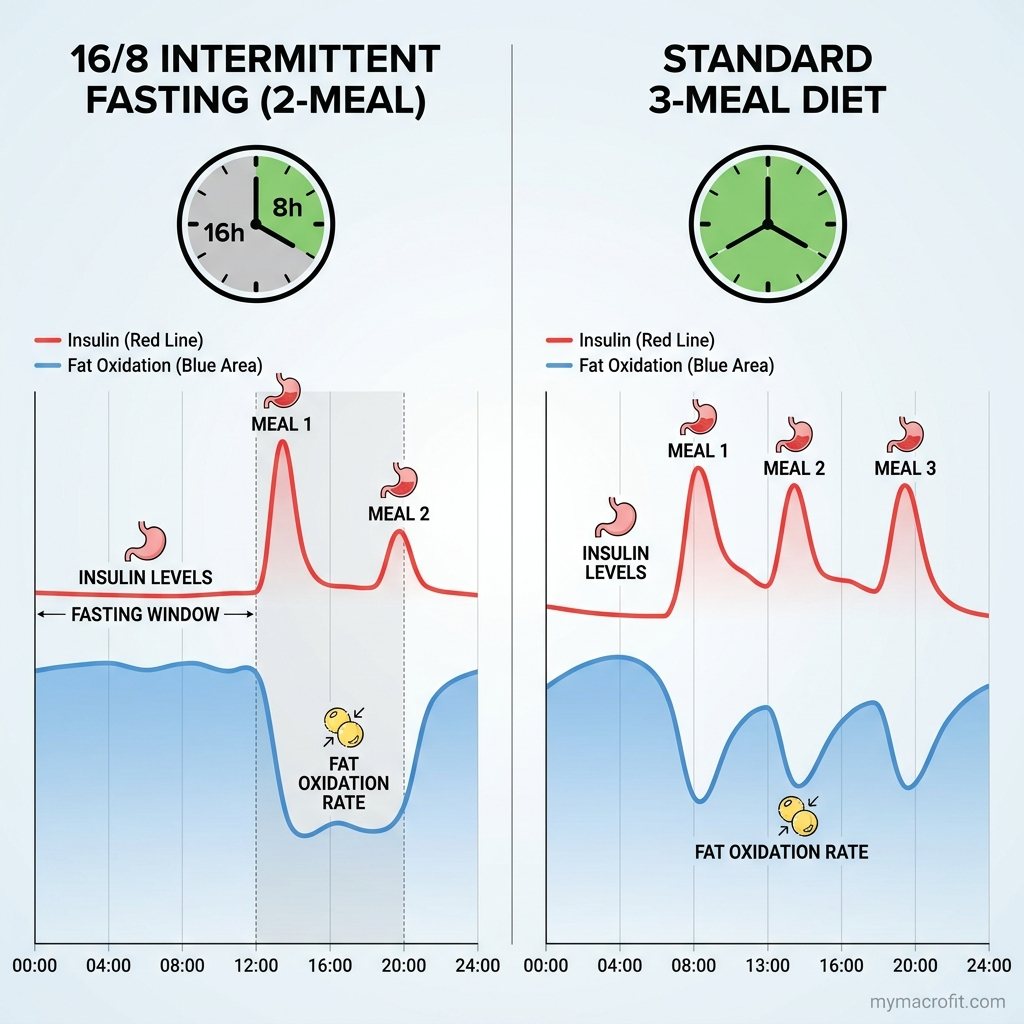
Contrary to popular belief, IF doesn't have unique metabolic magic. The primary mechanism is simple: a shorter eating window makes it easier to eat fewer calories because there's less time and opportunity to eat.
Secondary mechanisms that are genuinely evidenced:
Insulin reduction: During fasting, insulin levels fall. Lower insulin makes fat stores more accessible for energy, fat cells release stored fatty acids more readily.
Glycogen depletion: After 10-12 hours without food, liver glycogen depletes. The body increasingly relies on fat oxidation for fuel.
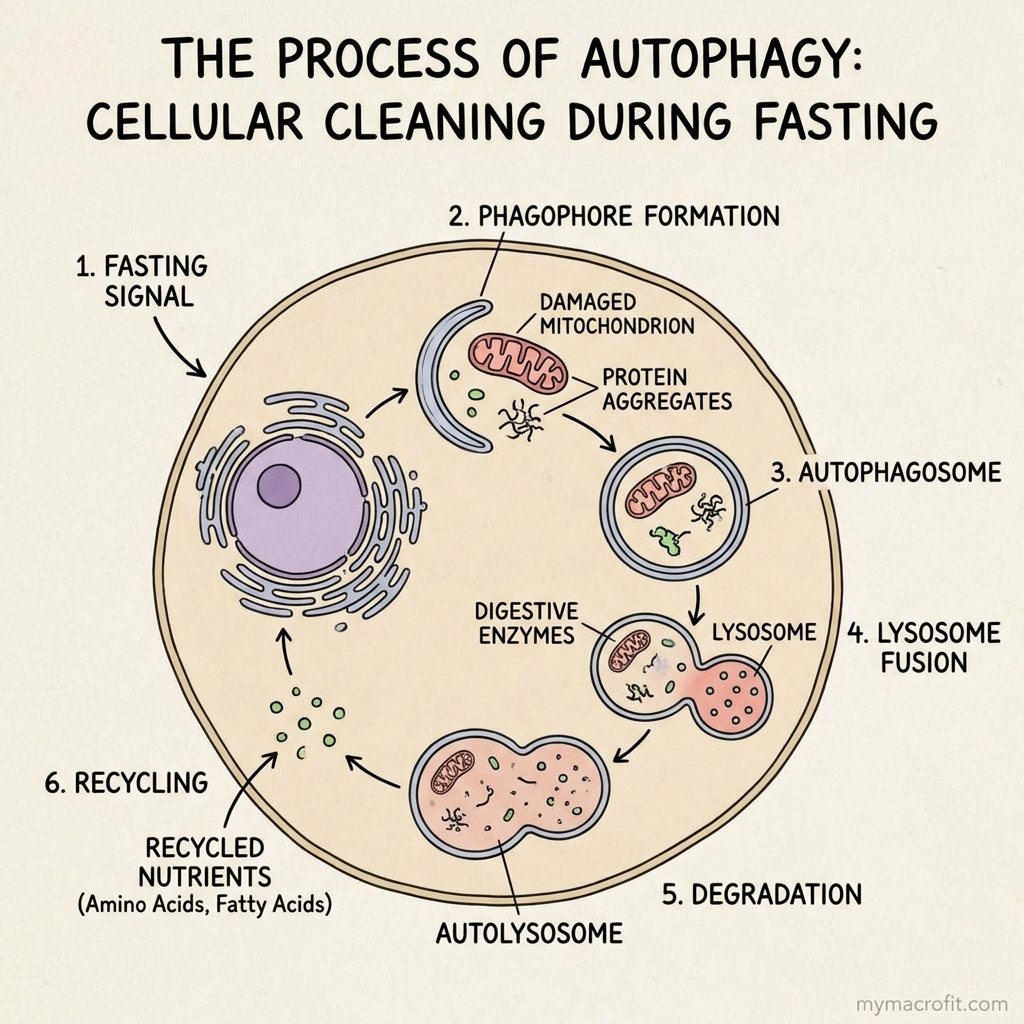
Autophagy: Extended fasting (16+ hours) triggers cellular cleanup processes. While the health benefits are real, they're most significant at fasting periods longer than 16/8 provides.
Appetite regulation: Many people report reduced hunger after adapting to 16/8, partly due to shifts in ghrelin (hunger hormone) patterns.
The Evidence: What Does 16/8 Actually Do?
A 2020 meta-analysis compared intermittent fasting to continuous calorie restriction across 27 studies. Key findings:
- Weight loss: Similar results between IF and standard calorie restriction when calories were equated
- Fat mass reduction: Comparable between methods
- Muscle retention: No significant difference when protein intake was adequate
- Adherence: Some people find IF easier to maintain long-term; others find it harder
The honest conclusion: IF is a tool for managing calorie intake, not a metabolic superpower. If it helps you eat less consistently, it works. If it makes you binge in your eating window, it doesn't.
Who Benefits Most from 16/8?
Intermittent fasting tends to work best for:
- People who aren't hungry in the morning and naturally skip breakfast
- Those who struggle with continuous calorie restriction but can follow time-based rules
- People who prefer fewer, larger meals over frequent small ones
- Anyone who finds tracking difficult and benefits from a simpler "don't eat until noon" rule
IF tends to work less well for:
- People who train first thing in the morning at high intensity
- Those with a history of disordered eating patterns
- People who get very hungry in the morning and become irritable or unable to focus
- Women with hormonal sensitivities (some research suggests very long fasting periods can disrupt menstrual cycles)
How to Start 16/8: A Practical Guide
Week 1-2: Gradual approach
If you currently eat breakfast, shift your first meal 1-2 hours later each week rather than jumping straight to noon. This lets your hunger hormones adapt gradually.
What you can have during the fast
- Water, as much as you want
- Black coffee, no calories, doesn't break the fast, suppresses appetite significantly
- Plain tea, green, herbal, black (no milk or sweeteners)
- Sparkling water, fine
What breaks the fast: Anything with calories, including "just a splash" of milk, bulletproof coffee (butter/MCT oil), cream, or BCAAs in flavoured form.
Managing hunger in the first 1-2 weeks
Hunger during the fast is mostly habitual. Your body is accustomed to eating at certain times, and it signals hunger based on that habit, not genuine energy need. Drinking black coffee and water, staying busy, and waiting 15 minutes when hunger hits are usually sufficient.
Most people report that hunger in the morning almost completely disappears after 1-2 weeks.
What to Eat in Your 8-Hour Window
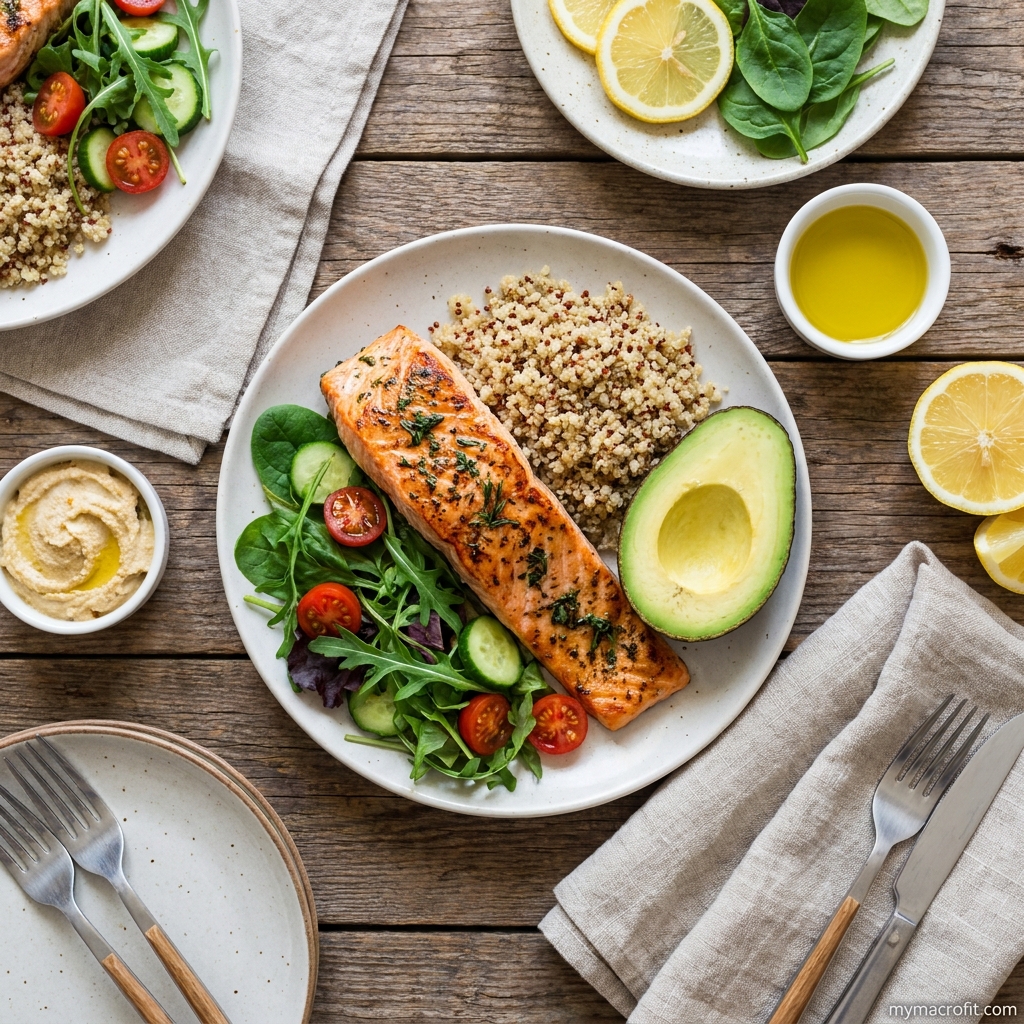
16/8 doesn't prescribe what you eat, but the goal should still be hitting your calorie and protein targets. Common approaches:
2 large meals + 1 snack:
- 12pm: Lunch (protein + carbs + veg), 40% of daily calories
- 3pm: Snack (protein-focused), 15% of daily calories
- 7pm: Dinner (protein + carbs + veg), 45% of daily calories
Focus on protein: With only 8 hours to eat, you have fewer meals to hit your protein target. Prioritise 30-40g of protein at each meal.
Don't undereat out of habit: Some people eat very little within the window simply because the time pressure creates a natural calorie restriction. While some restriction is the goal, eating 600 calories in an 8-hour window is too little and will cause muscle loss and fatigue.
16/8 and Exercise
Fasted training: Many people train fasted during the morning. Light to moderate intensity exercise (walking, cycling, yoga) is fine fasted. High-intensity strength training or interval training fasted can impair performance for some people.
If training fasted for strength: Consider a small protein supplement (10-20g of whey or EAAs) 30 minutes before training. This provides amino acids for muscle protein synthesis without significantly disrupting the fast's primary benefits.
Training in the eating window: Scheduling training 1-2 hours after your first meal generally provides the best performance for most people.

Common 16/8 Mistakes
Overeating during the window, "I fasted all morning, so I deserve a big lunch" defeats the purpose. The calorie deficit from the fast shouldn't be compensated by larger meals.
Under-eating protein, with fewer meals, under-eating protein is easy. Aim for 30-40g protein per meal and add a protein shake if needed.
Not adjusting for hunger cues, 16/8 is a guideline, not a law. If you're genuinely starving at 11:45am on a day you trained hard, eat. One early meal doesn't undo the habit.
Choosing IF because it sounds easier than tracking, for some people it is easier. For others, removing time restrictions and tracking macros consistently produces better results. Experiment and see what you adhere to better.
Sample 16/8 Day
12:00pm, First meal (40g P / 60g C / 15g F) Greek yogurt (200g) + granola (40g) + berries + 2 hard-boiled eggs
3:30pm, Snack (25g P / 20g C / 5g F) Protein shake + apple
7:00pm, Dinner (50g P / 80g C / 20g F) 200g chicken breast + 200g rice + roasted broccoli + olive oil
Total: ~115g protein / 160g carbs / 40g fat ≈ 1,440 kcal
The Bottom Line
The 16/8 protocol is a practical, evidence-backed tool for managing calorie intake without continuous tracking. It works best as a consistent daily structure rather than an occasional tactic. If you're someone who doesn't feel hungry in the morning and prefers fewer larger meals, try it for 4 weeks and assess the results.
If you're hungry in the morning or your performance suffers without breakfast, standard meal frequency with macro tracking will serve you equally well.
Save & share on Pinterest
Click any card to pin it — or share with someone who needs it.
Intermittent Fasting 16/8: The Complete Guide
Everything you need to know about the 16/8 intermittent fasting protocol, how it works, the real ben…
Everything you need to know about the 16/8 intermittent fasting protocol, how it…
Read the full guide: Intermittent Fasting 16/8: The Complete Guide
Try the free Intermittent Fasting Calculator
Intermittent Fasting 16/8: The Complete Guide — use our free calculators for instant personalised re…
Pinterest opens in a new tab. You can edit the description before saving.
Ready to get your numbers?
Free calculator, instant results, no signup required.
Frequently Asked Questions
How does 16/8 intermittent fasting work?+
Does intermittent fasting 16/8 help lose weight?+
Can you exercise during 16/8 fasting?+
What breaks an intermittent fast?+
About the Author

I'm a certified nutritionist and metabolic health coach. I went deep on keto and metabolism after reversing my own insulin resistance, and I'd rather give you the actual numbers than a hand-wave.
View full profile →