Ashwagandha for Weight Loss and Stress: What the Research Says

RHC · Pre/Postnatal Fitness Specialist
Ashwagandha (Withania somnifera) is one of the most extensively researched adaptogenic herbs in modern supplement science. Unlike many herbs with centuries of traditional use but weak clinical evidence, ashwagandha has accumulated a respectable body of randomised controlled trials in the past 15 years.
The benefits are real, but the marketing is often overblown. Here's what the evidence actually shows.
What Is an Adaptogen?
Ashwagandha is classified as an adaptogen, a substance that helps the body adapt to stress by modulating the HPA (hypothalamic-pituitary-adrenal) axis, which regulates cortisol production.
An adaptogen doesn't eliminate the stress response, it modulates its magnitude and duration, reducing the spike and promoting faster return to baseline. Over time, this reduces chronic cortisol elevation and its downstream effects.
Active compounds: Withanolides (steroidal lactones) are the primary bioactive compounds in ashwagandha. Standardised extracts are characterised by their withanolide content (typically 5-8%), this is what makes KSM-66 and Sensoril meaningfully different from cheap unstandardised powder.
The Evidence: What Ashwagandha Actually Does
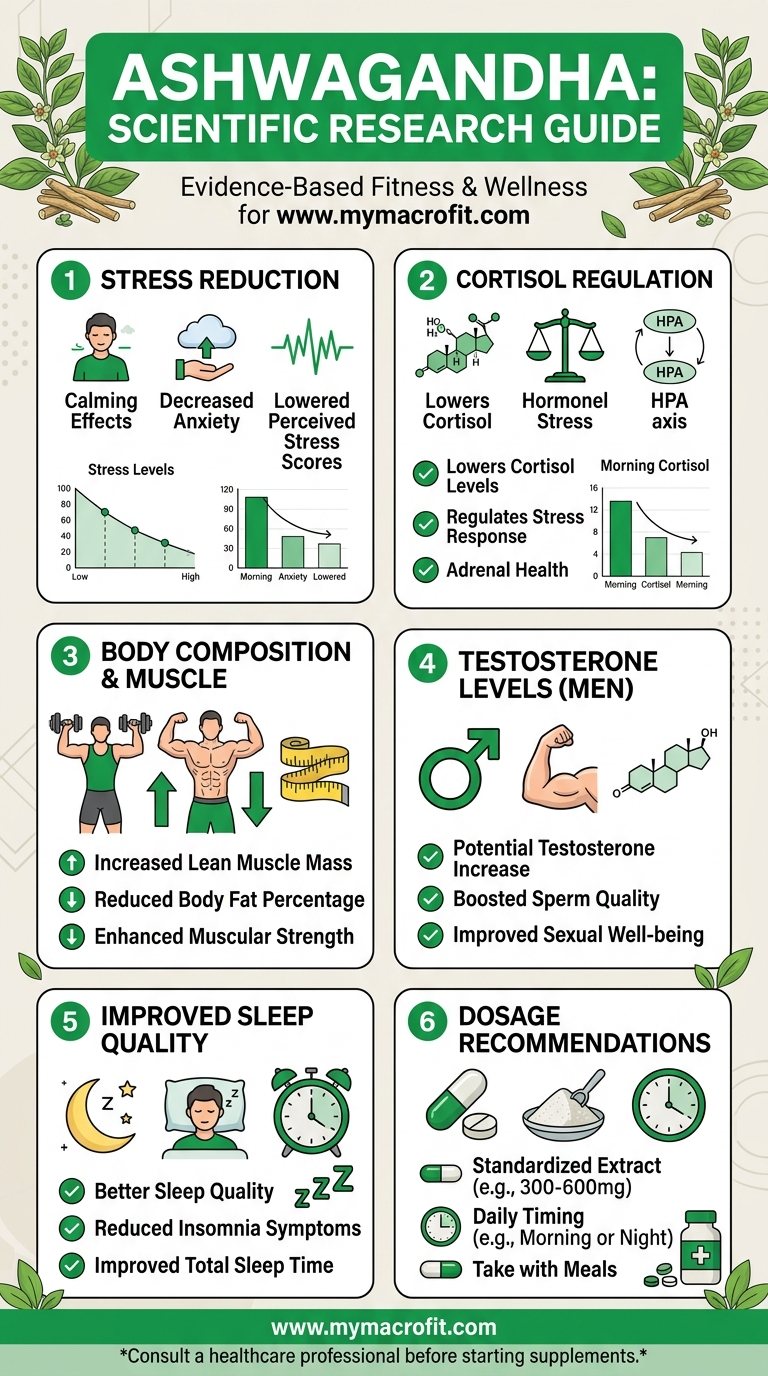
1. Cortisol Reduction
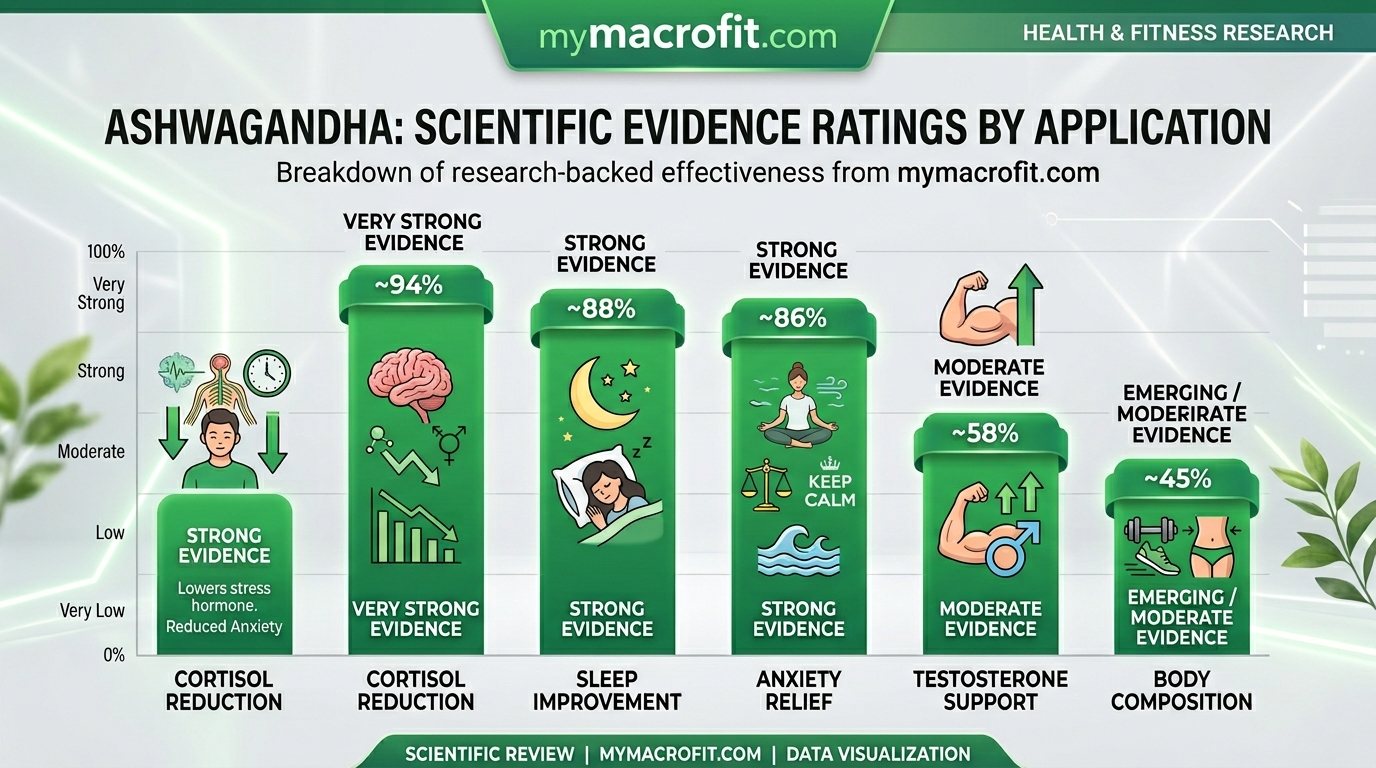
The most consistent finding across ashwagandha research. Multiple RCTs show significant reductions in serum cortisol:
- Chandrasekhar et al. (2012): 28% reduction in cortisol with KSM-66 at 300mg twice daily over 60 days
- Pratte et al. (2014): Significant cortisol reduction with Sensoril at 125-500mg over 60 days
- Multiple additional trials confirming the effect at 300-600mg/day
Practical significance: Chronically elevated cortisol promotes visceral fat storage, disrupts sleep, impairs insulin sensitivity, and suppresses immune function. Reducing it through supplementation addresses multiple health outcomes simultaneously.
2. Stress and Anxiety
Ashwagandha consistently reduces perceived stress scores (PSS), anxiety, and burnout symptoms in trials with stressed adults. The effect is modest-to-moderate in magnitude, meaningful in clinical terms, not transformative. It's not a substitute for addressing the source of stress, but it provides measurable relief.
3. Sleep Quality
Two focused RCTs show ashwagandha supplementation (at 300mg KSM-66 twice daily) significantly improved:
- Sleep onset latency (time to fall asleep)
- Total sleep time
- Sleep efficiency
- Mental alertness on waking
The mechanism appears to be through both cortisol modulation and direct effects on GABA receptors (an anxiolytic mechanism similar to magnesium).
4. Body Composition
Two RCTs specifically examined body composition effects of ashwagandha:
- Choudhary et al. (2017): 300mg KSM-66 twice daily in chronically stressed adults → significant reduction in body weight, waist circumference, and hip circumference vs. placebo, alongside cortisol reduction
- Wankhede et al. (2015): Ashwagandha combined with resistance training showed greater increases in muscle strength and recovery and greater reduction in exercise-induced muscle damage than training alone
The weight loss effect appears mediated through cortisol reduction, not direct fat-burning. This means ashwagandha's body composition benefits are most pronounced in stressed, cortisol-elevated individuals.
5. Testosterone (Primarily Relevant for Men)
Multiple RCTs show ashwagandha increases testosterone in men:
- 10-22% increases in free and total testosterone reported across trials
- Mechanism: cortisol reduction (cortisol competes with testosterone at the receptor level and suppresses GnRH), plus possible direct stimulation of luteinising hormone
This is why ashwagandha has become popular in men's health supplementation. The testosterone effect in women is less studied and less relevant, women have approximately 10% of men's testosterone levels, and moderate increases have different implications.
6. Thyroid Support
Ashwagandha appears to stimulate thyroid hormone production, both T3 and T4 increase in some studies. This may be particularly relevant for subclinical hypothyroidism or people with suboptimal thyroid function.
Important: People on thyroid medication should discuss ashwagandha with their doctor, the combination may require dose adjustment.
KSM-66 vs. Sensoril vs. Generic
If you decide to try ashwagandha, extract quality matters enormously:
| Form | Source | Withanolide % | Primary research | Best for |
|---|---|---|---|---|
| KSM-66 | Root only | 5% | 20+ trials | Stress, testosterone, body composition |
| Sensoril | Root + leaf | 8% withanolide glycosides | 10+ trials | Stress, cardiovascular, sleep |
| Generic/unstandardised | Variable | Variable (often <2%) | Limited | Unreliable |
Recommendation: KSM-66 at 300-600mg/day is the most studied form for the applications most people want. Sensoril is a legitimate alternative.
Dosage Protocol
Standard dose: 300-600mg of KSM-66 extract daily Split dosing: 300mg in morning + 300mg in evening (or 300mg evening only for sleep-focused use) Timing: Taking ashwagandha in the evening may amplify sleep benefits; morning dosing is appropriate for cortisol/energy goals Duration: 8-12 weeks minimum to assess effects; safe for longer-term use in most people
Who Benefits Most
Ideal for:
- People with high stress, elevated cortisol symptoms (abdominal fat gain, poor sleep, anxiety, fatigue)
- People struggling to lose abdominal fat despite deficit eating
- Athletes in heavy training phases managing recovery
- People with subclinical hypothyroidism (with medical oversight)
Less benefit for:
- People with low stress and normal cortisol
- People expecting dramatic weight loss without addressing diet
Avoid if:
- Pregnant or breastfeeding
- On thyroid medication (without medical guidance)
- On sedatives (additive CNS effects)
- Autoimmune conditions (ashwagandha is immunostimulatory)
The Bottom Line
Ashwagandha, specifically KSM-66 at 300-600mg/day, meaningfully reduces cortisol, improves sleep quality, and in stressed individuals with elevated cortisol, contributes to improvements in body composition. For men, it also raises testosterone.
It's not a weight loss pill. It's a stress and cortisol modulator that removes some of the hormonal obstacles to fat loss, particularly the cortisol-visceral fat-poor sleep cycle that affects many stressed adults.
For the full stress-weight connection, see our cortisol and weight gain guide.
Save & share on Pinterest
Click any card to pin it — or share with someone who needs it.
Ashwagandha for Weight Loss and Stress: What the Research Says
An honest look at the evidence for ashwagandha, stress reduction, cortisol, body composition, testos…
An honest look at the evidence for ashwagandha, stress reduction, cortisol, body…
Read the full guide: Ashwagandha for Weight Loss and Stress: What the Research Says
Try the free Supplement Timing Calculator
Ashwagandha for Weight Loss and Stress: What the Research Says — use our free calculators for instan…
Pinterest opens in a new tab. You can edit the description before saving.
Ready to get your numbers?
Free calculator, instant results, no signup required.
Frequently Asked Questions
Does ashwagandha help with weight loss?+
How long does ashwagandha take to work?+
What is the best form of ashwagandha?+
Can women take ashwagandha?+
Are there side effects or people who should avoid ashwagandha?+
Should I cycle ashwagandha or take it continuously?+
About the Author

I'm a registered health coach and pre/postnatal specialist. I look at the whole person, your sleep, your stress, your hormones, because the number on the scale is only ever part of the story.
View full profile →