Fat Loss After 40, Working With Your Hormones
If the diet that worked in your 30s has stopped working, you are not imagining it. As hormones shift through perimenopause, your body needs a different approach. Here are the calculators, plans, and evidence-based guides built specifically for it.
Step 1, Get Your Numbers
Calculators for Women 40+
Menopause Calorie Calculator
Adjust your maintenance calories for perimenopause and menopause.
Macro Calculator
Determine your exact daily protein, carbs & fat targets.
Protein Calculator
Get your exact daily protein needs for your body and goals.
TDEE Calculator
Find out precisely how many calories your body burns each day.
BMI Calculator
Understand your body composition and healthy weight range.
Waist-to-Hip Ratio
Assess your cardiovascular risk based on body shape.
Step 2, Free Resources
Get the Free Perimenopause Nutrition Starter
Protein targets, calorie adjustments, and the habits that matter most after 40, straight to your inbox.
Step 3, Follow a Proven Plan
Guides Built for You
Weight Loss After 40: What Actually Changes and What to Do About It
It is not in your head, and it is not your fault
The story is almost always the same. The eating and exercise that kept you in shape for twenty years quietly stops working somewhere in your early to mid forties, the weight settles around your middle in a way it never used to, and the advice you get is some version of "just try harder". It is exhausting, and it misses the point entirely.
Your body has genuinely changed. As you move through perimenopause, oestrogen starts to fluctuate and then decline, and that single shift ripples out into your metabolism, your muscle, your sleep and even where you store fat. None of this means you have failed. It means the old playbook was written for a different hormonal season, and you need an updated one. The good news is that the updated version is not complicated, and it works.
What falling oestrogen actually does
Understanding the mechanism takes the mystery, and a lot of the self-blame, out of it. Four things change at once:
- Muscle becomes harder to keep. Oestrogen helps protect muscle, so as it falls you lose it faster unless you actively train. Less muscle means a lower resting metabolism, which is a big part of why calories that used to maintain your weight now slowly add to it.
- Fat moves to your middle. Lower oestrogen shifts fat storage from hips and thighs toward the abdomen. This visceral fat is also more linked to health risk, which is why the change matters beyond appearance.
- Insulin sensitivity dips. Many women handle carbohydrates a little less efficiently through this transition, which nudges the body toward storing rather than burning.
- Sleep and mood take a hit. Disrupted sleep raises hunger hormones and cortisol the next day, making everything harder. This is not a willpower problem, it is a physiology problem.
What Changes After 40
Four shifts — each with a clear answer
Muscle is harder to keep
Lower oestrogen = faster muscle loss without training
Fat moves to your middle
Storage shifts from hips and thighs to the abdomen
Insulin sensitivity dips
Carbs are handled a little less efficiently
Sleep takes a hit
Disrupted sleep raises hunger hormones and cortisol
The two habits that move the needle most
If you only changed two things, make them these, because they address the muscle and metabolism problem directly.
Eat more protein than you think you need. Aim for roughly 1.6 to 2 grams per kilogram of bodyweight, spread across the day. Protein protects muscle, keeps you full, and has the highest "cost to digest" of any macro. Most women in this stage are eating far too little of it. Use the Protein Calculator to get your target, then build every meal around a protein source first.
Lift weights, properly. Cardio is fine, but resistance training is the single most powerful lever you have after 40. It is the only thing that reliably rebuilds the muscle you are losing, which props your metabolism back up and reshapes your body in a way the scale alone will never show. Two to three sessions a week is plenty to start.
And set your calories with your changed body in mind. Our Menopause Calorie Calculator adjusts your maintenance estimate for this stage so you are not working from a number meant for your thirties.
Food, supplements and the things worth doing
Beyond protein, prioritise calcium and vitamin D for your bones, which lose their oestrogen protection too, and plenty of fibre and colourful plants for your gut and overall health. You do not need a cupboard full of pills, but a few basics genuinely earn their place: vitamin D if you are low, omega-3 for recovery and mood, and magnesium, which many women find helps sleep. Always run new supplements past your GP, especially if you take medication.
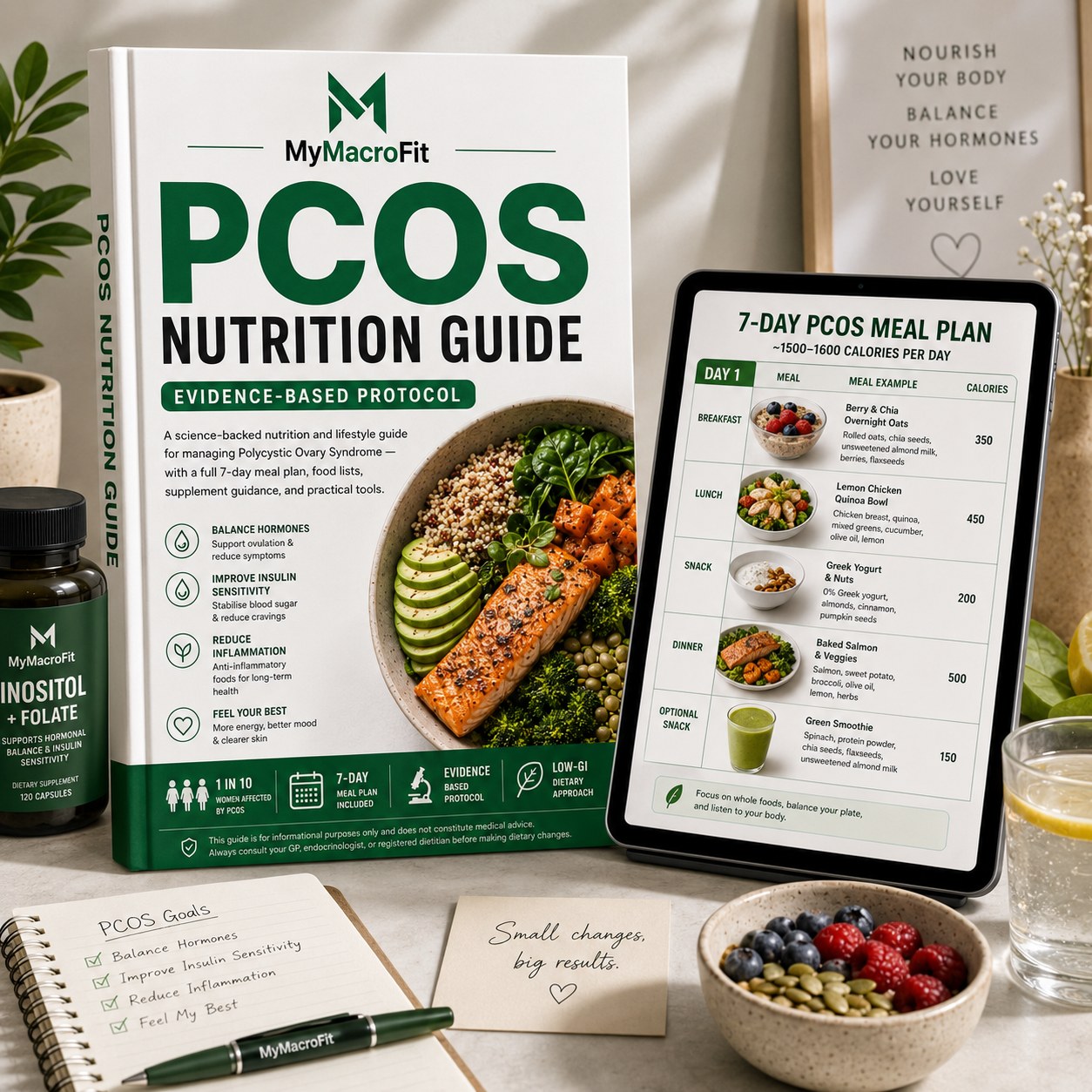
If hormones like PCOS are part of your picture, the PCOS Nutrition Guide turns all of this into a clear plan, including a full 7-day low-GI menu.
Most of all, be patient and kind with yourself. Progress after 40 is real, it is just steadier and quieter than the dramatic drops of your twenties. Measured in strength, energy, better sleep and how your clothes fit, you will feel the change long before the scale fully catches up.
Learn the Science
Guides for Women Over 40
How to Lose Belly Fat After 40 (What Actually Works for Women)
Why losing belly fat after 40 is different for women, and what actually works, covering hormones, cortisol, sleep, strength training, and protein targets.
How to Calculate Macros for Women (Step-by-Step Guide)
A step-by-step guide to calculating macros for women, covering why women's macros differ, hormonal cycling, protein targets, fat minimums, with a worked example.
The Complete Women's Fitness Guide: Nutrition, Training, and Hormones
A comprehensive fitness and nutrition guide for women, covering macros, hormonal fat loss, PCOS, postpartum, strength training, and the differences that make women's nutrition unique.
PCOS Diet and Macros: What to Eat to Manage Symptoms and Lose Weight
How to structure your diet and macros for PCOS, covering insulin resistance, low-GI carbs, protein targets, foods to avoid, and evidence-based supplement options.
Postpartum Weight Loss: A Realistic Timeline and What Actually Helps
A realistic guide to postpartum weight loss, covering the actual timeline, why it's different after a baby, breastfeeding calories, sleep deprivation, and safe deficit planning.
How Much Protein Do I Need to Build Muscle
Science-backed protein recommendations for muscle growth at every training level, plus the best sources, timing, and how to hit your target every day.
How to Build Muscle as a Woman: The Complete Guide (No Bulk, Just Tone)
How women can build muscle without getting bulky, covering progressive overload, protein needs, overcoming calorie surplus fear, and a realistic month-by-month timeline.
Save & Share
Pin These for Later


Ready to Start?
Get your numbers, grab the free guide, and follow the science, everything you need is right here.