Plant-Based Protein: How to Hit Your Macros Without Meat

BSc Kinesiology · CPT
More people are eating less meat, whether for health, environmental, ethical, or cost reasons. The most common concern is protein: specifically, whether you can hit sufficient quantities and quality without animal sources. The short answer is yes, but it requires more attention than an omnivore diet.
Understanding Plant Protein: The Key Differences
Before the food lists, three concepts that shape the strategy:
1. Protein Completeness
Complete proteins contain all 9 essential amino acids (EAAs) in sufficient quantities. Animal proteins are almost universally complete. Plant proteins are typically incomplete, most are low in one or more EAAs:
| Plant food | Typically low in |
|---|---|
| Grains (rice, wheat, oats) | Lysine |
| Legumes (beans, lentils) | Methionine |
| Nuts and seeds | Lysine |
| Soy products | Nearly complete, minor methionine shortfall |
The solution: Combine plant proteins across the day. Rice + lentils, beans + wheat (bread + hummus), nuts + legumes. You don't need them in the same meal, just through the day.
2. Digestibility
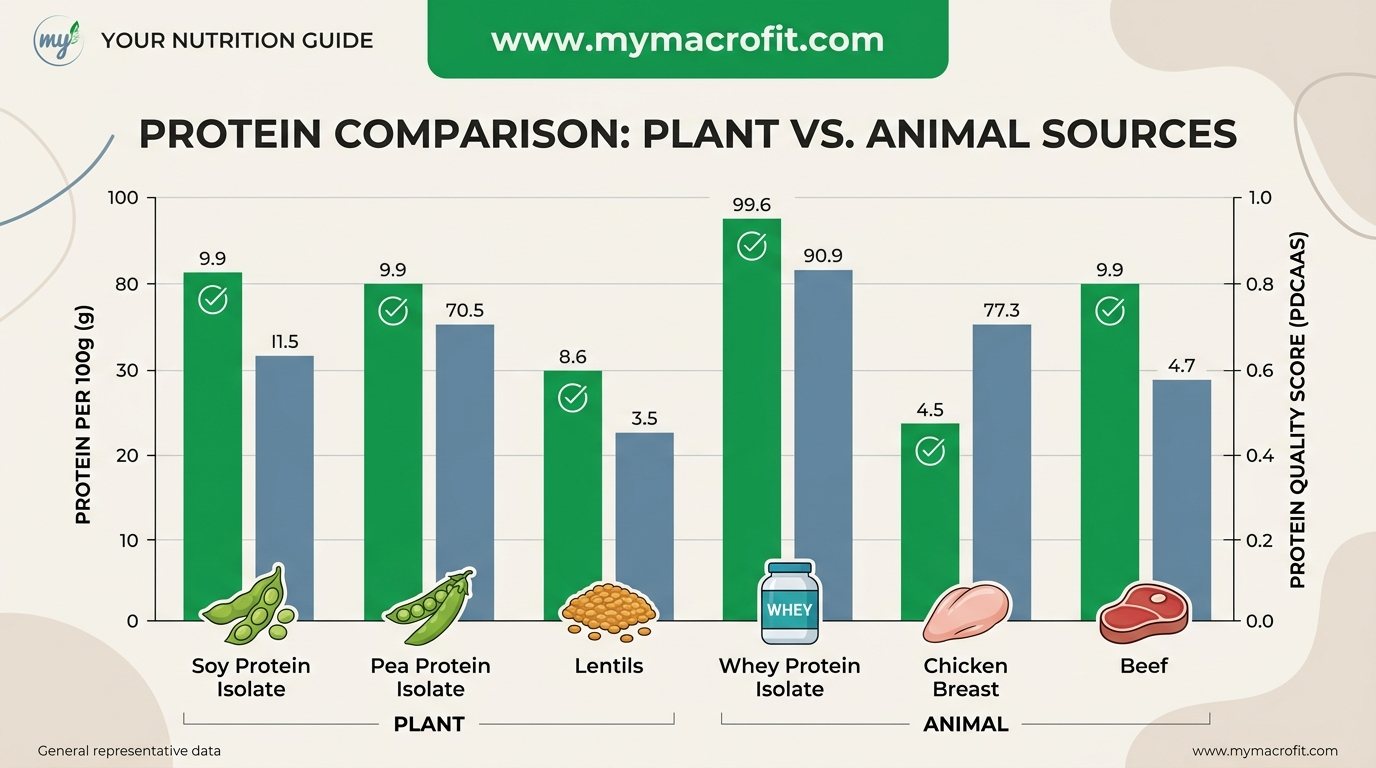
Plant proteins are less digestible than animal proteins. The PDCAAS (protein digestibility-corrected amino acid score) for plant proteins ranges from 0.5-0.9; most animal proteins score 0.9-1.0.
What this means practically: if you eat 100g of plant protein from lentils, you absorb approximately 75-85g. From chicken, approximately 95g.
The solution: Target 15-20% more total protein than the standard recommendation. If an omnivore targets 120g/day, a plant-based eater should target 138-144g/day.
3. Leucine Content
Leucine is the amino acid that most potently stimulates muscle protein synthesis (MPS). It acts as an anabolic signal. Most plant proteins are lower in leucine than whey and meat.
High-leucine plant proteins:
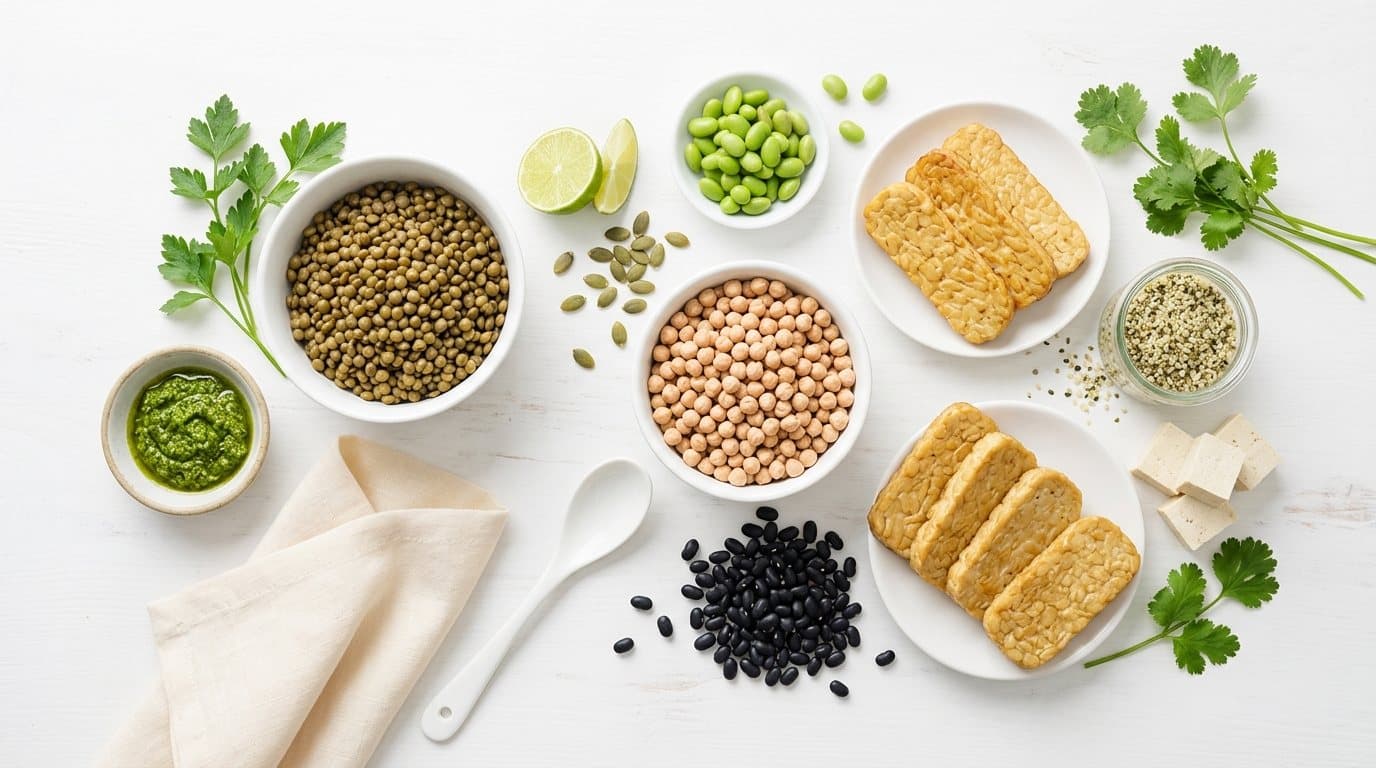
- Soy protein (tofu, tempeh, edamame, soy protein powder)
- Pea protein isolate
- Seitan (wheat gluten)
Prioritising these sources ensures adequate leucine stimulus for muscle building.
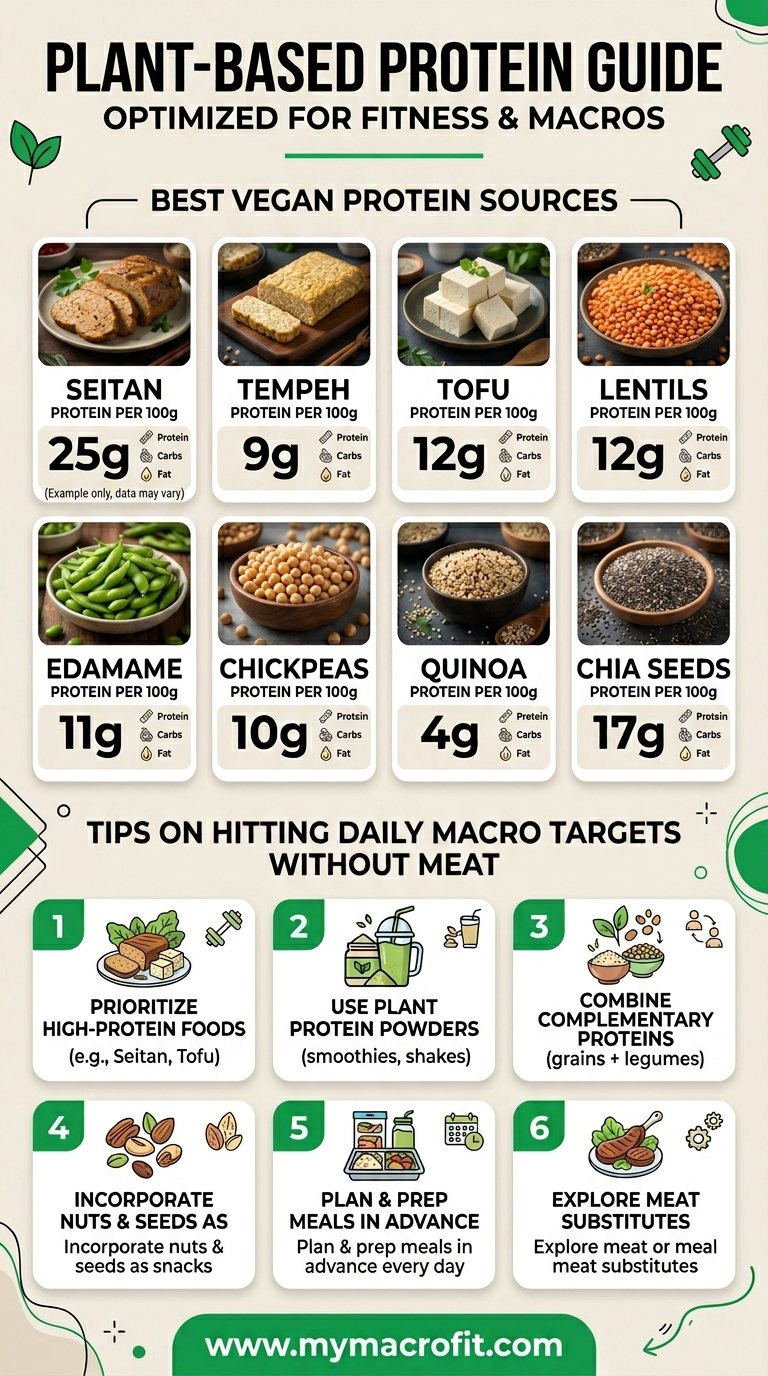
The Best Plant-Based Protein Sources
Tier 1: High Protein, Complete or Near-Complete
| Food | Protein per 100g | Notes |
|---|---|---|
| Seitan | 25g | Highest plant protein density; avoid if coeliac |
| Tempeh | 19g | Complete protein, fermented (better digestibility) |
| Edamame | 11g (fresh) | High leucine, excellent amino acid profile |
| Tofu (firm) | 8-15g | Versatile cooking; complete protein |
| Soy protein powder | 85-90g | Best plant protein for muscle building |
| Pea protein powder | 80-85g | High leucine, good digestibility |
Tier 2: Good Protein, Combine for Completeness
| Food | Protein per 100g | Notes |
|---|---|---|
| Lentils (cooked) | 9g | High fibre, combine with grains |
| Chickpeas (cooked) | 8g | Versatile, excellent fibre |
| Black beans | 8.9g | Combine with rice for complete amino acid profile |
| Kidney beans | 8.7g | Good all-round plant protein |
| Quinoa | 4.4g (cooked) | Complete protein grain, notable in this category |
Tier 3: Moderate Protein, Good Supporting Sources
| Food | Protein per 100g | Notes |
|---|---|---|
| Greek yogurt (plant-based) | 3-8g | Varies widely by brand |
| Hemp seeds | 31g | High in omega-3, complete protein |
| Pumpkin seeds | 19g | High zinc, good leucine |
| Peanut butter | 25g | High calorie, protein per calorie less optimal |
| Nutritional yeast | 40-50g | Complete protein, B12 fortified |
| Oats | 17g (dry) | Useful contributor at scale |
A Day of High-Protein Plant-Based Eating (100g+ target, 65kg person)
Breakfast: Tofu scramble with nutritional yeast (35g protein)
- 200g firm tofu, scrambled with turmeric, cumin, and nutritional yeast (3 tbsp)
- Spinach and cherry tomatoes
- 2 slices wholegrain toast with peanut butter
Lunch: Tempeh and edamame bowl (32g protein)
- 150g tempeh (marinated and baked)
- 100g edamame
- Roasted sweet potato and broccoli
- Brown rice (80g dry)
- Tahini dressing
Snack: Plant protein shake (25g protein)
- 30g pea protein powder blended with plant milk and banana
Dinner: Lentil and chickpea dahl (28g protein)
- 200g cooked green lentils
- 200g cooked chickpeas
- Tomato-based curry sauce with spices
- Large portion spinach
- Brown rice or roti
Total: ~120g protein, fully plant-based
Meeting Your Protein Target: The Calculator
Calculate your specific plant-based protein target using our Protein Calculator. Remember to add 15-20% to the standard recommendation to account for lower plant protein digestibility.
For a 70kg person targeting muscle building:
- Standard recommendation: 1.8g/kg = 126g protein
- Plant-based adjustment: 126g × 1.15-1.2 = 145-151g protein target
This can absolutely be achieved from whole foods, but a plant-based protein powder (pea or soy isolate) makes it significantly easier and more practical.
Common Plant-Based Protein Mistakes
1. Relying on vegetables as protein sources. Broccoli has 2.8g protein per 100g. It's nutritious, but it's not a protein source. Reaching 120g+ protein per day requires deliberate protein-focused foods.
2. Not combining protein sources. Eating only rice and not including legumes all day means missing lysine. The fix is simply ensuring legumes appear somewhere in the daily eating pattern.
3. Underestimating calorie density of plant protein foods. Nuts and seeds are high protein but also very high calorie. 30g almonds = 17g fat + 6g protein = 172 kcal. Useful but not efficient protein sources for people managing calorie intake.
4. Forgetting B12, vitamin D, zinc, and iron. Not protein-specific, but plant-based eaters commonly need supplementation for B12 (not found in plant foods), vitamin D (UK/northern climate), zinc (lower bioavailability from plants), and iron (non-haem iron is less well-absorbed). These affect energy and training quality.
The Bottom Line
Plant-based protein goals are achievable with the right approach. Prioritise high-protein, high-leucine plant foods (tempeh, tofu, edamame, lentils, pea/soy protein powder), combine protein sources across the day to ensure complete amino acid coverage, and target 15-20% more protein than the standard recommendation to compensate for lower digestibility. Use our Protein Calculator to set your specific daily target based on your weight and goals.
Save & share on Pinterest
Click any card to pin it — or share with someone who needs it.
Plant-Based Protein: How to Hit Your Macros Without Meat
The complete guide to plant-based protein sources, protein quality, the best plant foods for protein…
The complete guide to plant-based protein sources, protein quality, the best pla…
Read the full guide: Plant-Based Protein: How to Hit Your Macros Without Meat
Try the free Protein Calculator
Plant-Based Protein: How to Hit Your Macros Without Meat — use our free calculators for instant pers…
Pinterest opens in a new tab. You can edit the description before saving.
Ready to get your numbers?
Free calculator, instant results, no signup required.
Frequently Asked Questions
Can you build muscle on a plant-based diet?+
What is the best plant-based protein source?+
Do plant-based protein powders work as well as whey?+
How much protein do vegans and vegetarians need to build muscle?+
Are nuts and beans enough to get sufficient protein without supplements?+
About the Author
I'm a kinesiologist and personal trainer. I've spent eight years helping women lose fat and get stronger without handing their whole life over to a diet.
View full profile →