Progressive Overload: What It Is and Why It's the Key to Gains

BSc Kinesiology · CPT
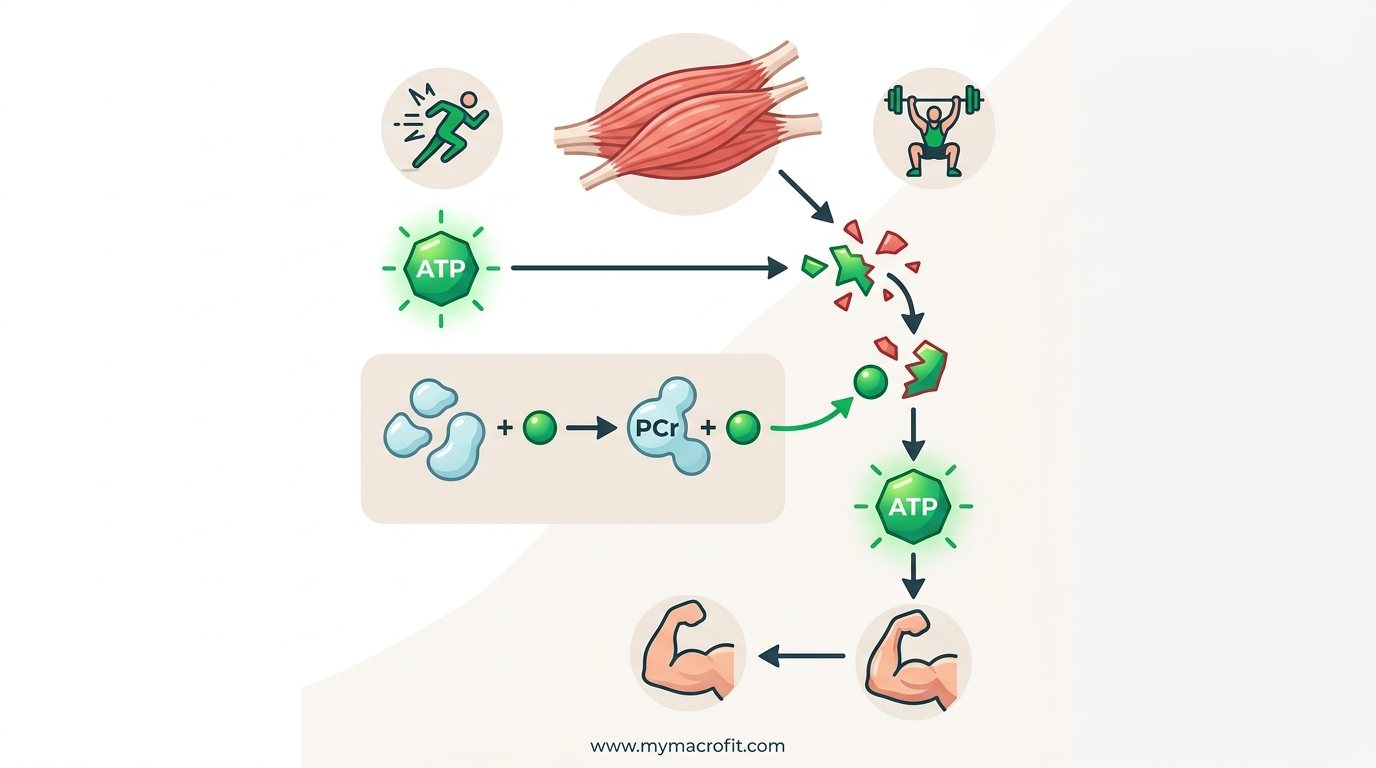
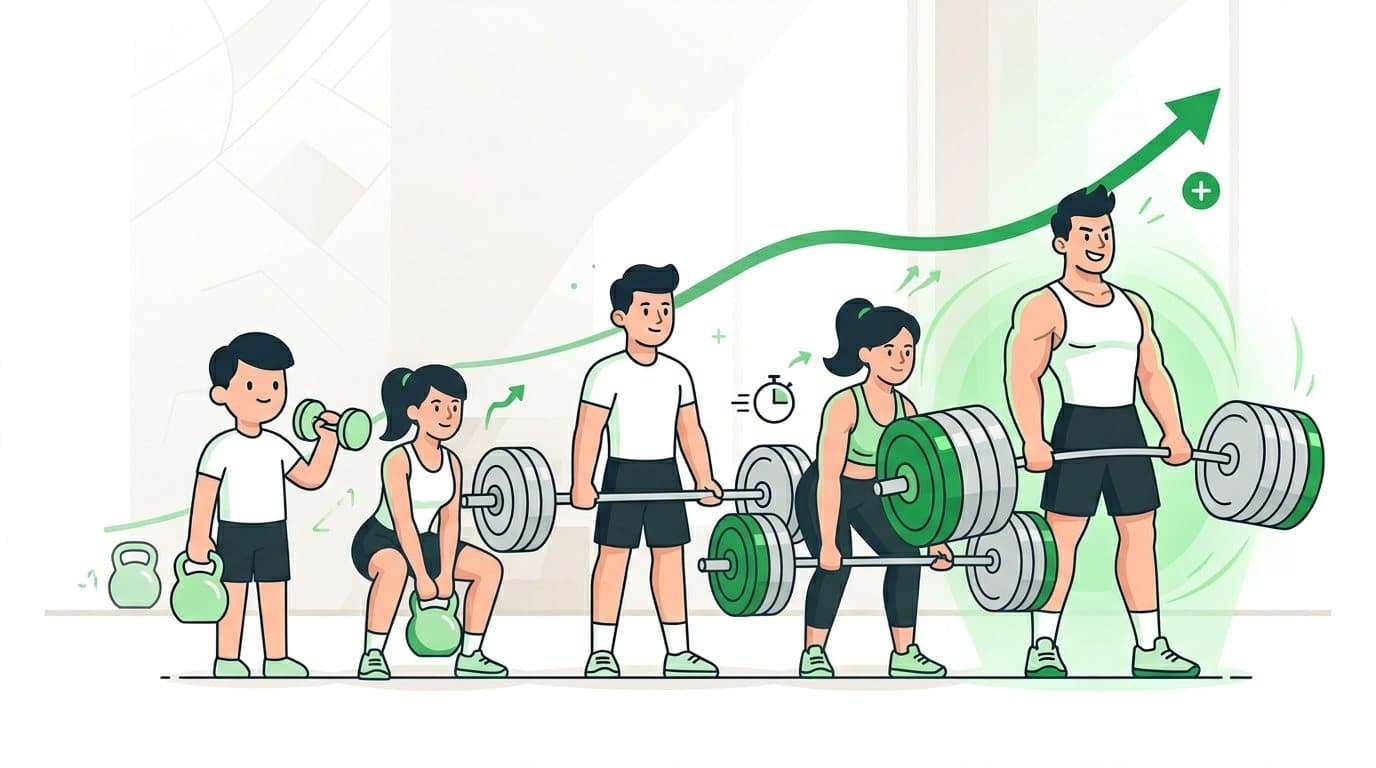
If there's one principle that separates training that produces results from training that produces nothing, it's progressive overload. It's the reason beginners gain muscle rapidly (any stimulus is new); it's the reason advanced lifters train very specifically (the body adapts to everything).
Why Progressive Overload Is Non-Negotiable
The body adapts to any consistent stimulus. Present a muscle with a weight it can comfortably move, and it will adapt to handle that weight, then stop growing. It has no reason to grow further.
The principle: To continue growing muscle (or increasing strength), the training stimulus must continue to increase beyond what the body has already adapted to.
Without progressive overload:
- The first 4-8 weeks produce gains (the stimulus is new)
- After adaptation, the same workout becomes a maintenance workout
- No new stimulus = no new adaptation = no growth
This is why people can "go to the gym 3 times a week" for years with no visible change, if the same weights and same reps are repeated indefinitely, the body adapted long ago.
The 6 Methods of Progressive Overload
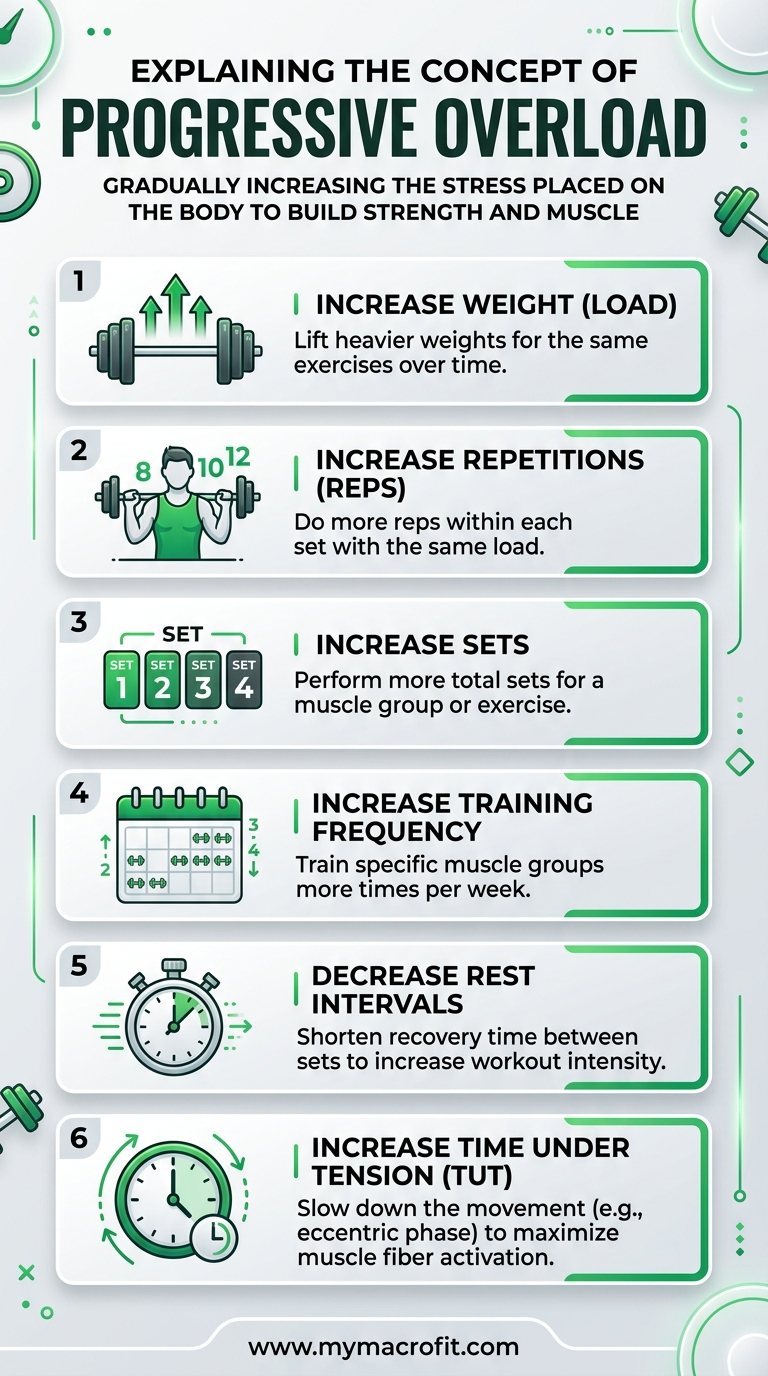
Progressive overload isn't only about adding weight. There are six distinct methods:
1. Increase Load (Most Common)
Add weight to the bar or increase dumbbell weight. The most direct form of progressive overload and the most intuitive.
When to apply: When you can complete all sets at the top of the rep range (e.g., 3×12) with 2+ reps still available.
Increments:
- Upper body isolation: 1-2.5kg per increase
- Lower body compound lifts: 2.5-5kg per increase
- Use fractional plates (0.5kg) for exercises that stall
2. Increase Reps (Volume Overload)
Complete more reps at the same weight before increasing load. Particularly useful when weight jumps are too large for the current level.
Example: Week 1: 3×8 at 40kg. Week 2: 3×9. Week 3: 3×10. Week 4: 3×12. Week 5: 3×8 at 42.5kg.
3. Increase Sets (Volume Overload)
Add working sets over time. Effective for intermediate trainees who have adapted to current volume.
Example: Progress from 3×10 → 4×10 → 5×10 over several weeks.
4. Reduce Rest Time
Completing the same work in less time is a form of overload, the body must adapt to less recovery between sets.
Use carefully: Reducing rest too aggressively impairs performance and can cause technique breakdown. Better suited to hypertrophy focus than maximal strength.
5. Improve Technique/Range of Motion
Squatting to parallel → squatting to full depth with the same weight is genuine progressive overload, the muscle is working through a greater range of motion under load.
Similarly, cleaning up technique (eliminating momentum, controlling the eccentric) makes the same weight more challenging.
6. Tempo Manipulation
Slowing down the eccentric (lowering phase) increases time under tension, the muscle works harder for longer with the same weight.
Example: Standard squat → 3-second descent squat. This is genuine overload without adding weight.
How to Track Progressive Overload
You cannot progressively overload if you don't know what you did last session.
A training log is non-negotiable. Record every session:
- Exercise name
- Sets × Reps × Weight
- Notes on form, feel, proximity to failure
This creates an objective record that eliminates guesswork and makes progress clearly visible over weeks and months.
Minimum tracking: A simple notebook or notes app. More sophisticated: a dedicated app (Strong, Hevy) that stores history and charts progress.
When Progressive Overload Stalls
Short-term stalls (1-2 weeks): Common and normal. Sleep, nutrition, stress, and fatigue all affect performance session to session. Don't increase weight just because it's been a week.
Persistent stalls (3-4 weeks): Time to troubleshoot:
- Sleep: Are you getting 7-9 hours? Sleep deprivation directly impairs strength
- Nutrition: Protein at 2g/kg? Sufficient calories? Cutting too aggressively impairs recovery
- Recovery: Is training frequency appropriate? Are you overtraining?
- Deload: A planned week of reduced intensity often breaks plateaus, the body overcompensates after rest
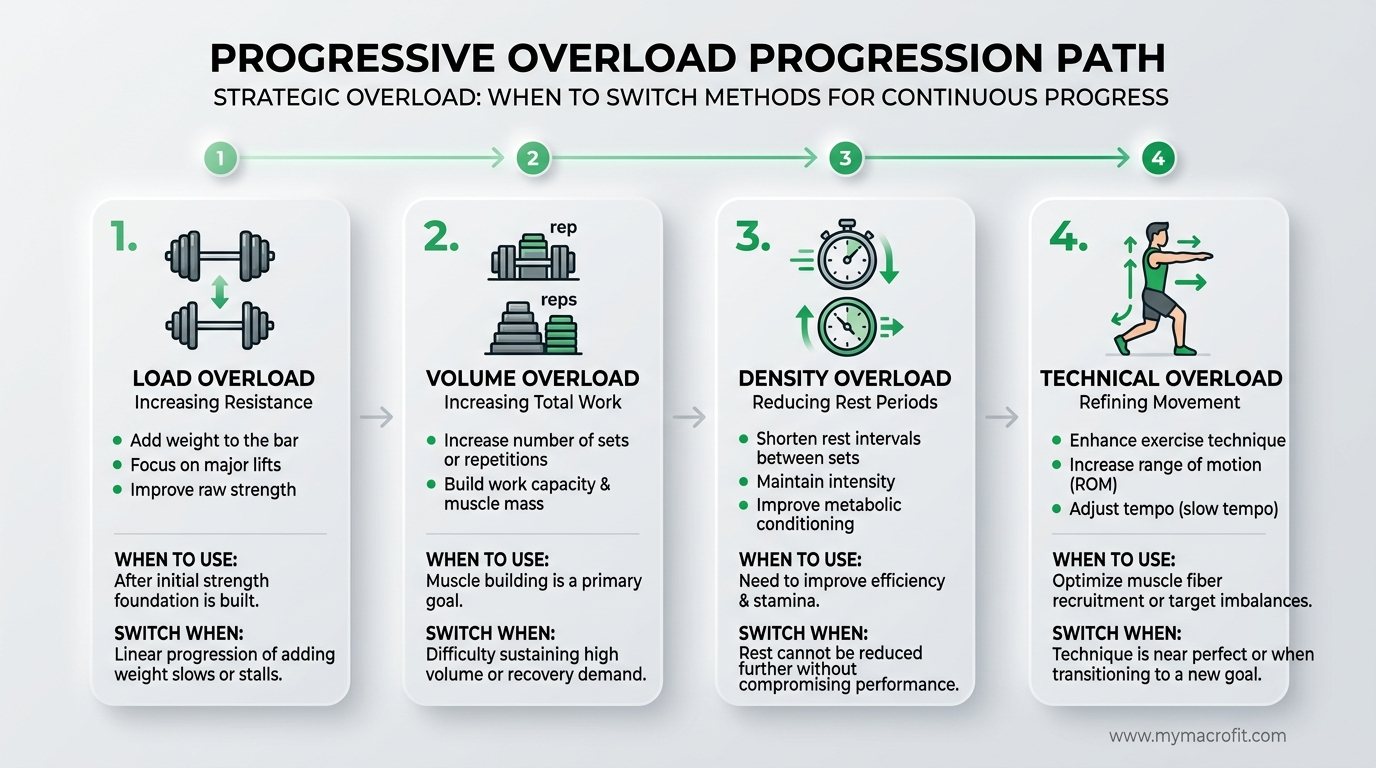
Periodisation for intermediate trainees: Once the beginner phase ends, linear progression (adding weight every session) is no longer sustainable. Planned variation in volume and intensity (periodisation) maintains long-term progress.
Progressive Overload Across the Training Phases
Beginner (0-6 months): Linear progression, add weight every session or every few sessions. This works because every stimulus is new.
Intermediate (6 months-3 years): Weekly or bi-weekly progression on most lifts. Micro-loading (fractional plates) extends linear progress. Periodisation begins to be necessary.
Advanced (3+ years): Periodisation is essential. Monthly or even longer progression cycles. Progressive overload may be subtle, even 2.5kg added to a squat over a month represents significant progress at advanced levels.
The Bottom Line
Progressive overload is the non-negotiable principle of muscle and strength development. Without it, training is exercise, beneficial for health but not producing new adaptation. The simplest implementation: keep a training log, push to complete the top of the rep range, then increase weight when you succeed.
The complexity comes later, when weight increases stop being linear and more sophisticated overload strategies are needed. Start with the simple version and let experience introduce complexity.
Save & share on Pinterest
Click any card to pin it — or share with someone who needs it.
Progressive Overload: What It Is and Why It's the Key to Gains
The single most important principle in strength training, what progressive overload means, the diffe…
The single most important principle in strength training, what progressive overl…
Read the full guide: Progressive Overload: What It Is and Why It's the Key to Gains
Free fitness tools
Progressive Overload: What It Is and Why It's the Key to Gains — use our free calculators for instan…
Pinterest opens in a new tab. You can edit the description before saving.
Frequently Asked Questions
What is progressive overload in simple terms?+
How much should I increase weight each week?+
What do I do when I stop making progress with progressive overload?+
What are the different ways to apply progressive overload besides adding weight?+
Do I need to add weight every single workout?+
About the Author

I'm a kinesiologist and personal trainer. I've spent eight years helping women lose fat and get stronger without handing their whole life over to a diet.
View full profile →