How to Reduce Bloating After Eating

RHC · Pre/Postnatal Fitness Specialist
Bloating after eating is one of the most common digestive complaints, and one of the most frustrating, because it can occur even when eating "healthy" foods. Understanding the mechanisms behind bloating makes it much more manageable.
What Actually Causes Bloating
Bloating has several distinct mechanisms, identifying yours determines the right intervention:
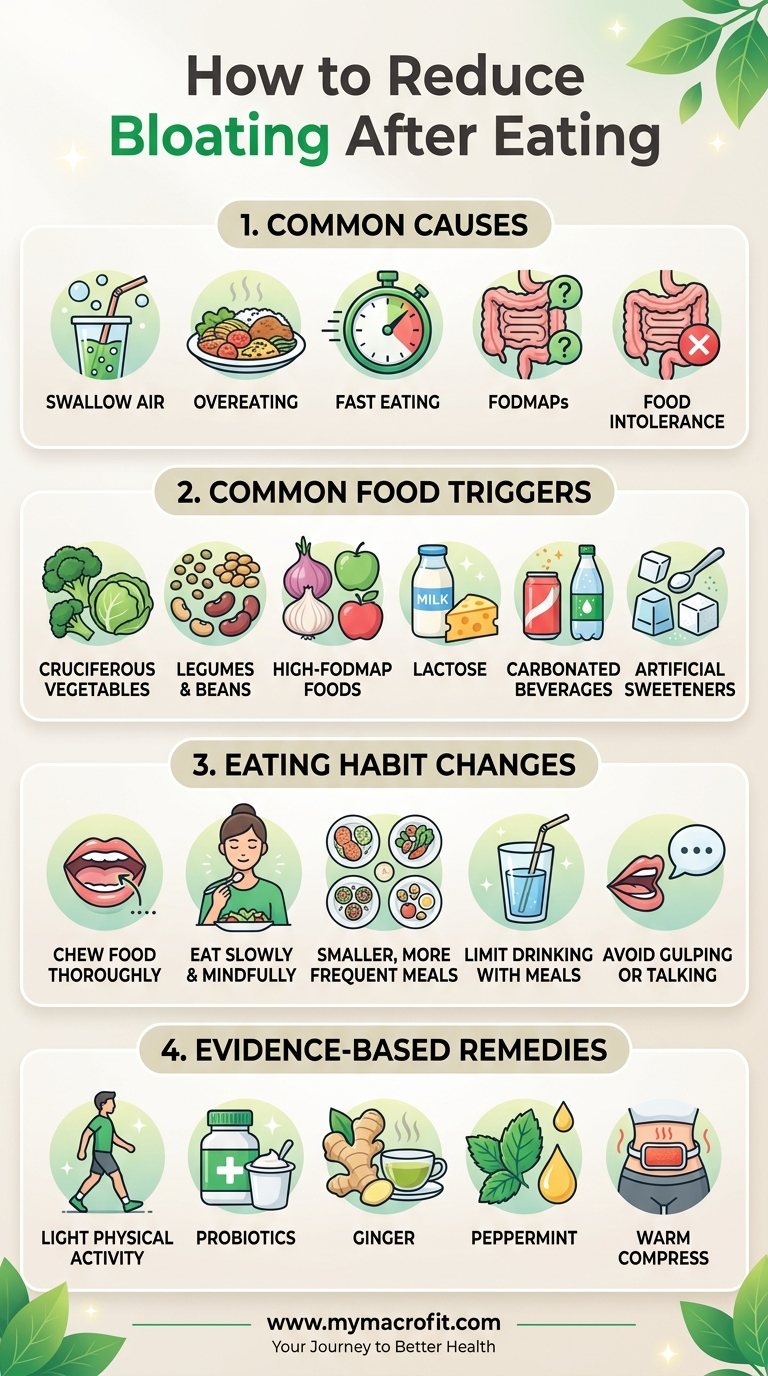
Gas production (most common): Gut bacteria ferment undigested carbohydrates in the colon, producing gases (hydrogen, methane, carbon dioxide). The gas distends the intestine, creating the bloated feeling.
Air swallowing (aerophagia): Eating or drinking too quickly, chewing gum, drinking carbonated drinks, and anxiety can all cause excess air in the digestive tract.
Delayed gastric emptying: Food sitting in the stomach longer than normal creates a full, distended feeling.
Fluid retention: Hormonal changes (especially around menstruation), high sodium intake, and certain medications can cause abdominal water retention distinct from gas bloating.
Gut sensitivity: People with IBS experience normal gas volumes as painful distension, their gut is hypersensitive rather than producing more gas than average.
High-FODMAP Foods: The Primary Dietary Trigger
FODMAP stands for Fermentable Oligosaccharides, Disaccharides, Monosaccharides, and Polyols, types of carbohydrates that are rapidly fermented by gut bacteria.
Common high-FODMAP foods:
| Category | Examples |
|---|---|
| Fructans (wheat, onion) | Wheat, rye, garlic, onions, leeks, artichokes |
| GOS (galacto-oligosaccharides) | Lentils, chickpeas, kidney beans, hummus |
| Lactose | Milk, yogurt, soft cheese, ice cream |
| Fructose | Apples, pears, mango, honey, agave, HFCS |
| Polyols | Stone fruits (cherries, peaches, plums), cauliflower, mushrooms, artificial sweeteners |
The low-FODMAP approach: A 2-4 week elimination of high-FODMAP foods, then systematic reintroduction to identify individual triggers. This produces significant bloating reduction in approximately 75% of IBS sufferers. Do not permanently exclude all high-FODMAP foods, many are highly nutritious and important for gut microbiome diversity.
Eating Habits That Reduce Bloating
Slow down: Eating quickly introduces significant air alongside food. Put cutlery down between bites. 15-20 minutes for a main meal is the target.
Don't talk while eating: Increases air swallowing.
Limit carbonated drinks: The carbon dioxide in fizzy drinks becomes trapped gas in the intestine.
Avoid chewing gum: Each piece of gum produces significant air swallowing.
Smaller portions more frequently: Very large meals take longer to process and create more fermentation in a single sitting.
Identify patterns with a food diary: Spend 1-2 weeks noting what you ate, when you ate it, and when bloating occurred. Patterns emerge within a week for most people.
Foods and Remedies That Reduce Bloating
Peppermint: Peppermint oil has consistent evidence for reducing IBS bloating, it relaxes the smooth muscle of the intestinal wall, reducing spasm. Peppermint tea after meals provides a milder version of this effect.
Ginger: Ginger improves gastric emptying (the speed at which the stomach empties into the small intestine) and reduces gas. Ginger tea or fresh ginger in food.
Fennel: Fennel seeds and tea relax intestinal muscles and reduce gas. Common traditional remedy with modern evidence support.
Lactase enzyme: If dairy is a trigger, lactase supplements (available over the counter) allow digestion of lactose without the gas production. Particularly useful for people who don't want to eliminate dairy.
Low-FODMAP protein alternatives: During high-bloating periods, replace beans and lentils with eggs, tofu, or fish as protein sources.
Gradual Fibre Introduction: Preventing Fibre-Related Bloating
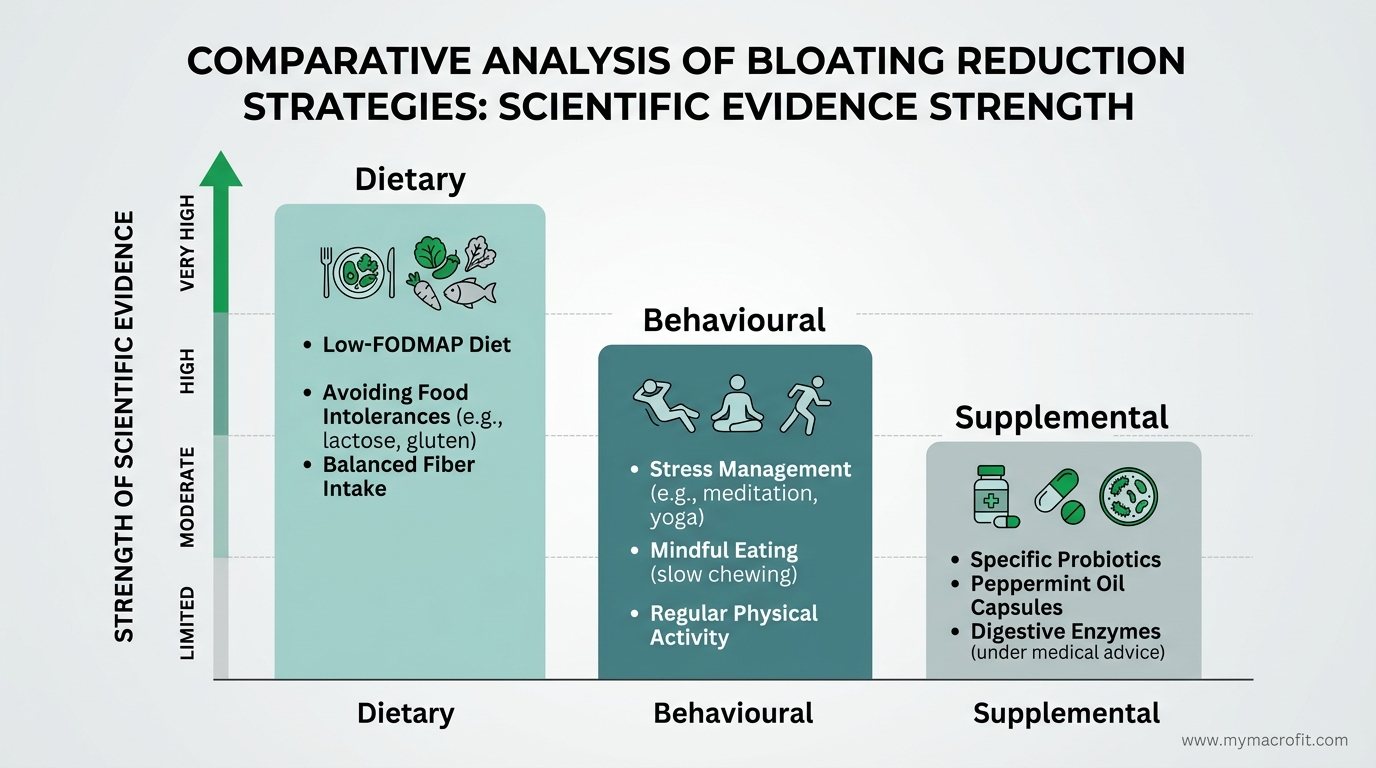
The paradox: the fibre that's best for gut health (legumes, oats, vegetables) is also the most common bloating trigger for people who haven't been eating it regularly.
The solution: gradual introduction. Increasing fibre from 15g/day to 30g/day immediately causes significant bloating for most people. Increasing by 5g/week allows the gut microbiome to adapt, building the bacterial populations that efficiently ferment the fibre.
Simultaneously increasing water intake (fibre needs water to move through the digestive tract) prevents the constipation-type bloating that can accompany rapid fibre increases.
When to See a Doctor
Bloating is usually benign, but see a GP if:
- Bloating is severe, persistent, and doesn't respond to dietary changes
- Accompanied by unexplained weight loss
- Blood in stools
- Persistent changes in bowel habit
- Bloating developed suddenly without dietary change
- Family history of bowel cancer or coeliac disease
These require medical evaluation to rule out coeliac disease, IBD, ovarian issues (in women), or other conditions that present as bloating.
The Bottom Line
Most bloating is caused by specific food triggers (high-FODMAP foods) or eating habits (speed, carbonation). A food diary identifies personal triggers; gradual FODMAP reduction confirms them. Peppermint tea, fennel, and ginger support the digestive process. For persistent IBS-type bloating, the low-FODMAP protocol (ideally with dietitian guidance) produces significant improvement in most cases.
Save & share on Pinterest
Click any card to pin it — or share with someone who needs it.
How to Reduce Bloating After Eating
The causes of bloating after meals and evidence-based strategies to reduce it, from dietary changes …
The causes of bloating after meals and evidence-based strategies to reduce it, f…
Read the full guide: How to Reduce Bloating After Eating
Free fitness tools
How to Reduce Bloating After Eating — use our free calculators for instant personalised results. No …
Pinterest opens in a new tab. You can edit the description before saving.
Frequently Asked Questions
Why am I bloated after every meal?+
What foods cause bloating?+
Does water help with bloating?+
How can I reduce bloating quickly after a meal?+
When should I see a doctor about bloating?+
About the Author

I'm a registered health coach and pre/postnatal specialist. I look at the whole person, your sleep, your stress, your hormones, because the number on the scale is only ever part of the story.
View full profile →