Fibre Intake Calculator
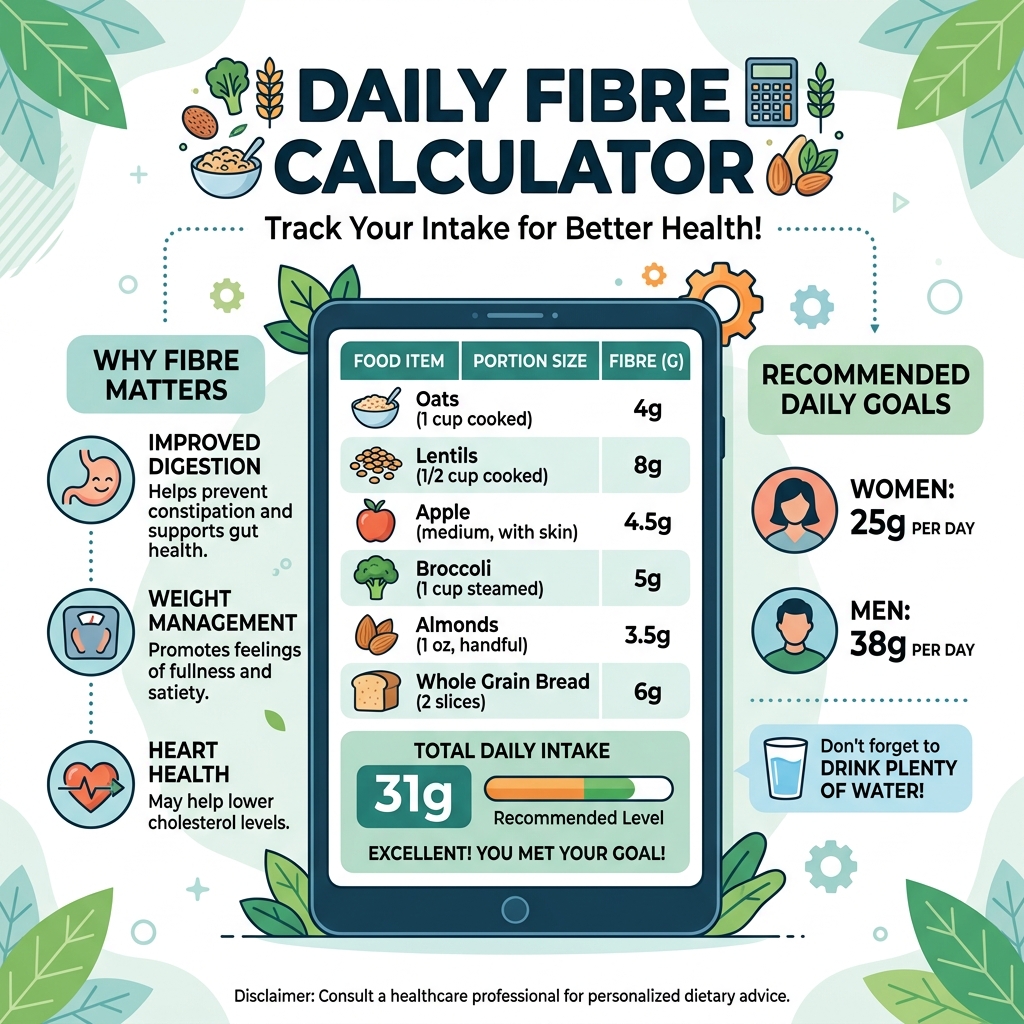
Find your daily fibre target based on age, biological sex, and calorie intake. Understand the soluble vs insoluble split and which foods to eat to reach your goal.
Quick answer
Adults benefit from about 25 to 38g of fibre a day, yet most people eat far less. This calculator sets your target and lists high-fibre foods to help you reach it.
Why Fibre Is the Most Underrated Nutrient
Despite overwhelming evidence of its health benefits, fibre is the nutrient most consistently under-consumed in Western diets. The average adult eats 10–15g/day, less than half the recommended intake.
Fibre and Gut Health: The Microbiome Connection
Your gut microbiome, the 100 trillion bacteria living in your intestines, is fed primarily by fibre. Different bacterial species ferment different types of fibre, producing short-chain fatty acids (SCFAs) including butyrate, which:
- Fuel colonocyte (gut lining cell) repair and maintenance
- Reduce gut inflammation
- Improve insulin sensitivity
- Signal satiety hormones in the brain
A diverse plant-based diet with 30+ different plant foods per week (studies show this number is associated with optimal microbiome diversity) is the most effective strategy for gut health.
Fibre and Weight Management
Increasing dietary fibre is one of the most effective and sustainable weight management strategies. A 2019 systematic review found that increasing fibre intake to recommended levels produced clinically meaningful reductions in body weight without other dietary changes.
The mechanisms: reduced calorie density of high-fibre foods, improved satiety signalling, improved insulin sensitivity reducing fat storage signals, and reduced absorption of some dietary fat in high-fibre contexts.
Frequently Asked Questions
How much fibre should I eat per day?
What is the difference between soluble and insoluble fibre?
Why does increasing fibre cause bloating?
Does fibre help with weight loss?
How it's calculated: this tool uses established, published equations. See the full calculator methodology for the formulas and assumptions behind it.
Results are estimates for general guidance, not medical advice. See our disclaimer, and speak to a qualified healthcare professional before making medical or dietary changes.
Related Tools
Save & share on Pinterest
Click any card to pin it — or share with someone who needs it.
Fibre Intake Calculator
Find your daily fibre target based on age, biological sex, and calorie intake. Understand the solubl…
Find your daily fibre target based on age, biological sex, and calorie intake. U…
Read the full guide: Fibre Intake Calculator
Try the free Fibre Intake Calculator
Fibre Intake Calculator — use our free calculators for instant personalised results. No signup requi…
Pinterest opens in a new tab. You can edit the description before saving.
Get Your Free Macro Cheat Sheet
One-page PDF with all the key formulas. Free, no spam ever.
Get the Free Macro Guide