Supplement Timing Calculator
Build a personalised supplement schedule. Enter which supplements you take and your wake, sleep, and workout times, get evidence-based timing recommendations for each.
Quick answer
Timing depends on the supplement: some absorb better with food or fat, others work best in the morning or before training. This calculator builds a simple daily schedule for the ones you take.
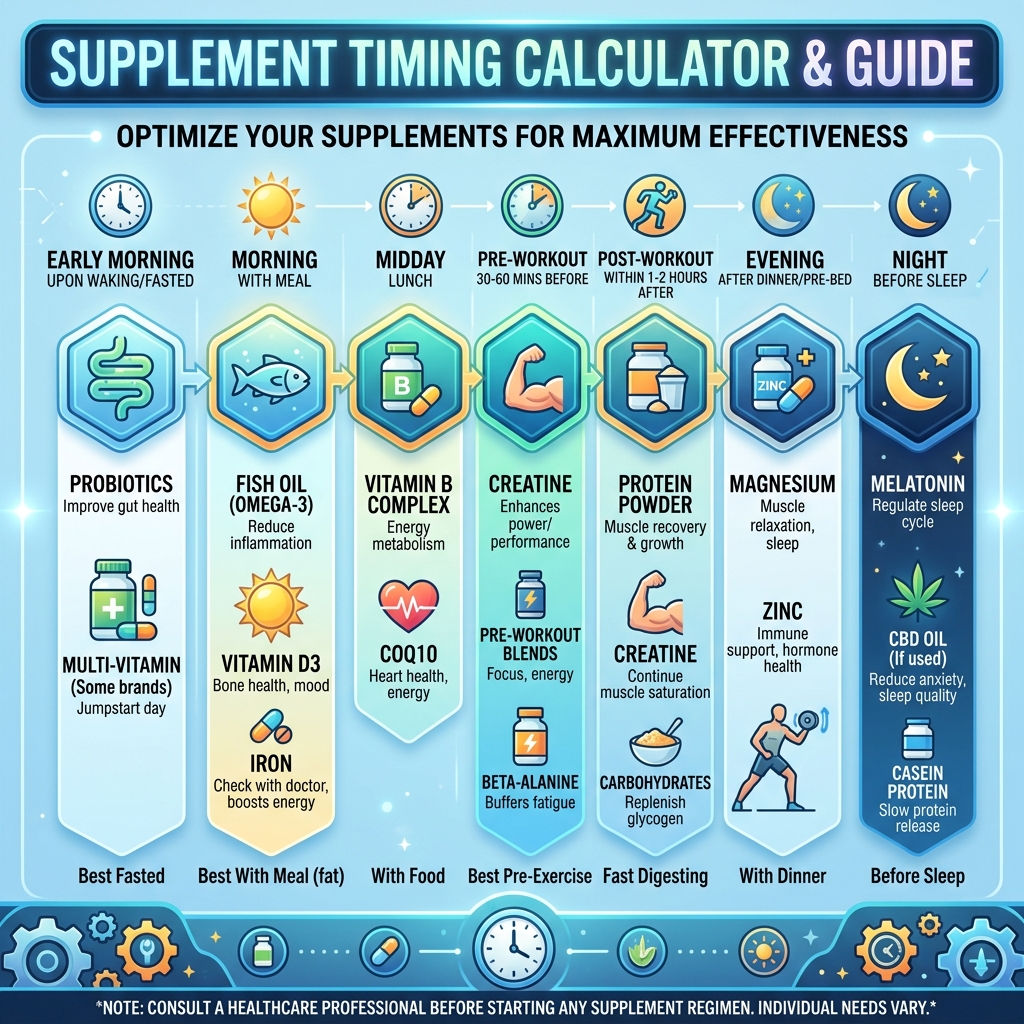
Why Timing Matters (For Some Supplements)
Supplement timing is one of the most confusing topics in nutrition, partly because it matters significantly for some supplements and almost not at all for others. Understanding which category each supplement falls into lets you prioritise what actually makes a difference.
High-Timing-Sensitivity Supplements
- Pre-workout: 30–60 minutes before exercise for peak caffeine levels during the session
- Berberine: Before carbohydrate-heavy meals, acts on glucose uptake pathways
- Casein protein: Before sleep, slow digestion provides overnight amino acid availability
- Magnesium: Evening, nervous system calming effect best used before sleep
Low-Timing-Sensitivity Supplements
- Creatine: Take consistently daily. Post-workout is slightly optimal on training days but the difference is small.
- Vitamin D: Any time with a fat-containing meal. Morning preferred for potential sleep quality reasons.
- Omega-3: With any fat-containing meal for absorption. Timing between meals has negligible difference.
- Collagen: Pre-exercise with vitamin C shows the best evidence for tendon/joint health.
Frequently Asked Questions
Does supplement timing really matter?
What is the best time to take creatine?
When should I take vitamin D?
Can I take all my supplements at once?
How it's calculated: this tool uses established, published equations. See the full calculator methodology for the formulas and assumptions behind it.
Results are estimates for general guidance, not medical advice. See our disclaimer, and speak to a qualified healthcare professional before making medical or dietary changes.
Related Tools
Save & share on Pinterest
Click any card to pin it — or share with someone who needs it.
Supplement Timing Calculator
Build a personalised supplement schedule. Enter which supplements you take and your wake, sleep, and…
Build a personalised supplement schedule. Enter which supplements you take and y…
Read the full guide: Supplement Timing Calculator
Try the free Supplement Timing Calculator
Supplement Timing Calculator — use our free calculators for instant personalised results. No signup …
Pinterest opens in a new tab. You can edit the description before saving.
Get Your Free Macro Cheat Sheet
One-page PDF with all the key formulas. Free, no spam ever.
Get the Free Macro Guide