
The 30-30-30 Rule: Does This Viral Morning Routine Actually Work?
Founder, MyMacroFit
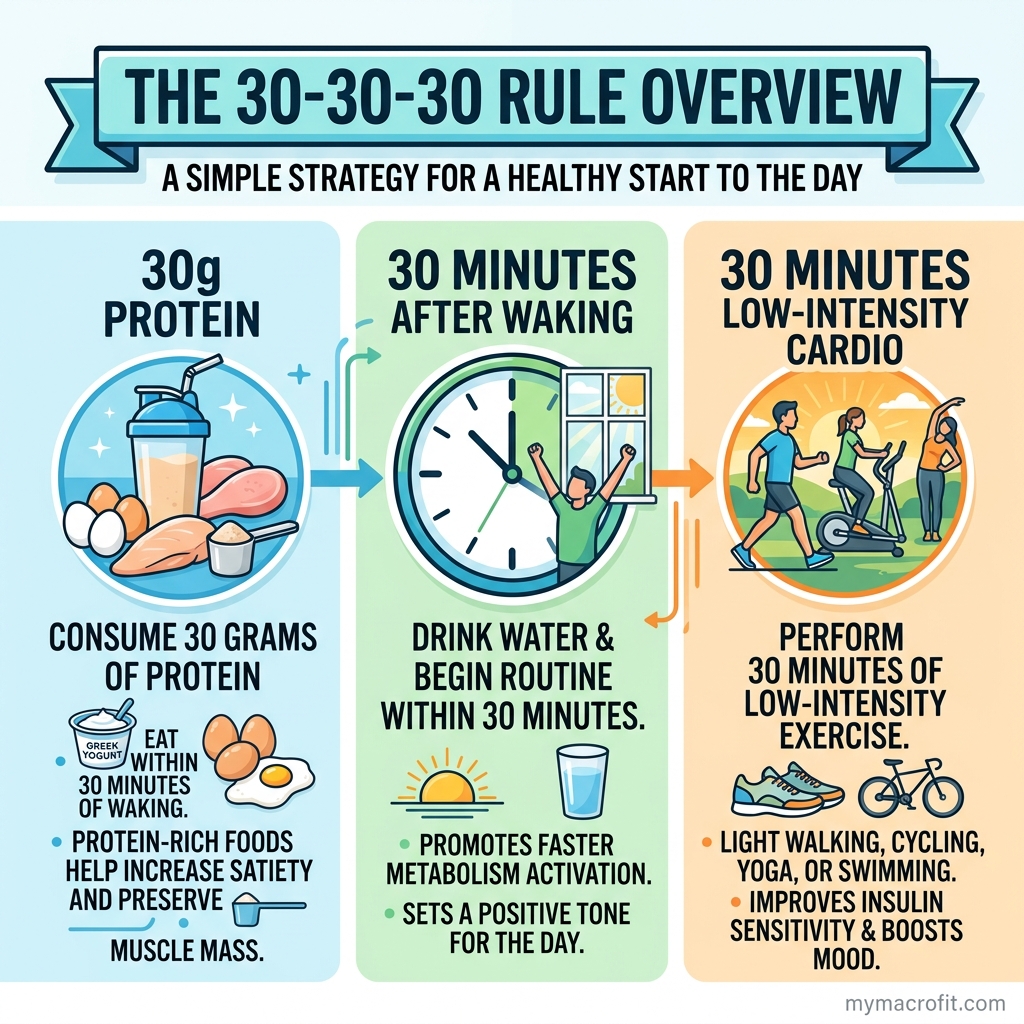
The 30-30-30 rule is one of those wellness trends that's easy to mock and surprisingly hard to actually criticise. The pitch: within 30 minutes of waking, eat 30 grams of protein, then do 30 minutes of low-intensity cardio. Do that every morning and watch the fat come off.
It sounds suspiciously neat. But unlike most viral routines, when you pull it apart, each piece holds up reasonably well. The interesting question isn't whether it works, it's why it works, because that tells you how much the specific numbers matter.
Breaking down the three thirties
30 grams of protein. A high-protein breakfast is one of the most consistently useful habits in nutrition. It increases satiety, reduces cravings and total calorie intake later in the day, and supports muscle, the tissue that keeps your metabolism up. Most people badly under-eat protein in the morning, so anchoring breakfast at 30g fixes a genuine weak spot. Thirty grams is also roughly the amount that maximally stimulates muscle protein synthesis in one sitting, so the number isn't arbitrary.
Within 30 minutes of waking. This is the softest part. There's no strong evidence that the 30-minute window specifically matters, eating your protein at 7:15 versus 7:50 won't change your results. What the rule really does here is remove decision-making. "Protein, first thing, every day" is a habit you can't forget or negotiate with.
30 minutes of low-intensity cardio. A daily zone 2 walk or easy ride is excellent: it's sustainable, repeatable, burns meaningful calories without spiking appetite, and improves cardiovascular and metabolic health. The one thing to ignore is the "fat-burning zone" mythology that sometimes gets attached, yes, low intensity burns a higher proportion of fat for fuel, but total calories burned is what drives fat loss, and that's set by how much you move overall.
Why it actually works (and it's not magic)
Here's the honest mechanism: the 30-30-30 rule works because it bundles three evidence-based habits into a format you'll actually follow.
- The protein reduces your appetite for the rest of the day, nudging you toward a calorie deficit without counting.
- The morning walk adds consistent activity, more calories out, plus the well-documented benefits of daily movement.
- The fixed routine removes willpower from the equation, you don't decide each morning, you just execute.
That's the whole trick, and it's a good one. The numbers are memorable, the actions are easy, and the result is that people stick with it. Adherence is the rarest ingredient in any fat-loss plan, and this rule is engineered for it.
What it isn't
It's worth being clear about the limits, because the viral framing oversells:
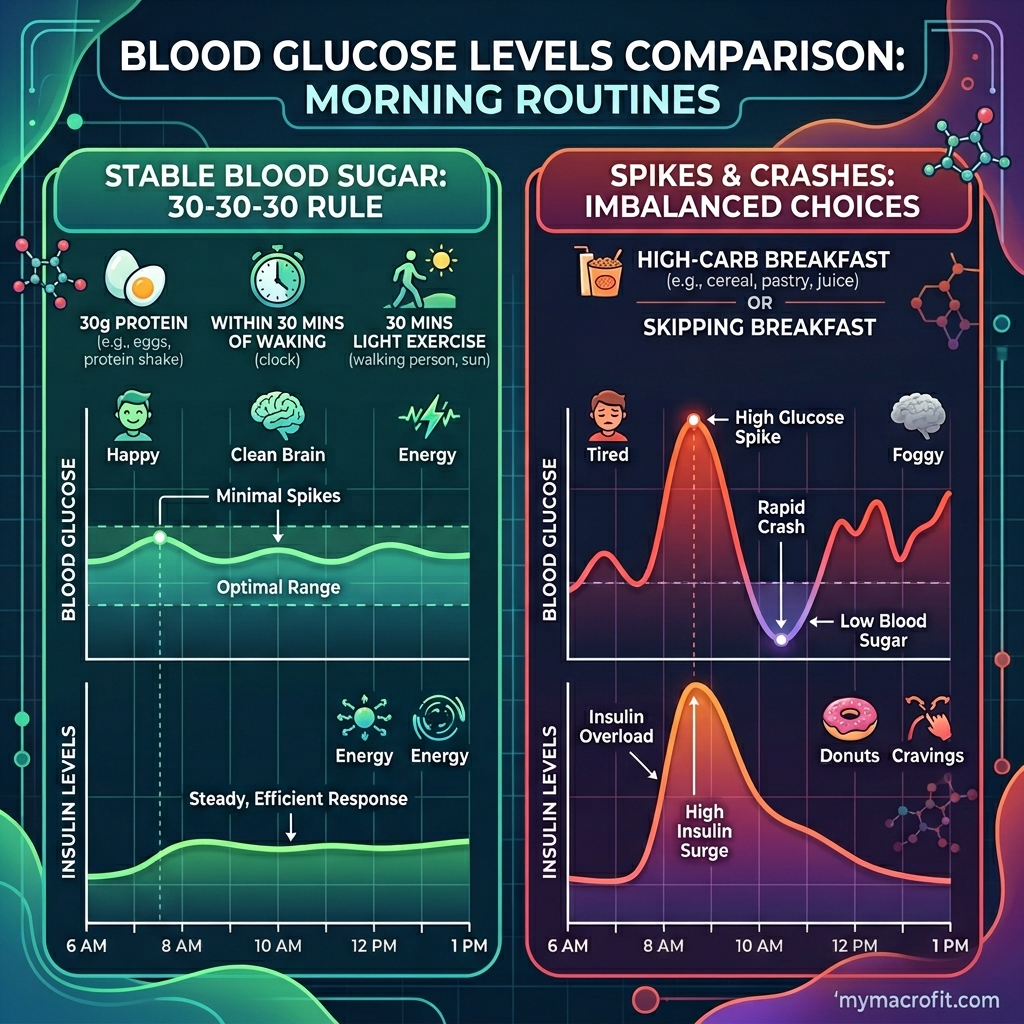
- It's not a metabolic hack. There's no special fat-burning effect from this exact combination. It helps you eat a bit less and move a bit more, that's it, and that's enough.
- It doesn't override a calorie surplus. If you eat more than you burn over the day, the morning routine won't save you. The deficit is still the engine; 30-30-30 just makes the deficit easier to reach.
- The numbers aren't sacred. 25g of protein and a 25-minute walk would work nearly as well. The specific thirties are good marketing, not a precise prescription.

Should you try it?
If you struggle with morning structure, under-eat protein, or can't seem to fit in regular activity, then yes, absolutely. The 30-30-30 rule packages three things worth doing into a format that's almost impossible to overthink. That's genuine value, even if the science underneath is more "sound fundamentals, well-bundled" than "revolutionary discovery."
Start by working out your actual daily protein target with the Protein Calculator, then make sure 30g of it lands at breakfast. Pair it with a daily walk, and you've got the bones of a routine that works, not because of the catchy name, but because of what's underneath it.
Save & share on Pinterest
Click any card to pin it — or share with someone who needs it.
The 30-30-30 Rule: Does This Viral Morning Routine Actually Work?
The 30-30-30 method, 30g of protein within 30 minutes of waking, then 30 minutes of low-intensity ex…
The 30-30-30 method, 30g of protein within 30 minutes of waking, then 30 minutes…
Read the full guide: The 30-30-30 Rule: Does This Viral Morning Routine Actually Work?
Try the free Protein Calculator
The 30-30-30 Rule: Does This Viral Morning Routine Actually Work? — use our free calculators for ins…
Pinterest opens in a new tab. You can edit the description before saving.
Ready to get your numbers?
Free calculator, instant results, no signup required.
Frequently Asked Questions
What is the 30-30-30 rule?+
Does eating protein within 30 minutes of waking matter?+
Why low-intensity cardio instead of a hard workout?+
Is the 30-30-30 rule better than other routines?+
Will 30-30-30 work without a calorie deficit?+
About the Author
I'm the founder of MyMacroFit. I'm not a coach or a dietitian. I'm someone who wanted to lose weight, worked it out the hard way, and built the tools I wish I'd had.
View full profile →