The Best Foods for Gut Health

RHC · Pre/Postnatal Fitness Specialist
Gut health isn't built on one supplement or superfood, it's the cumulative effect of a diverse diet rich in specific fibres and fermented foods. This guide focuses on the foods with the strongest evidence for improving microbiome diversity, barrier integrity, and digestive function.
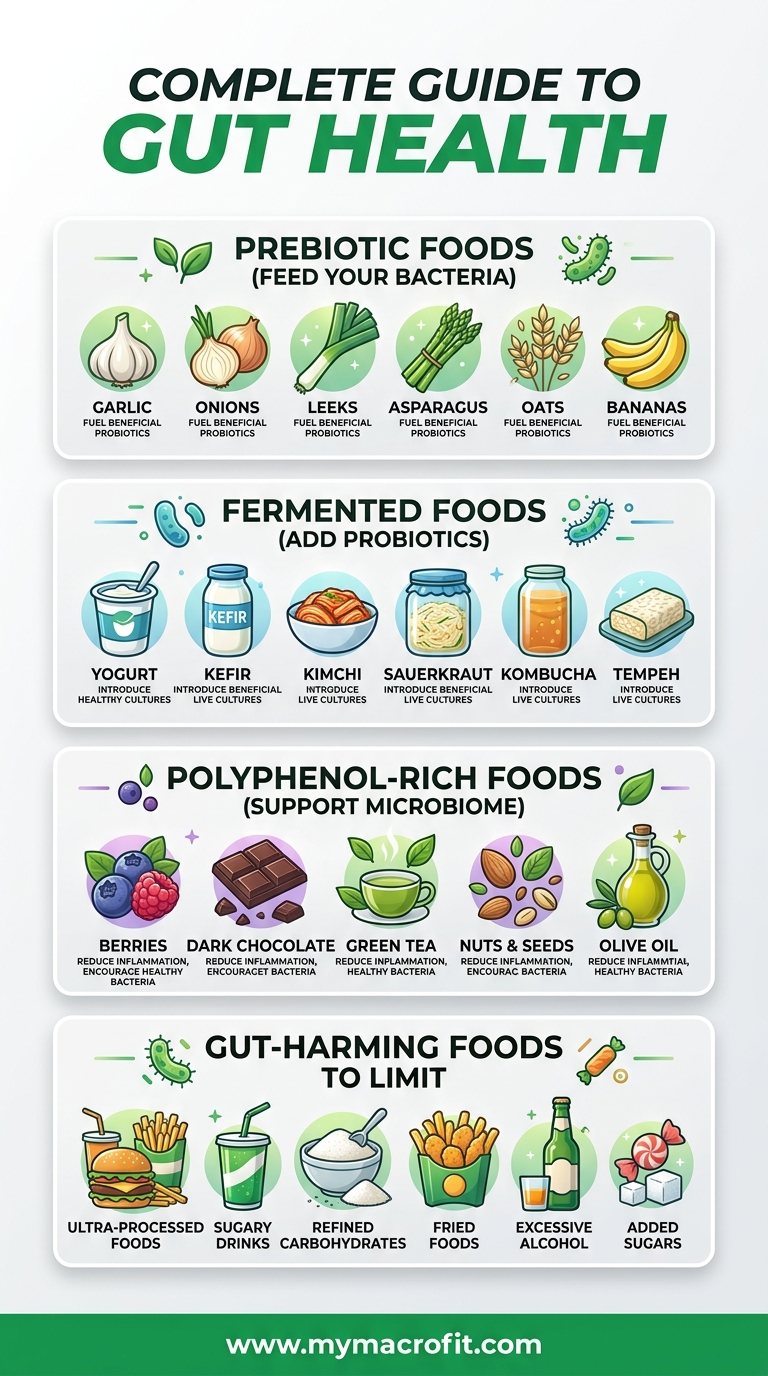
Category 1: Prebiotic Foods (Feeding Beneficial Bacteria)
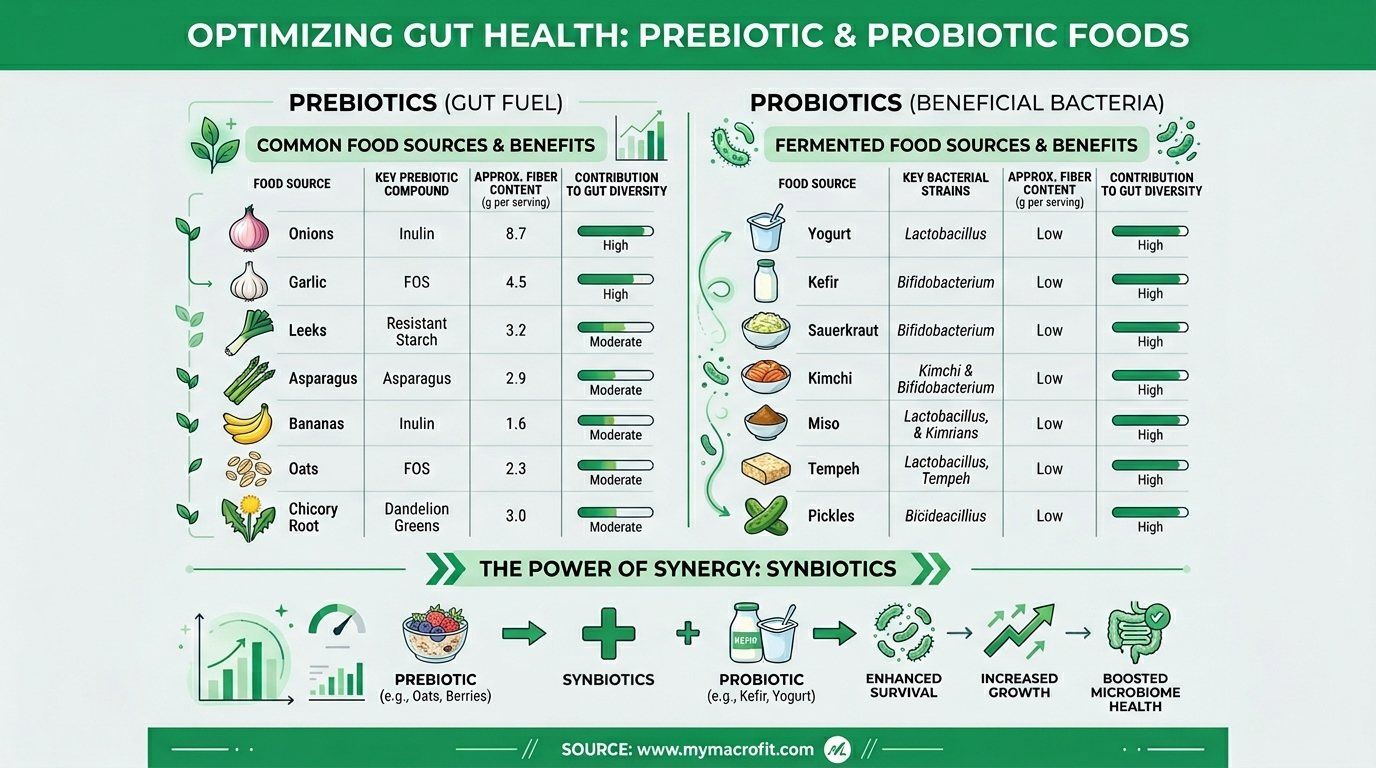
Prebiotics are dietary compounds, primarily specific fibres, that selectively feed beneficial gut bacteria.
Top prebiotic foods:
Legumes (the highest-impact prebiotic food): Lentils, chickpeas, kidney beans, black beans, peas. Contain a mix of inulin, FOS, and resistant starch. Adding 1-2 portions/week is the single most impactful dietary change for gut microbiome diversity in most people.
Garlic and onions: Among the richest sources of inulin, a prebiotic fibre that specifically feeds Bifidobacterium. Even small amounts (1 clove garlic, ¼ onion) in cooking makes a measurable difference.
Oats: Beta-glucan in oats is one of the most extensively studied prebiotic fibres. 40g dry oats/day provides ~4g beta-glucan, sufficient to measurably affect blood glucose, cholesterol, and microbiome composition.
Asparagus: High in inulin. Also contains prebiotic FOS. One of the most effective single vegetables for microbiome benefit.
Bananas (especially slightly underripe): Underripe bananas contain significant resistant starch, a prebiotic that feeds bacteria in the colon. As bananas ripen, resistant starch converts to regular starch. Green-tipped bananas have more prebiotic benefit.
Cooked-then-cooled potatoes and rice: Cooling after cooking increases resistant starch content substantially. Potato salad, cold rice dishes, and meal-prepped rice all have higher resistant starch than freshly cooked equivalents.
Jerusalem artichoke: The highest inulin content of any common vegetable, but introduce slowly (causes significant bloating until gut microbiome adapts).
Category 2: Fermented Foods (Adding Live Bacteria)
Fermented foods contain live microorganisms and the compounds they produce during fermentation.
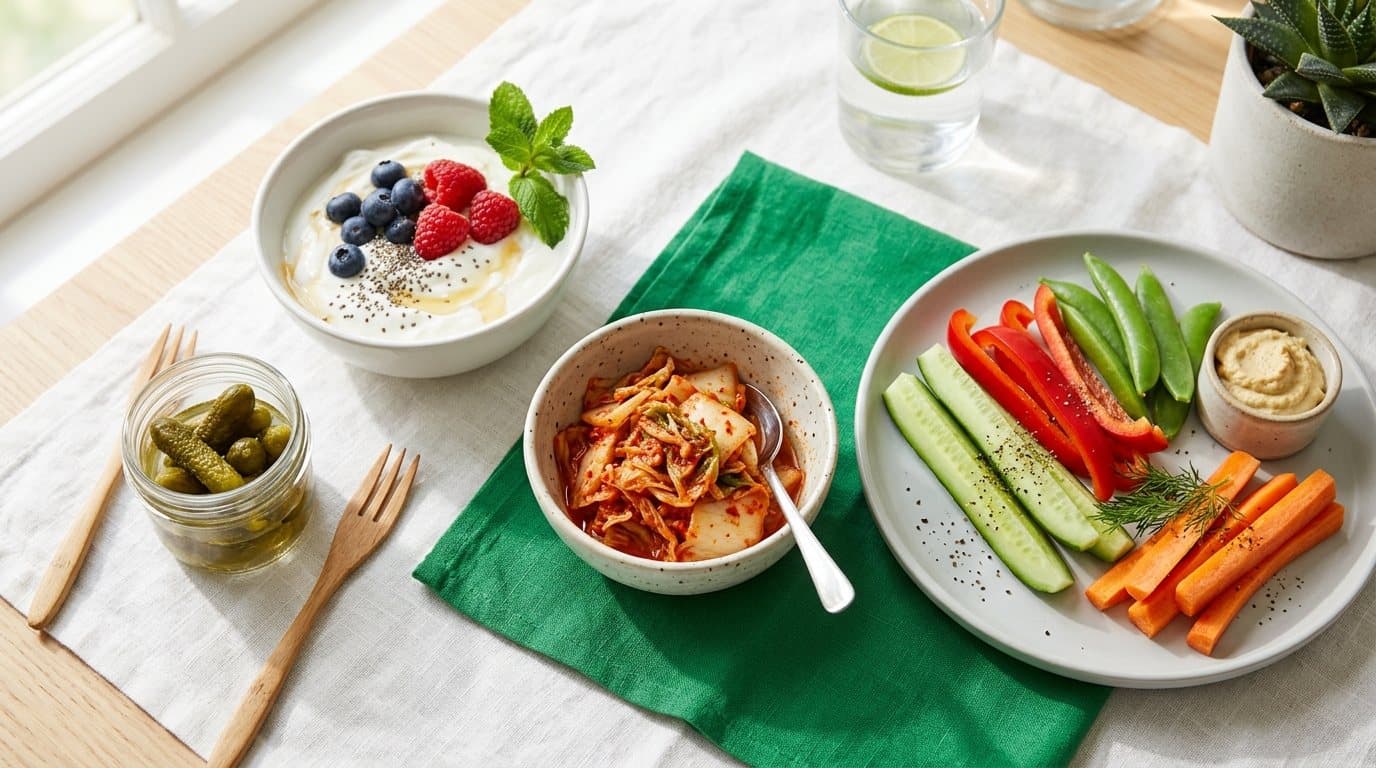
Live culture yogurt: The most accessible fermented food. Look for "live cultures" on label, heat treatment kills bacteria. Greek yogurt is typically richer in Lactobacillus. Eat daily for consistent benefit.
Kefir: Fermented milk with more bacterial diversity than yogurt, typically containing 15-20 different bacterial and yeast strains vs. 2-5 in yogurt. Research shows kefir consumption improves lactose digestion, reduces IBS symptoms, and increases microbiome diversity. Kefir is also well-tolerated by many lactose-intolerant individuals.
Unpasteurised sauerkraut and kimchi: Fermented vegetables (cabbage for sauerkraut, nappa cabbage and radish for kimchi) contain high quantities of Lactobacillus. Important: buy refrigerated, live culture versions, shelf-stable, pasteurised versions contain no live bacteria. Even 1-2 tbsp daily provides significant bacterial diversity.
Kombucha: Fermented tea drink with live yeast and bacteria. Variable bacterial content depending on brand and batch. Moderate sugar content, check label (some commercial versions are high sugar). A small daily serving contributes to fermented food intake.
Miso and tempeh: Both soy-based fermented foods. Miso (in soups and dressings) provides bacterial diversity; tempeh provides both live bacteria and prebiotic resistant starch.
Category 3: Polyphenol-Rich Foods
Polyphenols, plant compounds found in colourful fruits, vegetables, herbs, tea, and coffee, act as indirect prebiotics: they feed beneficial bacteria and inhibit harmful bacterial strains.
Top polyphenol sources for gut health:
- Berries (blueberries, blackberries, raspberries)
- Dark chocolate (70%+)
- Green tea and black tea
- Coffee
- Extra virgin olive oil
- Pomegranate
- Red wine (small amounts, alcohol counteracts benefits above moderate intake)
- Herbs and spices (cloves, star anise, dried oregano, thyme)
Berries have the strongest evidence, multiple studies show blueberry consumption specifically increases Bifidobacterium and reduces inflammatory markers.
The 30 Plants Per Week Target
Research from the British Gut Project found gut microbiome diversity correlated strongly with the number of different plant foods consumed weekly. People eating 30+ different plant foods had significantly higher microbial diversity than those eating fewer than 10.
What counts as a plant food:
- Vegetables (each variety = 1 plant)
- Fruits (each variety = 1)
- Legumes (each variety = 1)
- Whole grains (oats, rye, quinoa, etc.)
- Nuts and seeds (each variety = 1)
- Herbs and spices (each variety = ½ plant)
Reaching 30 per week is achievable with variety: a stir-fry with 8 different vegetables, 3 different fruits across the day, 2 varieties of nuts, 2 types of legumes in a week, and several grains.
Use our Fibre Intake Calculator to assess your current dietary fibre from these sources.
Foods to Limit for Gut Health
Ultra-processed foods: Emulsifiers (carrageenan, polysorbate-80) that improve texture in processed foods disrupt intestinal barrier integrity in research. Regular ultra-processed food consumption correlates with lower microbiome diversity.
Artificial sweeteners: Aspartame, saccharin, and sucralose have shown negative effects on gut microbiome composition in research, particularly altering blood glucose regulation through microbiome disruption. Use sparingly; whole-food alternatives preferred.
Excess alcohol: Damages intestinal barrier, kills beneficial bacteria, promotes bacterial overgrowth.
High sugar intake: Feeds less beneficial bacterial strains; reduces dietary space for prebiotic-containing foods.
The Bottom Line
Building gut health takes weeks to months of consistent dietary change, not a single supplement or food. The foundation: legumes regularly, 30+ different plant foods per week, daily fermented foods (yogurt, kefir, or sauerkraut), and limiting ultra-processed foods and excess alcohol.
Save & share on Pinterest
Click any card to pin it — or share with someone who needs it.
The Best Foods for Gut Health
The evidence-backed foods that improve gut microbiome diversity, barrier integrity, and digestive fu…
The evidence-backed foods that improve gut microbiome diversity, barrier integri…
Read the full guide: The Best Foods for Gut Health
Try the free Fibre Intake Calculator
The Best Foods for Gut Health — use our free calculators for instant personalised results. No signup…
Pinterest opens in a new tab. You can edit the description before saving.
Ready to get your numbers?
Free calculator, instant results, no signup required.
Frequently Asked Questions
What is the best food to eat for gut health?+
Does yogurt actually help gut health?+
What are prebiotic foods?+
What is the difference between prebiotics and probiotics?+
How long does it take to improve gut health through diet?+
About the Author

I'm a registered health coach and pre/postnatal specialist. I look at the whole person, your sleep, your stress, your hormones, because the number on the scale is only ever part of the story.
View full profile →