
Breastfeeding Nutrition: Calories, Macros, and What to Eat

RHC · Pre/Postnatal Fitness Specialist
Breastfeeding is nutritionally demanding, producing milk requires significant energy and nutrients, and many new mothers aren't given clear, practical guidance on what this means for their diet.
This guide provides the evidence-based nutritional framework for breastfeeding: what you need more of, what to be cautious about, and how to eat well when time and energy are limited.
Calorie Needs While Breastfeeding
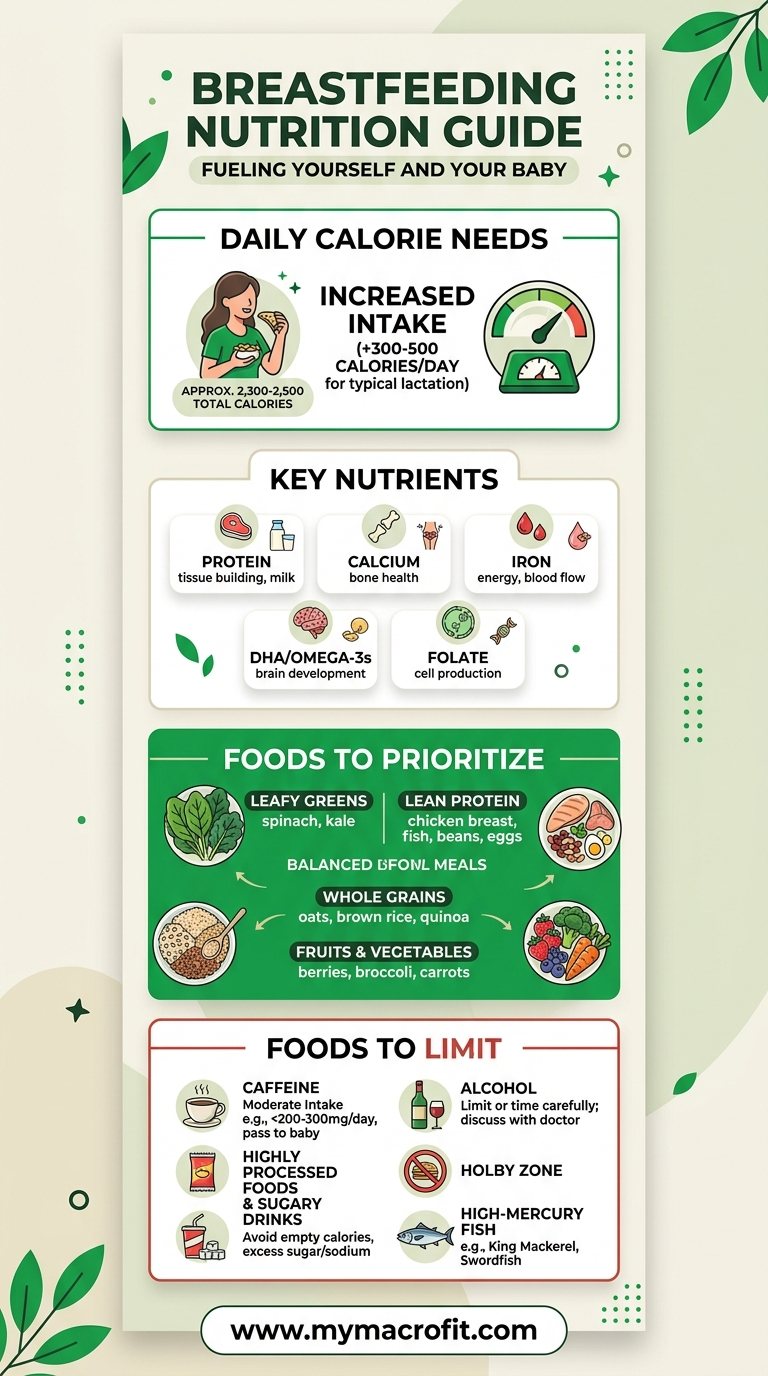
Producing breast milk uses approximately 500-600 kcal/day. However, the body draws on fat stores accumulated during pregnancy to contribute to milk production, meaning the additional dietary calories needed are somewhat less than the total milk energy cost.
Practical target: Pre-pregnancy maintenance calories + 300-500 kcal/day.
For most breastfeeding women, this means not aggressively restricting calories. Weight loss during breastfeeding can occur naturally (the body mobilises stored fat), but deliberate large deficits (over 500 kcal below pre-pregnancy maintenance) may reduce milk supply and impair energy levels.
Weight loss while breastfeeding: A gentle deficit of 200-300 kcal/day below breastfeeding-adjusted maintenance is generally safe and doesn't affect milk production. Faster weight loss targets are best deferred until after weaning.
Protein Requirements
Protein needs increase during breastfeeding:
Target: Approximately 1.7-2g/kg bodyweight (slightly above standard maintenance levels)
Adequate protein supports:
- Maternal tissue repair post-birth
- Maintenance of muscle mass (often reduced during pregnancy)
- Milk protein content (though milk protein is largely maintained even with low dietary protein)
Best sources: Lean poultry, fish, eggs, Greek yogurt, cottage cheese, legumes. Protein distribution across 3-4 meals of 35-50g supports sustained energy and hunger management.
The Most Important Nutrients During Breastfeeding
DHA (Omega-3)
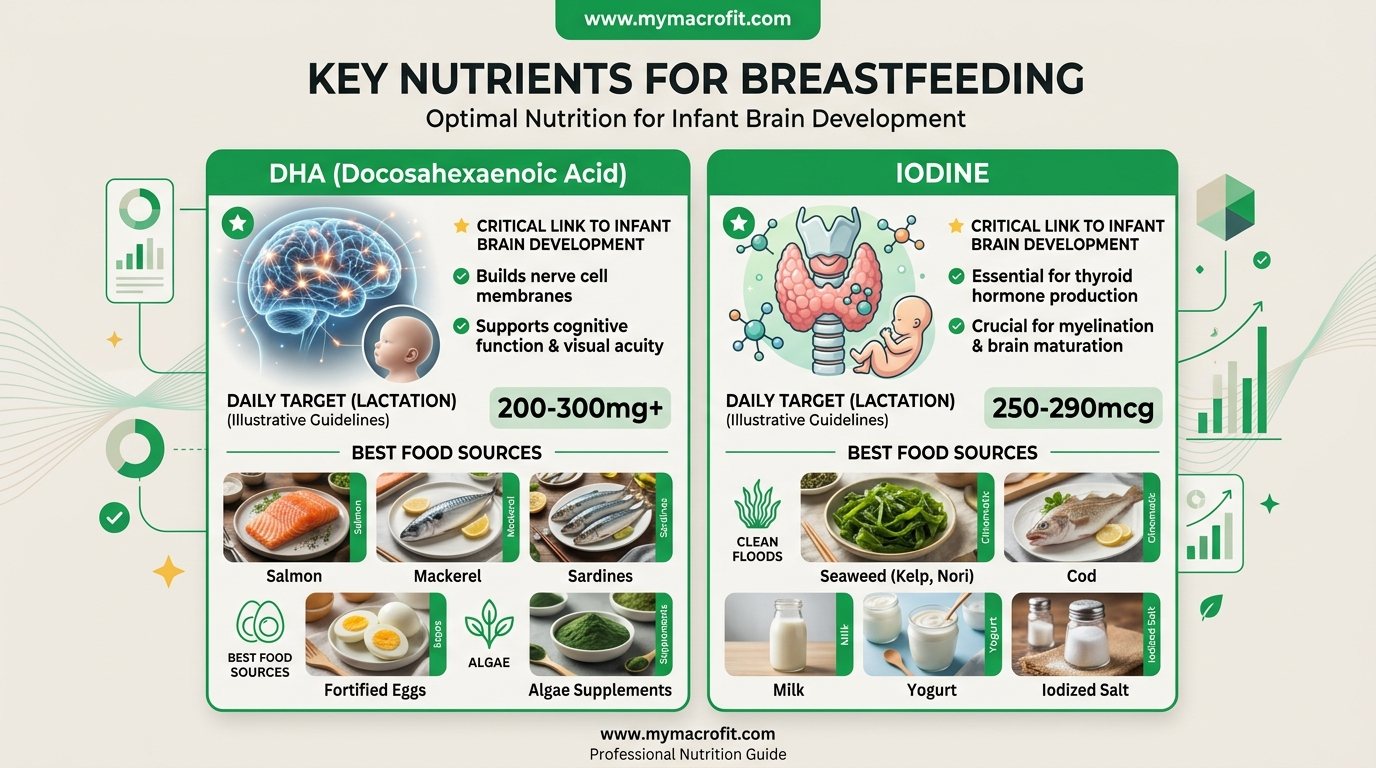
DHA passes directly into breast milk and is critical for infant brain and retinal development. Breast milk DHA content directly reflects maternal intake.
Target: 200-300mg DHA/day minimum (higher than standard adult recommendations)
Sources: Salmon (2,000mg DHA per 100g), sardines (700mg/100g), mackerel (1,400mg/100g), herring (800mg/100g). Aim for 2-3 portions fatty fish per week.
For women who don't eat fish: DHA supplement (algae-derived DHA is appropriate and vegan-friendly) 200-300mg/day.
Note: Limit tuna to 2 portions/week due to methylmercury content. Avoid shark, swordfish, marlin entirely.
Iodine
Iodine is critical for infant thyroid development and neurological function. Breast milk is the sole iodine source for exclusively breastfed infants.
Target: 250-290 mcg/day during breastfeeding (up from 150 mcg non-pregnant adult)
Sources: Dairy (milk 150-200 mcg/500ml), eggs (25 mcg/egg), seafood, iodised salt. Many breastfeeding women in the UK don't reach adequate iodine intake from diet alone, a postnatal supplement containing iodine is recommended by many UK dietitians.
Calcium
Breastfeeding temporarily reduces bone density as calcium is drawn for milk production. This largely reverses after weaning, it's a normal physiological process, not cause for alarm. However, adequate dietary calcium minimises the bone loss.
Target: 1,000-1,200mg/day
Sources: Dairy (300mg per glass milk, 200mg per pot yogurt), fortified plant milks, sardines with bones, kale, fortified soy products.
Vitamin D
Breast milk is relatively low in vitamin D regardless of maternal status, meaning exclusively breastfed infants need supplemental vitamin D drops (5-10 mcg/day, UK NHS recommendation). Maternal vitamin D supplementation (10-25 mcg/day) supports maternal bone health and immune function.
Iron
Iron is often depleted postpartum from blood loss during delivery. Fatigue in the early postpartum period is often partly iron-related. Have ferritin checked at 6-8 weeks postpartum if experiencing persistent fatigue.
Good iron sources: Red meat (highest bioavailability), dark leafy greens (best with vitamin C to enhance absorption), legumes, fortified cereals.
Choline
Often overlooked, choline is critical for infant brain development and is found in breast milk. Many women are deficient.
Best sources: Eggs (yolk, 150mg per large egg), beef liver (330mg/100g), salmon (80mg/100g), chickpeas (42mg/100g).
What to Eat More Of
Oily fish: 2-3 portions/week, DHA for infant brain development + protein + iodine
Eggs: Daily if possible, choline, protein, vitamin D
Dairy or fortified plant milks: Calcium, iodine, protein
Colourful vegetables and fruits: Vitamin C (enhances iron absorption), antioxidants passed into milk, fibre
Legumes: Iron, protein, fibre, particularly important for vegetarian and vegan breastfeeders
Whole grains: Sustained energy, B vitamins, fibre
Practical Eating With a Newborn
The reality of new motherhood is that food preparation time is minimal. High-nutrition, minimal-preparation foods:
- Boiled eggs, can be prepared in batches
- Greek yogurt, open and eat
- Nuts and seeds, easy snacking
- Fruit, no preparation
- Rotisserie chicken, protein with zero effort
- Ready-to-eat lentil soups or pouches
- Overnight oats prepared the evening before
Batch cooking on any available day (legume soups, grain bowls, roasted vegetables) provides several days of easy nutritious eating.
Breastfeeding and Weight Loss
Weight loss while breastfeeding happens naturally for most women, the energy cost of milk production draws on body fat stores. Expecting immediate rapid weight loss post-birth, however, creates unnecessary pressure.
Realistic timeline: Most women reach pre-pregnancy weight by 6-12 months postpartum with normal breastfeeding and standard eating, without deliberate restriction.
For intentional weight loss: A 200-300 kcal/day deficit below breastfeeding-adjusted maintenance is appropriate from around 8-12 weeks postpartum (once milk supply is well established). Prioritise protein to preserve muscle, particularly if not yet exercising.
Avoid very low carbohydrate diets (under 50g/day) during breastfeeding, they can reduce milk supply and cause ketone elevation in breast milk.
For the full postpartum weight loss guide, see our how to lose baby weight post.
The Bottom Line
Breastfeeding significantly increases nutritional needs, particularly for DHA, iodine, calcium, vitamin D, and protein. The priority is nourishment, not restriction. A well-fed breastfeeding mother produces better-quality milk and has more energy for the demanding postpartum period.
Focus on: fatty fish 2-3x/week, eggs daily, adequate dairy or fortified alternatives, colourful vegetables, and a postnatal supplement that includes iodine and DHA.
Save & share on Pinterest
Click any card to pin it — or share with someone who needs it.
Breastfeeding Nutrition: Calories, Macros, and What to Eat
How breastfeeding changes nutritional needs, calorie requirements, key nutrients, foods to prioritis…
How breastfeeding changes nutritional needs, calorie requirements, key nutrients…
Read the full guide: Breastfeeding Nutrition: Calories, Macros, and What to Eat
Free fitness tools
Breastfeeding Nutrition: Calories, Macros, and What to Eat — use our free calculators for instant pe…
Pinterest opens in a new tab. You can edit the description before saving.
Frequently Asked Questions
How many extra calories do I need while breastfeeding?+
Does diet affect breast milk quality?+
What foods should you avoid while breastfeeding?+
What nutrients are most important while breastfeeding?+
Can I follow a vegetarian or vegan diet while breastfeeding?+
About the Author

I'm a registered health coach and pre/postnatal specialist. I look at the whole person, your sleep, your stress, your hormones, because the number on the scale is only ever part of the story.
View full profile →