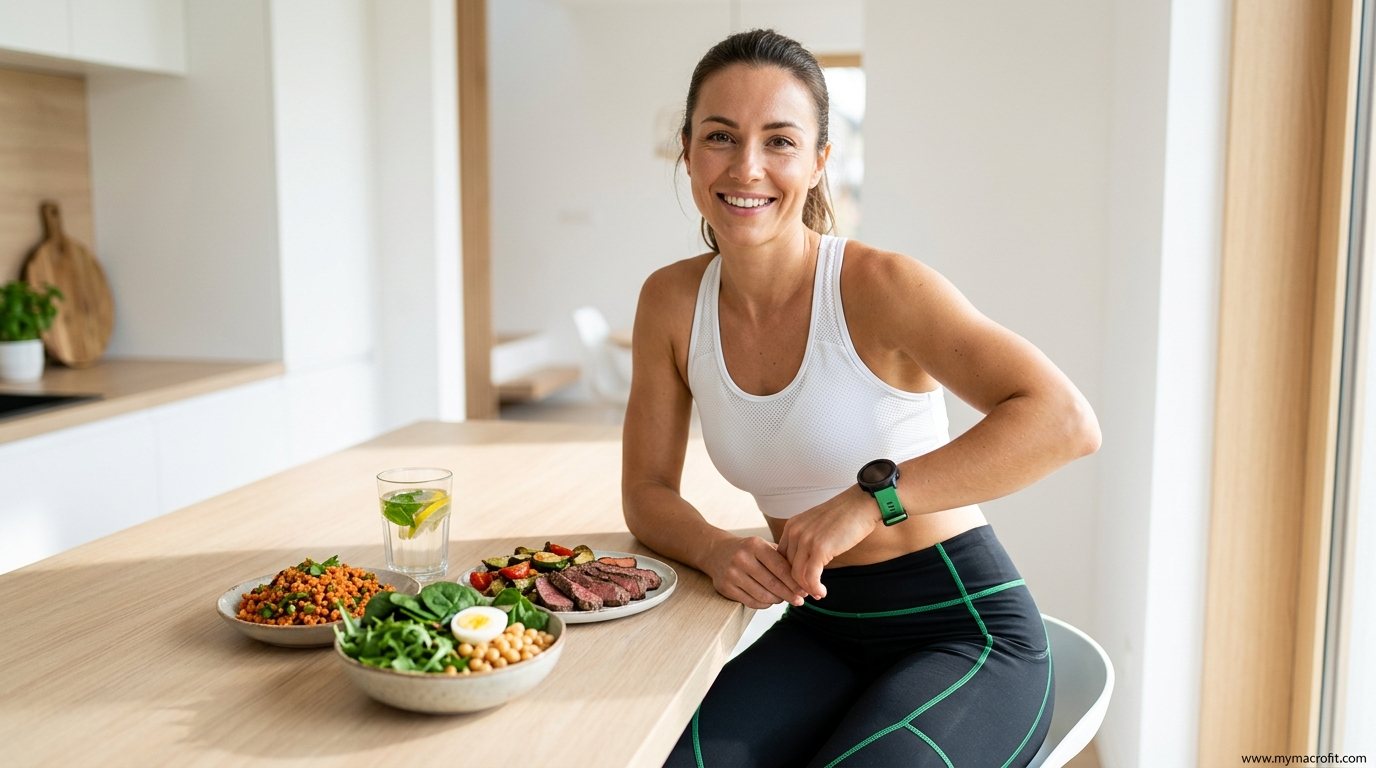
How to Lose Baby Weight Safely (Realistic Timeline)

RHC · Pre/Postnatal Fitness Specialist
The pressure on new mothers to "bounce back" after birth is both unrealistic and unhealthy. The body has just completed one of the most physically demanding processes in human biology, growing and delivering a baby. The postpartum period is one of healing, hormonal recalibration, and (often) sleep deprivation.
Weight loss can absolutely be part of this period, but it needs to be approached with the right timeline, realistic expectations, and priorities firmly placed on recovery and baby nourishment first.
What Happens to Weight After Birth
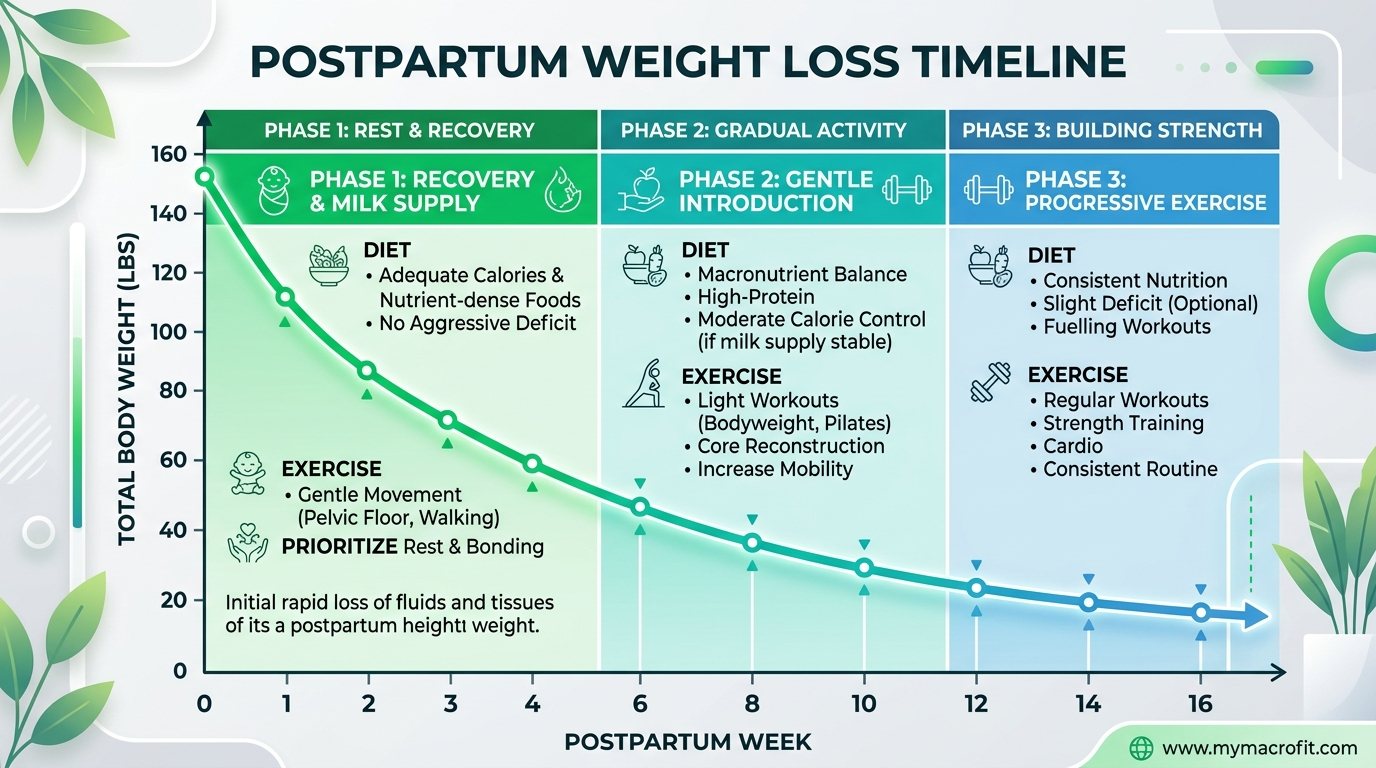
Immediately postpartum (first few days): Birth itself causes an immediate 5-7kg weight reduction (baby, placenta, amniotic fluid, blood loss). This happens without any effort.
Weeks 1-4: Additional water loss continues as pregnancy-related fluid retention resolves. Another 2-4kg typically lost during this period. This is hormonal and automatic.
Weeks 4-12: The remaining weight is stored fat accumulated during pregnancy. This is what requires deliberate effort to lose, and it takes time.
Realistic postpartum weight trajectory:
- Weeks 0-4: ~5-8kg without any dietary change (fluid and pregnancy weight)
- Months 1-6: 0.5-1kg/month with healthy eating and light exercise
- Months 6-12: Continued gradual progress with established routines
When to Start Active Weight Loss Efforts
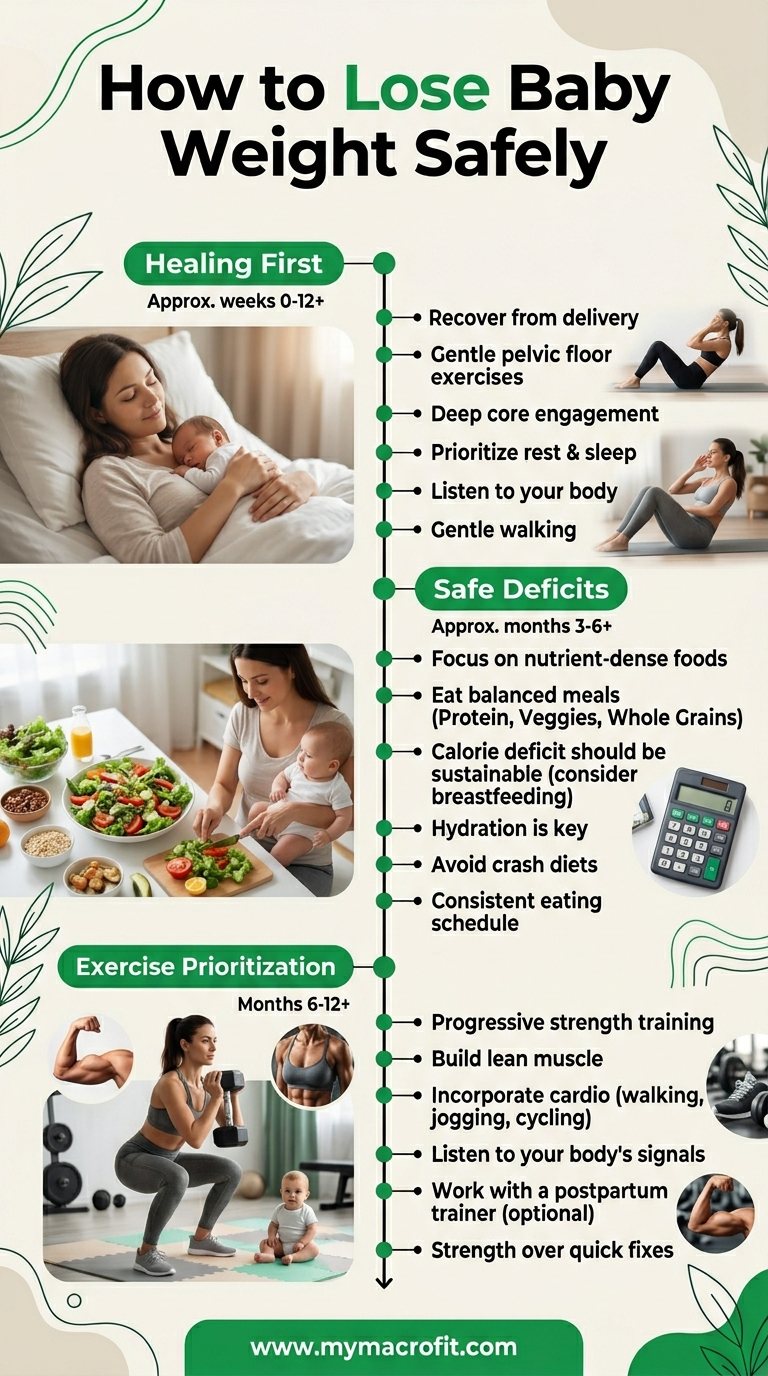
First 6 weeks: Focus entirely on recovery and establishing feeding. Eat adequately. Rest when possible. Don't restrict calories.
6-8 weeks (vaginal delivery): Light dietary improvements are appropriate, improving food quality, reducing ultra-processed food, establishing regular protein intake. Active calorie restriction still not recommended.
8-12 weeks postpartum (if not breastfeeding): Gentle deficit of 300-500 kcal/day can begin. Resume exercise as cleared by healthcare provider.
12 weeks postpartum (if breastfeeding): Small deficit of 200-300 kcal/day is appropriate once milk supply is well-established. Larger deficits may reduce supply.
Always: Get clearance from your GP or midwife before significant dietary changes, particularly post-C-section.
The Safe Rate of Postpartum Weight Loss
Maximum recommended rate while breastfeeding: 0.5kg/week (500 kcal/day deficit maximum)
Maximum recommended rate when not breastfeeding: 0.5-0.7kg/week
Why the caution: Faster weight loss post-birth is associated with muscle loss, micronutrient depletion, reduced milk supply, and increased fatigue, all counterproductive in the demanding postpartum period.
The Nutritional Foundation
Protein: The Priority
Protein supports:
- Postpartum tissue repair
- Muscle preservation during a mild deficit
- Satiety on fewer total calories
- Milk protein quality (if breastfeeding)
Target: 1.8-2g/kg bodyweight (pre-pregnancy weight, or current weight, whichever gives a higher number initially)
Don't Restrict Too Aggressively
The postpartum period involves:
- Significant sleep deprivation → elevated ghrelin → increased hunger
- Hormonal fluctuations → appetite dysregulation
- Physical recovery demands → increased nutrient needs
A very large deficit creates excess stress, increases cortisol (which promotes fat retention), depletes micronutrients needed for recovery, and makes breastfeeding harder.
A moderate deficit of 200-400 kcal/day is both safer and more effective in the long term than aggressive restriction.
Use our Calorie Deficit Calculator at your current weight, adjusted for breastfeeding activity.
Key Nutrients to Maintain
Even in a mild deficit, ensure adequate:
- Iron: Postpartum iron depletion is common; prioritise haem iron (red meat) or supplement if ferritin is low
- Vitamin D: 10-25 mcg/day
- Calcium: 1,000-1,200mg/day (higher if breastfeeding)
- DHA: 200-300mg/day from fatty fish or supplement (especially if breastfeeding, see breastfeeding nutrition)
Exercise: Rebuilding Gradually
Returning to exercise postpartum requires respecting healing, particularly for pelvic floor and abdominal recovery.
Weeks 1-6: Walking, gentle stretching, pelvic floor exercises (Kegels from day 1, even after C-section once comfortable)
6-8 weeks (GP clearance): Low-impact cardio, bodyweight exercises, light resistance training if no pelvic floor symptoms
12+ weeks: Progressive resistance training. HIIT and high-impact activities should be delayed until pelvic floor assessment by a women's health physiotherapist if any symptoms exist (leakage, heaviness, pelvic pain)
Key sign that progression is too fast: Increased lochia (postpartum bleeding), pelvic heaviness or discomfort, urinary leakage. Reduce intensity and consult a healthcare provider.
Practical Strategies That Work Postpartum
Prioritise sleep over workouts when they conflict. Sleep deprivation increases ghrelin, reduces insulin sensitivity, and impairs fat loss through multiple hormonal pathways. An extra hour of sleep does more for fat loss than an extra cardio session in sleep-deprived new mothers.
Protein at every meal. The satiety benefit of protein is critical when time for cooking is minimal and hunger regulation is disrupted by sleep deprivation and hormones.
Don't skip meals. New mothers often "forget" to eat or skip lunch, then overeat at dinner from accumulated hunger. Batch cooking protein sources (boiled eggs, grilled chicken, cottage cheese) makes eating consistently easier.
Walking as primary cardio. Easily done with a pram, low impact, doesn't require childcare, and 8,000-10,000 steps/day contributes meaningfully to calorie expenditure.
Reduce ultra-processed food, not all food. The quality swap (fewer biscuits and crisps; more fruit, yogurt, eggs) produces calorie reduction without hunger, without tracking, and without stress.
The Bottom Line
Losing baby weight safely means: prioritising recovery for the first 6-12 weeks, beginning with gentle dietary quality improvements before calorie restriction, maintaining a moderate deficit (not aggressive), and accepting that the realistic timeline is 6-12 months, not 6 weeks.
The pressure to lose weight immediately postpartum is not evidence-based. The body that grew a human deserves patient, nourishing recovery, and will respond to sensible, sustainable approaches over the months that follow.
Save & share on Pinterest
Click any card to pin it — or share with someone who needs it.
How to Lose Baby Weight Safely (Realistic Timeline)
A realistic, evidence-based guide to postpartum weight loss, when to start, how fast to lose, what w…
A realistic, evidence-based guide to postpartum weight loss, when to start, how …
Read the full guide: How to Lose Baby Weight Safely (Realistic Timeline)
Try the free Calorie Deficit Calculator
How to Lose Baby Weight Safely (Realistic Timeline) — use our free calculators for instant personali…
Pinterest opens in a new tab. You can edit the description before saving.
Ready to get your numbers?
Free calculator, instant results, no signup required.
Frequently Asked Questions
How long does it realistically take to lose baby weight?+
When is it safe to start dieting after giving birth?+
Does breastfeeding help you lose baby weight?+
How do I lose weight without hurting my milk supply?+
Why am I struggling to lose the baby weight even though I'm trying?+
About the Author

I'm a registered health coach and pre/postnatal specialist. I look at the whole person, your sleep, your stress, your hormones, because the number on the scale is only ever part of the story.
View full profile →