Iron Deficiency and Fatigue in Women: Signs, Causes, and Food Fixes

RHC · Pre/Postnatal Fitness Specialist
Iron deficiency is the most common nutritional deficiency globally, and premenopausal women are among the highest-risk groups. Yet iron deficiency is frequently missed, particularly in its pre-anaemic stage when haemoglobin is normal but ferritin (iron stores) is depleted.
For active women especially, undetected iron deficiency is one of the most common and correctable causes of unexplained fatigue and poor exercise performance.
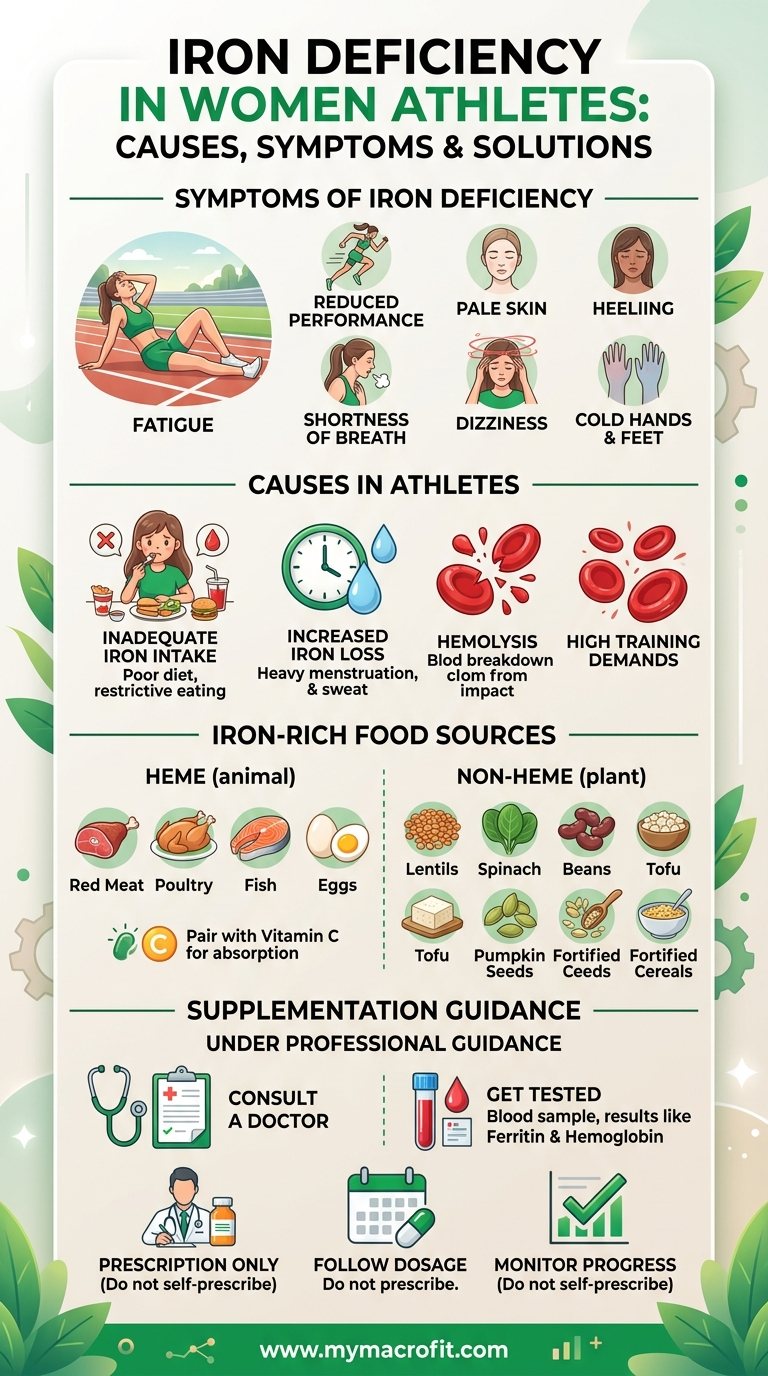
Why Iron Deficiency Is So Common in Women
Menstrual blood loss: Each menstrual period involves 30-80ml of blood loss, containing approximately 15-30mg of iron. Women with heavy periods (menorrhagia) lose significantly more, 80ml+ per cycle. This monthly loss means menstrual iron demand substantially exceeds that of men.
Low dietary intake: Despite higher requirements, premenopausal women often consume less iron than men, partly because they eat less red meat (the highest bioavailable iron source) and more plant-based foods (with lower-bioavailability non-haem iron).
Exercise-related iron losses: Active women have additional iron loss mechanisms:
- Foot-strike haemolysis (running causes red blood cell destruction from repeated impact)
- Sweat losses (small but cumulative)
- Exercise-induced inflammation reduces iron absorption and utilisation
- GI blood loss with high exercise volume
Vegetarian and vegan diets: Plant-based iron (non-haem iron) is 2-10x less bioavailable than haem iron from meat. Vegetarian women have significantly higher iron requirements (approximately 1.8x higher) than meat-eating women.
Pregnancy: Iron requirements nearly double in pregnancy, depleting stores if not addressed.
The Iron Deficiency Spectrum
Iron deficiency exists on a spectrum before overt anaemia develops:
Stage 1: Depleted stores (ferritin low, haemoglobin normal) Fatigue, reduced exercise performance, difficulty concentrating. Blood tests: ferritin under 30 ng/mL; haemoglobin normal. Often missed because "your blood test is normal", if only haemoglobin is checked.
Stage 2: Iron-deficient erythropoiesis Iron stores exhausted, red blood cell production beginning to be affected. Still no anaemia but symptoms worsen.
Stage 3: Iron deficiency anaemia Haemoglobin falls below normal. Classic anaemia presentation with significant fatigue, pallor, and shortness of breath.
Important: Request ferritin testing, not just haemoglobin. Pre-anaemic iron depletion (stage 1) causes real symptoms and impairs performance but won't show on a standard FBC if only haemoglobin is checked.
Optimal ferritin for athletes: Many sports medicine clinicians consider ferritin under 30-40 ng/mL as iron deficiency even with normal haemoglobin.
The Best Iron-Rich Foods
Haem Iron (Highest Bioavailability, 15-35% Absorbed)
| Food | Iron content per 100g |
|---|---|
| Beef liver | 6.5mg |
| Beef (lean) | 2.5-3mg |
| Lamb | 2-2.5mg |
| Pork | 1-2mg |
| Dark chicken/turkey meat | 1.5-2mg |
| Sardines | 3mg |
| Oysters | 5-7mg |
Non-Haem Iron (Plant Sources, 2-10% Absorbed)
| Food | Iron content per 100g | Absorption tips |
|---|---|---|
| Lentils (cooked) | 3.3mg | Pair with vitamin C |
| Chickpeas (cooked) | 2.9mg | Squeeze lemon over |
| Tofu (firm) | 3mg | Add bell pepper alongside |
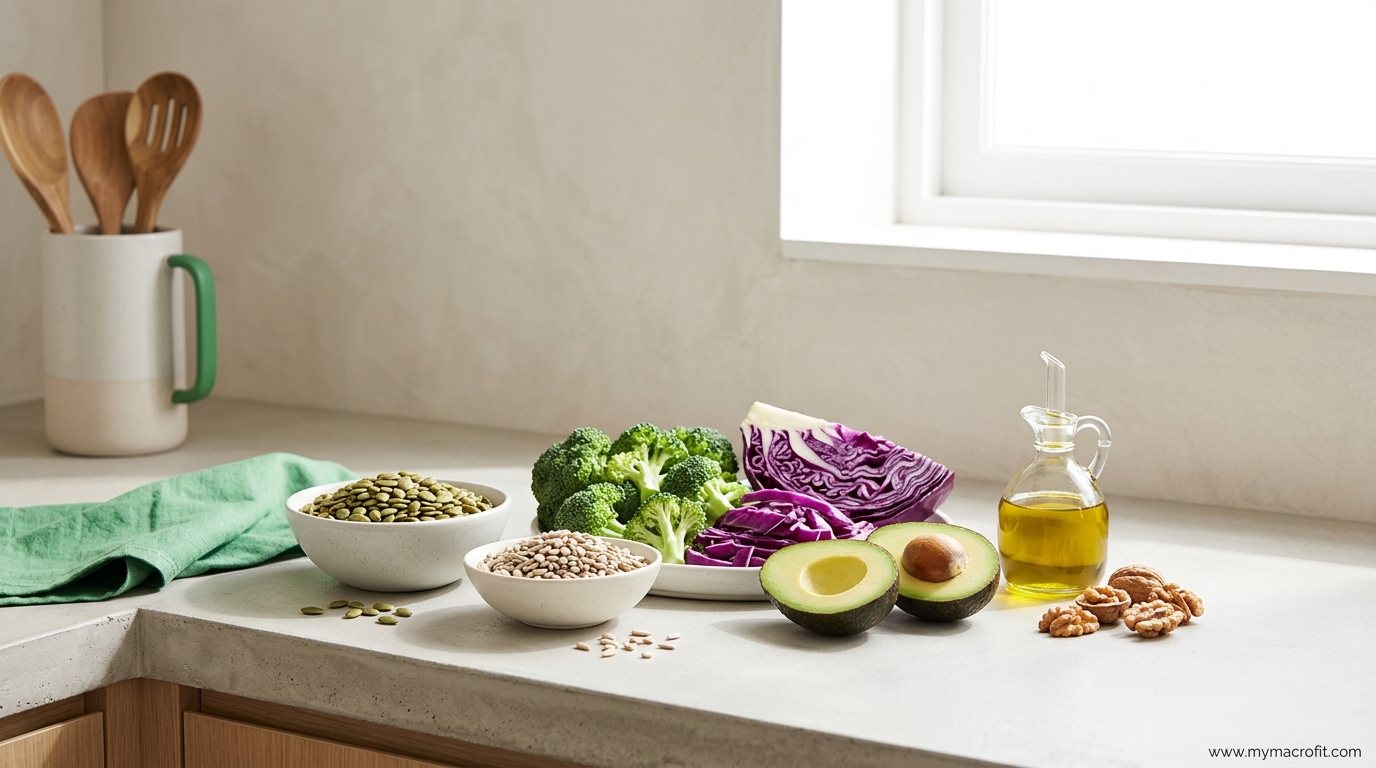
| Pumpkin seeds | 8.8mg | Eat with strawberries |
| Dark chocolate (70%+) | 3.3mg | , |
| Spinach (cooked) | 3.6mg | Cook reduces oxalate |
| Fortified cereals | 4-17mg | Vary significantly |
| Quinoa (cooked) | 1.5mg |
Maximising Non-Haem Iron Absorption
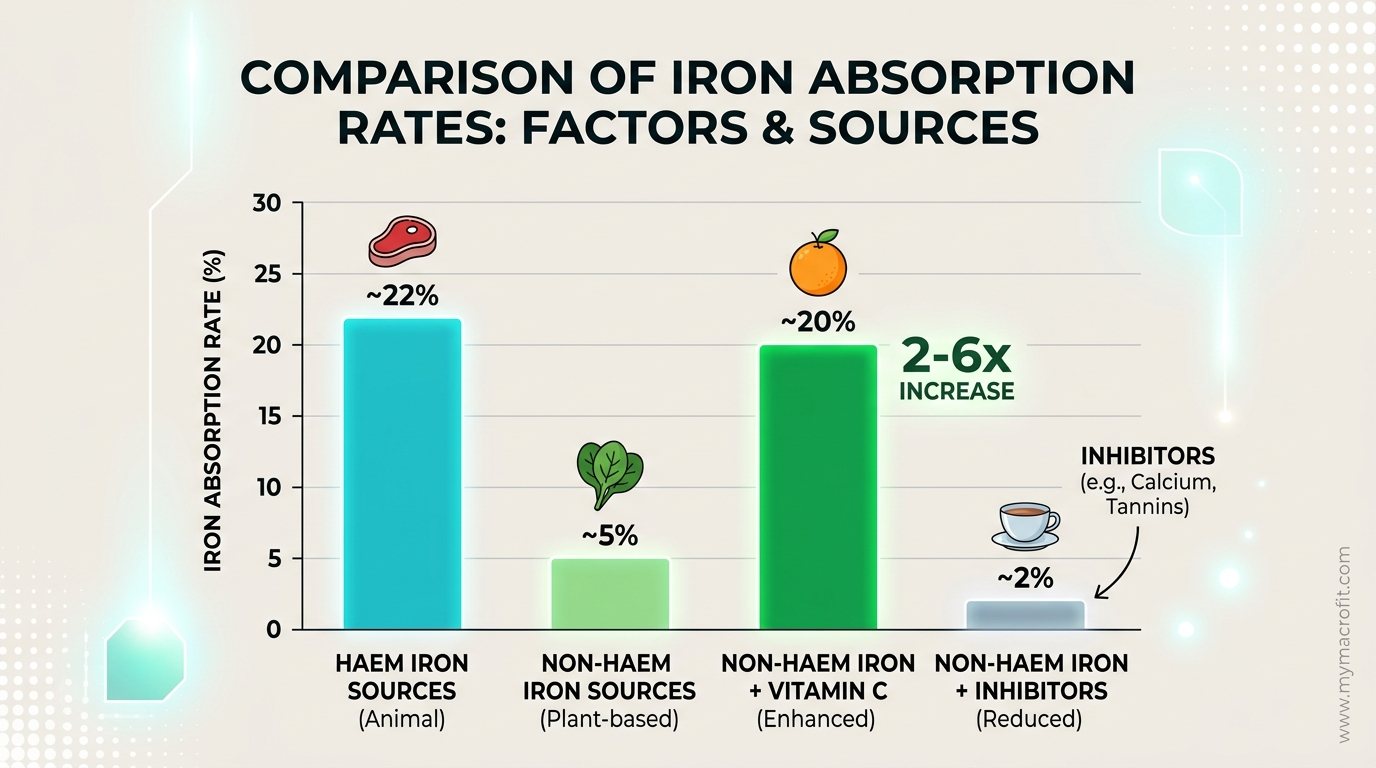
Vitamin C dramatically increases non-haem iron absorption (by 2-6x). Always pair plant-based iron sources with vitamin C:
- Lentil soup + squeeze of lemon
- Spinach salad + red pepper
- Porridge + strawberries
- Beans on toast + orange juice
Iron inhibitors to avoid within 1 hour of iron-rich meals:
- Tea (polyphenols)
- Coffee (chlorogenic acid)
- Calcium (dairy, supplements)
- Phytates in large amounts (though not as significant as often stated)
For Active Women: Additional Strategies
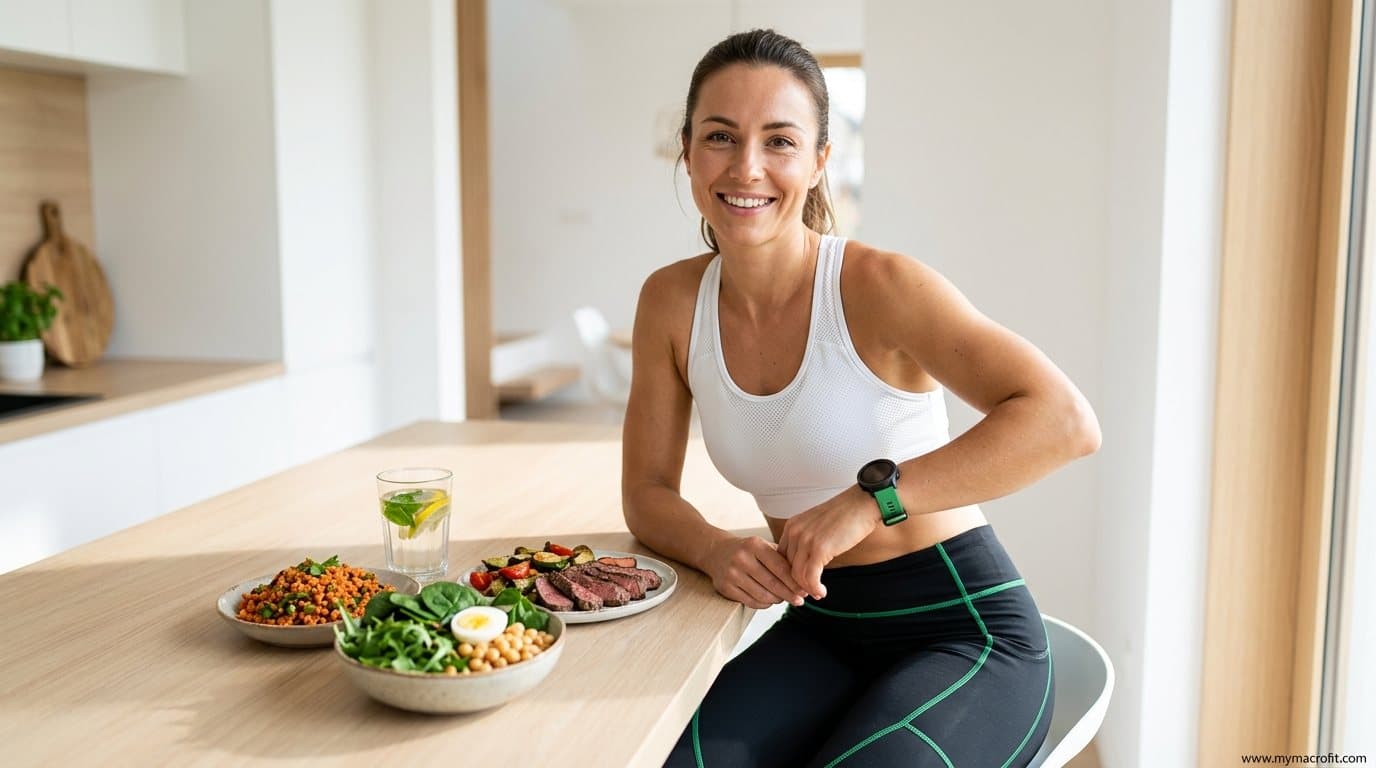
Increase red meat frequency: Even 2 portions of red meat per week significantly improves iron status in women who were previously eating little or none. This doesn't need to be every day.
Cooking in cast iron: Cooking acidic foods (tomato-based sauces, curries) in cast iron cookware leaches a small amount of iron into the food, measurable and meaningful as a dietary contribution.
Periodise high-iron eating around training: Some evidence suggests reducing tea and coffee intake for the hour after training and including an iron-rich food in the post-workout meal.
When to Supplement
Testing first is ideal: Request ferritin (not just FBC) from your GP if you have symptoms or risk factors. Testing before supplementing allows appropriate dosing and monitoring.
Supplement if:
- Ferritin under 30 ng/mL with symptoms
- Dietary changes insufficient despite consistent effort
- Heavy periods making dietary replacement impractical
- Vegetarian or vegan with consistently poor status
Supplement choice:
- Ferrous bisglycinate (iron glycinate), best tolerated, excellent absorption. Take with vitamin C on an empty stomach if possible.
- Ferrous sulphate, most prescribed, less expensive, more GI side effects.
Dosing: Under GP or dietitian supervision. Self-supplementing with iron without confirmed deficiency can cause iron overload, iron is a pro-oxidant at excess levels.
Retest ferritin 8-12 weeks after starting supplementation.
The Bottom Line
Iron deficiency is extremely common in premenopausal women, frequently overlooked (because only haemoglobin is tested), and one of the most correctable causes of fatigue and impaired performance.
Test ferritin, not just haemoglobin. If low, prioritise haem iron sources (red meat 2x/week minimum) and enhance non-haem iron with vitamin C. For significant deficiency, iron bisglycinate supplementation under GP guidance provides reliable correction.
Save & share on Pinterest
Click any card to pin it — or share with someone who needs it.
Iron Deficiency and Fatigue in Women: Signs, Causes, and Food Fixes
Why iron deficiency is extremely common in active women, how to identify it, the best iron-rich food…
Why iron deficiency is extremely common in active women, how to identify it, the…
Read the full guide: Iron Deficiency and Fatigue in Women: Signs, Causes, and Food Fixes
Free fitness tools
Iron Deficiency and Fatigue in Women: Signs, Causes, and Food Fixes — use our free calculators for i…
Pinterest opens in a new tab. You can edit the description before saving.
Frequently Asked Questions
What are the signs of iron deficiency in women?+
How much iron do women need per day?+
What iron supplement is easiest on the stomach?+
Should I get tested before taking iron supplements?+
How can I get more iron from food, especially as a vegetarian?+
About the Author

I'm a registered health coach and pre/postnatal specialist. I look at the whole person, your sleep, your stress, your hormones, because the number on the scale is only ever part of the story.
View full profile →