Casein Protein: Why Slow-Release Protein Before Bed Builds More Muscle

CN · Metabolic Health Coach
Most people who train have heard that protein timing matters. What's less commonly discussed is whether the overnight fast, 7-9 hours without protein intake, represents a missed opportunity for muscle protein synthesis.
The research on this question is surprisingly clear.
Whey vs. Casein: The Key Difference
Both whey and casein are derived from milk. The fundamental difference is digestion rate:
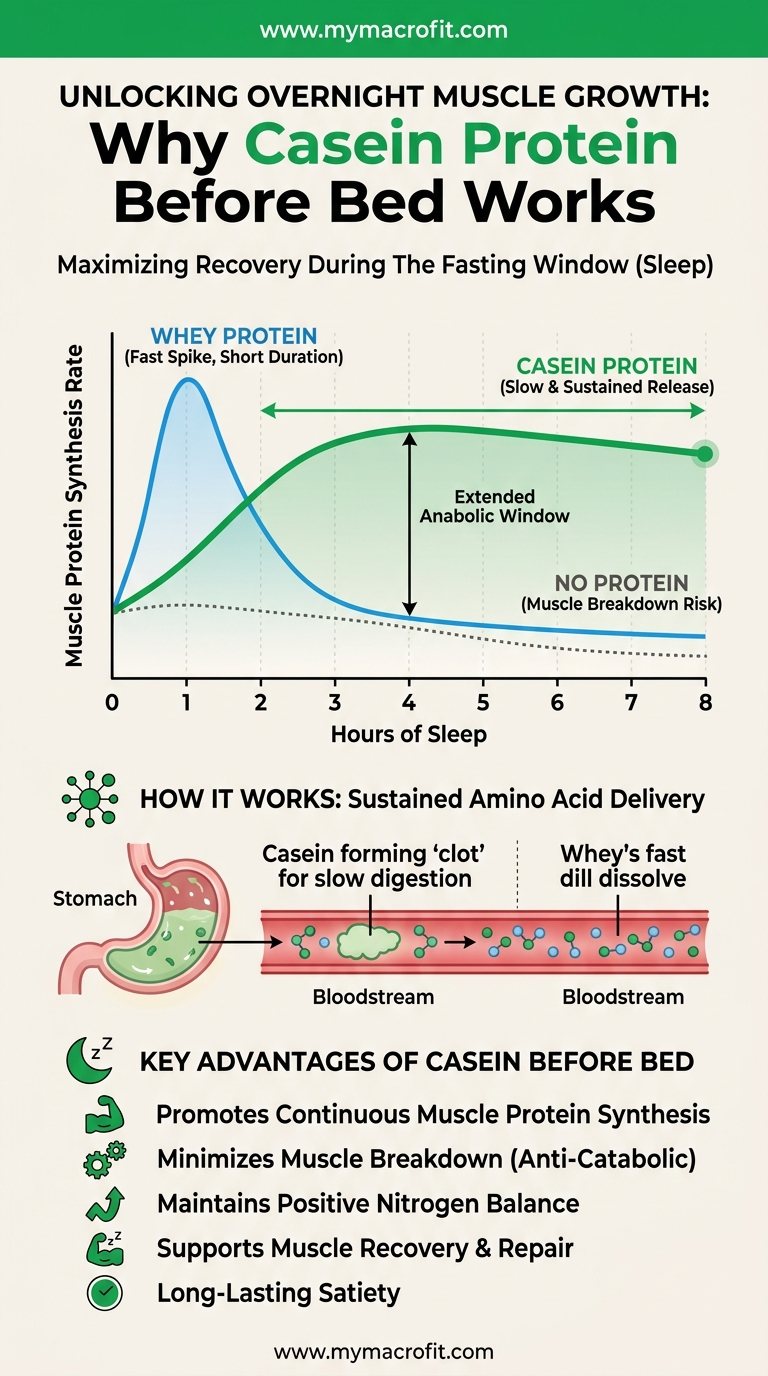
Whey: "Fast" protein. Amino acids peak in bloodstream within 60-90 minutes and return to baseline in 3-4 hours. Ideal for acute post-workout window.
Casein: "Slow" protein. Coagulates in the stomach, creating a gel that digests over 5-7 hours. Provides a sustained, low-level amino acid supply, perfect for overnight fasting.
The difference in speed is not due to amino acid content (both are high-quality, complete proteins) but to the physical properties of casein micelles in the stomach.
The Pre-Sleep Protein Research
The key study in this area is Snijders et al. (2015), a 12-week RCT where resistance-trained young men received 40g casein (or placebo) immediately before sleep, added to their normal diet:
Results:
- Pre-sleep casein group: +1.8kg lean mass (vs. +0.9kg placebo)
- Pre-sleep casein group: greater gains in leg strength and muscle hypertrophy (MRI measured)
- No difference in fat mass between groups
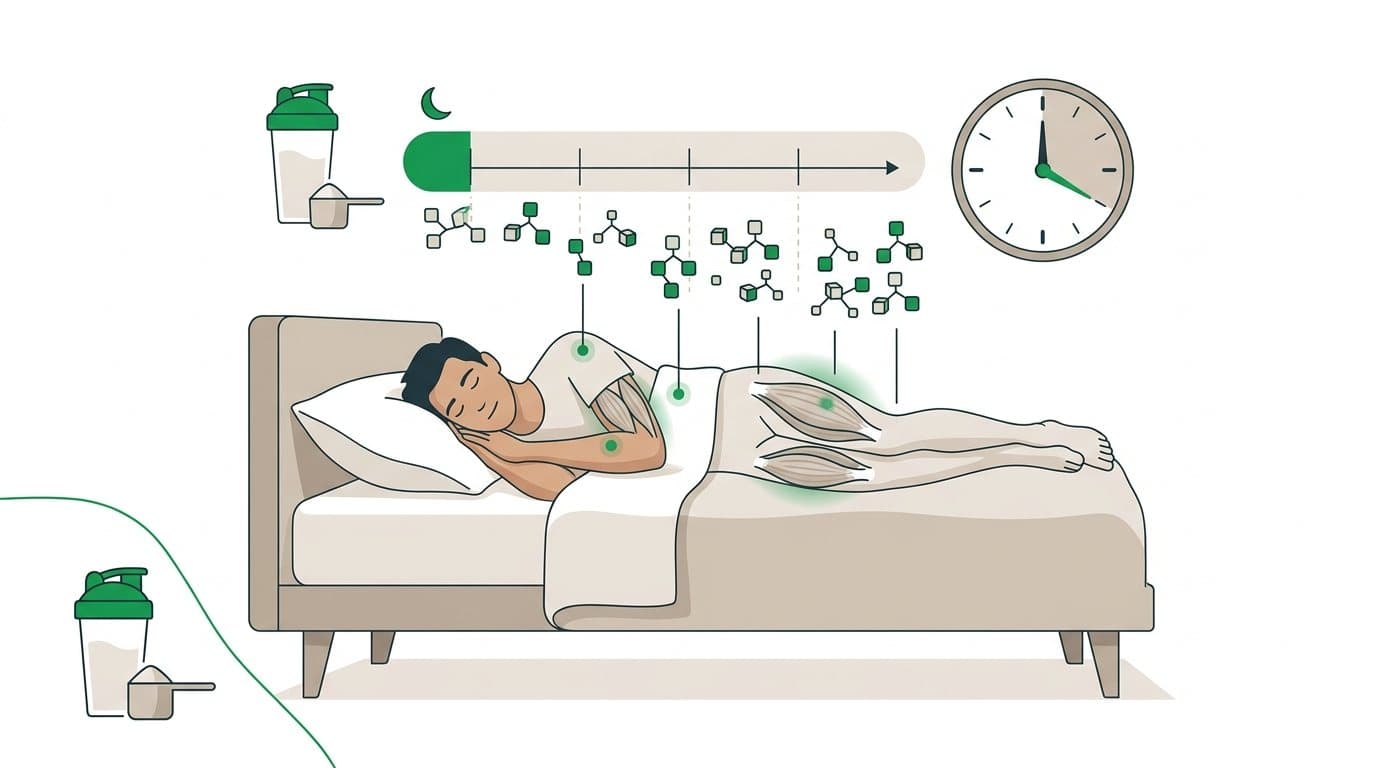
The mechanism: providing amino acids during the overnight fast keeps muscle protein synthesis elevated during a period when it would otherwise have no substrate.
Additional research from the same group showed pre-sleep protein ingestion is effectively digested and absorbed overnight, and that 40g casein before sleep produces a whole-body net protein positive balance during sleep.
How Much Protein and When
Dose: 30-40g of casein protein Timing: 30-60 minutes before sleep Form: Micellar casein (slow-digesting), not casein hydrolysate (fast-digesting like whey)
Whole food alternatives (both casein-rich):
- Cottage cheese (200-250g), most practical, provides 25-30g primarily casein
- Greek yogurt (250g), 20-25g protein, also predominantly casein
- Milk (500ml), 16g protein, mix of casein and whey
Casein powder is more convenient for hitting 40g specifically, but whole food sources are nutritionally equivalent and often more satiating.
Do You Need to Supplement Pre-Sleep Protein?
Yes, if:
- You're in an active muscle-building phase and want to maximise hypertrophy
- Your last protein-containing meal is more than 4-5 hours before sleep
- You struggle to hit your daily protein target through daytime meals
Probably not necessary, if:
- You eat a protein-rich meal (chicken, eggs, fish) within 2-3 hours of sleep
- Your total daily protein is already at the high end of target (2.2g/kg+)
- You're in a maintenance or fat loss phase with no acute muscle-building priority
Total daily protein remains the priority. Pre-sleep casein is an optimisation tool, not the foundation. If you're not hitting your daily protein target, fix that first.
The Bottom Line
Pre-sleep casein protein (30-40g) has genuine evidence for improving overnight muscle protein synthesis and producing greater lean mass gains over 12-week resistance training programmes. It's one of the few protein timing strategies with direct RCT evidence for improved body composition outcomes.
Cottage cheese or Greek yogurt are completely effective whole food alternatives that provide the same slow-release casein protein without needing a supplement.
Use our Protein Calculator to confirm your daily target is met first, pre-sleep protein is an optimisation, not a foundation.
Save & share on Pinterest
Click any card to pin it — or share with someone who needs it.
Casein Protein: Why Slow-Release Protein Before Bed Builds More Muscle
The evidence for casein protein before sleep, how it differs from whey, what the overnight muscle pr…
The evidence for casein protein before sleep, how it differs from whey, what the…
Read the full guide: Casein Protein: Why Slow-Release Protein Before Bed Builds More Muscle
Try the free Protein Calculator
Casein Protein: Why Slow-Release Protein Before Bed Builds More Muscle — use our free calculators fo…
Pinterest opens in a new tab. You can edit the description before saving.
Ready to get your numbers?
Free calculator, instant results, no signup required.
Frequently Asked Questions
Should I take casein protein before bed?+
Can I use Greek yogurt or cottage cheese instead of casein powder?+
Does taking protein before bed cause fat gain?+
Is casein better than whey overall?+
Can I take casein during the day too, not just at night?+
Will casein before bed disrupt my sleep or digestion?+
About the Author

I'm a certified nutritionist and metabolic health coach. I went deep on keto and metabolism after reversing my own insulin resistance, and I'd rather give you the actual numbers than a hand-wave.
View full profile →