Creatine Gummies vs Powder: Are the Trendy Gummies Worth It?

BSc Kinesiology · CPT
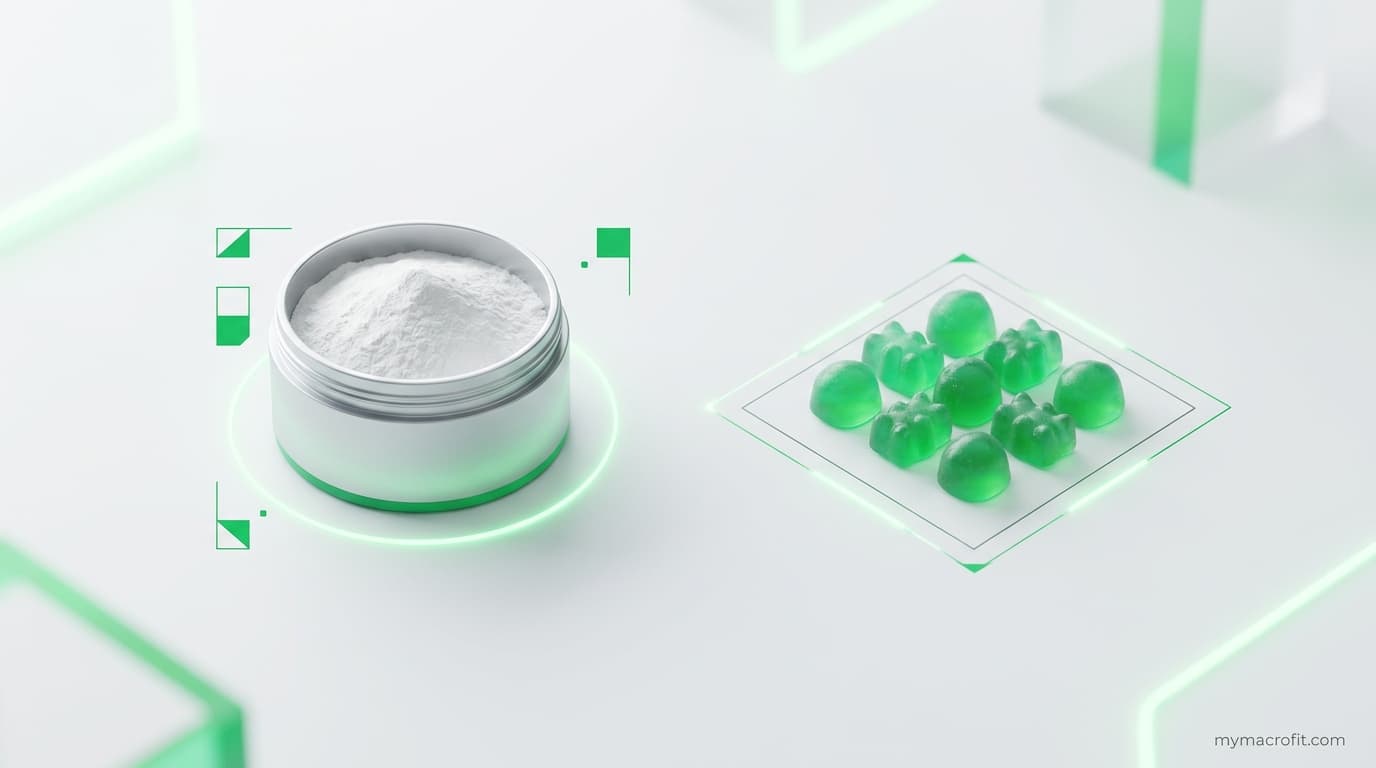
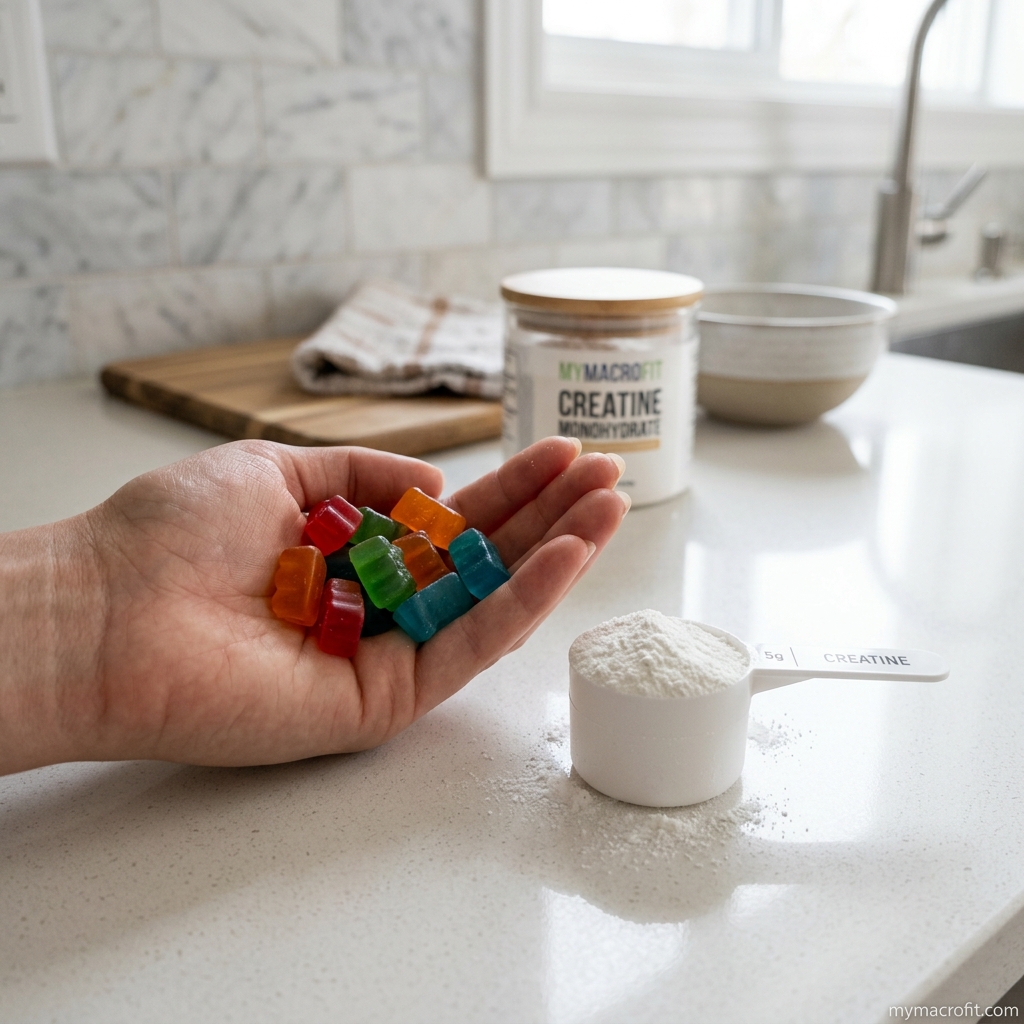
Creatine gummies have exploded in popularity, and the pitch is appealing: all the proven benefits of creatine, in a tasty chew you'll never forget to take. No mixing, no chalky shaker, no powder clumping in the bottom of the glass. But are they actually as good as plain monohydrate powder, or are you paying a premium for sugar and marketing?
The answer is more nuanced than either the gummy brands or the powder purists will tell you.
Your muscles don't care about the format
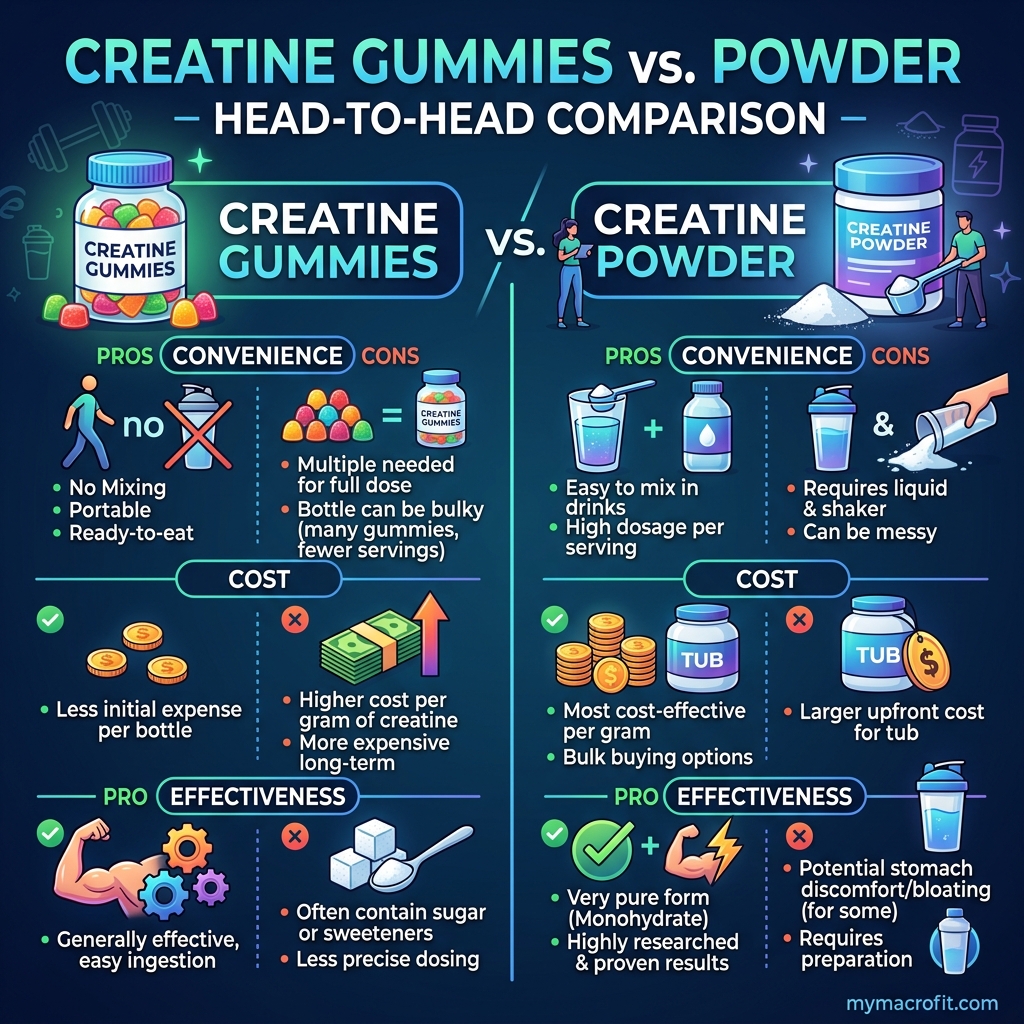
Let's clear up the core question first: creatine monohydrate works the same regardless of how it's delivered. Powder, capsule, or gummy, once the creatine reaches your bloodstream and saturates your muscle stores, the format is irrelevant. There's no magic in a gummy and no penalty either.
So in principle, a creatine gummy that delivers a genuine 5g daily dose will saturate your muscles exactly like powder. If you want to confirm your own target dose, the Creatine Calculator sorts loading versus maintenance in a few seconds.
The "in principle" is doing some work in that sentence, though, and it's where gummies get interesting.
The two real catches with gummies
1. Degradation. Creatine monohydrate is stable when dry, but it slowly converts to creatinine (a useless byproduct) in the presence of moisture, heat, and acidity. A gummy is, by definition, a moist and often slightly acidic environment. Poorly formulated or badly stored gummies can lose a chunk of their active creatine before you ever eat them. Reputable brands account for this; cheap ones may not. This is the one area where format genuinely matters, and where third-party testing is worth seeking out.
2. The dose-per-gummy trap. Many gummies contain only 1 to 1.5g of creatine each. A standard 5g daily dose can therefore mean four or five gummies, every day. Brands sometimes list an appealing "serving" while burying how many gummies that serving is, or how much creatine each one actually holds. Always read the creatine content per gummy.
The cost problem
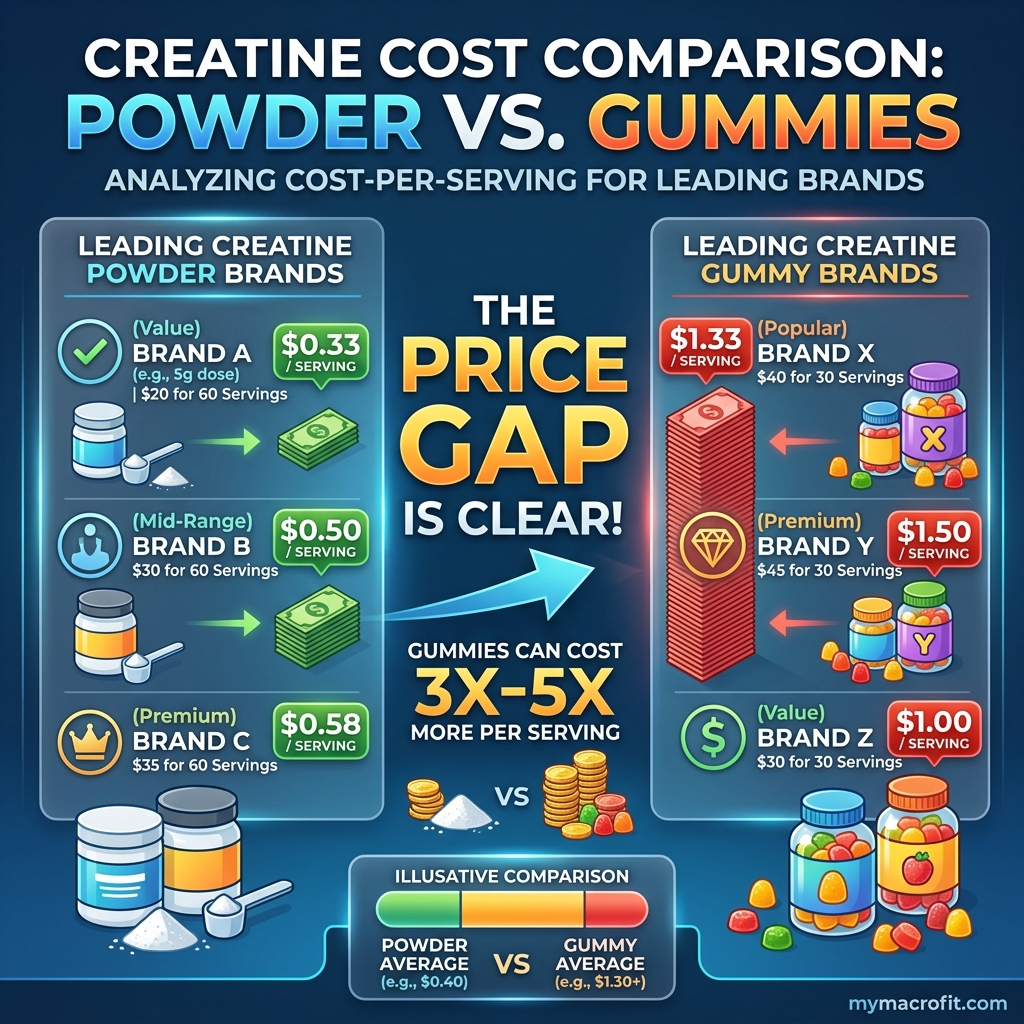
This is where gummies lose for most people. Creatine monohydrate is one of the cheapest effective supplements in existence, a tub of bulk powder works out to pennies per dose. Gummies routinely cost several times more per gram of actual creatine, because you're paying for flavour, sweeteners, manufacturing, and convenience.
For something you take every single day, ideally for years, that premium compounds. Paying 4x for the same creatine adds up to real money over time, with zero difference in results.
The honest cost comparison
Numbers make the premium concrete. Here's roughly how the formats stack up for the same effective 5g daily dose, taken every day:
| Format | Rough cost per 5g | Notes |
|---|---|---|
| Bulk monohydrate powder | A few pennies | The value benchmark |
| Capsules | 2-3x powder | Convenient, no taste |
| Gummies | 3-5x+ powder | Flavour, but degradation risk |
Over a year of daily use, choosing gummies over powder can mean spending several times more for the identical 5g of creatine reaching your muscles. That's not a reason never to buy them, it's a reason to buy them on purpose, knowing what the convenience costs.
How to actually choose
Strip away the marketing and it comes down to one honest question: will the format change whether you take it consistently? Creatine only works if you take it daily, more or less forever, so adherence beats everything.
- Pick powder if you're happy stirring a scoop into a drink. It's the cheapest, most-tested, completely effective default, and it's what I'd suggest most people start with.
- Pick capsules if you travel a lot or hate the taste, a middle ground on cost and convenience.
- Pick gummies only if the chew is genuinely the thing that makes you take it every day, and you've checked the dose-per-gummy and the brand's testing.
There's no wrong answer if you take it consistently. There's only an expensive answer you abandon versus a cheap one you keep.
So who should buy gummies?
There's an honest case for them. If the convenience is the difference between you taking creatine consistently and forgetting it, a gummy that you actually take beats a powder that sits in the cupboard. Adherence is what produces results, and a slightly expensive habit you keep beats a cheap one you don't.
But go in clear-eyed:
- Check the creatine per gummy, not just the serving size, and work out how many you need for 5g.
- Favour third-party-tested brands, because gummy degradation is a real risk.
- Accept the premium for what it is, paying for convenience, not better results.
For most people, plain monohydrate powder stirred into a drink remains the smart default, cheapest, most researched, completely effective. Gummies are a convenience product, and that's fine, as long as you know that's what you're paying for. For the full picture on dosing, timing, and the myths, see our Complete Creatine Guide.
Save & share on Pinterest
Click any card to pin it — or share with someone who needs it.
Creatine Gummies vs Powder: Are the Trendy Gummies Worth It?
Creatine gummies are everywhere, but do they actually work as well as plain monohydrate powder? A lo…
Creatine gummies are everywhere, but do they actually work as well as plain mono…
Read the full guide: Creatine Gummies vs Powder: Are the Trendy Gummies Worth It?
Try the free Creatine Calculator
Creatine Gummies vs Powder: Are the Trendy Gummies Worth It? — use our free calculators for instant …
Pinterest opens in a new tab. You can edit the description before saving.
Ready to get your numbers?
Free calculator, instant results, no signup required.
Frequently Asked Questions
Do creatine gummies actually work?+
How many creatine gummies equal a 5g dose?+
Are creatine gummies less effective than powder?+
Why are creatine gummies more expensive?+
Which form of creatine is best overall?+
How can I tell if my creatine gummies have degraded?+
Are there any downsides to the sugar in creatine gummies?+
About the Author

I'm a kinesiologist and personal trainer. I've spent eight years helping women lose fat and get stronger without handing their whole life over to a diet.
View full profile →