Cortisol and Weight Gain: How Stress Makes You Store Fat

RHC · Pre/Postnatal Fitness Specialist
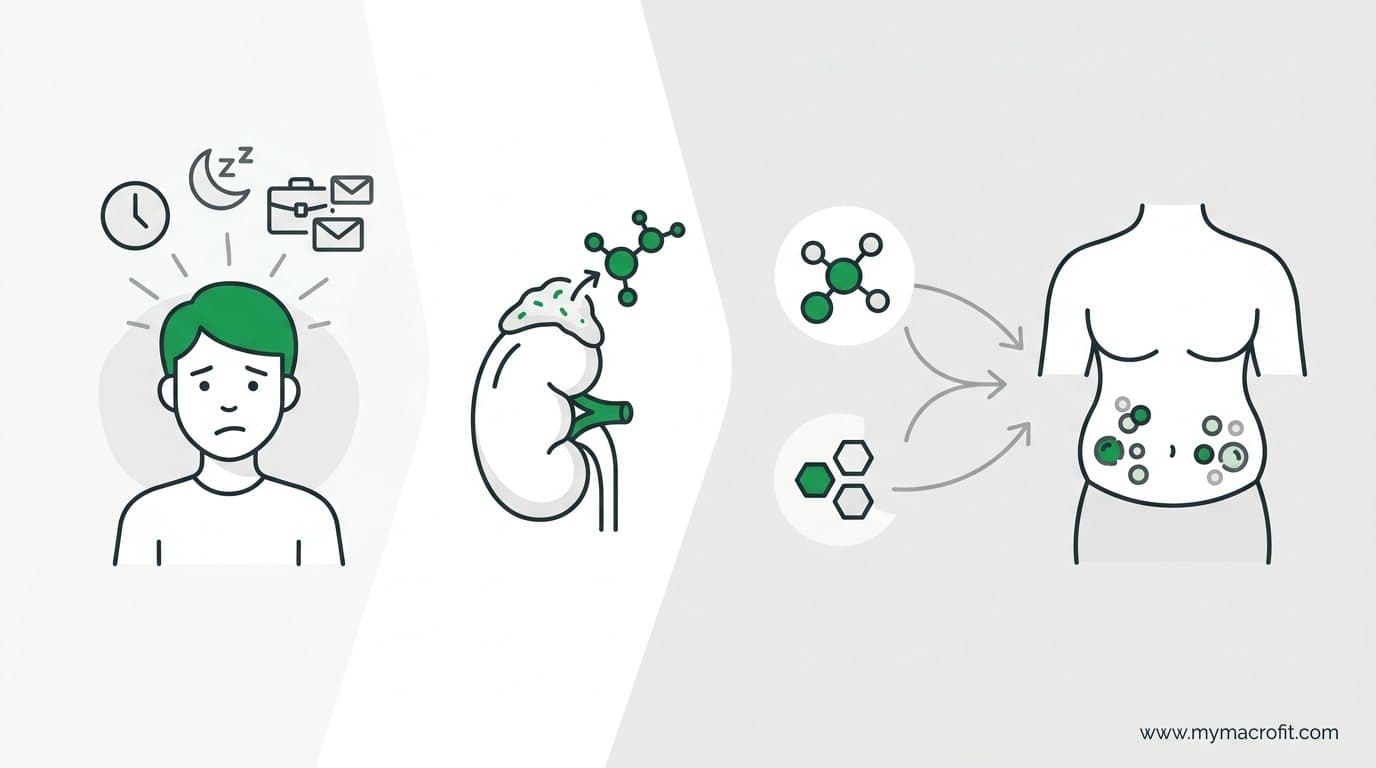
You're eating well, exercising regularly, but something isn't working, the scale won't move, and weight keeps accumulating around your middle. If this sounds familiar alongside a period of significant stress, cortisol may be the missing piece of your fat loss puzzle.
Cortisol is real, the mechanisms are real, and the solutions are more practical than most stress articles suggest.
What Cortisol Is and Why It Affects Weight
Cortisol is a glucocorticoid hormone produced by the adrenal glands. Its primary evolutionary role is to mobilise energy quickly in response to threat, raising blood glucose, increasing heart rate, and sharpening alertness.
This acute stress response is useful. The problem is chronic, sustained cortisol elevation, the hormonal state produced by months of psychological stress, poor sleep, excessive calorie restriction, or overtraining.
What chronically elevated cortisol does to your body:
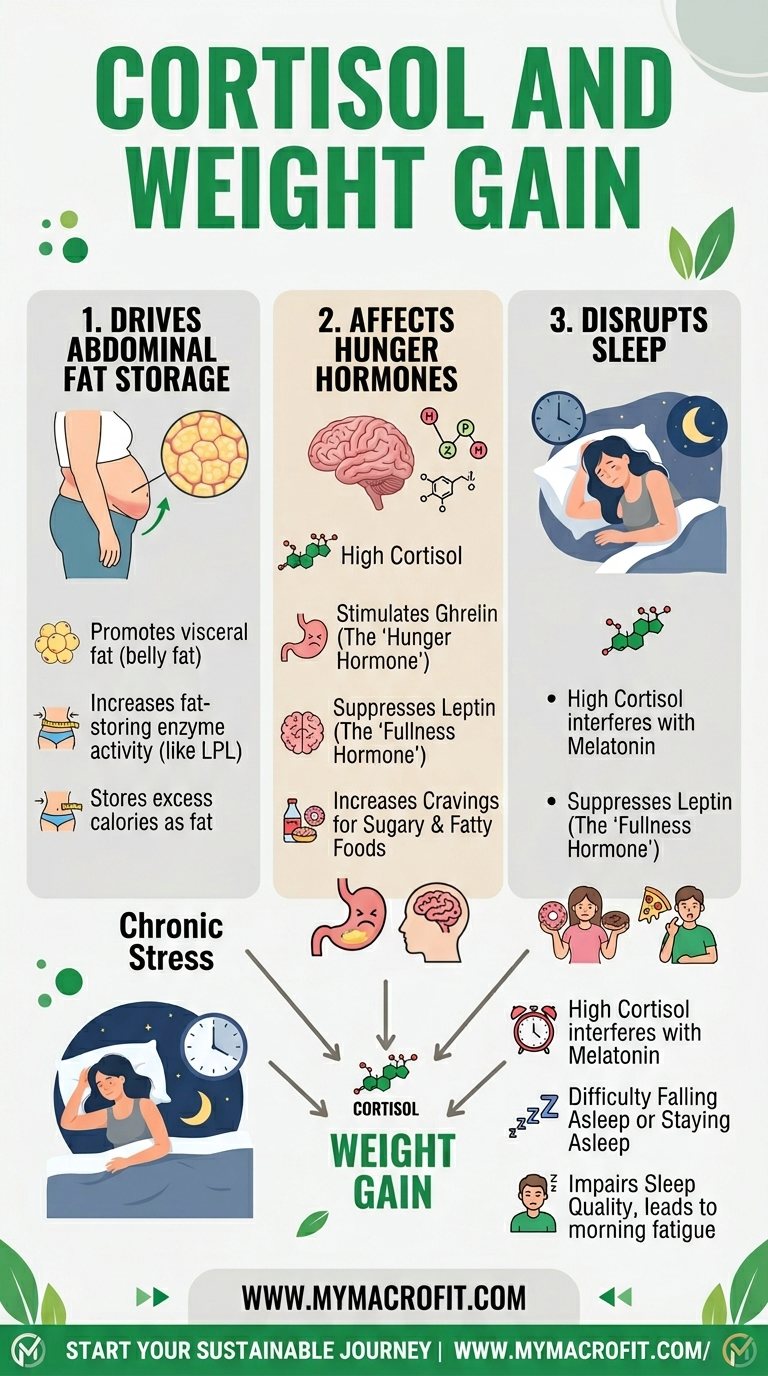
Promotes visceral fat storage: The abdomen is dense with glucocorticoid receptors. Cortisol signals fat cells in the abdominal region to grow and store more fat, even at the same calorie intake. This is why chronic stress is specifically associated with increased waist circumference, not just overall weight gain.
Increases blood glucose: Cortisol is a gluconeogenic hormone, it breaks down muscle protein and liver glycogen to raise blood glucose, preparing for "fight or flight." Chronically elevated blood glucose stimulates insulin release, which promotes fat storage.
Raises ghrelin: Cortisol upregulates ghrelin, the primary hunger hormone. People under chronic stress genuinely experience more hunger, and specifically crave high-calorie, high-carbohydrate foods, which provide quick glucose to fuel the perceived threat response.
Breaks down muscle: Prolonged cortisol elevation is catabolic, it degrades muscle protein. Less muscle means lower resting metabolic rate, making fat loss harder.
Disrupts sleep: High cortisol in the evening (when it should be low) impairs sleep quality. Poor sleep then further elevates ghrelin and reduces leptin, creating a compounding hormonal environment against fat loss.
Causes water retention: Cortisol increases aldosterone, a hormone that causes the kidneys to retain sodium and water. This adds scale weight and can make it appear that fat loss has stalled even when it hasn't.
The Stress-Weight Gain Cycle
Chronic stress → elevated cortisol → increased hunger + fat storage + poor sleep → harder fat loss and dietary adherence → frustration → more stress → repeat.
This cycle is why people under significant stress can eat very well, train consistently, and still find fat loss difficult. The hormonal environment created by chronic stress is genuinely working against them.
It's not that stress "breaks" the laws of thermodynamics, a calorie surplus still causes weight gain, and a genuine deficit still produces fat loss. But cortisol makes both sides harder: it increases how much you eat (via ghrelin) and reduces how much you burn (via muscle breakdown and NEAT reduction).
Who Is Most Affected
Cortisol-driven weight gain is particularly pronounced in:
People under sustained psychological stress (work, relationships, financial stress, caregiving)
People doing excessive exercise without adequate recovery, overtraining elevates cortisol persistently
Chronic under-eaters: Very large calorie deficits are a physiological stressor that elevates cortisol, paradoxically making it harder to lose fat in some contexts
People with consistently poor sleep, cortisol and sleep are bidirectionally linked
Perimenopausal and post-menopausal women, declining oestrogen in this phase increases cortisol sensitivity, making abdominal fat gain more pronounced
Evidence-Based Strategies to Reduce Cortisol
1. Sleep: The Most Powerful Cortisol Intervention
Cortisol follows a circadian pattern, high in the morning (cortisol awakening response), declining through the day. Poor sleep disrupts this pattern, causing elevated evening cortisol and blunted morning cortisol.
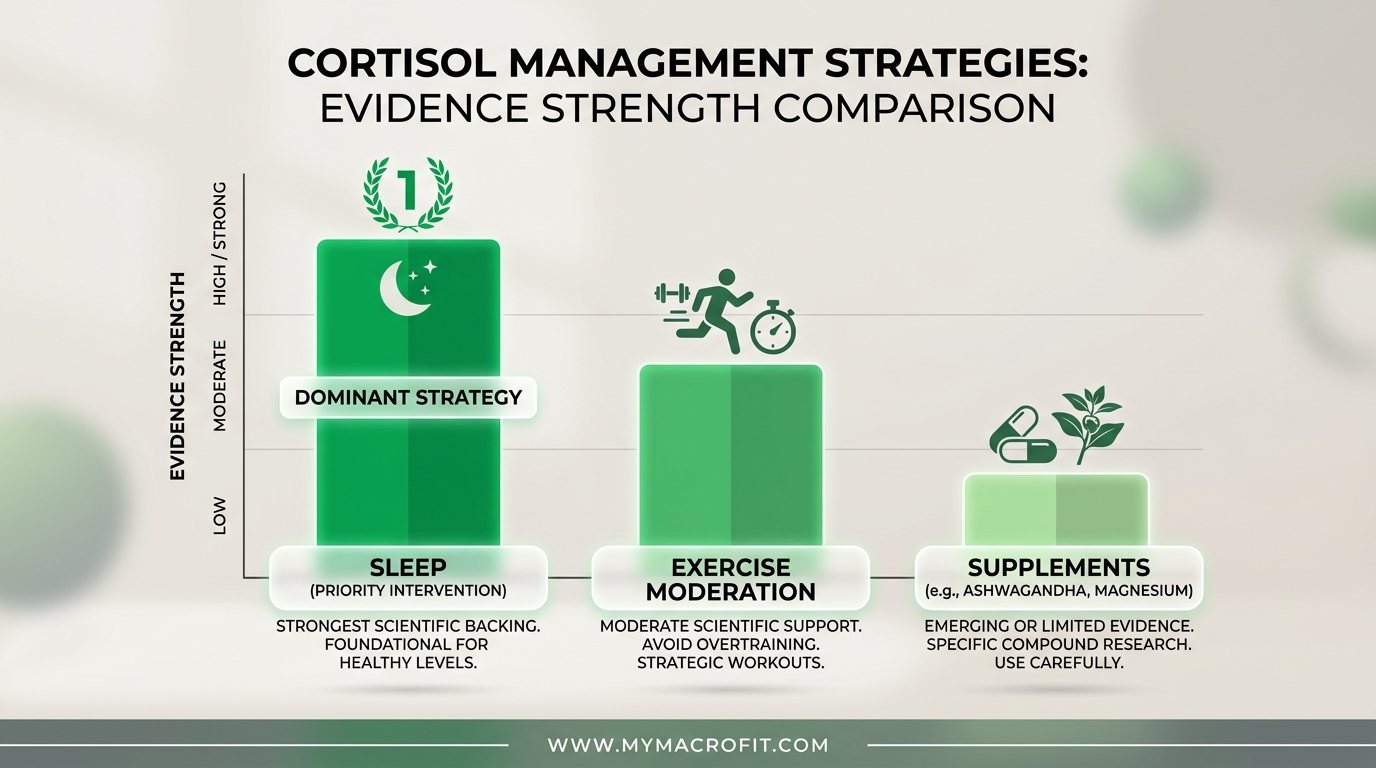
7-9 hours of quality sleep consistently is the single most impactful cortisol-lowering intervention. No supplement matches it. See our sleep quality guide.
2. Reduce Deficit Size (If Dieting)
A very large calorie deficit (over 700-800 kcal/day) is a physiological stressor. The body interprets extreme food restriction as a threat, elevating cortisol.
Moderate deficits (400-500 kcal/day) produce consistent fat loss with much less cortisol elevation than aggressive restriction. This is one of the reasons crash diets often cause more visceral fat accumulation even as overall weight drops.
3. Limit Excessive Cardio
While cardio supports fat loss, excessive cardio volume (5+ sessions/week of intense exercise) without adequate recovery chronically elevates cortisol. This is the mechanism behind the "cardio kills gains" phenomenon, specifically for people who overtrain.
2-3 moderate cardio sessions plus resistance training is far better for cortisol management than daily intense cardio.
4. Manage Psychological Stress Actively
The practical tools with evidence:
- Mindfulness and meditation (even 10 minutes daily): Multiple RCTs show significant cortisol reduction
- Nature exposure: 20-minute walks in natural environments measurably reduce cortisol
- Social connection: Strong social support is inversely associated with cortisol levels
- Reducing caffeine after midday: Caffeine prolongs the cortisol awakening response; afternoon caffeine elevates evening cortisol
5. Ashwagandha
Of supplement options, ashwagandha (specifically KSM-66 or Sensoril extract) has the strongest evidence for cortisol reduction, with multiple RCTs showing 15-30% reduction in serum cortisol with 300-600mg daily.
6. Magnesium
Magnesium deficiency (common in Western diets) is associated with elevated cortisol. Magnesium glycinate (200-400mg in the evening) supports sleep quality, which in turn reduces cortisol. A well-tolerated and widely useful supplement for stress-related weight management.
The Cortisol Mistake Dieters Make
The most counterproductive cortisol pattern: a large calorie deficit + excessive cardio + inadequate sleep + high life stress.
This combination creates maximal cortisol elevation, leading to muscle breakdown, visceral fat accumulation around the middle, intense hunger, and miserable mood. It looks like an intense diet and exercise plan. It often produces poor body composition results.
The fix: moderate deficit + resistance training + adequate sleep + 2-3 cardio sessions maximum. This produces better fat loss results with less cortisol damage.
The Bottom Line
Cortisol is a legitimate fat loss obstacle under chronic stress conditions, not just an excuse. It specifically promotes visceral fat storage, increases hunger, breaks down muscle, and disrupts sleep.
The interventions that work: prioritise sleep above all else, keep deficit moderate rather than aggressive, avoid overtraining, and address psychological stress directly. Ashwagandha and magnesium are worthwhile supplements for support.
Managing cortisol won't override a calorie surplus, but it significantly improves the hormonal environment for fat loss when the basics are in place.
Save & share on Pinterest
Click any card to pin it — or share with someone who needs it.
Cortisol and Weight Gain: How Stress Makes You Store Fat
The science of cortisol and fat storage, how chronic stress causes abdominal weight gain, disrupts h…
The science of cortisol and fat storage, how chronic stress causes abdominal wei…
Read the full guide: Cortisol and Weight Gain: How Stress Makes You Store Fat
Free fitness tools
Cortisol and Weight Gain: How Stress Makes You Store Fat — use our free calculators for instant pers…
Pinterest opens in a new tab. You can edit the description before saving.
Frequently Asked Questions
Does cortisol cause belly fat?+
How much does stress affect weight loss?+
What are the best supplements for lowering cortisol?+
Is 'cortisol belly' a real thing, and can I lose it?+
Can lowering my stress actually help me lose weight?+
About the Author

I'm a registered health coach and pre/postnatal specialist. I look at the whole person, your sleep, your stress, your hormones, because the number on the scale is only ever part of the story.
View full profile →