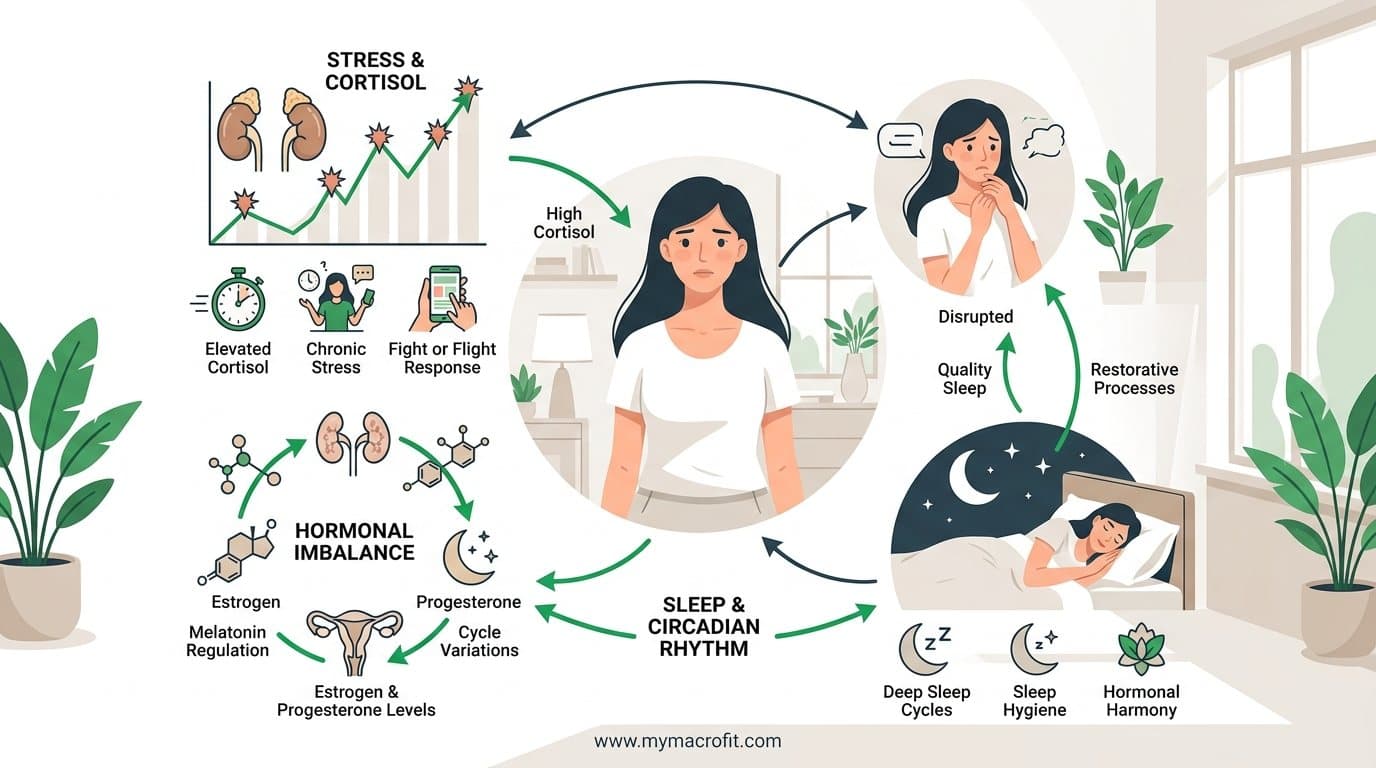
How Cortisol Affects Women's Weight, Hormones, and Sleep

RHC · Pre/Postnatal Fitness Specialist
Cortisol's effects on the female hormonal system extend far beyond simple stress responses. Women are more sensitive to HPA (stress axis) activation than men, and the interaction between cortisol and sex hormones creates specific vulnerability patterns that affect menstrual cycles, fertility, weight, sleep, and long-term hormonal health.
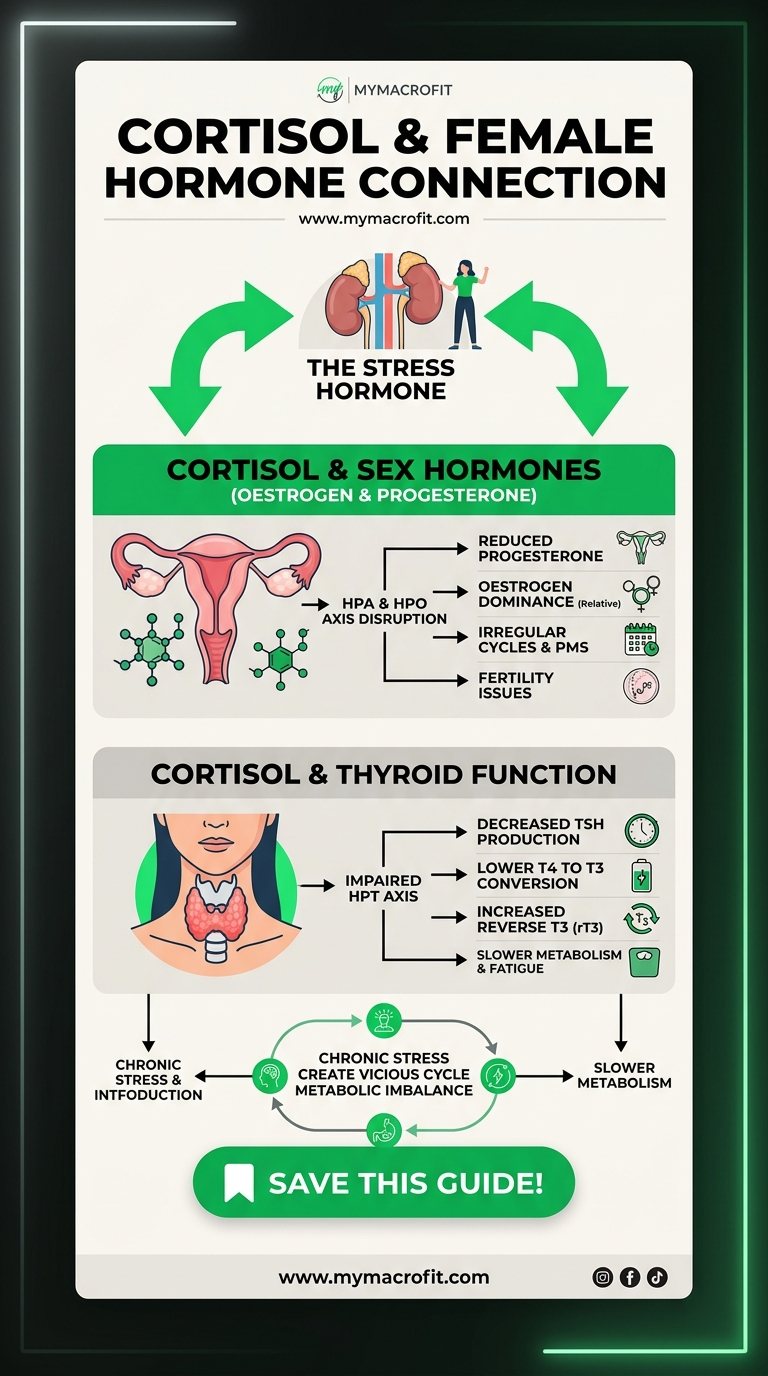
The Cortisol-Sex Hormone Connection
The Pregnenolone Steal
All steroid hormones, including cortisol, oestrogen, progesterone, and testosterone, are synthesised from cholesterol via pregnenolone (the "mother hormone").
When the adrenal glands are chronically stressed and producing high cortisol, pregnenolone is preferentially directed toward cortisol synthesis. This is sometimes called the "pregnenolone steal", the substrate that would have become oestrogen and progesterone is instead converted to cortisol.
The result: under chronic stress, sex hormone production is suppressed. This isn't a metaphor, it's a real biochemical competition for limited precursor.
Cortisol and Progesterone
Of the sex hormones, progesterone is most directly suppressed by high cortisol:
Why progesterone is particularly vulnerable:
- Progesterone and cortisol are chemically similar and compete for the same receptors
- Cortisol excess can occupy progesterone receptors, blocking progesterone's effects even when progesterone levels appear normal on testing
- High cortisol directly suppresses the LH surge required for ovulation, reducing progesterone production in the luteal phase
Signs of cortisol-driven progesterone insufficiency:
- Short luteal phase (under 10 days between ovulation and period)
- PMS symptoms (low progesterone = oestrogen dominance relative to progesterone)
- Irregular or missed periods
- Difficulty conceiving
Cortisol and Oestrogen
The cortisol-oestrogen relationship is more complex:
Short-term: Cortisol can reduce oestrogen production through pregnenolone steal.
Long-term with high body fat: Cortisol promotes visceral fat accumulation, and visceral fat contains aromatase, converting androgens to oestrogen peripherally. This can create oestrogen excess (dominance) alongside adrenal cortisol excess simultaneously.
Reduced SHBG: Cortisol reduces sex hormone binding globulin, increasing free (unbound) oestrogen, altering the hormonal balance even when total oestrogen appears normal.
Cortisol and Thyroid Hormones
High cortisol impairs thyroid function through two mechanisms:
Reduces T4 to T3 conversion: T3 (the active thyroid hormone) is produced by converting T4 in peripheral tissues. Cortisol inhibits the enzyme (deiodinase) responsible for this conversion, reducing active T3 even when TSH and T4 are normal.
Increases reverse T3 (rT3): A metabolically inactive form of thyroid hormone that competes with active T3. Chronic stress increases rT3 production, effectively blocking thyroid hormone action.
This explains why women under chronic stress often have thyroid-like symptoms (fatigue, weight gain, cold sensitivity, brain fog) despite technically "normal" thyroid function tests.
Cortisol and Sleep
Cortisol should be low in the evening, allowing melatonin to rise and sleep to occur. When cortisol is elevated in the evening:
- Difficulty falling asleep despite tiredness
- Waking in the early hours (3-4am) with racing thoughts
- Light, unrefreshing sleep
- Morning fatigue despite hours in bed
Poor sleep then further elevates cortisol the following day, creating a cycle that's self-perpetuating.
Cortisol Across the Menstrual Cycle
Women's HPA axis reactivity changes across the menstrual cycle:
Follicular phase: Oestrogen has a modulating effect on cortisol reactivity, stress responses are somewhat buffered.
Luteal phase: Lower oestrogen and higher progesterone reduce this buffer. HPA reactivity increases, the same stressor produces a larger cortisol response in the luteal phase than the follicular phase.
Practical implication: Sleep is more cortisol-sensitive in the luteal phase. Stress management is more important in the week before menstruation than at other times.
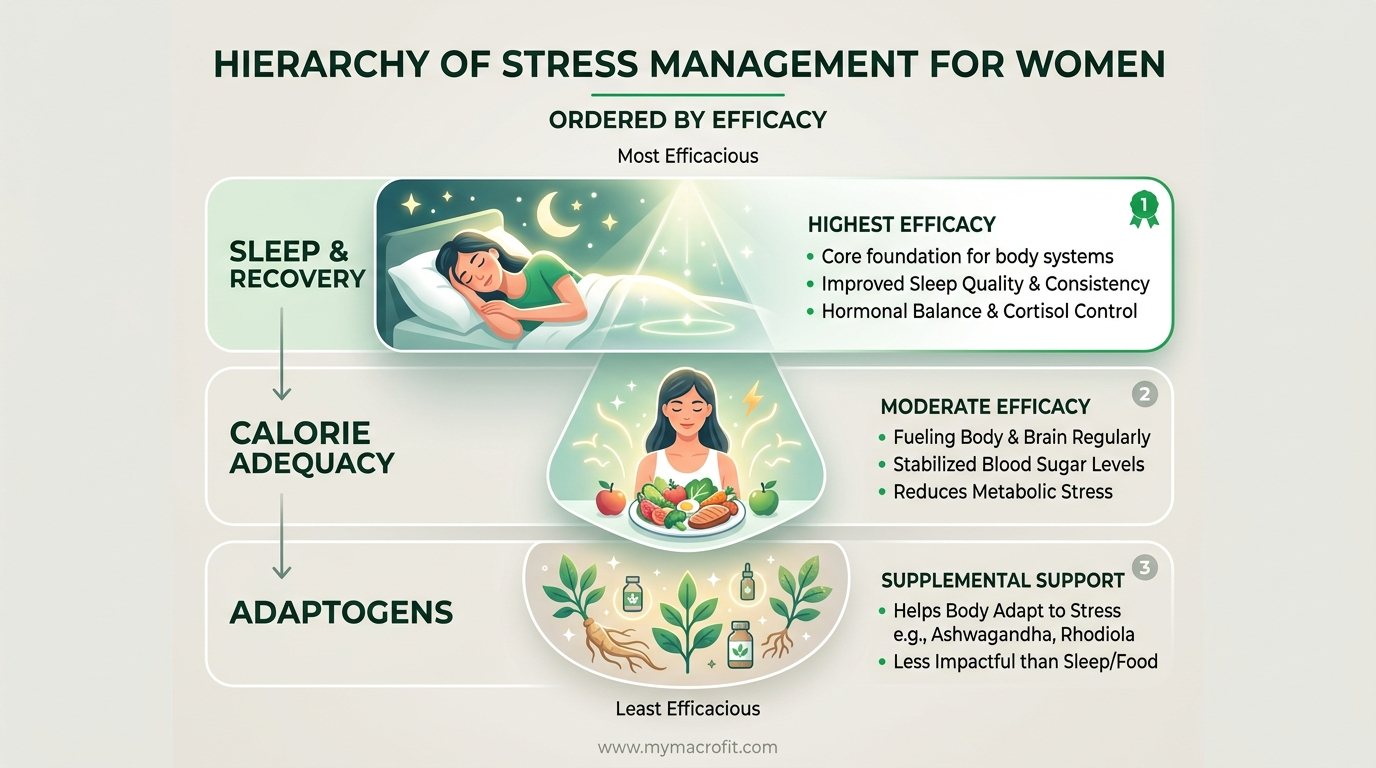
Evidence-Based Cortisol Management for Women
1. Sleep Architecture First
Cortisol follows a precise daily rhythm. Disrupting sleep disrupts this rhythm, elevating cortisol at times it should be low. The single most effective cortisol management intervention is maintaining consistent sleep and wake times (even weekends) to protect the circadian cortisol pattern.
2. Moderate Exercise, Not Maximum
Exercise is a cortisol stimulus. Moderate exercise (30-45 minutes, moderate intensity) improves cortisol regulation over time. Very high intensity training (2+ hours/day, multiple HIIT sessions without recovery) produces chronically elevated cortisol, particularly problematic for women with already high life stress.
3. Adequate Calorie Intake
Under-eating is a significant cortisol trigger. Very large calorie deficits (over 700-800 kcal/day) activate the HPA axis as a starvation response. Women attempting aggressive weight loss alongside high life stress create conditions for maximal cortisol elevation, counterproductive for both fat loss and hormonal health.
4. Adaptogenic Herbs
Adaptogens are plant compounds that help the body regulate the stress response:
Ashwagandha (KSM-66): Strongest evidence of any adaptogen. 300-600mg/day consistently shows cortisol reduction (15-30%) in RCTs.
Rhodiola rosea: Good evidence for reducing stress fatigue and cortisol at 200-400mg/day.
Holy basil (tulsi): Emerging evidence for HPA axis modulation; generally safe.
5. Magnesium
The HPA axis requires magnesium for regulation. Magnesium deficiency (common in Western diets) is associated with elevated cortisol reactivity. Magnesium glycinate 200-400mg in the evening supports sleep and reduces evening cortisol.
6. Addressing Psychological Stress Directly
No supplement reverses the cortisol elevation from sustained psychological stress. Identifying and addressing the primary stress sources, workload, relationship stress, financial anxiety, is the only complete solution. Therapy, boundary-setting, and stress source reduction are the highest-leverage interventions.
The Bottom Line
Cortisol's effects on the female hormonal system are pervasive, suppressing sex hormone production, impairing thyroid function, disrupting sleep, and promoting visceral fat storage. Women are more sensitive to these effects than men, and the interaction with the menstrual cycle creates specific vulnerability windows.
Prioritising adequate sleep, moderate (not excessive) exercise, sufficient calorie intake, and active stress management addresses the root cause. Ashwagandha and magnesium provide meaningful support. The goal isn't eliminating stress, it's preventing the chronic, sustained activation that impairs the entire hormonal ecosystem.
Save & share on Pinterest
Click any card to pin it — or share with someone who needs it.
How Cortisol Affects Women's Weight, Hormones, and Sleep
How cortisol specifically affects women's hormonal health, its interaction with oestrogen, progester…
How cortisol specifically affects women's hormonal health, its interaction with …
Read the full guide: How Cortisol Affects Women's Weight, Hormones, and Sleep
Free fitness tools
How Cortisol Affects Women's Weight, Hormones, and Sleep — use our free calculators for instant pers…
Pinterest opens in a new tab. You can edit the description before saving.
Frequently Asked Questions
How does cortisol affect oestrogen in women?+
Does stress delay your period?+
What is the best time to test cortisol?+
What are the most effective ways for women to lower cortisol?+
Is my hormonal weight gain caused by cortisol, and what can I do about it?+
About the Author

I'm a registered health coach and pre/postnatal specialist. I look at the whole person, your sleep, your stress, your hormones, because the number on the scale is only ever part of the story.
View full profile →