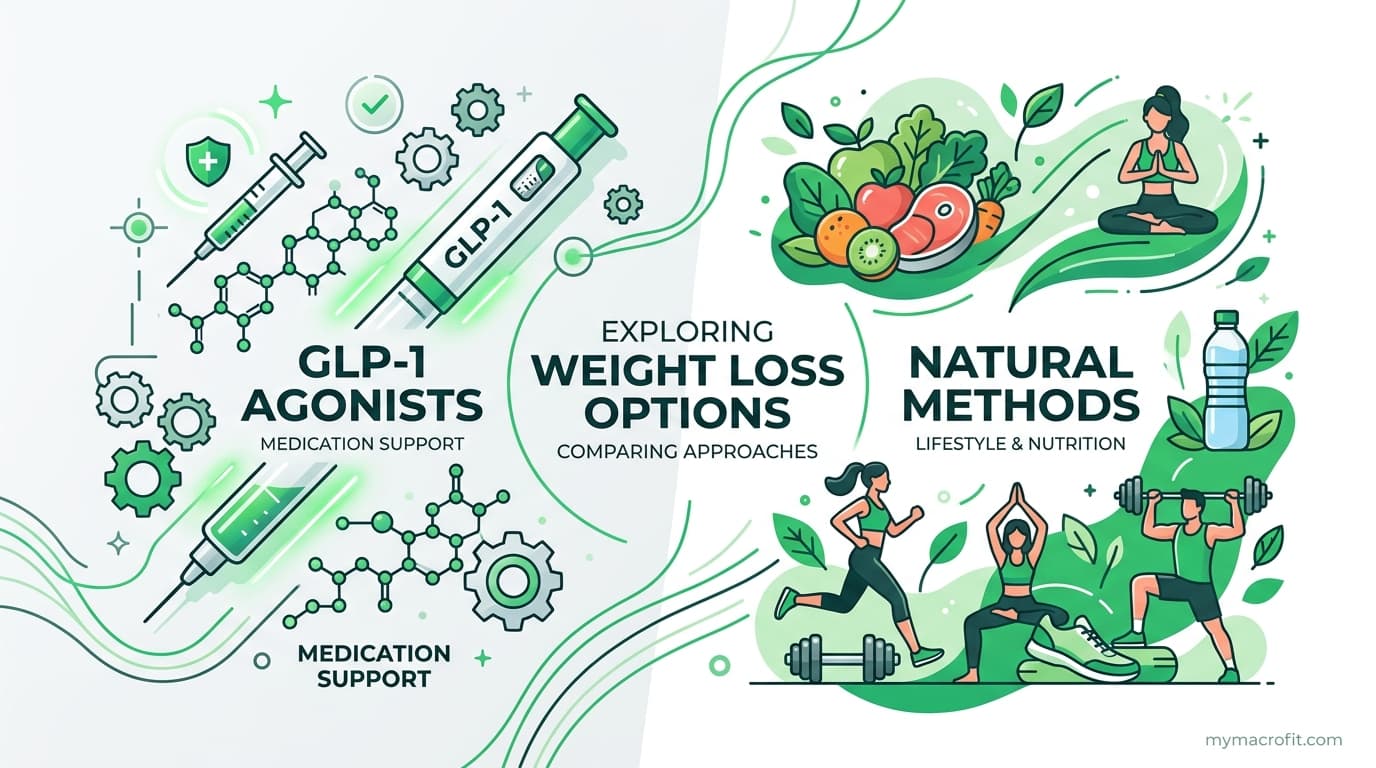
GLP-1 vs Natural Weight Loss: How the Results Actually Compare

CN · Metabolic Health Coach
GLP-1 medications have changed the weight-loss conversation more than anything in a generation. The trial numbers are genuinely impressive, and the before-and-afters are everywhere. So the obvious question is the one worth answering honestly: how do they actually compare to losing weight the old-fashioned way, and what does each approach really involve?
This isn't a "medication bad, natural good" piece, or the reverse. It's a straight comparison of what the evidence shows.
What the trials actually found
Start with the headline numbers, because they're the source of most of the confusion.
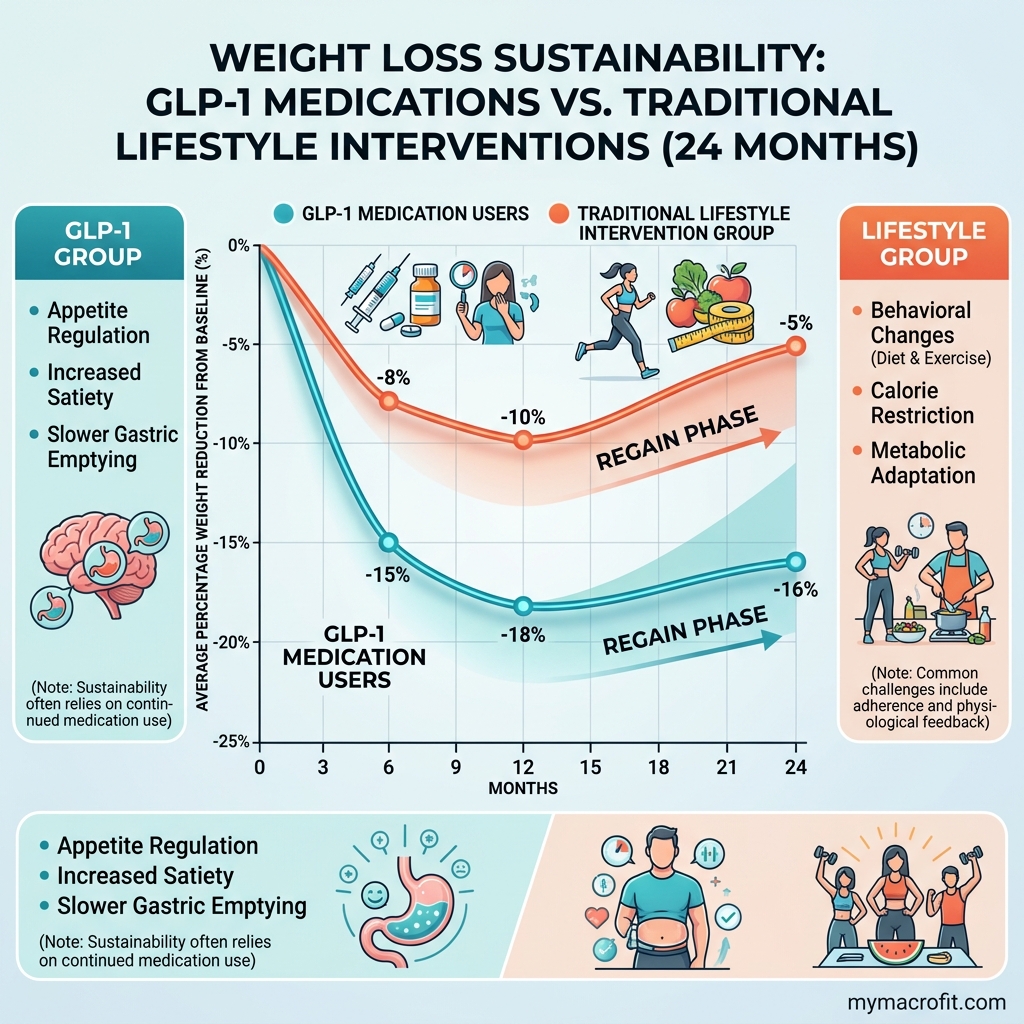
- Semaglutide (Wegovy, the weight-loss dose of the drug in Ozempic) averaged about 15% of total body weight lost over 68 weeks in the STEP 1 trial.
- Tirzepatide (Zepbound) averaged about 20% over 72 weeks in SURMOUNT-1.
- Structured lifestyle-only programmes, diet plus activity with support, average around 3 to 9% over a year.
So medication roughly doubles or triples the average. But notice two things the marketing skips: every medication arm also included a diet and exercise programme, so the numbers already bake in lifestyle change, and the spread is huge, with some people losing 30% and roughly one in seven losing very little.
You can see how the trial averages scale to your own weight with our GLP-1 Weight Projection Calculator, it's an educational tool, not a prediction.
The thing both approaches share
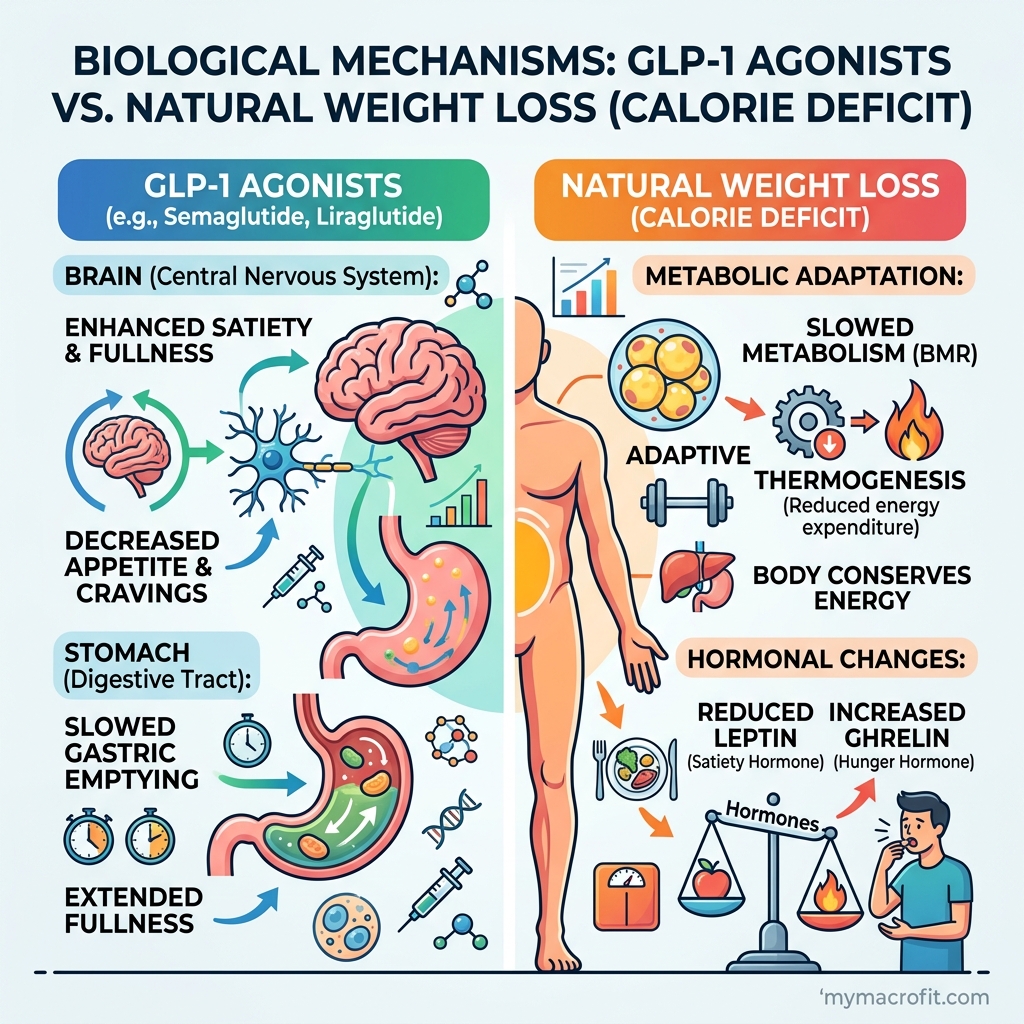
Here's what gets lost in the medication-versus-natural framing: they work through the same mechanism. GLP-1 drugs don't burn fat directly. They reduce appetite, which makes a calorie deficit far easier to sustain. The deficit is still doing the work.
That means the playbook is identical either way:
- A moderate calorie deficit you can actually live with.
- High protein, 1.6 to 2.2g per kg, to protect muscle as you lose.
- Resistance training two to three times a week for the same reason.
- Enough sleep to keep hunger hormones and cravings in check.
The medication makes the first point easier by quietening hunger. It does nothing for the other three, which is exactly why people who skip them lose muscle and rebound.
The trade-offs nobody puts on the sales page
Muscle loss. Rapid weight loss takes muscle with it. Analyses suggest 25 to 40% of weight lost on GLP-1s can be lean mass when people don't train or eat enough protein. Losing weight but a third of it as muscle leaves you weaker with a slower metabolism, the classic rebound setup.
The off-ramp. When the medication stops, appetite returns. The STEP 1 extension showed roughly two-thirds of lost weight regained within a year of stopping. Whatever you didn't turn into a habit comes undone.
Cost and side effects. Medication runs into the hundreds per month and brings nausea, gallbladder issues, and other effects for some people. Natural weight loss is free and side-effect-free, but demands you white-knuckle the appetite that medication would have softened.

The two approaches, side by side
Stripping out the hype, here's the honest comparison on the factors that actually matter:
| Factor | GLP-1 medication | Structured lifestyle |
|---|---|---|
| Average loss (trials) | ~15-20% over ~16 months | ~3-9% over a year |
| How it works | Reduces appetite | Reduces appetite via food choices |
| The actual mechanism | Calorie deficit | Calorie deficit |
| Cost | Hundreds/month, often uncovered | Essentially free |
| Side effects | Nausea, GI, others for some | None |
| Keeping it off | Hard if habits don't change | Built on habits by default |
| Muscle risk | High without protein + training | High without protein + training |
Read that last row twice. The muscle risk is identical, because rapid loss without protein and lifting costs you lean mass either way. The medication changes how easy the deficit is to sustain, not the rules of what protects your body while you lose.
Why the medication window is the opportunity
If someone does use a GLP-1 under medical supervision, the smartest framing I've seen is to treat the appetite suppression as a window, not a cure. For the months that hunger is quietened, it's far easier to practise the habits that have to outlast the drug: building meals around protein, getting to the gym, sleeping properly, learning what reasonable portions feel like.
The people who keep the weight off are the ones who used that window to rewrite their defaults. The people who regain are the ones who treated the drug as the whole plan and changed nothing underneath it. That's the difference between the medication being a tool and being a temporary patch, and it's entirely down to what you build while it's working.
The honest bottom line
If you have a lot of weight to lose and have genuinely struggled with appetite despite real effort, GLP-1 medication, under medical supervision, can be a powerful tool. If your situation is more moderate, a structured lifestyle approach gets you meaningful results with no cost or side effects, just more reliance on willpower.
Either way, the fundamentals decide your outcome. If you want to lock those in, the natural GLP-1 guide covers how to stimulate your own fullness hormone through food, and the free Macro Guide gives you the calorie and protein targets to build on.
Sources
- Semaglutide (Wegovy) for weight loss, NHS.
- Prescription medications to treat overweight and obesity, National Institute of Diabetes and Digestive and Kidney Diseases (NIH).
- Obesity, NHS.
- Obesity and overweight, World Health Organization.
Save & share on Pinterest
Click any card to pin it — or share with someone who needs it.
GLP-1 vs Natural Weight Loss: How the Results Actually Compare
An evidence-based comparison of GLP-1 medications like Ozempic and Wegovy versus a structured diet-a…
An evidence-based comparison of GLP-1 medications like Ozempic and Wegovy versus…
Read the full guide: GLP-1 vs Natural Weight Loss: How the Results Actually Compare
Try the free GLP-1 Weight Projection Calculator
GLP-1 vs Natural Weight Loss: How the Results Actually Compare — use our free calculators for instan…
Pinterest opens in a new tab. You can edit the description before saving.
Ready to get your numbers?
Free calculator, instant results, no signup required.
Frequently Asked Questions
How much more weight do you lose on GLP-1 medication versus dieting?+
Do you keep the weight off after stopping GLP-1 medication?+
Is it cheaper to lose weight naturally?+
Can you boost GLP-1 naturally?+
Should I consider GLP-1 medication?+
Is losing weight slowly and naturally healthier than using medication?+
About the Author

I'm a certified nutritionist and metabolic health coach. I went deep on keto and metabolism after reversing my own insulin resistance, and I'd rather give you the actual numbers than a hand-wave.
View full profile →