Gut Health for Beginners: What It Is and Why It Affects Your Weight

RHC · Pre/Postnatal Fitness Specialist
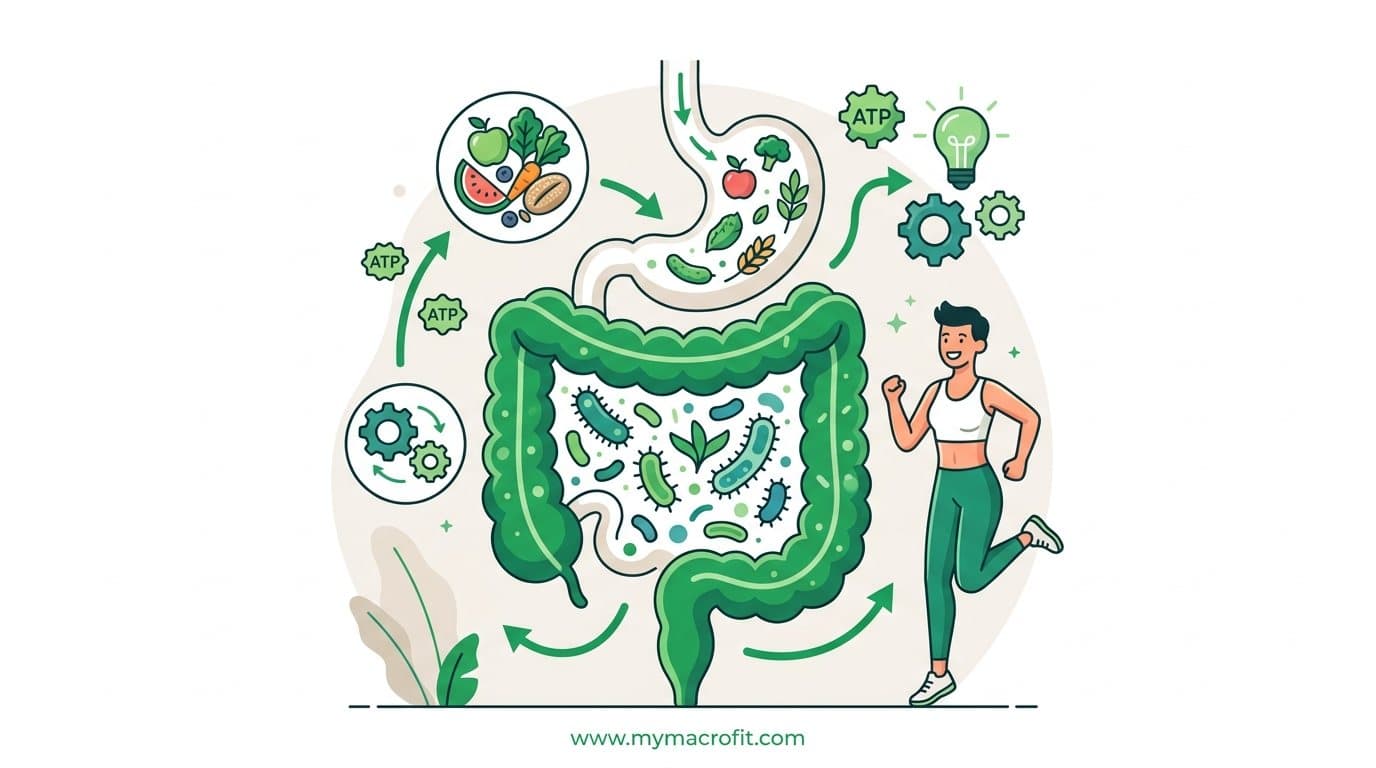
Your gut contains approximately 100 trillion microorganisms, collectively weighing 1-2kg, that influence everything from how you digest food to how you feel mentally. Understanding this system, and how to support it, is increasingly recognised as fundamental to weight management and overall health.
The Gut Microbiome: What It Actually Does
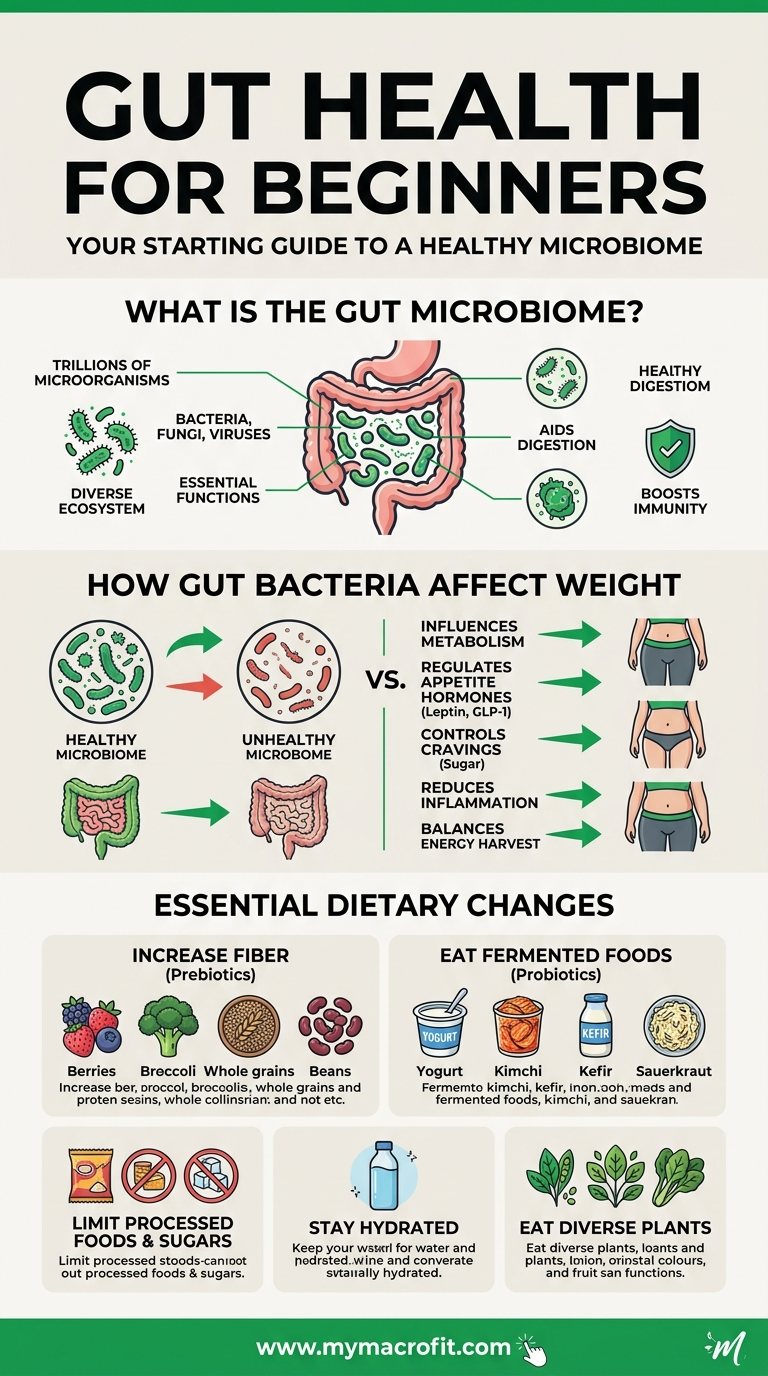
Your gut microbiome isn't a passive passenger, it's an active metabolic organ.
Energy metabolism: Gut bacteria ferment dietary fibre that human enzymes cannot digest, producing short-chain fatty acids (SCFAs), primarily butyrate, propionate, and acetate. These SCFAs:
- Provide 5-10% of your daily calorie intake
- Regulate appetite hormones (GLP-1 and PYY, the satiety signals)
- Improve insulin sensitivity
- Reduce systemic inflammation
Immune regulation: 70% of the immune system is located in the gut lining. The microbiome trains and moderates immune responses, dysbiosis (imbalanced microbiome) is associated with chronic low-grade inflammation, which underlies obesity, type 2 diabetes, and cardiovascular disease.
Neurotransmitter production: The gut produces approximately 90% of the body's serotonin and significant quantities of dopamine precursors. The gut-brain axis (bidirectional communication via the vagus nerve) explains why gut health affects mood and mental health.
Vitamin synthesis: Gut bacteria produce vitamin K2 and several B vitamins, contributing to nutritional status beyond what diet alone provides.
Gut Health and Weight: The Mechanisms
Microbiome differences in obesity: Studies consistently show that the gut microbiomes of obese and lean individuals differ measurably in composition. Obese individuals tend to have lower diversity and more bacteria from phyla associated with greater energy extraction from food.
The energy extraction pathway: Some gut bacteria strains are more efficient at extracting calories from food, meaning two people eating identical diets can absorb different calorie amounts depending on their microbiome composition.
Leaky gut and inflammation: Dysbiosis compromises intestinal barrier integrity, allowing bacterial components to enter the bloodstream and trigger systemic inflammation. Chronic low-grade inflammation promotes insulin resistance and visceral fat accumulation.
Appetite hormone regulation: SCFA production from fibre fermentation directly stimulates PYY and GLP-1 release, the same hormones that GLP-1 agonist medications (Ozempic) target. A fibre-rich diet that feeds beneficial bacteria can naturally increase these satiety signals.
The Fibre Foundation
The single most evidence-based gut health intervention: increase dietary fibre.
The average UK adult eats 18g fibre/day against a 30g/day target. Most people are significantly under-feeding their gut microbiome.
Dietary fibre serves as "prebiotic", food for beneficial gut bacteria. Increasing fibre intake:
- Feeds Bifidobacterium and Lactobacillus strains (associated with healthy weight)
- Increases SCFA production
- Improves gut barrier integrity
- Reduces inflammatory markers
Best fibre sources for gut health: Legumes (lentils, chickpeas, beans), oats (beta-glucan), flaxseed, asparagus, garlic, onions, chicory, leeks, Jerusalem artichoke, and berries.
Use our Fibre Intake Calculator to see your current intake and the gap to close.
The Diversity Principle
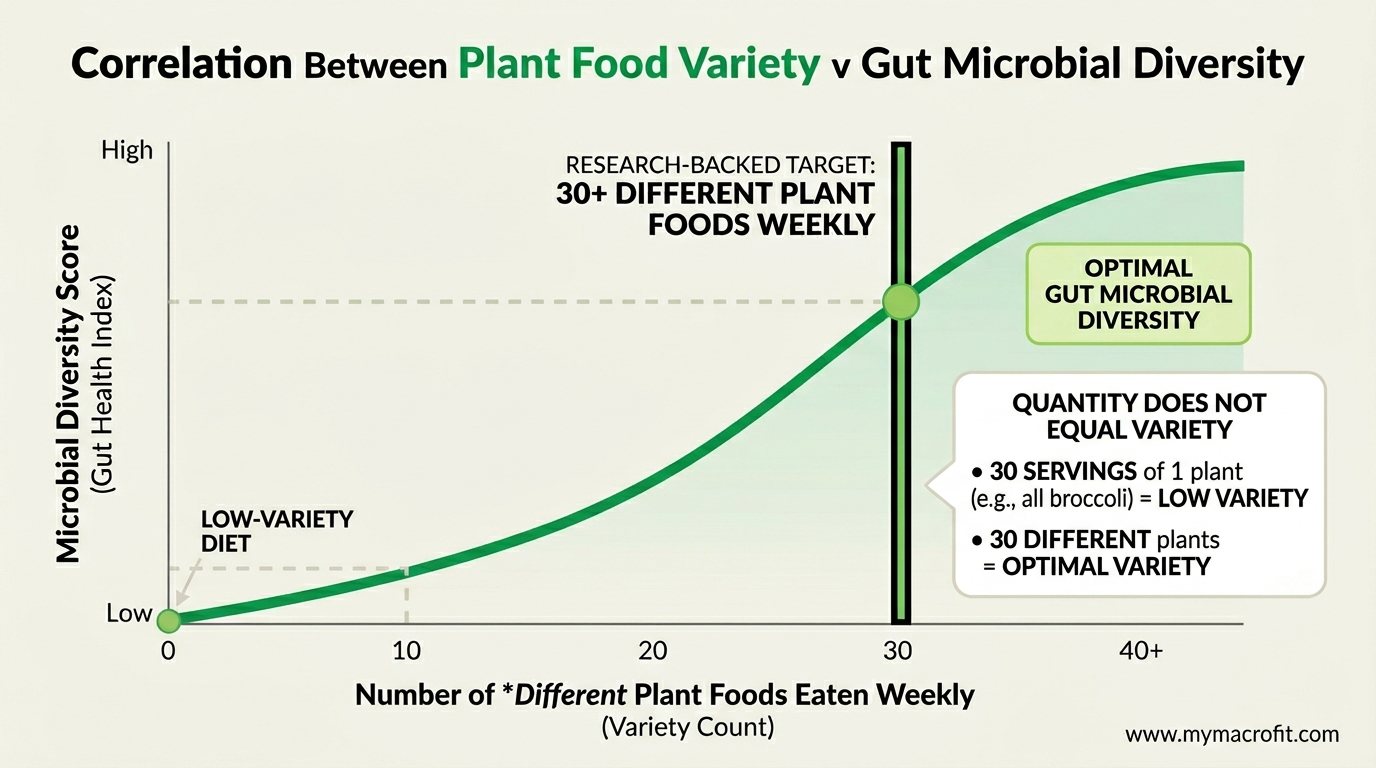
Gut microbiome diversity, the number of different bacterial species, is the strongest single predictor of gut health. Higher diversity correlates with lower BMI, better metabolic health, and lower inflammatory markers.
How to increase diversity: Eat a wide variety of plant foods. Research (the British Gut Project and Human Food Project) found that people who eat 30+ different plant foods per week have significantly higher microbiome diversity than those eating fewer than 10.
The practical target: Count plant variety, not servings. Different vegetables, fruits, legumes, wholegrains, nuts, and seeds all contribute. Herbs and spices count. Aim for 20-30 different plant foods per week, much more achievable than it sounds.
The Probiotic Question
Probiotic supplements (live bacteria in capsule or fermented food form) have evidence for specific conditions (antibiotic-associated diarrhoea, IBS) but mixed evidence for general gut health improvement.
Fermented foods (preferred over supplements):
- Live yogurt, kefir (dairy or water-based)
- Sauerkraut (unpasteurised)
- Kimchi
- Kombucha
- Miso, tempeh
These provide live bacteria plus the food matrix that supports their survival. Regular consumption of 1-2 servings of fermented foods daily is associated with increased microbiome diversity in research.
When supplements are appropriate: After antibiotic use (to reseed the microbiome), for specific diagnosed gut conditions, or when fermented foods aren't consistently achievable.
Gut-Harming Habits
Excess alcohol: Damages intestinal barrier integrity and kills beneficial bacteria. Chronic heavy drinking produces marked dysbiosis.
Highly processed foods: Ultra-processed foods contain emulsifiers and additives that disrupt gut barrier integrity. Populations eating primarily ultra-processed food have measurably lower gut diversity.
Chronic stress: The gut-brain axis means chronic stress directly disrupts gut function, altering motility, increasing permeability, and changing bacterial composition.
Excessive antibiotics: Antibiotics kill beneficial bacteria as well as pathogens. Necessary when prescribed, but not for viral infections. Each antibiotic course measurably reduces diversity for 1-2 months.
The Bottom Line
Gut health influences weight through appetite hormones, inflammation, insulin sensitivity, and energy extraction from food. The most impactful improvements come from increasing dietary fibre (30g/day target), eating 20-30 different plant foods per week, and regularly including fermented foods. These changes measurably improve microbiome diversity and metabolic function.
Save & share on Pinterest
Click any card to pin it — or share with someone who needs it.
Gut Health for Beginners: What It Is and Why It Affects Your Weight
A beginner's guide to gut health, what the gut microbiome is, how it influences weight and metabolis…
A beginner's guide to gut health, what the gut microbiome is, how it influences …
Read the full guide: Gut Health for Beginners: What It Is and Why It Affects Your Weight
Try the free Fibre Intake Calculator
Gut Health for Beginners: What It Is and Why It Affects Your Weight — use our free calculators for i…
Pinterest opens in a new tab. You can edit the description before saving.
Ready to get your numbers?
Free calculator, instant results, no signup required.
Frequently Asked Questions
What is the gut microbiome?+
Can improving gut health help you lose weight?+
What are the signs of poor gut health?+
What are the best first steps to improve my gut health?+
Do I need probiotic supplements for a healthy gut?+
About the Author

I'm a registered health coach and pre/postnatal specialist. I look at the whole person, your sleep, your stress, your hormones, because the number on the scale is only ever part of the story.
View full profile →