Hashimoto's and Weight Loss: What to Eat and What to Avoid

RHC · Pre/Postnatal Fitness Specialist
Hashimoto's thyroiditis is the most common cause of hypothyroidism in developed countries, and it affects women 7-10 times more often than men. Beyond the thyroid medication conversation, there's a significant dietary dimension that many people with Hashimoto's don't receive clear guidance on.
This guide covers what the evidence shows about diet, specific nutrients, and fat loss with this autoimmune condition.
Understanding How Hashimoto's Affects Weight
Hashimoto's thyroiditis is an autoimmune condition in which the immune system attacks thyroid tissue. Over time, this reduces thyroid hormone production, causing hypothyroidism.
Thyroid hormones (T4 and T3) regulate basal metabolic rate. When production is insufficient:
- BMR decreases: The body burns 10-30% fewer calories than expected at the same bodyweight
- Fatigue: Reduced energy impairs exercise capacity and NEAT
- Cold sensitivity: Impaired thermogenesis
- Water retention: Myxoedema (thyroid-related fluid retention)
- Constipation: Reduced gut motility
With appropriate levothyroxine (T4 replacement) medication, many of these effects normalise. However, some people with Hashimoto's feel persistently symptomatic even with TSH in range, often because T4 to T3 conversion is impaired, leaving active T3 levels suboptimal.
Before focusing on diet: Ensure your medication is appropriate. If TSH is controlled but you still have symptoms, discuss free T3 and T4 testing with your GP or endocrinologist. Diet addresses the autoimmune inflammation and nutrient support, it doesn't replace thyroid hormone replacement when needed.
The Dietary Framework for Hashimoto's
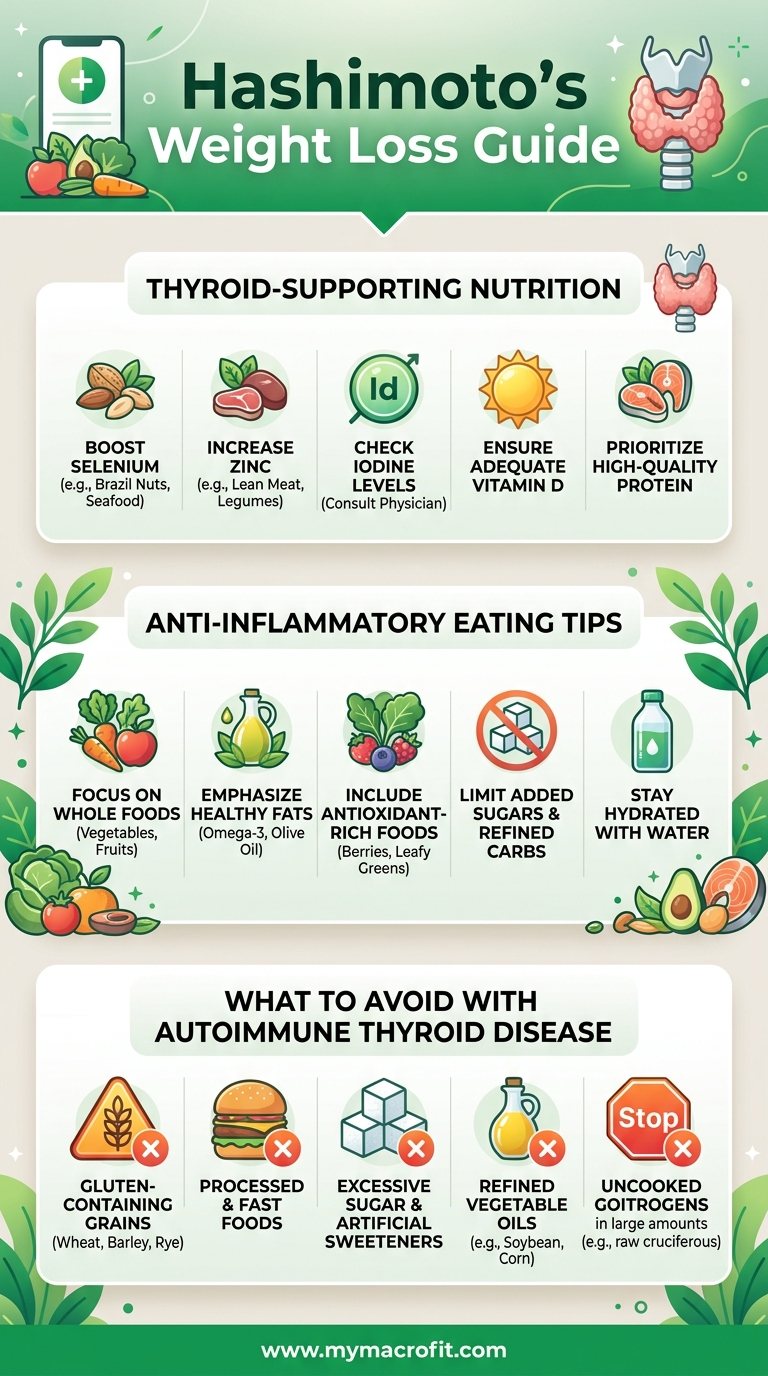
1. Anti-Inflammatory Foundation
Hashimoto's is an autoimmune condition, chronic inflammation is both a cause and consequence of the ongoing immune attack on thyroid tissue. Reducing dietary inflammatory load is the primary dietary goal.
Anti-inflammatory dietary pattern:
- Abundant colourful vegetables (6-8 servings/day)
- Fatty fish 2-3x/week (omega-3 reduces pro-inflammatory cytokines)
- Olive oil as primary cooking fat
- Berries and antioxidant-rich fruits
- Turmeric (with black pepper for bioavailability)
- Ginger
- Green tea
Reduce:
- Refined sugar and high-fructose corn syrup
- Ultra-processed foods (trans fats, refined seed oils)
- Excessive alcohol
- High-glycaemic meals (spike inflammatory markers)
2. Calorie Calculation Adjustment
Because Hashimoto's reduces metabolic rate, use our TDEE Calculator and then reduce the result by 10-20% as a starting point, reflecting the metabolic suppression of hypothyroidism.
Validate against your actual weekly weight trend and adjust. With well-managed Hashimoto's on medication, TDEE may be closer to normal, but the adjustment accounts for the common scenario of partially suppressed metabolism.
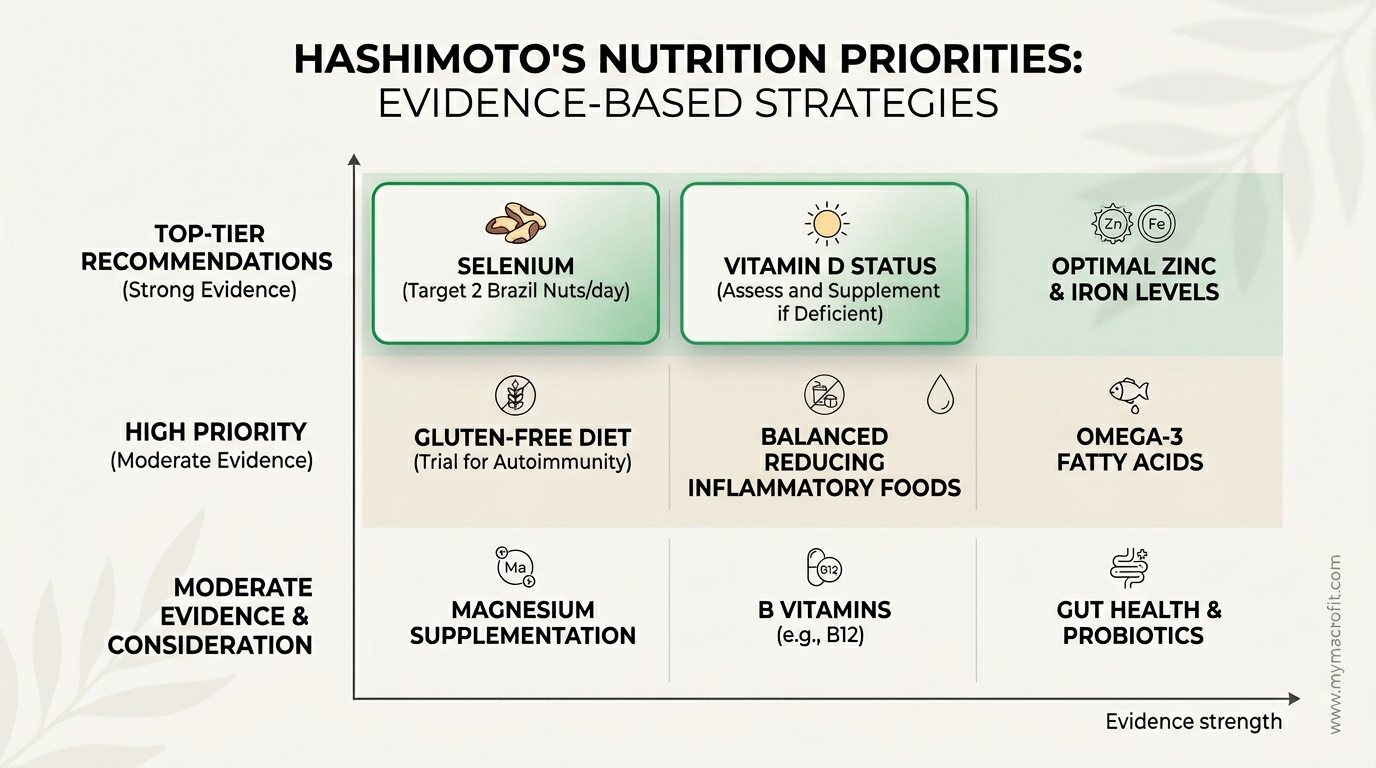
3. Gluten: The Evidence-Based Approach
The Hashimoto's-gluten connection is real but more nuanced than the "everyone with Hashimoto's must be gluten-free" approach:
Firmly established: Hashimoto's and coeliac disease co-occur at higher rates than chance. If you haven't been tested for coeliac, request an anti-tTG IgA test.
In coeliac-positive Hashimoto's: Strict gluten-free diet significantly reduces thyroid antibodies and may improve thyroid function.
In coeliac-negative Hashimoto's: Evidence for gluten-free diet is weaker. Some studies show reduction in TPO antibodies; others show no difference. A 3-6 month gluten elimination trial while monitoring antibody levels is reasonable, if no improvement, reintroduction is appropriate.
The risk of unnecessary gluten elimination: reduced fibre intake, poorer gut microbiome diversity, nutritional gaps from avoiding whole grains.
4. Key Nutrients for Thyroid Function
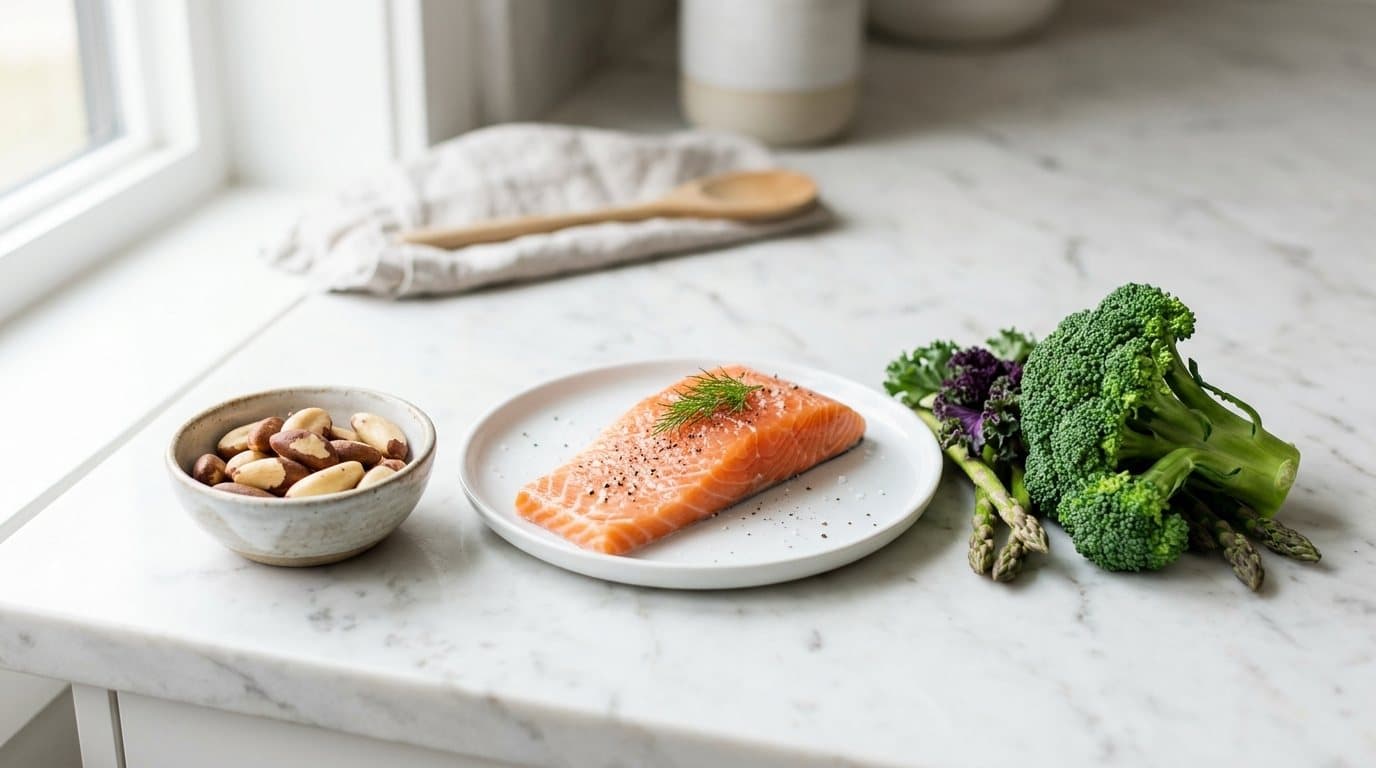
Selenium (the most important): Required for thyroid peroxidase (the enzyme that synthesises thyroid hormones) and for T4 to T3 conversion. Multiple RCTs demonstrate 200mcg selenium/day reduces TPO antibody levels by 40-60% in Hashimoto's.
Best food source: 2 Brazil nuts/day (200mcg selenium), though note wild variation in selenium content. Supplementation (selenomethionine, 200mcg/day) is more reliable.
Iodine: a complex case
Iodine is required for thyroid hormone synthesis. However, excessive iodine intake can worsen Hashimoto's, paradoxically increasing autoimmune activity. The guidance:
- Severe deficiency must be corrected (dietary sources: seafood, dairy, eggs, iodised salt)
- Avoid high-dose iodine supplements unless confirmed deficient
- Avoid excessive kelp/seaweed consumption (extremely high iodine content)
Iron: Required for thyroid peroxidase activity. Iron deficiency impairs thyroid hormone synthesis independently of iodine or selenium. Have ferritin levels checked (optimal range for thyroid function: ferritin 70-100 ng/mL for many clinicians, not just "within range").
Zinc: Supports T4 to T3 conversion and thyroid hormone synthesis. Found in: pumpkin seeds, beef, oysters, legumes.
Vitamin D: Low vitamin D is associated with higher TPO antibody levels. Supplementation to maintain 25(OH)D above 75 nmol/L is generally recommended.
5. Goitrogens: The Nuance
Goitrogens are compounds in certain foods (particularly raw cruciferous vegetables) that can interfere with iodine uptake. This is frequently used to advise against eating broccoli, kale, and cabbage with Hashimoto's.
The reality: Cooking destroys most goitrogen activity. Raw cruciferous vegetables in normal dietary amounts do not pose a clinically significant risk for most people with Hashimoto's who are iodine-sufficient. The anti-inflammatory and DIM (oestrogen metabolism) benefits of cruciferous vegetables outweigh the theoretical goitrogen concern for most people.
Practical guidance: Cook cruciferous vegetables rather than eating large amounts raw; maintain adequate iodine through diet.
Weight Loss With Hashimoto's: The Practical Protocol
Step 1: Ensure medication is appropriately dosed and monitored (TSH, free T4, free T3 with your doctor).
Step 2: Calculate adjusted TDEE (standard TDEE × 0.85-0.90 as a starting estimate).
Step 3: Set a 300-400 kcal deficit (slightly more moderate than the standard 500 kcal to avoid excessive cortisol elevation, which worsens autoimmune activity).
Step 4: Protein at 2-2.2g/kg, preserves muscle despite suppressed metabolic rate.
Step 5: Apply anti-inflammatory dietary pattern (Mediterranean base) with attention to selenium, vitamin D, and iron.
Step 6: Resistance training 3x/week, improves insulin sensitivity and maintains muscle mass, both of which are compromised in hypothyroidism.
Step 7: Monitor weekly weight average and adjust calorie target based on actual trend (not calculator estimate).
The Bottom Line
Weight loss with Hashimoto's is possible with appropriately managed thyroid medication and an adjusted dietary approach. The key differences from standard fat loss advice: a slightly lower calorie target (reflecting suppressed metabolic rate), selenium supplementation (specific evidence for reducing autoimmune activity), anti-inflammatory dietary pattern, and attention to iron and vitamin D status.
Gluten elimination is worth a trial, particularly if coeliac disease is confirmed or strongly suspected, but isn't universally necessary. Cook cruciferous vegetables; don't avoid them.
Save & share on Pinterest
Click any card to pin it — or share with someone who needs it.
Hashimoto's and Weight Loss: What to Eat and What to Avoid
How Hashimoto's thyroiditis affects weight loss, the dietary approaches with the best evidence, and …
How Hashimoto's thyroiditis affects weight loss, the dietary approaches with the…
Read the full guide: Hashimoto's and Weight Loss: What to Eat and What to Avoid
Try the free TDEE Calculator
Hashimoto's and Weight Loss: What to Eat and What to Avoid — use our free calculators for instant pe…
Pinterest opens in a new tab. You can edit the description before saving.
Ready to get your numbers?
Free calculator, instant results, no signup required.
Frequently Asked Questions
Why is it hard to lose weight with Hashimoto's?+
Should you avoid gluten with Hashimoto's?+
What vitamins help Hashimoto's?+
Can diet replace thyroid medication for Hashimoto's?+
Is iodine good or bad for Hashimoto's?+
About the Author

I'm a registered health coach and pre/postnatal specialist. I look at the whole person, your sleep, your stress, your hormones, because the number on the scale is only ever part of the story.
View full profile →