Low Progesterone: Signs and What to Eat to Support It

RHC · Pre/Postnatal Fitness Specialist
Progesterone is often called the "calming hormone" or the counterbalance to oestrogen, and its deficiency creates a recognisable pattern of symptoms that significantly affects quality of life. Understanding what drives low progesterone and how nutrition and lifestyle support it gives women genuine tools for addressing one of the most common hormonal imbalances.
What Progesterone Does
Progesterone is produced primarily by the corpus luteum (the remnant of the follicle after ovulation) in the second half of the menstrual cycle. It:
- Counterbalances oestrogen: Prevents oestrogen-driven endometrial proliferation; without progesterone, oestrogen's effects on the uterus and elsewhere go unchecked (oestrogen dominance)
- Supports pregnancy: Maintains the uterine lining; low progesterone is a common cause of early pregnancy loss
- Supports sleep: Progesterone has anxiolytic and sedative properties (it's metabolised to allopregnanolone, which activates GABA receptors, the same pathway as anti-anxiety medications)
- Supports thyroid function: Progesterone enhances thyroid hormone receptor sensitivity
- Reduces water retention: Has a mild anti-aldosterone effect, low progesterone allows more fluid retention
When progesterone is low: The oestrogen that was previously balanced by progesterone acts without opposition, creating the constellation of oestrogen dominance symptoms even when oestrogen itself is normal.
Causes of Low Progesterone
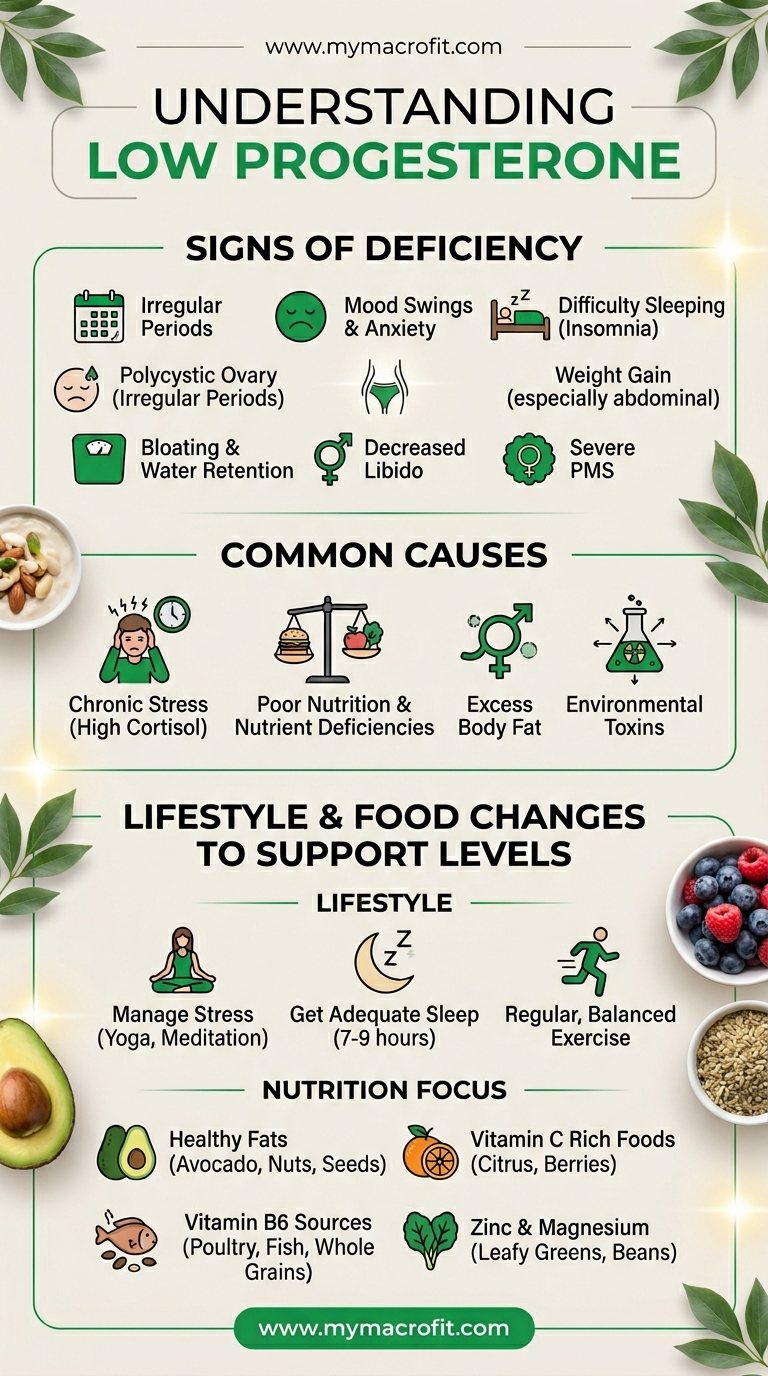
Anovulatory cycles: Progesterone is only produced after ovulation. Cycles that don't include ovulation (common in perimenopause, PCOS, and extreme dietary restriction) produce no progesterone.
Inadequate luteal phase: Even with ovulation, if the corpus luteum doesn't produce enough progesterone (luteal phase deficiency), levels may be insufficient. Signs: luteal phase under 10 days.
Chronic stress (cortisol dominance): As described above, cortisol production competes with progesterone synthesis.
Perimenopause: Progesterone often declines before oestrogen in the perimenopausal transition, creating years of relative oestrogen dominance before oestrogen declines.
Thyroid dysfunction: Hypothyroidism impairs the LH surge required for ovulation, reducing progesterone production.
Under-eating or very low fat intake: Sex hormones are synthesised from cholesterol. Severely calorie-restricted or very low fat diets impair the substrate availability for hormone synthesis.
Over-exercising: Very high exercise volume without adequate calorie intake can suppress GnRH pulsatility, disrupting the LH surge and preventing ovulation (hypothalamic amenorrhea).
The Nutritional Framework for Progesterone Support
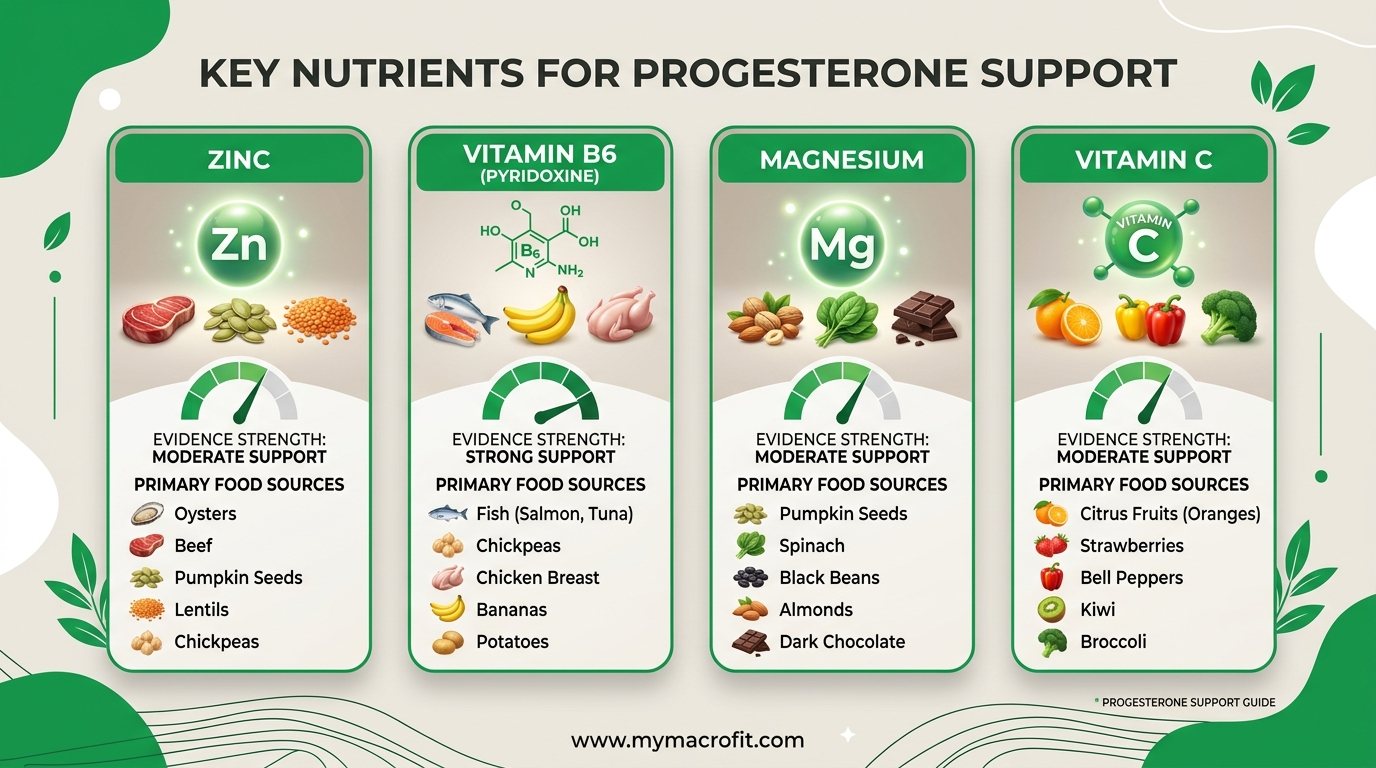
Zinc: The Corpus Luteum Nutrient
The corpus luteum (progesterone-producing structure) has a high zinc concentration. Zinc is required for LH receptor activity (LH signal triggers progesterone production) and for the corpus luteum's progesterone synthesis.
Target: 8mg/day (female RNI), with dietary emphasis on high-zinc foods
Best sources:
- Pumpkin seeds: 7mg/30g
- Oysters: 5mg/oyster
- Beef (lean): 4-5mg/100g
- Cashews: 1.6mg/30g
- Chickpeas: 1.3mg/100g cooked
Vitamin B6: Direct Progesterone Evidence
B6 is one of the few nutrients with direct clinical evidence for progesterone support. Multiple studies show B6 supplementation (50-100mg/day) reduces PMS symptoms, an effect thought to be mediated partly through improved progesterone activity.
B6 is required for the synthesis of neurotransmitters (dopamine, serotonin) that regulate GnRH pulsatility, the hormonal signal from the hypothalamus that initiates ovulation.
Best food sources: Chicken breast (1.1mg/100g), salmon (0.9mg/100g), potatoes (0.4mg/100g), bananas (0.4mg/medium), pistachio nuts (1.7mg/100g)
Magnesium
Magnesium supports multiple hormonal pathways:
- Reduces cortisol (reducing the "cortisol steal" effect on progesterone)
- Supports the enzyme systems involved in steroidogenesis (hormone production)
- Deficiency is associated with impaired corpus luteum function
Best sources: Dark chocolate, leafy greens, legumes, nuts, seeds. Supplement: magnesium glycinate 200-400mg/day.
Vitamin C: Corpus Luteum Support
Vitamin C concentrations are unusually high in the corpus luteum, suggesting specific functional importance. Some studies show vitamin C supplementation (750mg/day) increases progesterone levels in women with luteal phase defect.
Best food sources: Bell peppers (190mg/100g), kiwi (93mg), strawberries (59mg), broccoli (89mg). The whole-food equivalent of a supplemental dose is easily achievable through vegetables.
Adequate Dietary Fat and Cholesterol
Progesterone is synthesised from cholesterol via pregnenolone. Very low fat diets (under 15-20% of calories from fat) reduce substrate availability for steroid hormone synthesis, impacting all sex hormones including progesterone.
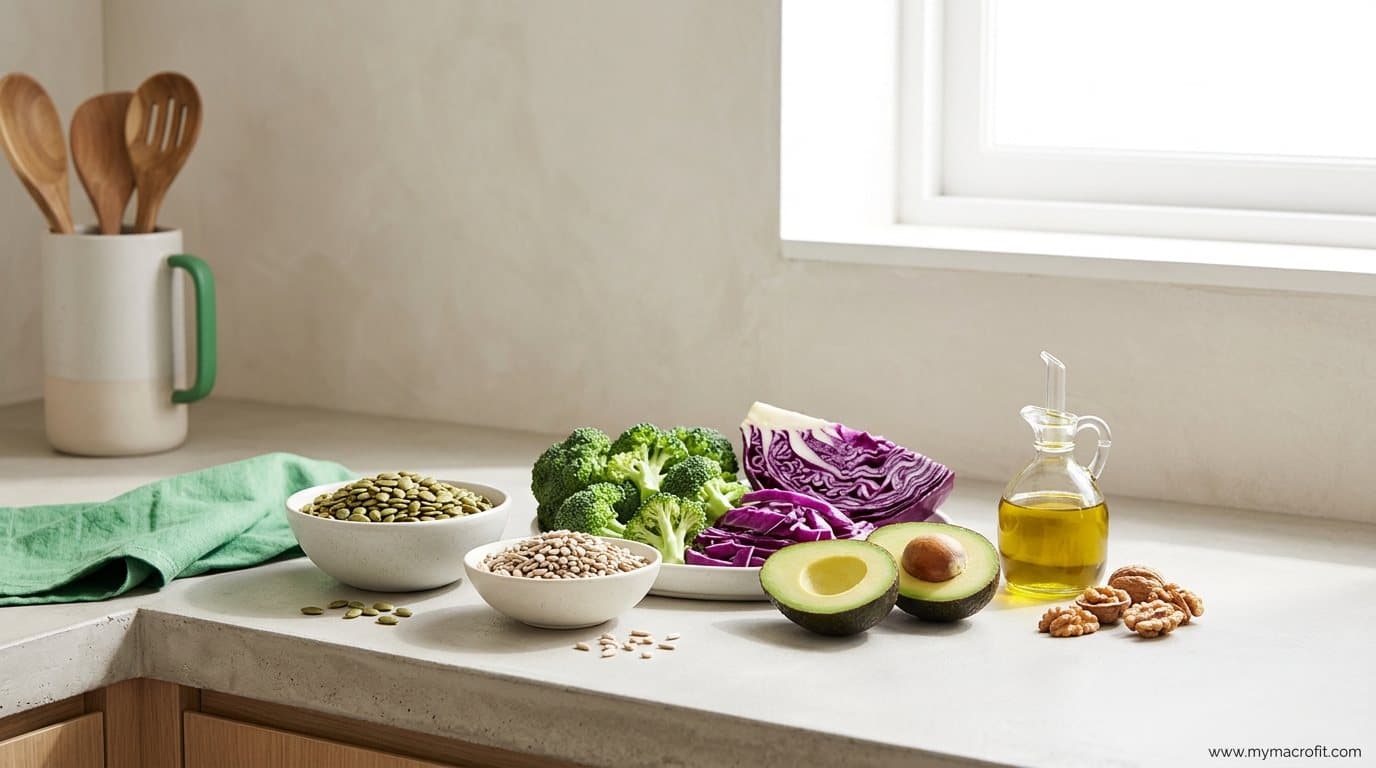
Include daily: olive oil, avocado, nuts, eggs, fatty fish. Don't fear dietary fat in the context of hormonal health.
Lifestyle Factors That Support Progesterone
Stress management: The cortisol-progesterone competition is real. Reducing chronic cortisol elevation through adequate sleep, moderate exercise (not excessive), and stress management directly supports progesterone production. See our cortisol and women's hormones guide.
Adequate calorie intake: Under-eating suppresses GnRH and prevents ovulation, without ovulation, there's no progesterone. If you have irregular or absent periods, calorie intake is a primary suspect.
Avoid excessive cardio: Very high exercise volume without adequate fuelling suppresses the hypothalamic-pituitary axis, preventing ovulation. This is the mechanism of exercise-induced hypothalamic amenorrhea.
Maintain healthy body weight: Both very low and very high body fat are associated with menstrual irregularity and anovulatory cycles.
When Dietary Support Is Insufficient
For significant luteal phase deficiency or progesterone insufficiency in the context of fertility difficulties, medical evaluation is appropriate. Treatments include:
- Natural micronised progesterone (Utrogestan), bioidentical progesterone for luteal phase support
- HRT in perimenopause, addressing the declining progesterone of this transition
Nutritional support is most effective for mild-to-moderate progesterone insufficiency where ovulation is occurring. It cannot substitute for progesterone when ovulation is absent.
The Bottom Line
Low progesterone is a common and often unrecognised hormonal imbalance that causes PMS, irregular cycles, poor sleep, and fertility difficulties. Nutritional support, particularly zinc, B6, magnesium, and vitamin C, addresses the corpus luteum and progesterone synthesis pathways.
The lifestyle fundamentals are equally important: managing cortisol, eating adequate calories and fat, and avoiding the over-exercising that suppresses the ovulatory signal that produces progesterone.
Save & share on Pinterest
Click any card to pin it — or share with someone who needs it.
Low Progesterone: Signs and What to Eat to Support It
The signs of low progesterone, what causes it, and the dietary and lifestyle strategies with evidenc…
The signs of low progesterone, what causes it, and the dietary and lifestyle str…
Read the full guide: Low Progesterone: Signs and What to Eat to Support It
Free fitness tools
Low Progesterone: Signs and What to Eat to Support It — use our free calculators for instant persona…
Pinterest opens in a new tab. You can edit the description before saving.
Frequently Asked Questions
What are the signs of low progesterone?+
What foods increase progesterone naturally?+
Does stress lower progesterone?+
Can diet and lifestyle alone fix low progesterone?+
When should I see a doctor about low progesterone symptoms?+
About the Author

I'm a registered health coach and pre/postnatal specialist. I look at the whole person, your sleep, your stress, your hormones, because the number on the scale is only ever part of the story.
View full profile →