
Can You Do Keto If You Exercise a Lot?

CN · Metabolic Health Coach
Keto and high training volume present a genuine conflict, and the research on this is clearer than fitness marketing suggests. Whether keto and exercise are compatible depends heavily on what type of exercise you do and what "performance" means to you.
The Fuel System Conflict
Human muscles use three energy systems at different exercise intensities:
Phosphocreatine system (0-10 seconds): Powers maximum effort sprints and heavy lifts. Doesn't require carbohydrates directly, but PCr resynthesis requires aerobic metabolism to be efficient.
Glycolytic system (10 seconds-2 minutes): Rapidly breaks down glucose/glycogen to produce ATP. Powers moderate-to-high intensity exercise, resistance training sets, interval running, cycling at high effort.
Aerobic system (2+ minutes): Produces ATP from fat or glucose using oxygen. Powers sustained moderate-intensity exercise, distance running, cycling at conversational pace.
The keto problem: The glycolytic system is specifically glucose-dependent. At high intensities (above approximately 70% VO2max), carbohydrates dominate as fuel and ketones cannot be used at sufficient rate. Glycogen depletion and restricted carbohydrate availability directly limit high-intensity performance.
What the Research Shows
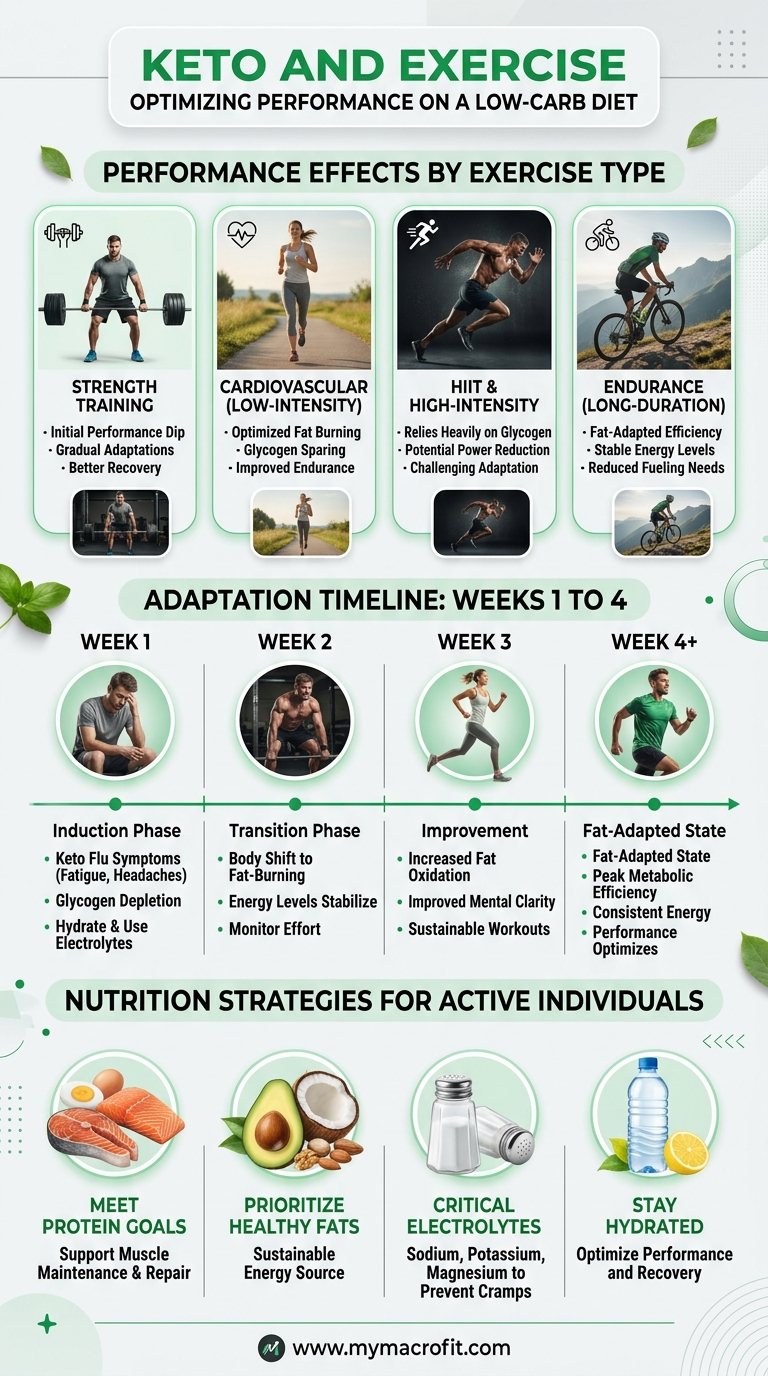
Endurance exercise (moderate intensity): Multiple studies show that after 3-6 weeks of keto-adaptation, fat oxidation during moderate-intensity exercise (50-65% VO2max) is markedly increased. Some endurance athletes report maintained or improved performance at moderate intensities after adaptation. The Peterson et al. 2019 study found no significant difference in sub-threshold endurance performance between keto-adapted and carbohydrate-fed athletes.
High-intensity endurance (above lactate threshold): Consistently impaired on keto. The 2017 Burke et al. study found keto-adapted elite race walkers improved their fat oxidation substantially but had significantly reduced performance at competition intensities compared to high-carbohydrate peers.
Resistance training: Most studies show reduced training volume (total reps × weight) on ketogenic diets, typically 10-20% less volume capacity vs. high-carbohydrate conditions. Muscle protein synthesis response may also be blunted at very low carbohydrate intakes.
Sprint and power performance: Consistently reduced on keto. These activities are primarily glycolytic, keto fundamentally limits glycolytic fuel availability.
The Adaptation Timeline
Exercising on keto follows a predictable trajectory:
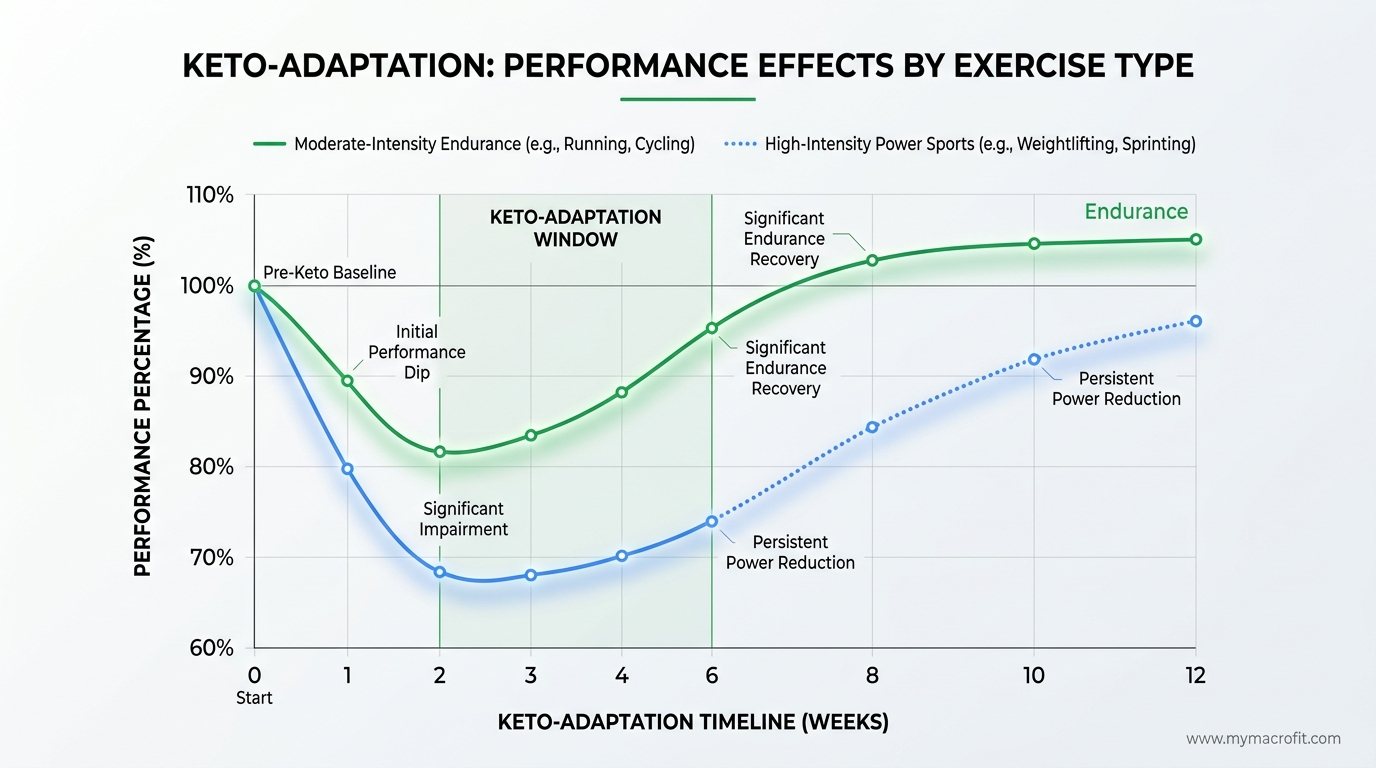
Weeks 1-4: Significant performance impairment, don't judge keto based on this period. Glycogen-dependent pathways are limited and ketone metabolism isn't yet optimised.
Weeks 4-8: Partial recovery. Fat oxidation is upregulated. Moderate-intensity endurance performance improving. High-intensity remains impaired.
Weeks 8-12+: Plateau established. Fat-adapted performance ceiling reached. For moderate-intensity work, this may approach (but typically not match) pre-keto performance. For high-intensity, the limitation is metabolic, carbohydrates simply process faster for high-power output.
Strategies for Active People on Keto
1. Target Ketosis (TKD, Targeted Ketogenic Diet)
Add 20-40g fast-acting carbohydrates (dextrose, dates, banana) immediately before high-intensity training sessions. This provides acute glycogen for the session without significantly disrupting overall ketosis between sessions.
Who it suits: People primarily interested in keto benefits (appetite suppression, metabolic health) who also do occasional high-intensity training.
2. Cyclical Ketogenic Diet (CKD)
5 days strict keto followed by 1-2 high-carbohydrate days to refill glycogen. The carb-loading days produce moderate glycogen replenishment and temporarily exit ketosis. Ketosis is re-established within 1-3 days of returning to restriction.
Who it suits: Recreational gym-goers or moderate athletes who want most of keto's benefits with periodic glycogen restoration for training quality.
3. Low-Carb (Not Full Keto) for Athletes
50-100g carbohydrates/day, enough for moderate glycogen availability without full ketosis. This provides most of the metabolic health benefits of carbohydrate restriction without fully eliminating glycolytic capacity.
Who it suits: Athletes who want improved metabolic flexibility and fat adaptation without the full performance compromise of strict keto.
4. Post-Workout Protein Priority
Resistance training while in ketosis requires adequate protein, amino acids are particularly important for muscle protein synthesis when insulin is very low. Target 40-50g protein in the post-workout meal.
Use Our Calculator
If training regularly on keto, your TDEE is higher, calculate it accurately using our TDEE Calculator. Most keto calculators underestimate calorie needs for active people, which can impair both performance and recovery.
Who Might Benefit from Keto Training
Ultra-endurance athletes (events over 4-5 hours): At these durations, glycogen is inevitably depleted regardless of diet. Keto-adapted athletes have superior fat oxidation at moderate intensities, which may benefit ultra-endurance performance where fat becomes the dominant fuel anyway.
People training at low-moderate intensity for general health and fat loss: Zone 2 cardio, yoga, light resistance training, none of these depend critically on glycolytic capacity. Keto's appetite-reduction benefit may outweigh the modest performance impact.
The Bottom Line
Keto is compatible with exercise but has real, evidence-based performance costs for high-intensity work that persist beyond adaptation. For recreational exercisers focused on health and fat loss at moderate intensities, these costs are manageable. For athletes with performance goals, the evidence consistently favours carbohydrate availability for training quality, with low-carb (not full keto) as a middle ground for those wanting metabolic flexibility.
Save & share on Pinterest
Click any card to pin it — or share with someone who needs it.
Can You Do Keto If You Exercise a Lot?
The evidence on keto and athletic performance, what the research shows about keto for different type…
The evidence on keto and athletic performance, what the research shows about ket…
Read the full guide: Can You Do Keto If You Exercise a Lot?
Try the free TDEE Calculator
Can You Do Keto If You Exercise a Lot? — use our free calculators for instant personalised results. …
Pinterest opens in a new tab. You can edit the description before saving.
Ready to get your numbers?
Free calculator, instant results, no signup required.
Frequently Asked Questions
Does keto affect workout performance?+
How long does it take to adapt to exercising on keto?+
Should athletes do keto?+
What is targeted keto, and does it help training performance?+
Will I lose muscle exercising on keto?+
How should I fuel a long endurance event on keto?+
About the Author

I'm a certified nutritionist and metabolic health coach. I went deep on keto and metabolism after reversing my own insulin resistance, and I'd rather give you the actual numbers than a hand-wave.
View full profile →