Keto for Beginners: What to Eat, What to Avoid, How to Start

CN · Metabolic Health Coach
The ketogenic diet is one of the most effective dietary approaches for appetite control and rapid initial weight loss, but it's also one of the most difficult to start correctly. The first week is genuinely unpleasant if you're unprepared; understanding what to expect and how to navigate it makes a significant difference.
The Macro Setup
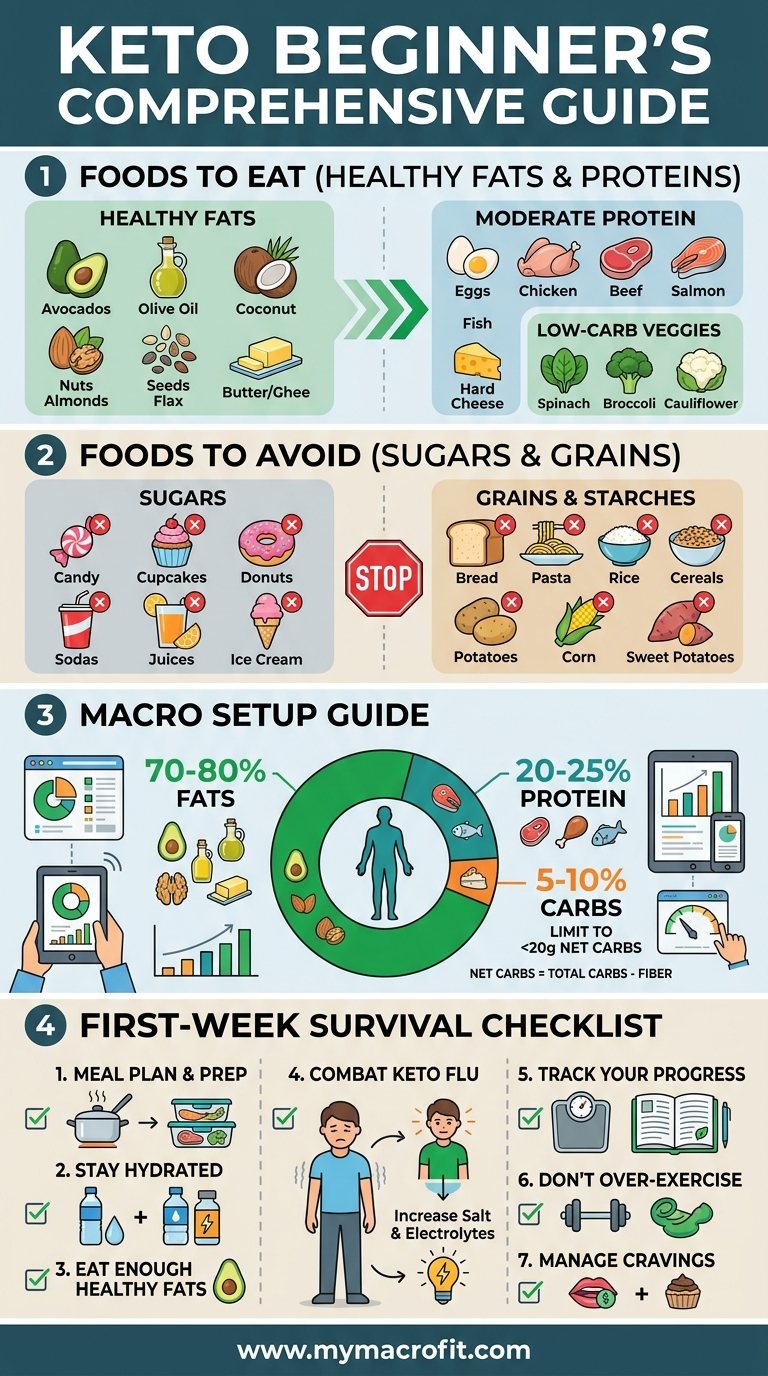
Standard ketogenic diet macros:
- Net carbohydrates: under 20-50g/day (the critical variable)
- Protein: 1.2-1.7g/kg bodyweight (adequate, but don't over-consume)
- Fat: fills remaining calories
Calculating fat intake: Start with your total calorie target from our Keto Macro Calculator, subtract protein calories (protein g × 4), subtract carbohydrate calories (net carb g × 4), remaining calories come from fat (÷ 9 = grams of fat).
Common beginner mistake: Focusing on adding lots of fat rather than on carbohydrate restriction. Ketosis is primarily driven by carbohydrate restriction, not fat intake. Fat fills calories to satiety, not as a target to achieve.
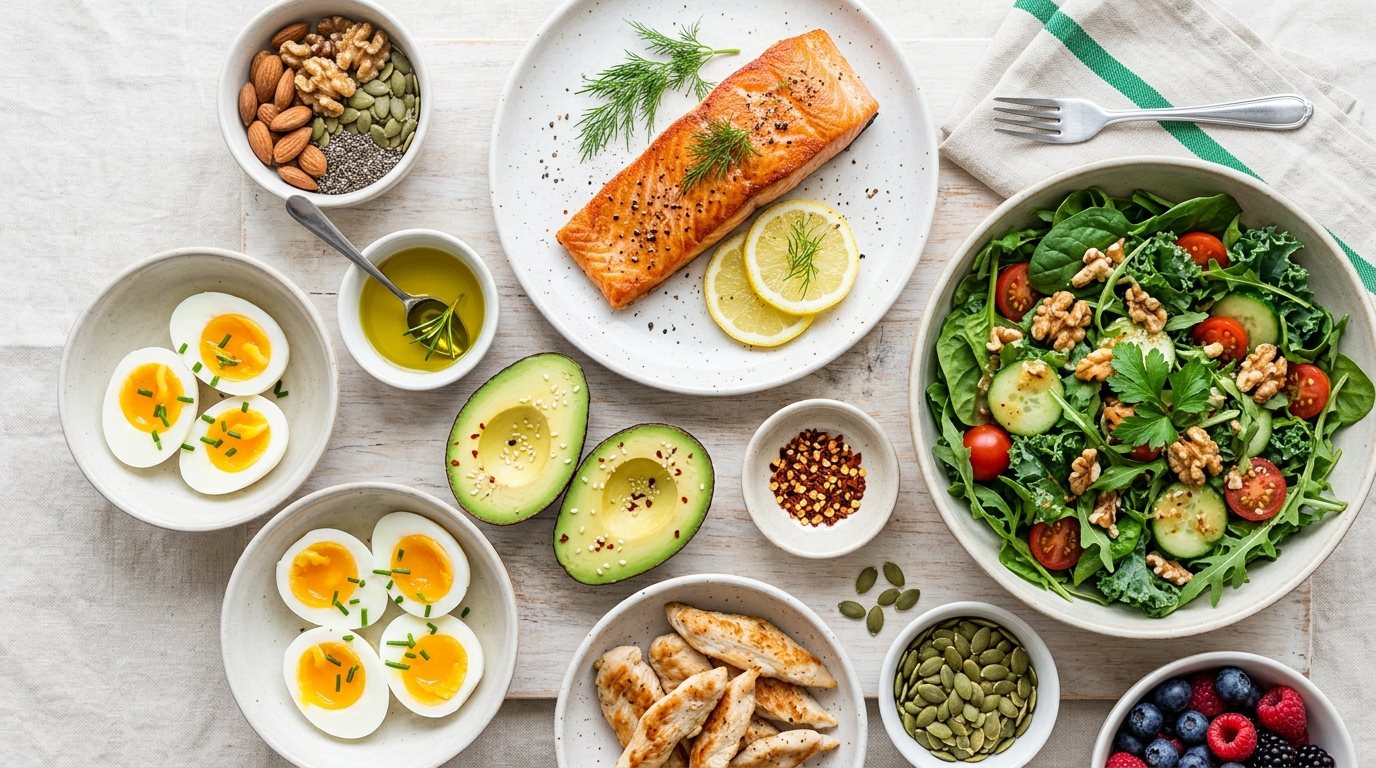
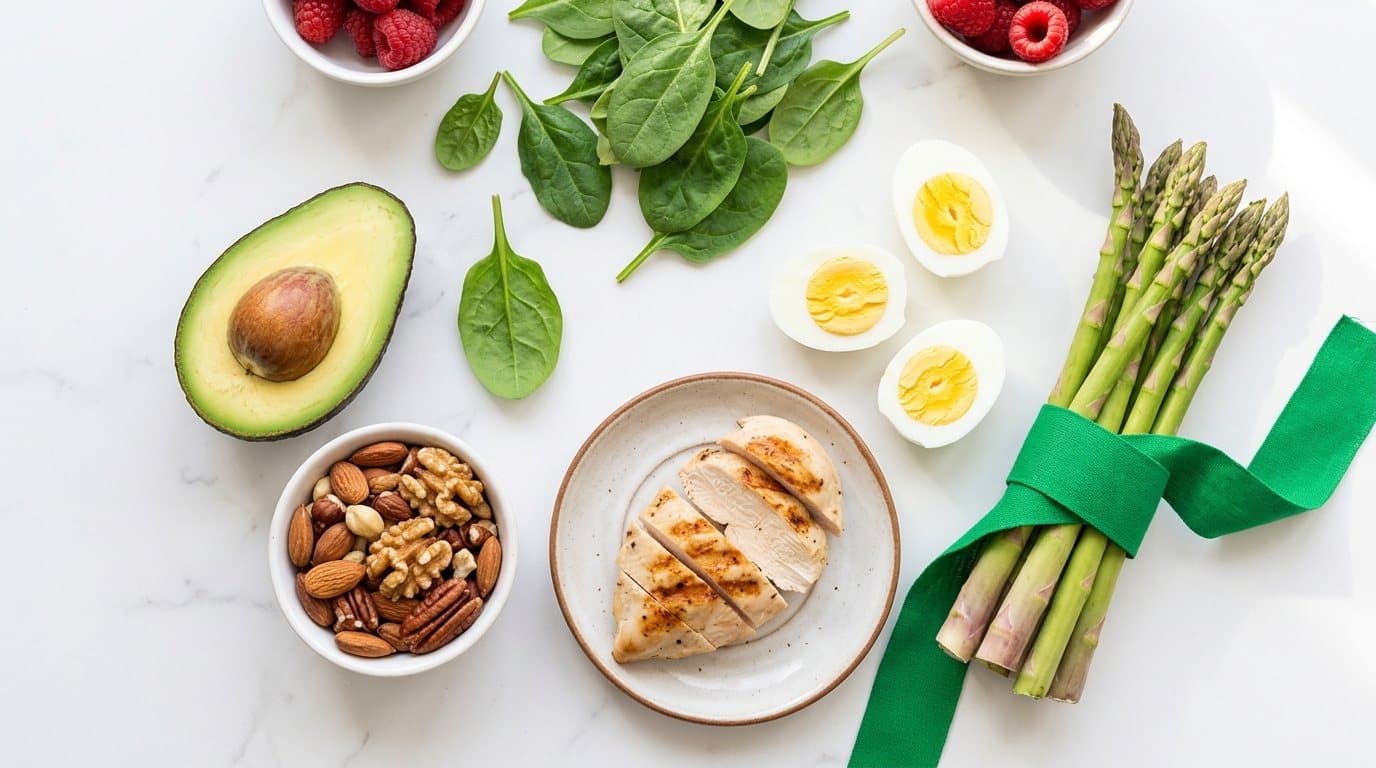
What to Eat on Keto
Proteins (no carb limit):
- Beef, pork, lamb, venison
- Chicken, turkey, duck
- Fish: salmon, mackerel, sardines, tuna, cod, haddock
- Shellfish: prawns, lobster, crab (check: some shellfish have trace carbs)
- Eggs
- Organ meats (liver, high nutritional density)
Fats (no carb limit):
- Extra virgin olive oil, avocado oil, coconut oil
- Butter, ghee
- Double cream, full-fat cream cheese
- Lard, tallow
Low-carb vegetables (count net carbs):
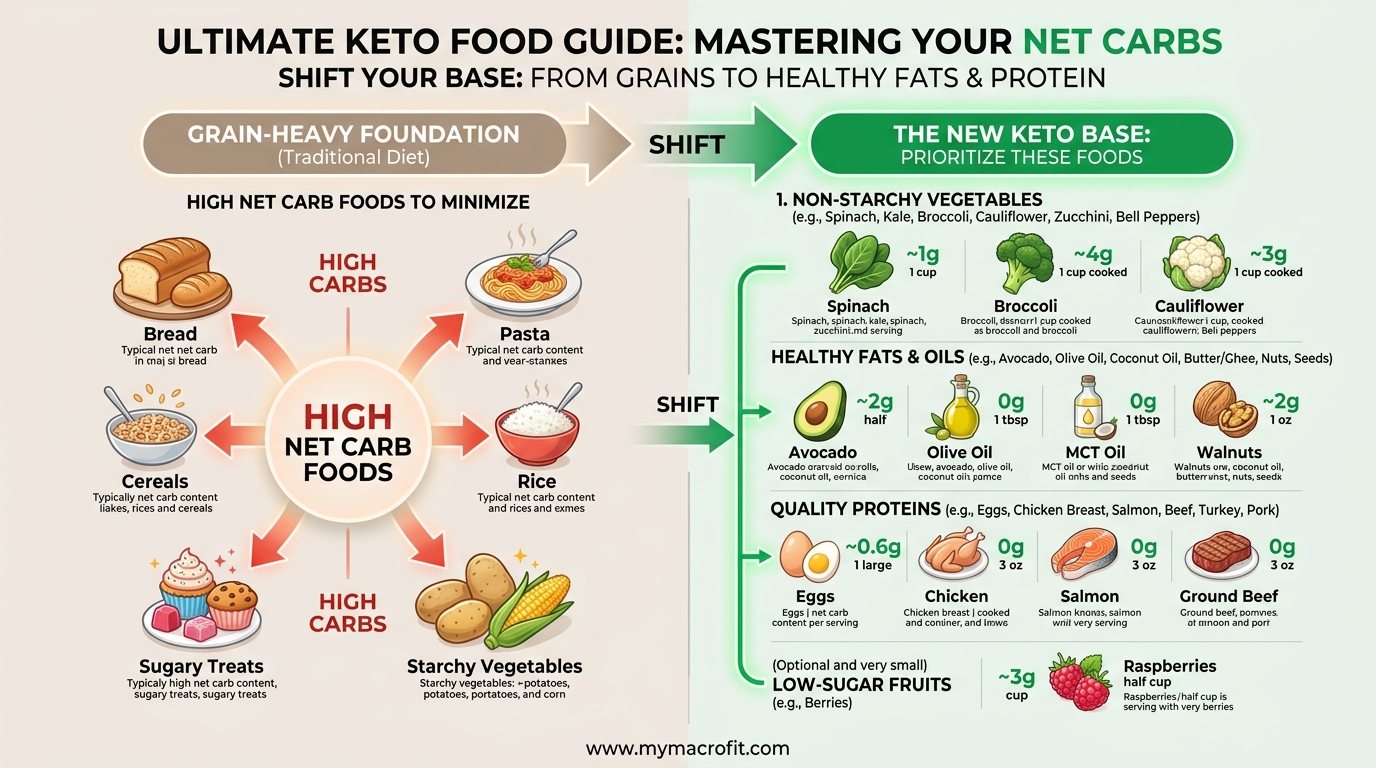
- Leafy greens: spinach, kale, romaine, Swiss chard (<2g net carbs/100g)
- Broccoli (~4g net carbs/100g)
- Cauliflower (~3g net carbs/100g)
- Courgette (~2g net carbs/100g)
- Peppers (5-6g net carbs/100g, moderate, use sparingly)
- Mushrooms (~2g net carbs/100g)
- Celery, cucumber, asparagus, green beans (all low)
- Avocado (~2g net carbs per ½ avocado)
Dairy (check labels):
- Full-fat cheese (most are very low carb: cheddar, brie, camembert, parmesan, mozzarella)
- Greek yogurt (7-8g carbs/200g, fits within limits in small portions)
- Heavy cream, butter, ghee (essentially zero carbs)
Nuts and seeds (count net carbs, eat in moderation):
- Macadamia nuts: ~2g net carbs/30g ✅
- Pecans, almonds, walnuts: ~2-4g net carbs/30g ✅
- Cashews: ~7g net carbs/30g ⚠️ (limit)
What to Avoid (High-Carb Foods)
Grains and starches: Bread, pasta, rice, oats, couscous, cereals, all eliminated. These are the biggest challenge for most people as they typically anchor every meal.
Sugar: All forms, white sugar, honey, maple syrup, agave, cane juice, coconut sugar. Sugar is obvious; hidden sugars in sauces, condiments, and processed foods require label-checking.
Most fruit: Berries are the exception (handful = ~8g net carbs). Bananas, apples, oranges, grapes, mangoes, all too high in fructose for regular keto consumption.
Legumes: Lentils, beans, chickpeas, high in carbohydrates despite their fibre content.
Starchy vegetables: Potato, sweet potato, corn, peas, butternut squash (most root vegetables and leguminous vegetables).
Alcohol: Most alcoholic drinks contain carbohydrates. Exception: spirits (vodka, gin, whisky) contain zero carbs, as do very dry wines in small quantities.
The First Week: What to Expect and How to Survive It
Days 1-3: The carbohydrate elimination phase. Blood glucose drops, glycogen depletes, insulin falls. Many people feel fine at this stage, the restriction hasn't yet impacted.
Days 3-7 (keto flu): As glycogen depletes and ketone production begins, common symptoms:
- Headache (often severe)
- Fatigue and brain fog
- Muscle cramps (electrolyte depletion)
- Nausea
- Irritability
Why the keto flu happens: Low-carb diets cause the kidneys to excrete more sodium (lower insulin → less sodium retention). Sodium depletion triggers loss of potassium and magnesium, causing the headaches, cramps, and fatigue.
How to reduce keto flu severity:
Electrolyte supplementation is essential:
- Sodium: 2,000-4,000mg/day (salty broth, pickle juice, table salt on food, electrolyte supplement)
- Potassium: 1,000-3,500mg/day (avocado, leafy greens, potassium supplement)
- Magnesium: 300-500mg/day (supplement recommended, food sources alone are insufficient)
Drinking electrolyte-rich broth (bone broth or standard broth + sea salt) 2× daily during the first week prevents most keto flu symptoms.
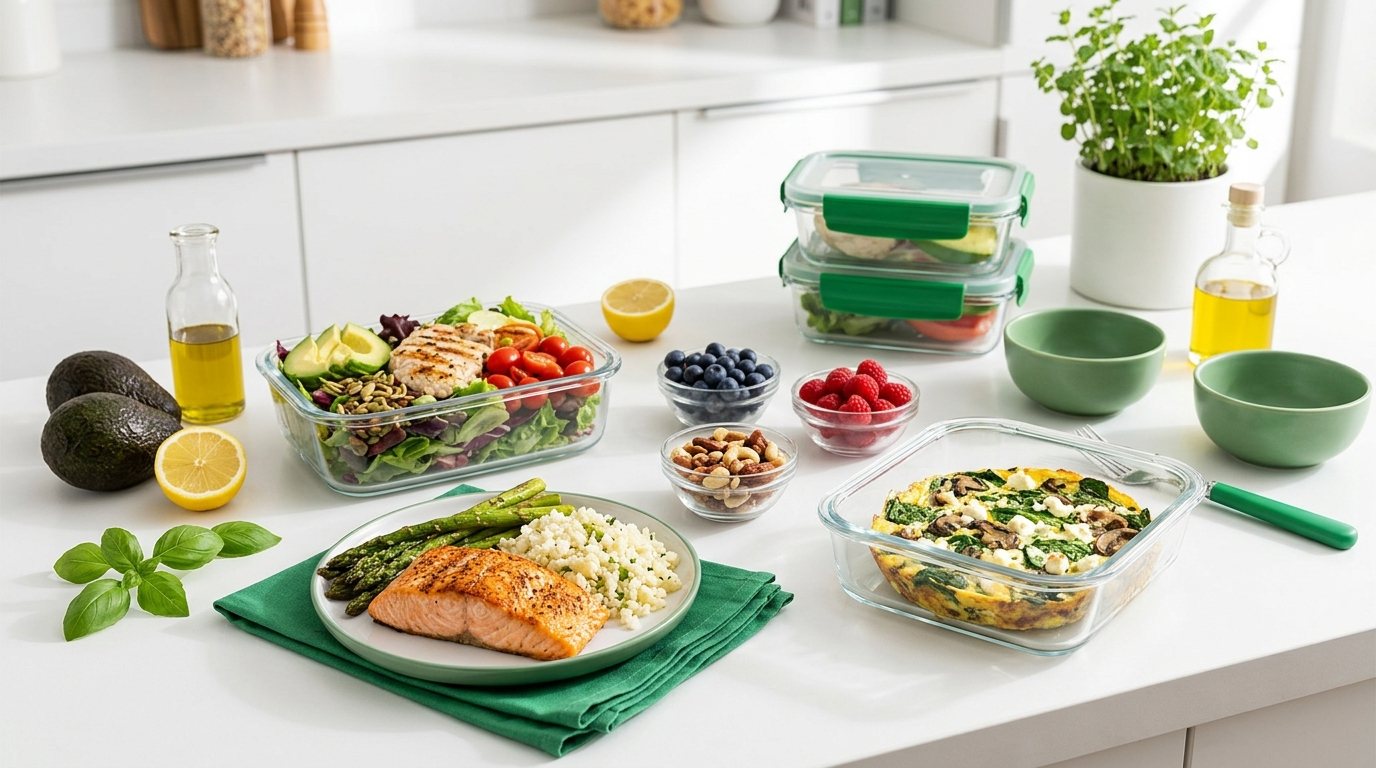
A Sample Day on Keto
Breakfast: 3 eggs scrambled in butter + 3 rashers bacon + wilted spinach (2g net carbs)
Lunch: Tuna salad with mayo + celery + cucumber + avocado (4g net carbs)
Dinner: 200g salmon fillet + large green salad with olive oil + 100g broccoli (5g net carbs)
Snacks: 30g almonds (3g net carbs), 30g cheese (0g net carbs)
Total net carbs: ~14g ✓
The Bottom Line
Keto success requires understanding that it's fundamentally a carbohydrate restriction diet, fat intake fills remaining calories, but the carbohydrate ceiling is the non-negotiable variable. Prepare for the keto flu with electrolytes. The first week is the hardest; most people who persist past week 2 find the dietary pattern sustainable and the appetite reduction remarkable.
Save & share on Pinterest
Click any card to pin it — or share with someone who needs it.
Keto for Beginners: What to Eat, What to Avoid, How to Start
The complete beginner's guide to starting keto, the carb limits, what you can eat, foods to avoid, h…
The complete beginner's guide to starting keto, the carb limits, what you can ea…
Read the full guide: Keto for Beginners: What to Eat, What to Avoid, How to Start
Try the free Keto Macro Calculator
Keto for Beginners: What to Eat, What to Avoid, How to Start — use our free calculators for instant …
Pinterest opens in a new tab. You can edit the description before saving.
Ready to get your numbers?
Free calculator, instant results, no signup required.
Frequently Asked Questions
How many carbs can I eat on keto?+
What should a beginner eat on keto?+
Is keto safe long-term?+
How do I get through the first week of keto?+
Will I lose energy or strength in the gym on keto?+
What are the most common beginner keto mistakes?+
About the Author

I'm a certified nutritionist and metabolic health coach. I went deep on keto and metabolism after reversing my own insulin resistance, and I'd rather give you the actual numbers than a hand-wave.
View full profile →