
Keto Side Effects: The Keto Flu and How to Manage It

CN · Metabolic Health Coach
The keto flu is the most common reason people abandon ketogenic diets. Most people start keto, feel terrible for 5-7 days, conclude it "doesn't work for them," and quit, not knowing that the misery was almost entirely preventable with proper electrolyte management.
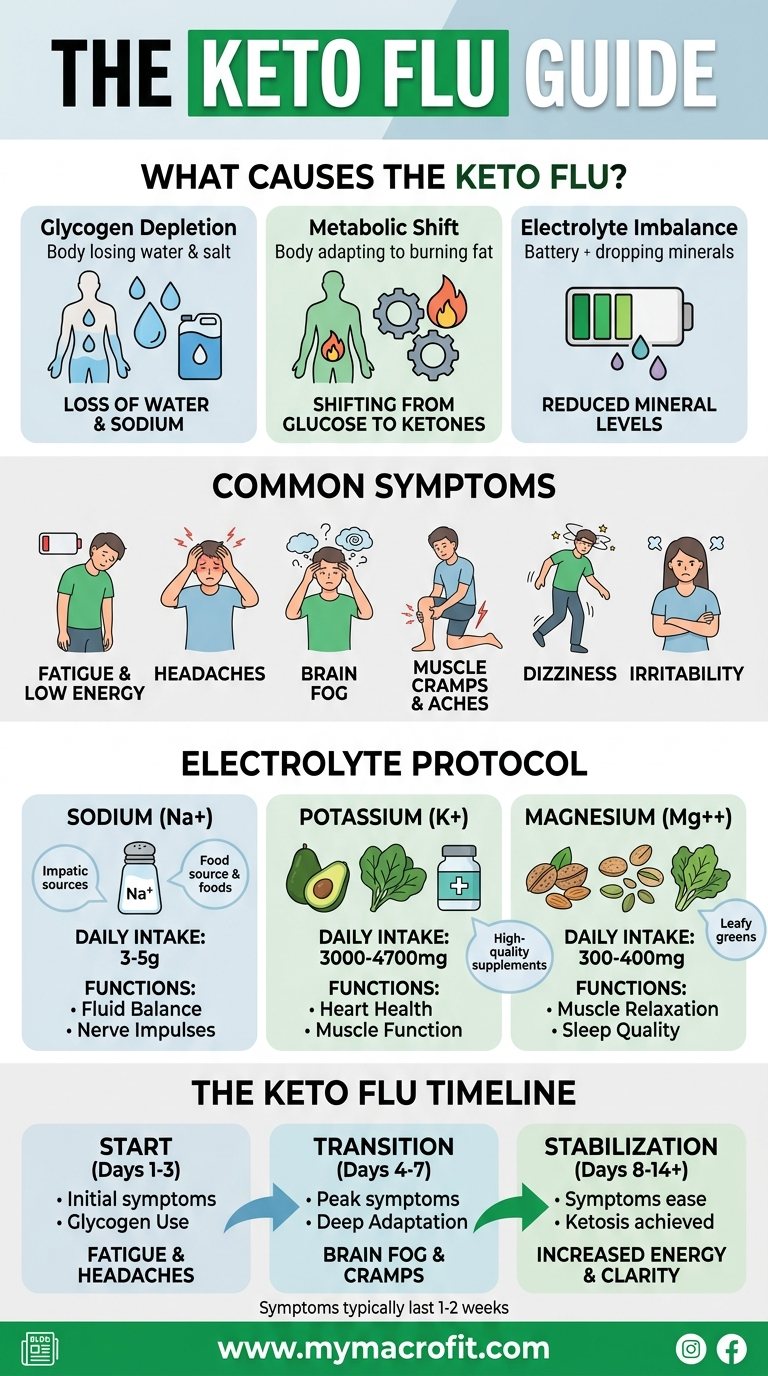
Why the Keto Flu Happens
The mechanism is well-understood:
1. Glycogen depletion and water loss: When carbohydrates are restricted, glycogen stores in liver and muscle are rapidly depleted. For every gram of glycogen, approximately 3-4g of water is stored alongside it. Glycogen depletion = significant rapid water loss (typically 1-3kg in the first week).
2. Reduced insulin → sodium excretion: Insulin promotes sodium retention in the kidneys. As carbohydrates drop and insulin falls, the kidneys start excreting much more sodium in urine.
3. Sodium depletion triggers mineral imbalances: Sodium loss drives sodium-potassium exchange, as sodium is excreted, potassium is also lost. Magnesium is similarly depleted. The electrolyte disruption causes:
- Headaches (primary symptom, most severe)
- Muscle cramps (low sodium + low magnesium)
- Fatigue and brain fog (cellular energy impaired without adequate electrolytes)
- Dizziness (volume depletion)
- Nausea
- Heart palpitations (in severe electrolyte depletion)
The key insight: The keto flu is primarily an electrolyte deficiency problem, not an inevitable metabolic consequence of ketosis. It's preventable with proper supplementation.
The Electrolyte Protocol
Start BEFORE symptoms develop, day 1 of your keto diet:
Sodium (Most Critical)
- Target: Additional 2,000-4,000mg/day above normal dietary sodium
- Sources: Table salt on all meals (1 tsp table salt = ~2,300mg sodium), chicken/beef broth (one mug twice daily = ~1,000-2,000mg sodium), electrolyte supplements
- Practical: Drink 2 cups of salty broth daily for the first 2 weeks
Potassium
- Target: 1,000-3,500mg/day (total from all sources)
- Food sources: Avocado (½ avocado = ~450mg), leafy greens (spinach, kale), salmon, courgette
- Supplement: 99mg per tablet (regulatory limit), may need 3-5 tablets spread through the day (check with GP if on medications)
Magnesium (Best from Supplements)
- Target: 300-400mg/day elemental magnesium
- Forms: Magnesium glycinate or citrate, best absorbed; avoid magnesium oxide (poorly absorbed)
- Timing: Split between morning and evening, or 200-300mg before bed (also improves sleep)
Practical all-in-one option: Electrolyte powders or drinks designed for keto provide all three electrolytes in appropriate ratios. Take 1-2 servings daily in water.
What Else Helps
Don't reduce fat intake too low: Going very low calorie + very low carb + low fat simultaneously stresses the body more. Adequate fat intake supports the transition, at least 60-70% of total calories from fat during the adaptation phase.
Stay hydrated: The water loss from glycogen depletion needs replacing. Drink enough to produce pale yellow urine. Note: plain water without electrolytes can worsen electrolyte dilution, add salt or use electrolyte drinks.
Light exercise: Moderate activity (walking) helps deplete remaining glycogen stores faster and improves mood. Avoid high-intensity training in the first week, it exacerbates electrolyte loss.
Maintain protein: Don't over-restrict protein. Adequate protein (1.5-2g/kg) supports muscle preservation and reduces the severity of fatigue.
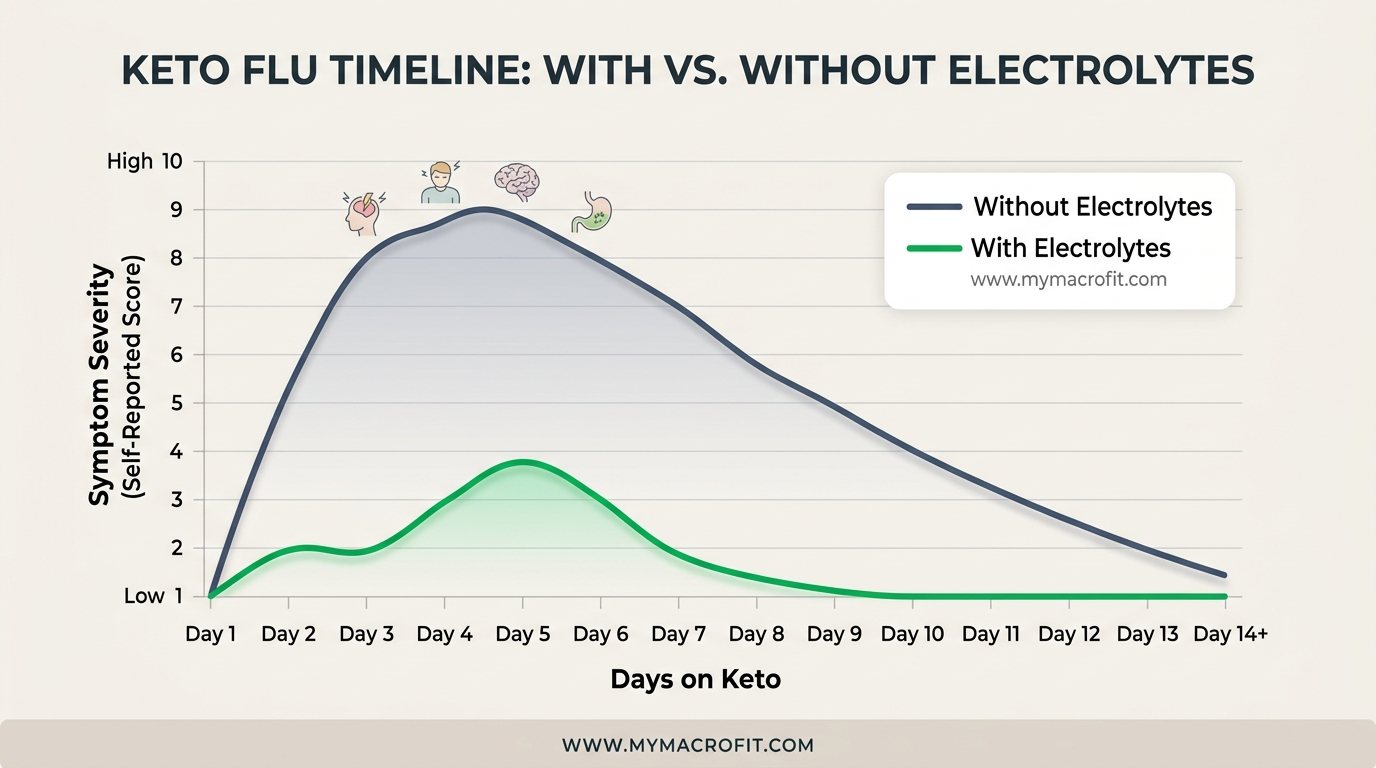
The Symptom Timeline (With Proper Electrolytes)
Days 1-2: Normal, glycogen depletion beginning. No significant symptoms with electrolytes.
Days 3-5: Mild headache and fatigue may occur. Continue electrolyte protocol. Symptoms should be mild, not debilitating.
Days 5-7: Energy begins stabilising. Appetite significantly reducing (ketone-mediated ghrelin suppression). Brain clarity improving.
Weeks 2-4: Most people report feeling genuinely better than before keto, stable energy, reduced appetite, no carbohydrate-driven energy crashes.
Without electrolytes: Days 3-7 are often severe, debilitating headaches, extreme fatigue, muscle cramps, confusion. This is the experience most people have who don't follow electrolyte guidance.
Other Common Keto Side Effects
Constipation: Common in early keto as fibre intake typically drops with grain elimination. Solutions: increase non-starchy vegetable intake significantly, add ground flaxseed (without exceeding carb limits), and drink more water.
Leg cramps (at night): Low magnesium + low potassium. Increase magnesium supplementation and eat more avocado and leafy greens.
Bad breath ("keto breath"): Acetone is exhaled as a ketone body, the fruity or nail-varnish remover smell confirms ketosis. Reduces after adaptation as acetone production normalises.
Reduced exercise performance: Temporary (2-6 weeks). Glycogen-dependent high-intensity exercise is impaired until keto-adaptation. Moderate exercise is fine; competitive performance should wait for the adapted state.
The Bottom Line
The keto flu is primarily an electrolyte problem, preventable with adequate sodium, potassium, and magnesium supplementation starting on day 1. Most people who experience severe keto flu are simply under-replacing the electrolytes lost through the keto-driven diuresis.
Save & share on Pinterest
Click any card to pin it — or share with someone who needs it.
Keto Side Effects: The Keto Flu and How to Manage It
What causes the keto flu, why it happens, how long it lasts, and exactly what to take and eat to min…
What causes the keto flu, why it happens, how long it lasts, and exactly what to…
Read the full guide: Keto Side Effects: The Keto Flu and How to Manage It
Free fitness tools
Keto Side Effects: The Keto Flu and How to Manage It — use our free calculators for instant personal…
Pinterest opens in a new tab. You can edit the description before saving.
Frequently Asked Questions
What is the keto flu and how long does it last?+
How do you stop the keto flu?+
Is the keto flu dangerous?+
Can you prevent the keto flu entirely?+
What electrolytes do I need and how much on keto?+
How is keto flu different from actually being ill?+
About the Author

I'm a certified nutritionist and metabolic health coach. I went deep on keto and metabolism after reversing my own insulin resistance, and I'd rather give you the actual numbers than a hand-wave.
View full profile →