
Training Around Your Menstrual Cycle for Better Performance

RHC · Pre/Postnatal Fitness Specialist
The menstrual cycle creates predictable hormonal changes that affect strength, endurance, recovery, perceived effort, and injury risk. Women who understand these patterns can time training demands more intelligently, pushing harder when physiology supports it and training smarter when it doesn't.
This isn't about limiting performance, it's about maximising it throughout the cycle.
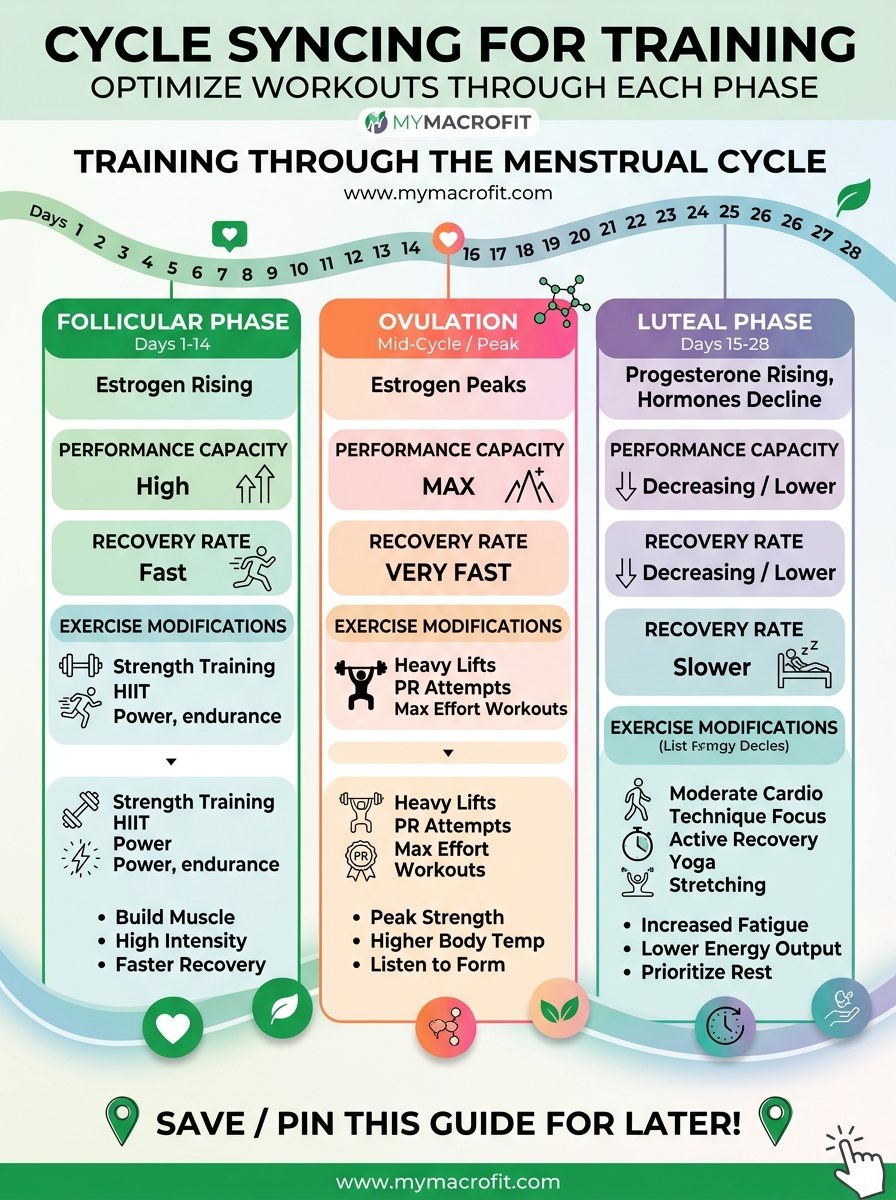
The Science: What Changes Across the Cycle
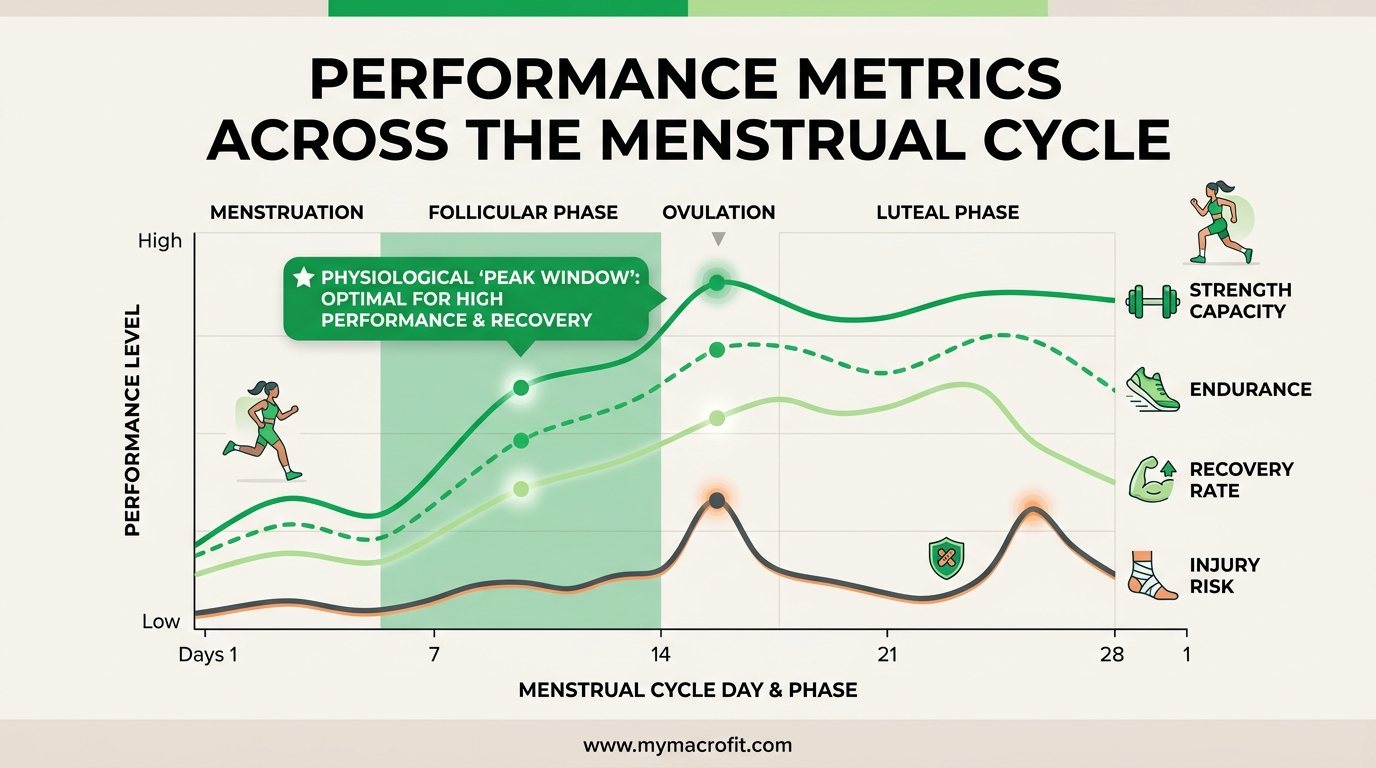
Strength and Power
Follicular phase (days 1-14): Several studies suggest maximal strength may be slightly higher in the late follicular phase compared to the mid-luteal phase. The mechanism is likely oestrogen's influence on muscle contractility and neural drive. A 2021 meta-analysis (Romero-Moraleda et al.) found significantly greater strength gains from training in the follicular phase when volume was higher in this period.
Luteal phase (days 15-28): Strength is largely maintained but perceived effort is higher at the same intensity. Recovery is slower, muscle glycogen resynthesis post-exercise takes longer.
Practical implication: Programme your highest-intensity efforts, PR attempts, and highest training volume in the follicular phase. The luteal phase is for maintenance and moderate volume.
Endurance Performance
Follicular phase: Better cardiovascular efficiency. Blood viscosity is lower, haematocrit is relatively higher, and aerobic metabolism is somewhat more efficient under oestrogen's influence.
Luteal phase: Core temperature is elevated (0.3-0.5°C, caused by progesterone). This blunts the cardiovascular response to heat, reducing endurance performance in hot conditions. Substrate utilisation shifts, the luteal phase favours fat oxidation over glycogen, which may be advantageous for very long efforts but reduces high-intensity capacity.
Practical implication: Plan long endurance races ideally in the follicular phase if you have flexibility. The elevated core temperature in the luteal phase is particularly impactful in hot conditions, heat acclimatisation or race timing matters.
Recovery
Follicular phase: Faster recovery between sessions. Muscle protein synthesis response to training may be more efficient. Better sleep quality.
Luteal phase: Slower recovery due to elevated progesterone, higher inflammatory response to exercise, and often disrupted sleep (from temperature changes and PMS). More rest days and lower training density are physiologically justified.
Injury Risk
Around ovulation (approximately day 14): The well-documented increased ACL and ligament injury risk from oestrogen-driven laxity peaks here. Studies in female athletes show ACL injuries disproportionately cluster in the ovulatory phase.
Practical implication: Don't avoid training around ovulation, but prioritise:
- Thorough dynamic warm-up
- Attention to landing mechanics and knee tracking
- Not pushing to fatigue in high-impact or plyometric training on this specific day
Phase-by-Phase Training Guide
Menstruation (Days 1-5)
Physiology: Both oestrogen and progesterone are low. Uterine contractions cause cramping. Iron loss begins.
Training: Individual response varies enormously. Some women feel great and train normally; others experience significant cramping and fatigue.
If training:
- No physiological reason to avoid it, exercise often reduces prostaglandin-driven cramping
- Light to moderate intensity is well-tolerated on difficult days
- Yoga, walking, and swimming are common preferences
- If strength training, expect possible slight performance reduction day 1-2
Recovery focus: Iron replacement (red meat, dark greens) is particularly important in the days following menstruation.
Follicular Phase (Days 6-14)
Physiology: Rising oestrogen, low progesterone, improving energy, best insulin sensitivity.
Training: This is peak training phase. The physiology supports high intensity, heavy loading, and volume.
Prioritise here:
- Heaviest resistance training sessions
- PR attempts and strength testing
- High-intensity interval training
- Highest weekly training volume
- Skill acquisition (better neuromuscular coordination)
Recovery: Best recovery capacity of the cycle, can handle more frequent and demanding sessions.
Ovulation (~Day 14)
Training: High energy and confidence. Performance is typically excellent.
Caution: Highest ligament laxity, prioritise warm-up quality and form over maximum loading on the day of ovulation.
Luteal Phase (Days 15-28)
Physiology: Progesterone rises; then both decline toward menstruation. Elevated core temperature, slower recovery, higher perceived effort.
Training: Maintain training consistency but manage expectations.
Adjustments:
- Reduce intensity slightly without reducing frequency
- Extend rest periods between heavy sets
- Add an extra recovery day if needed
- Focus on technique and quality over maximum load
- Avoid new maximum efforts, not the right time for PRs
- Hydrate more, elevated core temperature increases fluid needs
Nutrition note: Appetite is higher (genuine physiological increase, don't ignore it). Carbohydrate cravings are real; meeting them with quality complex carbs (oats, sweet potato) supports both serotonin synthesis and performance.
Practical Cycle Tracking for Training
Tools: A menstrual cycle tracking app (Clue, Flo, Natural Cycles) shows where you are in your cycle with reasonable accuracy. Basal body temperature (BBT) tracking confirms ovulation.
Training log note: Note your cycle day alongside training data for 2-3 cycles. You'll quickly identify your personal performance patterns, which are more individual than average data suggests.
For athletes competing: If you have scheduling flexibility, consider requesting race dates that fall in your follicular phase for peak performance. Some elite female athletes now do this systematically.
The Individual Variation Caveat
The research describes averages. Individual response to cycle phases varies significantly:
- Some women notice dramatic performance changes; others notice almost none
- Women on hormonal contraception don't have the same hormonal cycling, effects are different and less pronounced
- Cycle length variation (21-35 days is normal) affects when each phase falls
Track your own experience rather than assuming average research applies to you.
The Bottom Line
Training around the menstrual cycle is evidence-based and practical. The follicular phase supports higher intensity and volume, push hard here. The luteal phase warrants slightly reduced intensity and extended recovery, don't fight the physiology. Around ovulation, prioritise warm-up quality for injury risk management.
Consistent training throughout the cycle is more important than perfectly phasing it, the best programme is one you complete over months and years, not the one optimally periodised for a single cycle.
Save & share on Pinterest
Click any card to pin it — or share with someone who needs it.
Training Around Your Menstrual Cycle for Better Performance
The evidence on how menstrual cycle phases affect strength, endurance, recovery, and injury risk, an…
The evidence on how menstrual cycle phases affect strength, endurance, recovery,…
Read the full guide: Training Around Your Menstrual Cycle for Better Performance
Free fitness tools
Training Around Your Menstrual Cycle for Better Performance — use our free calculators for instant p…
Pinterest opens in a new tab. You can edit the description before saving.
Frequently Asked Questions
Does your period affect workout performance?+
Should you train on your period?+
Are women more prone to injury at certain points in their cycle?+
Should I lift heavier in the follicular phase and lighter in the luteal phase?+
What if my cycle is irregular or I'm on hormonal birth control?+
About the Author

I'm a registered health coach and pre/postnatal specialist. I look at the whole person, your sleep, your stress, your hormones, because the number on the scale is only ever part of the story.
View full profile →